Artwork
January and February
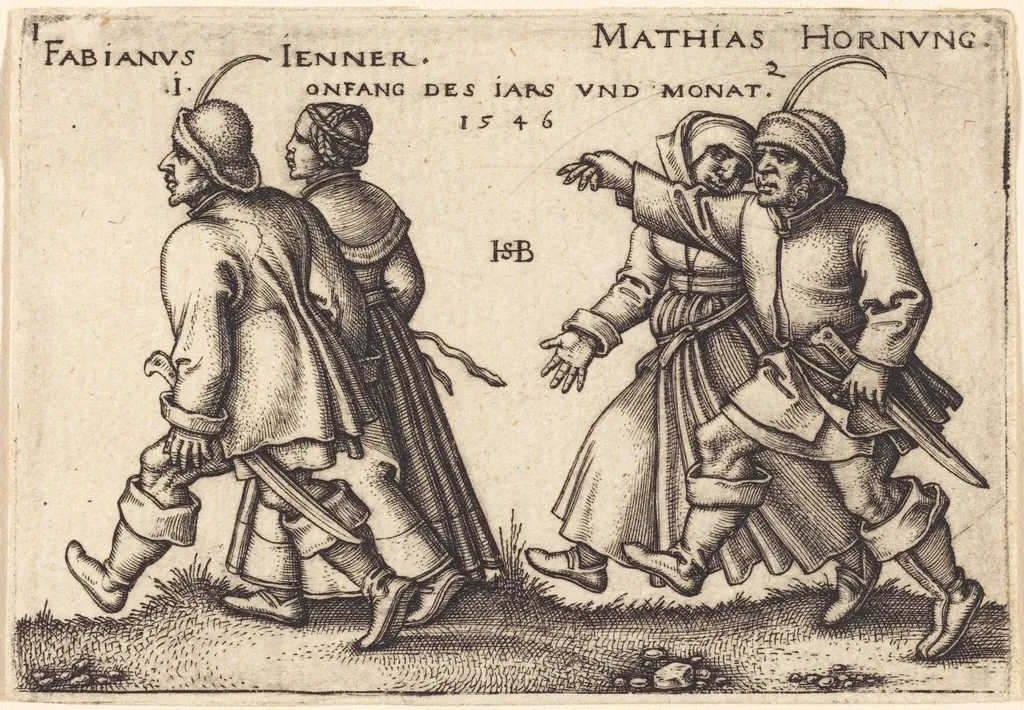
January and February is an ink print by the Renaissance artist Sebald Beham. It dates from 1546 and is held in the collection of the National Gallery of Art.
About this work
Overview
Beham, a Nuremberg-born artist active in Frankfurt, was a leading figure among the Little Masters, known for producing small, finely detailed prints.
Created in 1546 by Sebald Beham, *January and February* is an engraving from a series depicting seasonal labor and daily life. Beham, a Nuremberg-born artist active in Frankfurt, was a leading figure among the Little Masters, known for producing small, finely detailed prints. This work exemplifies the technical precision and intimate scale characteristic of his later career, reflecting the broader German printmaking tradition of the mid-sixteenth century.
Subject & Meaning
The scene portrays winter’s harshness through four figures engaged in mundane, cold-weather activities. Two men walk away, staffs in hand, while two others confront each other—one gesturing emphatically, the other gripping a sword. The absence of domestic warmth or communal activity suggests isolation. The labeled months anchor the image in seasonal reality, implying the physical and social tensions that arise in winter’s grip.
Technique & Style
Beham employed fine, controlled lines to render fabric folds, rough terrain, and the texture of winter grass. The engraving’s sharp contrasts and dense cross-hatching create depth and movement without color. The figures’ postures and gestures are rendered with economy, yet convey psychological tension. The medium’s precision allowed Beham to capture minute details—stone, thread, and weathered wood—within a compact format.
History & Provenance
The engraving emerged from Beham’s prolific output during his time in Frankfurt, following his earlier years in Nuremberg. Though many of his prints were widely circulated, specific early ownership records for this piece are sparse. It survives as part of a broader corpus of seasonal engravings produced for collectors and artisans, reflecting the demand for small-scale, intellectually engaging prints in Renaissance Germany.
Context
In mid-16th-century Germany, engravings like this served both decorative and didactic purposes, often illustrating the labors of the months in alignment with calendar traditions. Beham’s work responds to humanist interests in daily life and seasonal cycles, while diverging from grand religious or mythological themes. His focus on ordinary figures in harsh conditions aligns with emerging secular sensibilities in Northern European art.
Legacy
Beham’s *January and February* contributed to the enduring appeal of the Little Masters’ small-scale engravings, influencing later printmakers who valued detail over monumentality. Though less celebrated than contemporaries like Dürer, his work preserved a record of rural winter life with unembellished realism. The engraving remains a testament to the expressive potential of line and texture in reproductive printmaking.
Artist & collection
Artist
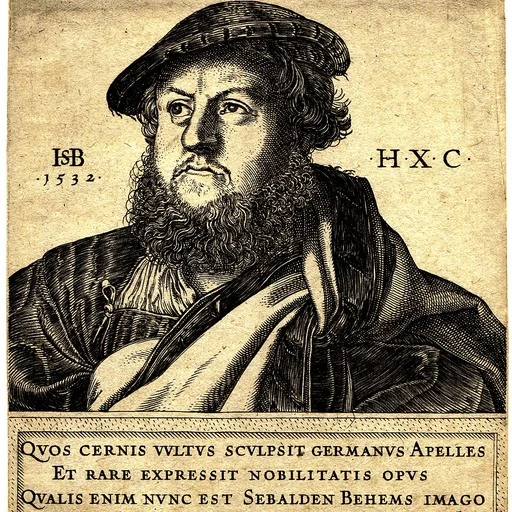
Sebald Beham (1500–1550) was a German painter and printmaker, mainly known for his very small engravings.


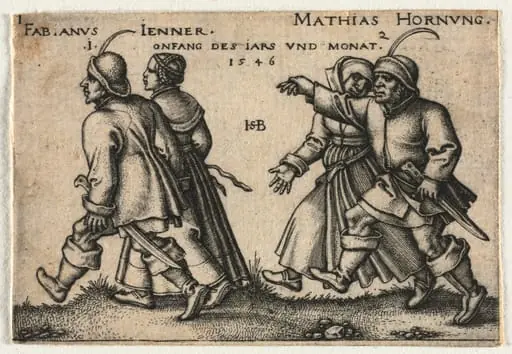 The Peasant Wedding or the Twelve Months: 1-Fabianus Jenner 2-Mathias Hornung
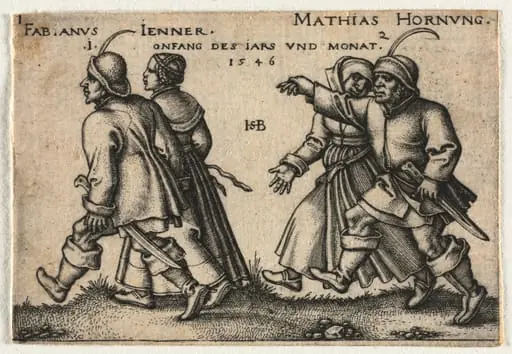 The Peasant Wedding or the Twelve Months
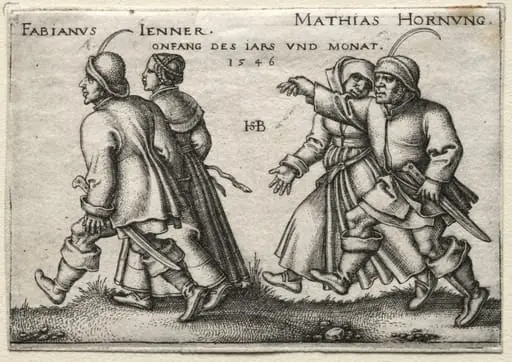 The Village Wedding: Fabianus Jenner
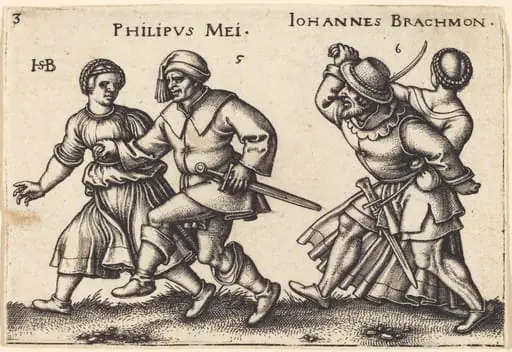 May and June
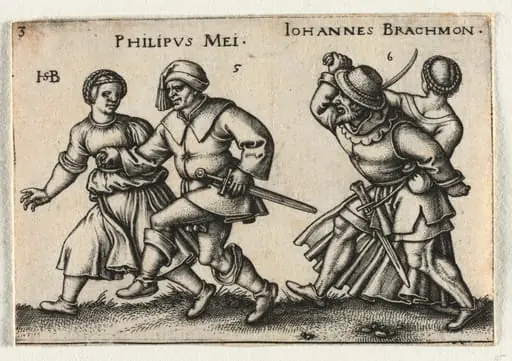 The Peasant Wedding or the Twelve Months: 5-Philipus Mei 6-Johannes Brachmon
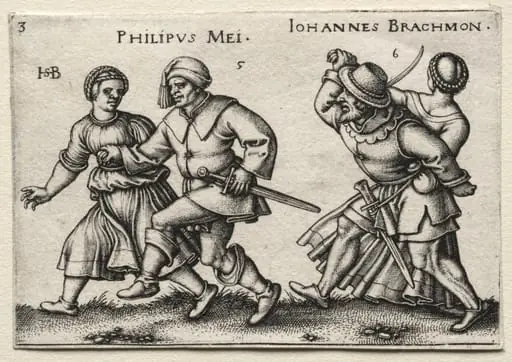 The Village Wedding: Philipus Mei
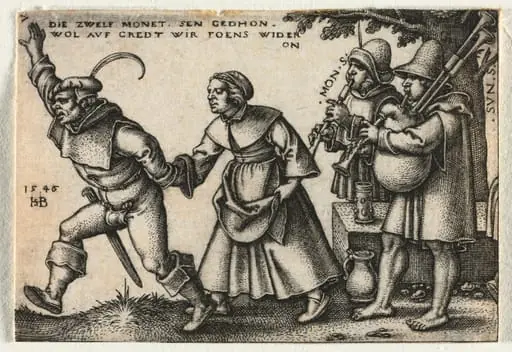 The Peasant Wedding or the Twelve Months: No. 7
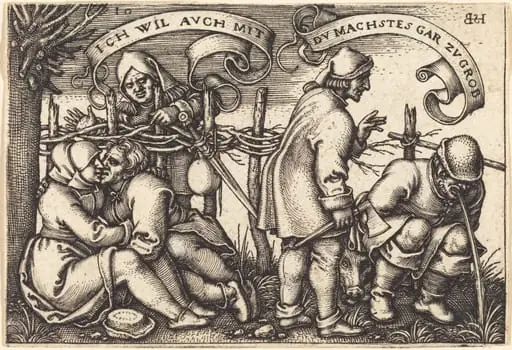 Peasants Behind the Fence
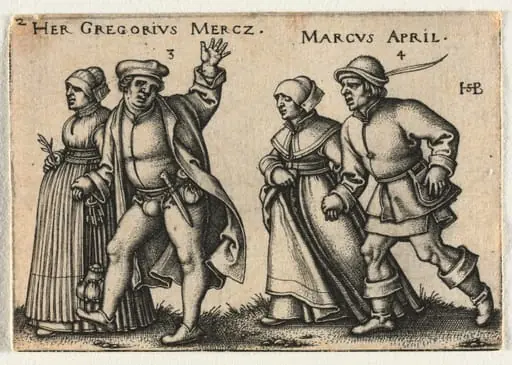 The Peasant Wedding or the Twelve Months: 3-Her Gregorius Mercz 4-Marcus April
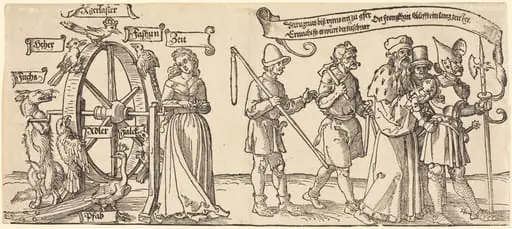 Time and a Fox Turning the Wheel of Fortune with People of all Ranks to the Right