Artwork
The Peasant Wedding or the Twelve Months: No. 7
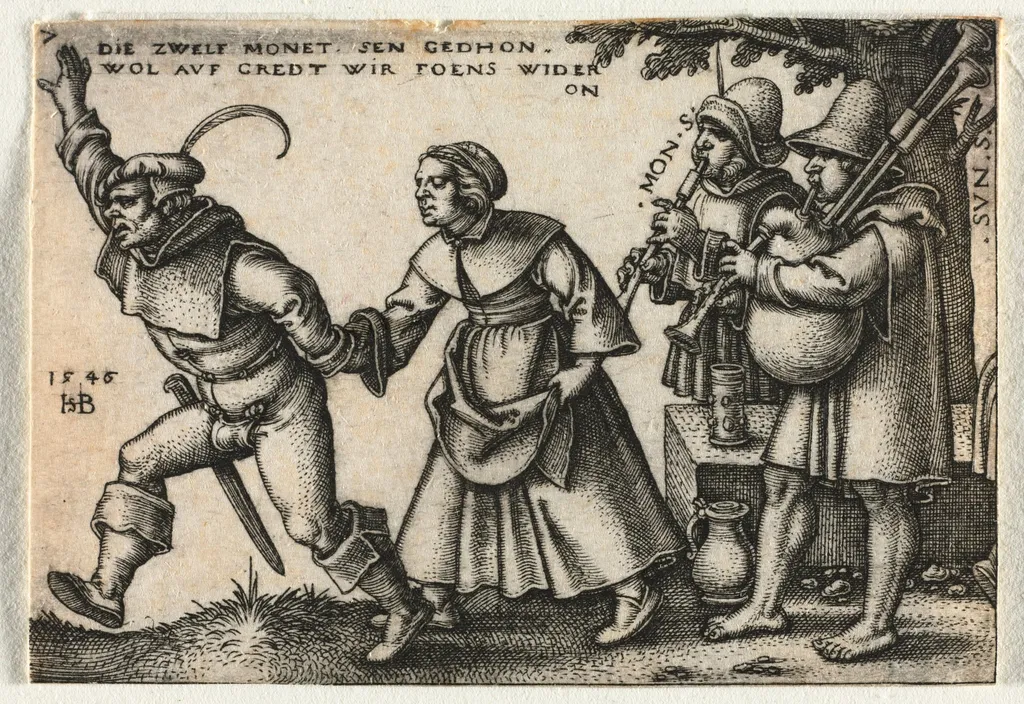
The Peasant Wedding or the Twelve Months: No. 7 is a print by the Renaissance artist Sebald Beham. It dates from 1546 and is held in the collection of the Cleveland Museum of Art.
About this work
The text at the top is German and might mean this is part of a series about months or seasons.
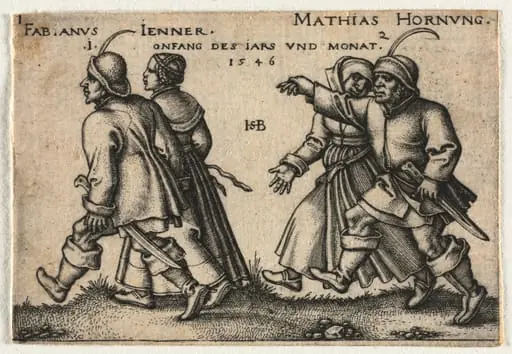
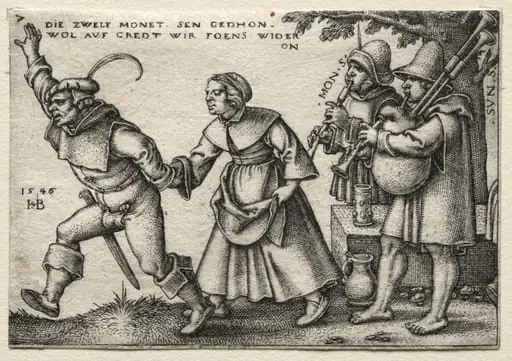
This print shows five rough-looking people in a messy scene. One woman in a long dress stands in the middle, grabbing a man’s arm. Two soldiers with swords and helmets push her. Another man plays a bagpipe, and a third holds a jug. The ground is dirt, and the whole thing looks like a fight.
The text at the top is German and might mean this is part of a series about months or seasons. The artist drew it in 1546.
Look up Renaissance next to see how this style shaped art.
Overview
Created in 1546 by the German printmaker Hans Sebald Beham, this small-scale engraving forms the seventh entry in his series on the twelve months. Executed in the characteristic fine detail of the “Little Masters,” the image records a bustling rural gathering that likely represents a peasant wedding.
Subject & Meaning
The composition depicts a chaotic outdoor scene on a dirt floor, populated by five roughly rendered figures. A woman in a long dress seizes a man's arm while two armed soldiers press forward, a bagpipe player provides music, and another figure carries a jug. The disorder suggests a festive, perhaps unruly, celebration typical of agrarian customs.
Technique & Style
Beham employed the precise line work of engraving to achieve intricate textures within a compact format. The figures are rendered with exaggerated gestures and simplified anatomy, a hallmark of his approach to narrative prints. The tight composition and dense detailing reflect the meticulous craftsmanship associated with the Little Masters of the mid‑16th century.
History & Provenance
Born in Nuremberg, Beham later worked in Frankfurt, where he produced the Twelve Months series for a market interested in portable, affordable artworks. The print bears a German heading that identifies its place within the monthly series, confirming its original intent as part of a sequential visual calendar.
Context
During the Renaissance, German printmakers increasingly catered to a growing middle class by creating small, highly finished works that could be collected and displayed in domestic settings. Beham’s series aligns with this trend, offering a visual record of seasonal life that combined genre observation with decorative appeal.
Artist & collection
Artist
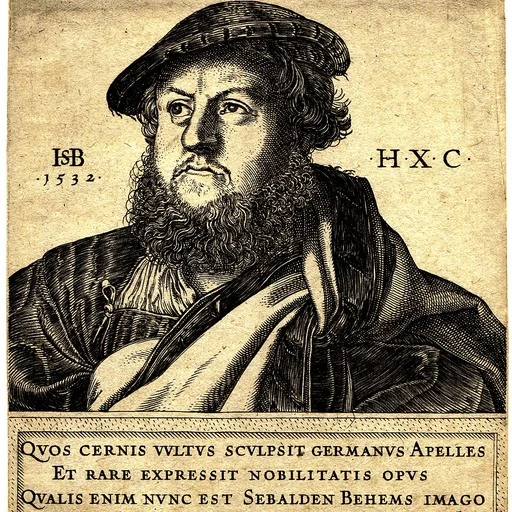
Sebald Beham (1500–1550) was a German painter and printmaker, mainly known for his very small engravings.


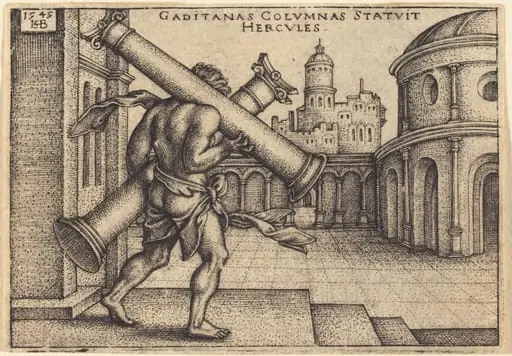
 The Peasant Wedding or the Twelve Months
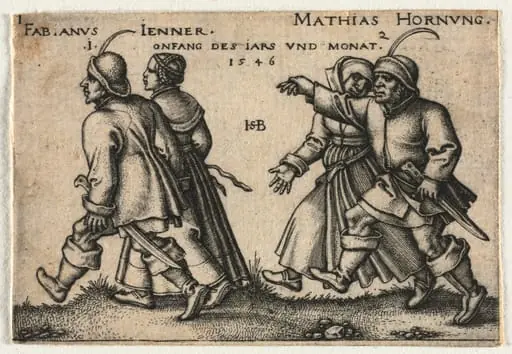 The Peasant Wedding or the Twelve Months: 1-Fabianus Jenner 2-Mathias Hornung
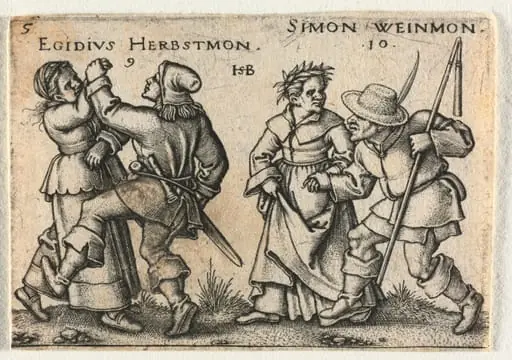 The Peasant Wedding or the Twelve Months: 9-Egidius Herbstmon 10-Simon Weinmon
 The Twelve Months: The Year's End
 The Peasant Wedding or the Twelve Months: No. 8
 Peasant and His Wife
 The Peasant Wedding or the Twelve Months: 11-Martinus Wintermon 12-Nicolaus Cristmon
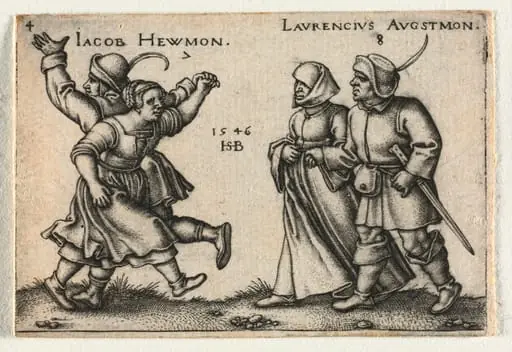 The Peasant Wedding or the Twelve Months: 7 Jacob Hewmon 8-Laurencius Augstmon
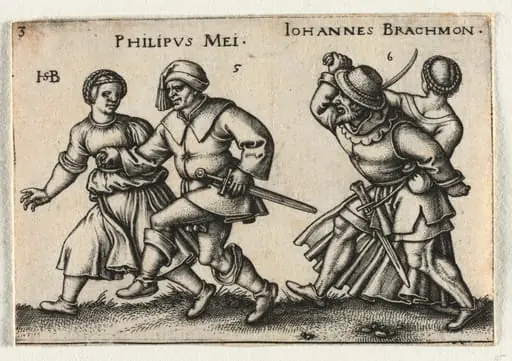 The Peasant Wedding or the Twelve Months: 5-Philipus Mei 6-Johannes Brachmon
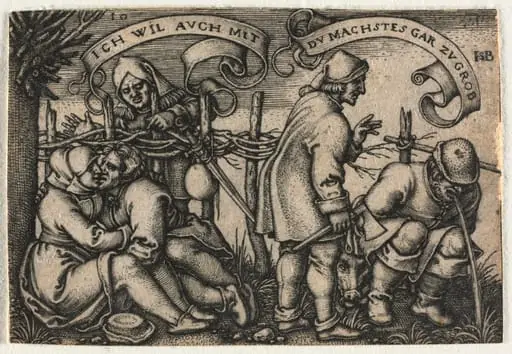 The Peasant Wedding or the Twelve Months: No. 10
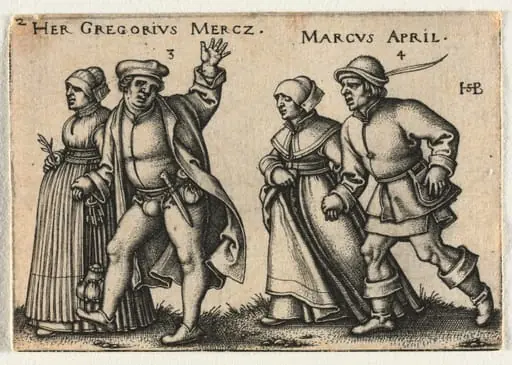 The Peasant Wedding or the Twelve Months: 3-Her Gregorius Mercz 4-Marcus April