Artwork
May and June
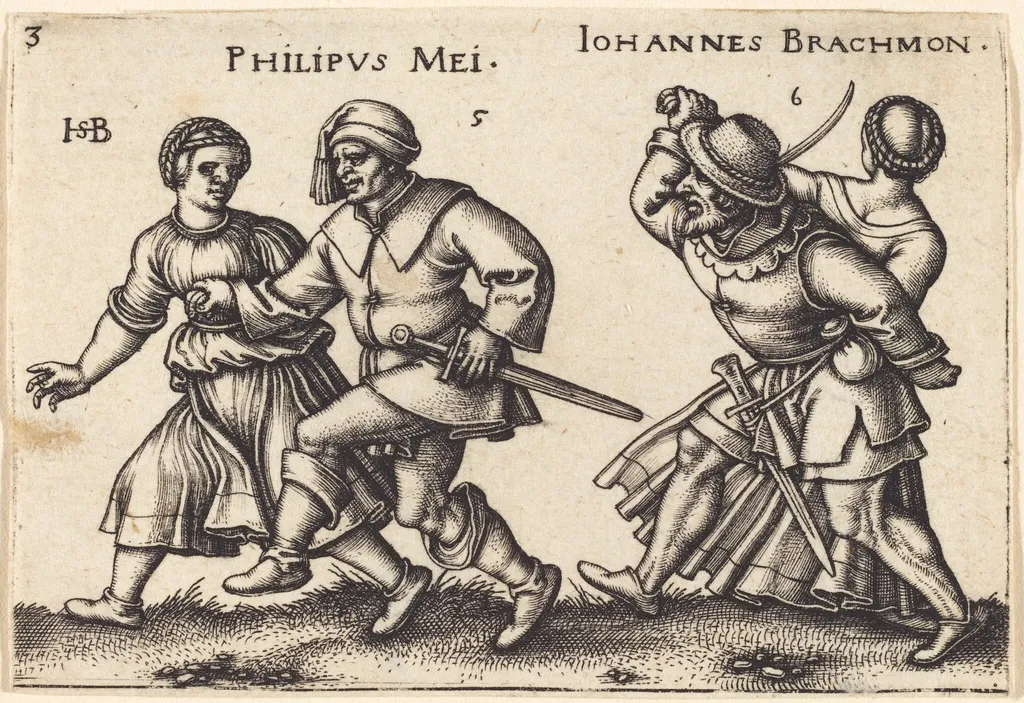
May and June is an ink print by the Renaissance artist Sebald Beham. It dates from 1546 and is held in the collection of the National Gallery of Art.
About this work
Overview
Sebald Beham’s 1546 engraving *May and June* exemplifies the compact, highly detailed prints for which the German “Little Masters” are known. Executed in black‑and‑white, the work measures only a few inches across yet contains a densely rendered scene populated by four figures engaged in a dramatic encounter.
Subject & Meaning
The composition presents two women and two armored men in a moment of conflict. On the left, a woman supports a kneeling, armored figure, while on the right a fallen soldier lies helmetless beneath a sword‑wielding woman. The tension of the tableau suggests a narrative of struggle or capture, though no explicit story is provided, leaving interpretation open.
Technique & Style
Beham employs fine, incisive lines to achieve a high degree of texture and definition within the limited scale of the print. The engraving’s crisp hatching models the sheen of armor and the folds of clothing, while the careful delineation of facial expressions enhances the immediacy of the scene.
History & Provenance
Part of Beham’s prolific output of roughly 252 engravings, *May and June* was produced after his relocation from Nuremberg to Frankfurt, where he continued to work for a courtly clientele. The inscription of the names “Philippus Mei” and “Johannes Brachmon” appears above the figures, though their identities remain uncertain, and no documented ownership trail precedes its appearance in modern collections.
Artist & collection
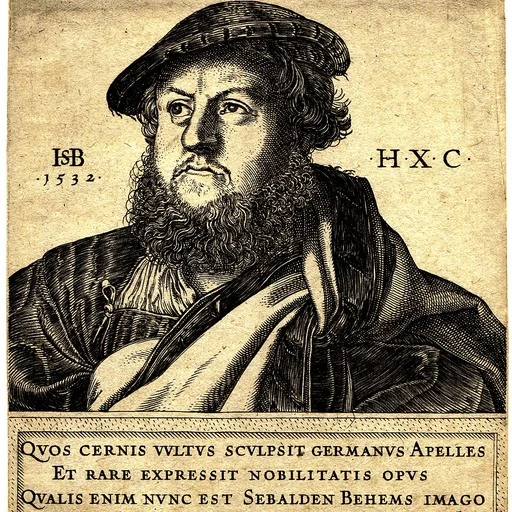
Artist
Sebald Beham (1500–1550) was a German painter and printmaker, mainly known for his very small engravings.


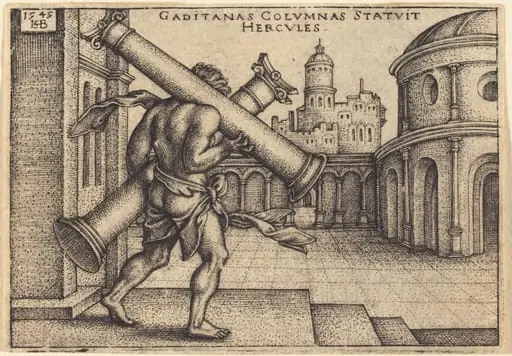
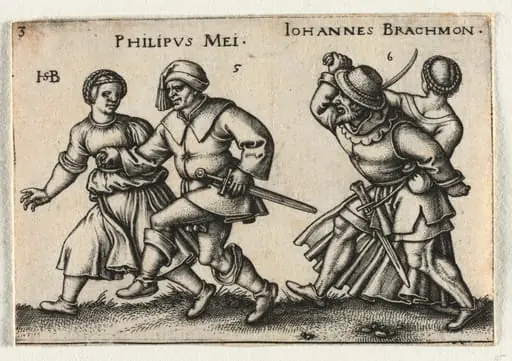 The Peasant Wedding or the Twelve Months: 5-Philipus Mei 6-Johannes Brachmon
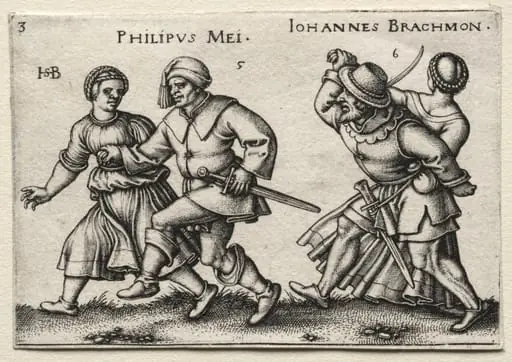 The Village Wedding: Philipus Mei
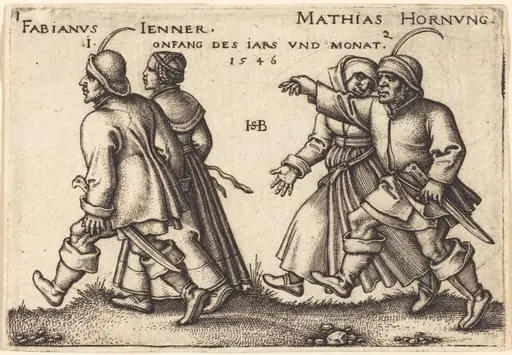 January and February
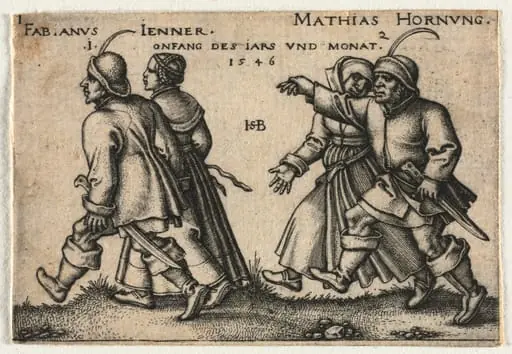 The Peasant Wedding or the Twelve Months: 1-Fabianus Jenner 2-Mathias Hornung
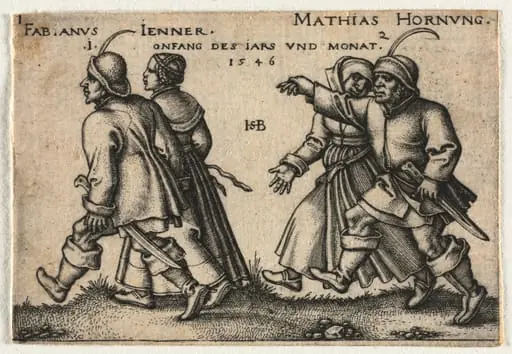 The Peasant Wedding or the Twelve Months
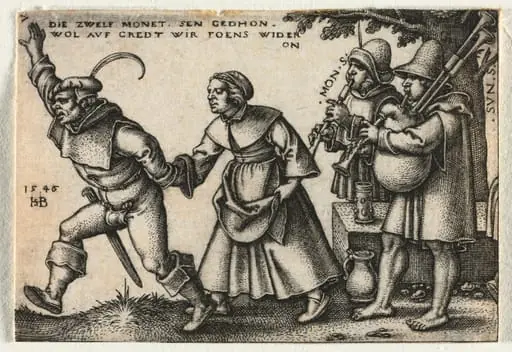 The Peasant Wedding or the Twelve Months: No. 7
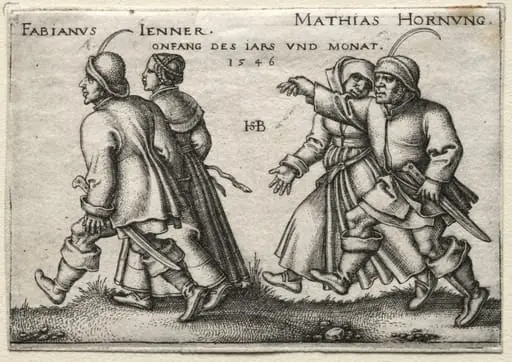 The Village Wedding: Fabianus Jenner
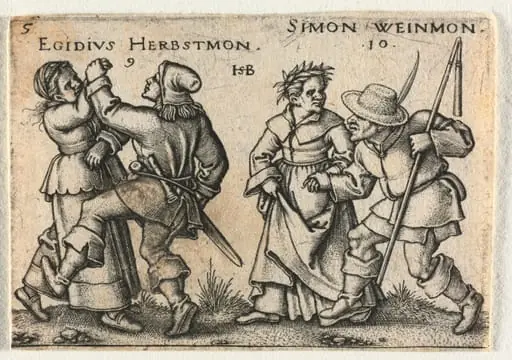 The Peasant Wedding or the Twelve Months: 9-Egidius Herbstmon 10-Simon Weinmon
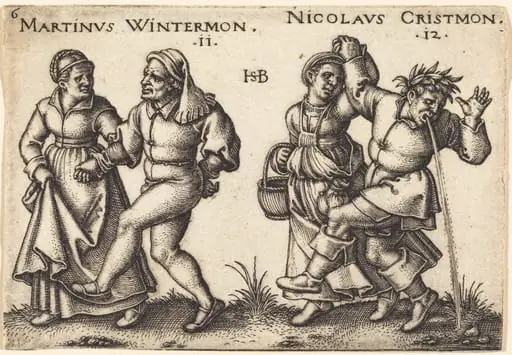 November and December