Artwork
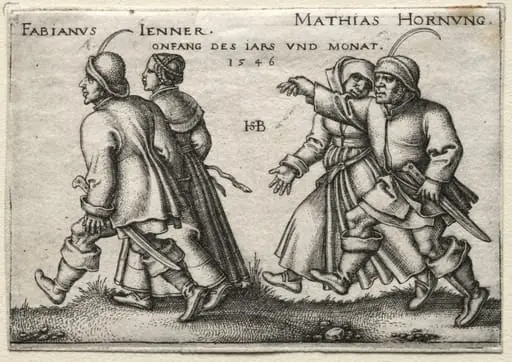
The Peasant Wedding or the Twelve Months: 1-Fabianus Jenner 2-Mathias Hornung
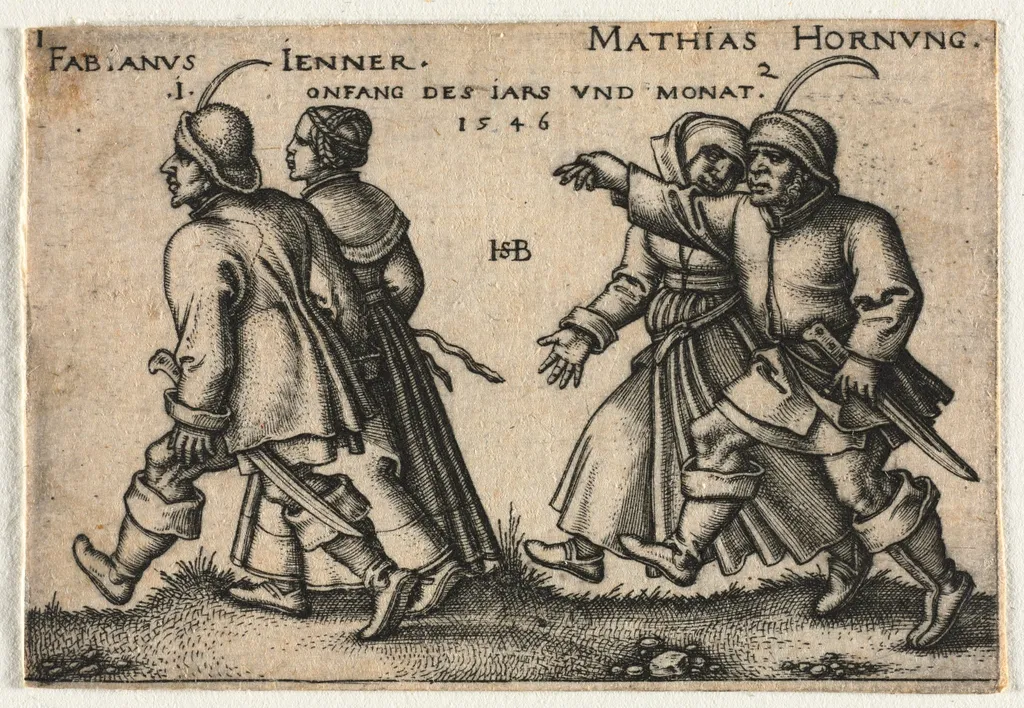
The Peasant Wedding or the Twelve Months: 1-Fabianus Jenner 2-Mathias Hornung is a print by the Renaissance artist Sebald Beham. It dates from 1546 and is held in the collection of the Cleveland Museum of Art.
About this work
The text at the top names two people—Fabianus Jenner and Mathias Hornung—and the date 1546.
This etching shows four people in a rough, grassy area. Two men in armor stand with their backs to us, holding swords. One man in old-fashioned clothes is reaching out toward a woman who’s falling or kneeling. The woman wears a headscarf and a loose dress.
The text at the top names two people—Fabianus Jenner and Mathias Hornung—and the date 1546. This looks like a scene from a story or calendar, not a real event.
Next, check out The Cleveland Museum of Art to see more prints like this.
Overview
Hans Sebald Beham’s 1546 print, titled *The Peasant Wedding* (also known as *The Twelve Months*), presents a compact, intricately rendered scene of a countryside marriage ceremony. Executed as an etching, the work measures only a few inches across, reflecting the miniature scale for which Beham and his contemporaries were celebrated.
Subject & Meaning
The composition gathers a small group of figures on a grassy patch: two armored men stand with swords, a man in plain dress reaches toward a kneeling woman wearing a headscarf, and other participants attend the nuptial ritual. The inclusion of the names Fabianus Jenner and Mathias Hornung, together with the date, suggests the image may have functioned as a commemorative or calendar illustration rather than a literal record of a specific wedding.
Technique & Style
Beham employed fine line work characteristic of the German “Little Masters,” achieving a high level of detail within a limited space. The etching’s crisp outlines and delicate cross‑hatching convey texture in clothing, armor, and foliage, while the tight composition emphasizes the intimacy of the scene.
History & Provenance
Created in the mid‑sixteenth century, the print entered the collection of the Cleveland Museum of Art, where it is currently held. Its attribution to Beham aligns with his prolific output of prints that circulated widely across Europe during his lifetime.
Context
During the 1540s, German printmakers frequently produced small, narrative images for private collectors and for use in almanacs or devotional books. Beham’s work fits within this tradition, offering both a visual record of peasant customs and a decorative element for domestic settings.
Artist & collection
Artist
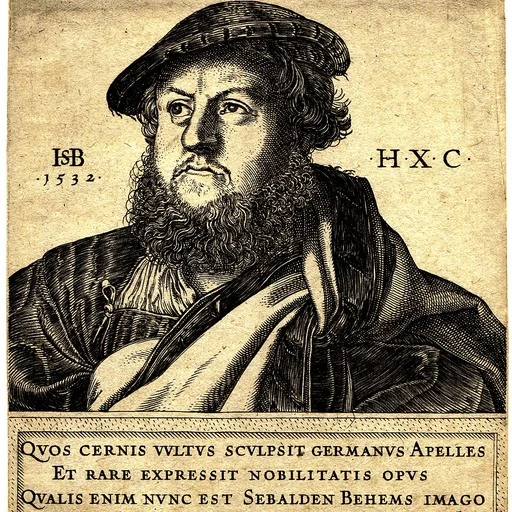
Sebald Beham (1500–1550) was a German painter and printmaker, mainly known for his very small engravings.


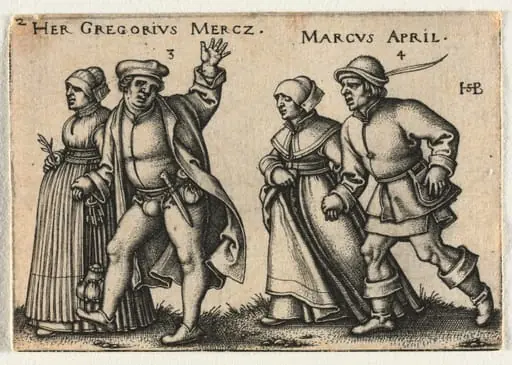 The Peasant Wedding or the Twelve Months: 3-Her Gregorius Mercz 4-Marcus April
 The Village Wedding: Fabianus Jenner
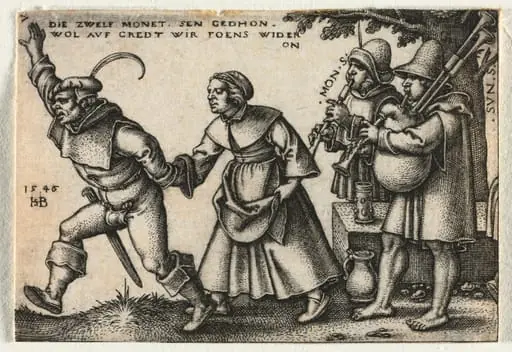 The Peasant Wedding or the Twelve Months: No. 7
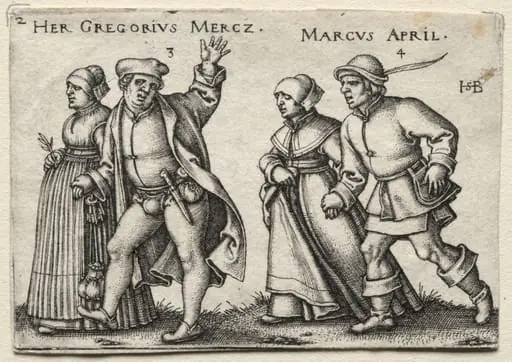 The Village Wedding: Her Gregorius Mercz
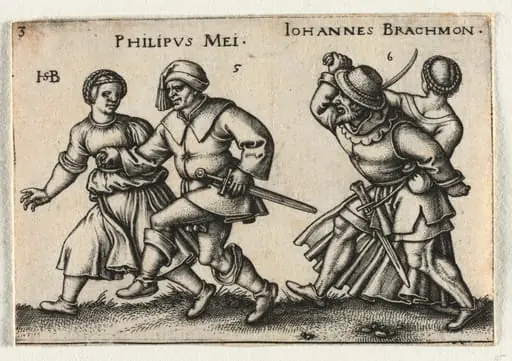 The Peasant Wedding or the Twelve Months: 5-Philipus Mei 6-Johannes Brachmon
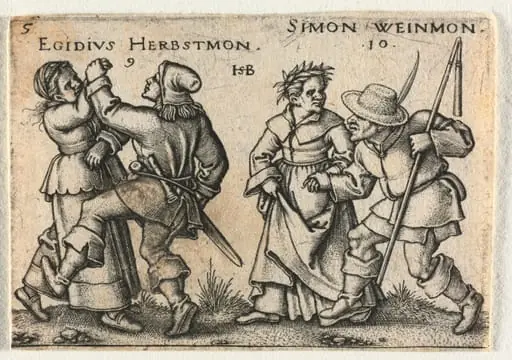 The Peasant Wedding or the Twelve Months: 9-Egidius Herbstmon 10-Simon Weinmon
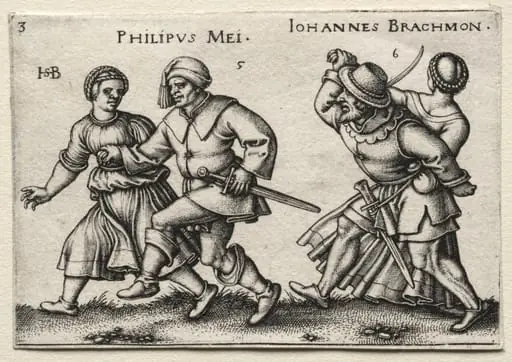 The Village Wedding: Philipus Mei
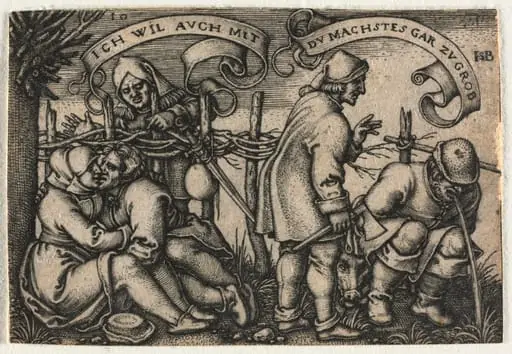 The Peasant Wedding or the Twelve Months: No. 10
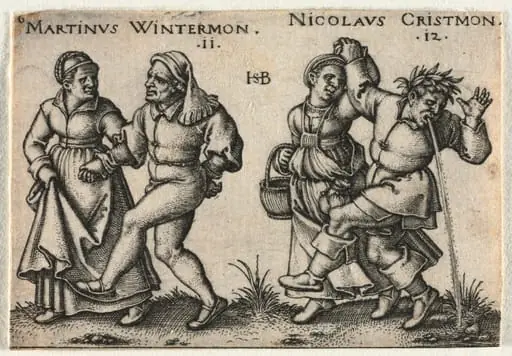 The Peasant Wedding or the Twelve Months: 11-Martinus Wintermon 12-Nicolaus Cristmon
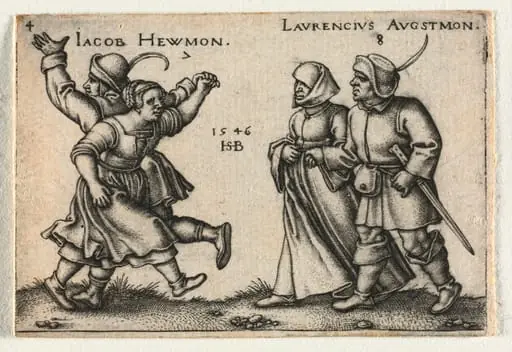 The Peasant Wedding or the Twelve Months: 7 Jacob Hewmon 8-Laurencius Augstmon
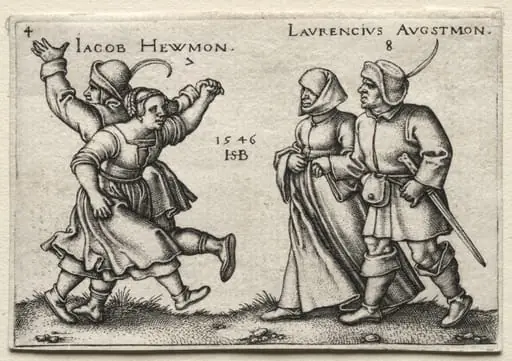 The Village Wedding: Jacob Hewmon