Artwork
Mercury
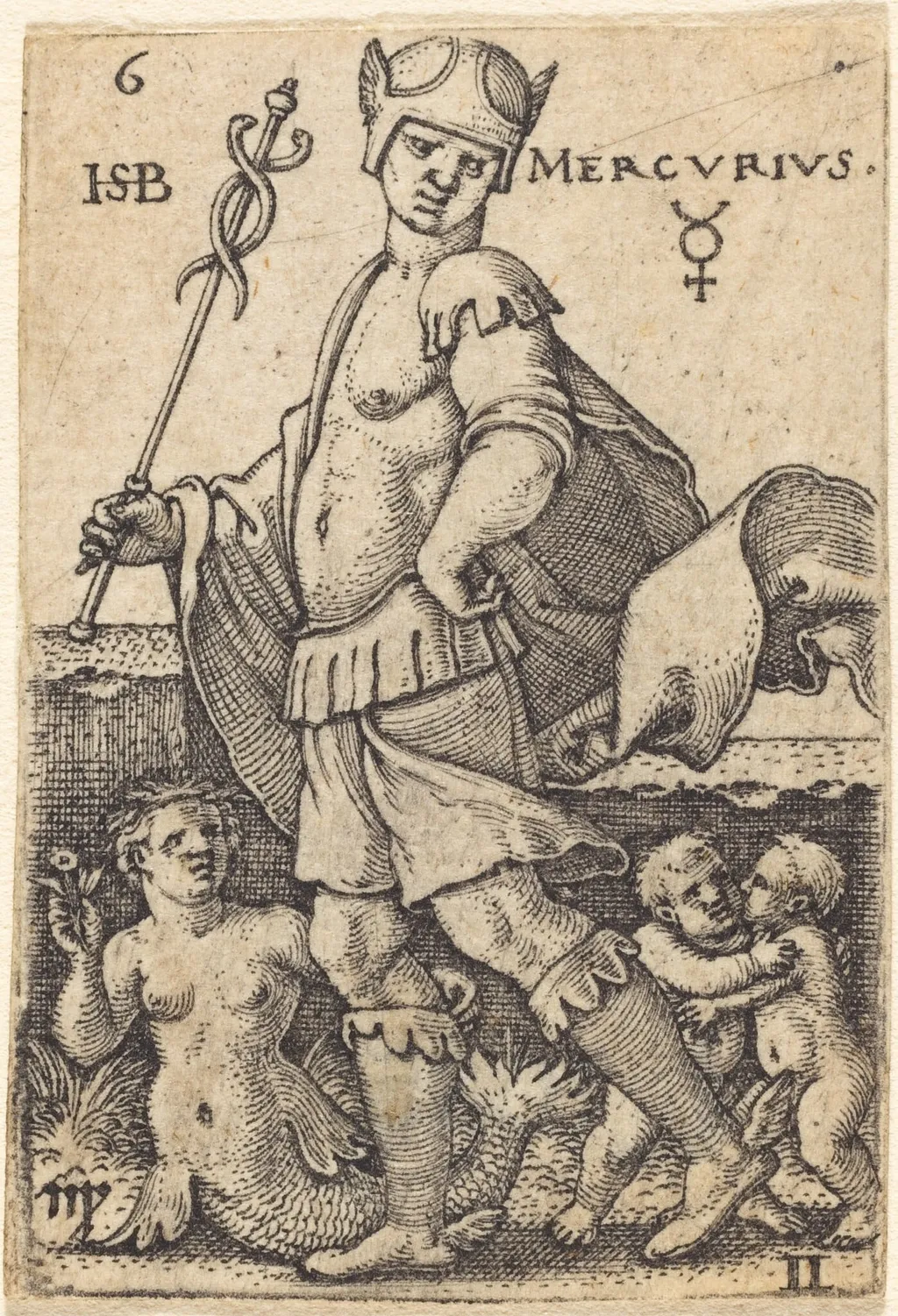
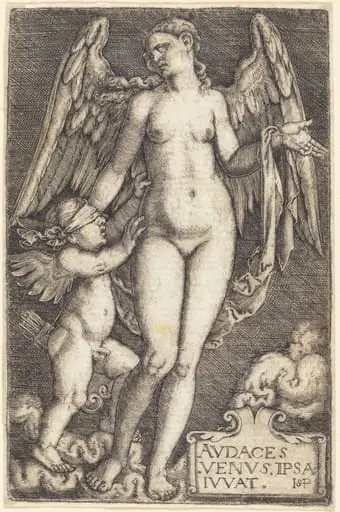
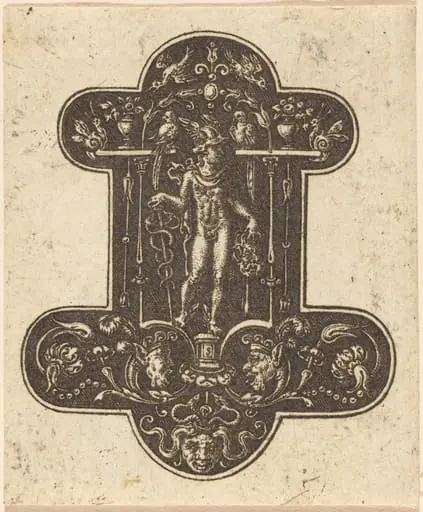
Mercury is an ink print by the Renaissance artist Sebald Beham. It dates from 1539 and is held in the collection of the National Gallery of Art.
About this work
Overview
Sebald Beham’s 1539 engraving titled *Mercury* is a small-scale, black‑and‑white print characteristic of the German “Little Masters.” Executed in fine lines on a metal plate, the work depicts the Roman deity Mercury in a compact, highly detailed composition.
Subject & Meaning
The figure is a muscular Mercury, identifiable by his winged hat and the caduceus—a staff entwined with a serpent. He stands on three diminutive, winged infants and carries a bag of coins, alluding to his roles as patron of commerce, travelers, and thieves. A hidden tiny figure among the foliage may suggest the chaos or mischief under his control.
Technique & Style
Beham employed the engraving process, incising sharp, precise lines into a copper plate to achieve intricate textures and fine detail. The print’s miniature scale and meticulous rendering reflect the “Little Masters” emphasis on elaborate, densely composed images within a limited surface.
History & Provenance
Created while Beham was active in Nuremberg, the print belongs to his early period before his later move to Frankfurt. As part of his extensive output of engravings, etchings, and woodcuts, *Mercury* exemplifies his reputation as one of the foremost German printmakers following Albrecht Dürer.
Context
The work aligns with the 16th‑century Northern Renaissance interest in classical mythology, merging scholarly subjects with the technical virtuosity of printmaking. Its compact format made such images accessible to a broader audience, serving both decorative and educational purposes.
Artist & collection
Artist
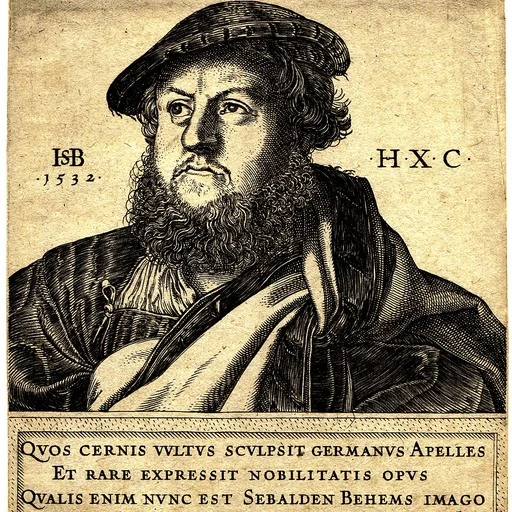
Sebald Beham (1500–1550) was a German painter and printmaker, mainly known for his very small engravings.