Artwork
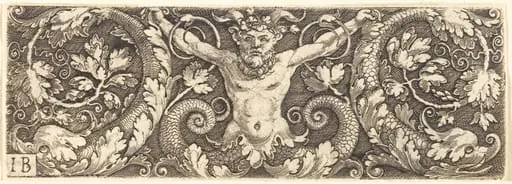
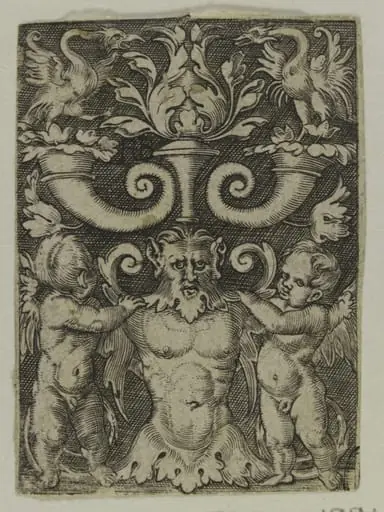
Ornament with Male Half Figure Between Two Genii
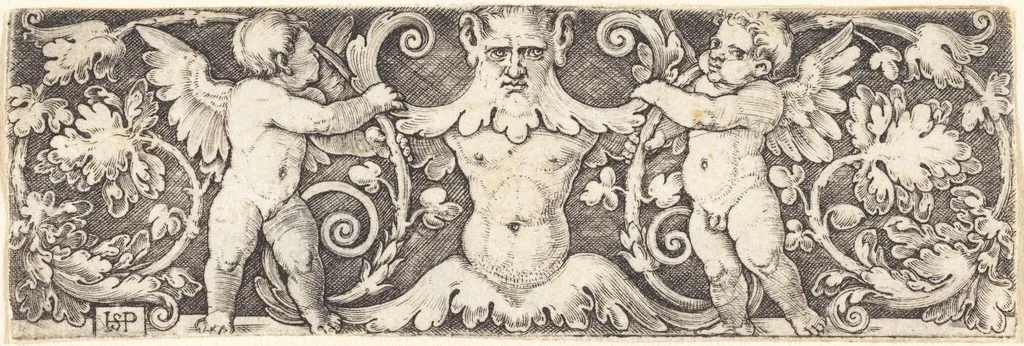
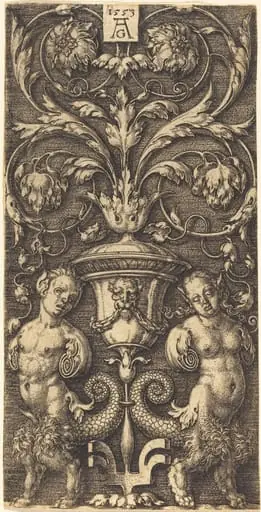
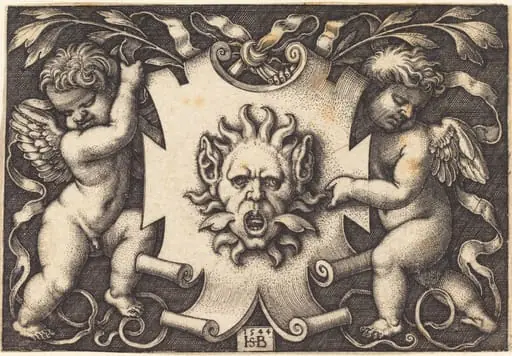
Ornament with Male Half Figure Between Two Genii is an ink print by the Renaissance artist Sebald Beham. It dates from 1528 and is held in the collection of the National Gallery of Art.
About this work
Overview
Created around 1528 by Sebald Beham, this engraving is a small-scale work in black ink on paper, typical of the Northern Renaissance print tradition.
Created around 1528 by Sebald Beham, this engraving is a small-scale work in black ink on paper, typical of the Northern Renaissance print tradition. Beham, a Nuremberg-based artist later active in Frankfurt, was part of a group known as the Little Masters for their precision in miniature formats. The piece functions as a decorative motif rather than a narrative scene, emphasizing intricate detail over storytelling.
Subject & Meaning
At the center stands a bearded male figure, depicted from the waist up, holding a scroll—possibly symbolizing knowledge or authority. Flanking him are two hybrid genii, part-human, part-animal, with wings and elongated limbs, reaching toward the central figure. These figures likely represent protective or intermediary spirits, common in Renaissance emblematic traditions, suggesting a symbolic rather than literal interpretation.
Technique & Style
Beham employed fine, controlled engraving lines to render dense, swirling ornamentation. The background is filled with interlaced foliage, scrolls, and abstract forms that blur organic and fantastical elements. The tight composition and minute detail reflect his skill in metal engraving, where each line was incised by hand into copper, requiring exceptional precision to achieve such complexity in a small format.
History & Provenance
The work originates from Beham’s early period in Nuremberg, where he produced numerous ornamental prints for collectors and artisans. Though no specific early ownership records are documented, such engravings were widely circulated as models for decorative arts, including goldsmithing and textile design. The print survives in multiple impressions across European collections, indicating its popularity among Renaissance patrons.
Context
In early 16th-century Germany, ornamental prints like this served both aesthetic and functional roles, informing craftsmen in metalwork, woodcarving, and manuscript illumination. Beham’s work responded to humanist interests in classical motifs and allegory, while also reflecting the era’s fascination with hybrid creatures and symbolic systems. His prints bridged fine art and applied design, circulating beyond elite circles.
Legacy
Beham’s engravings influenced later generations of Northern artists and designers through their technical refinement and imaginative ornamentation. Though less celebrated than contemporaries like Dürer, his contributions to the genre of miniature printmaking helped standardize the use of intricate, symbolic motifs in decorative arts. This piece remains a representative example of how print culture expanded artistic ideas beyond painting and sculpture.
Artist & collection
Artist
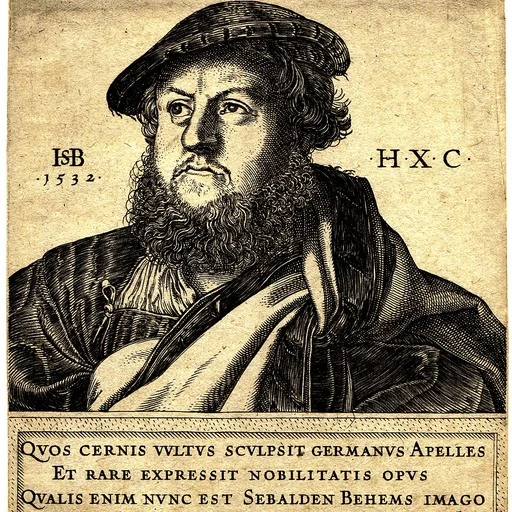
Sebald Beham (1500–1550) was a German painter and printmaker, mainly known for his very small engravings.