Artwork
Peasant Woman at Market
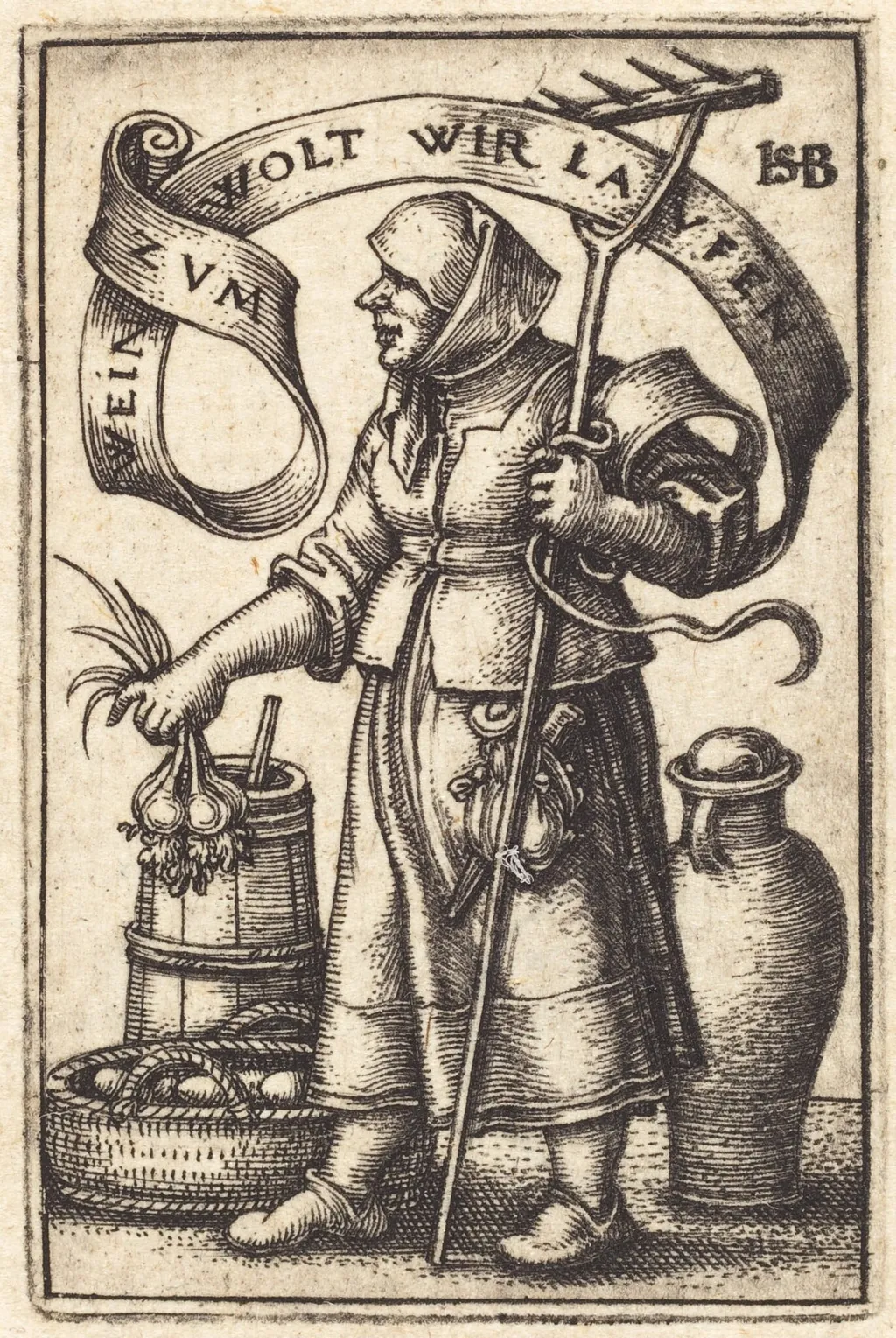
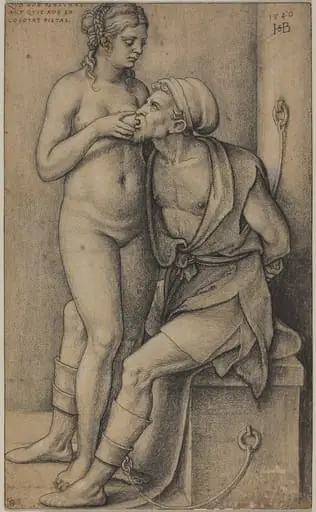
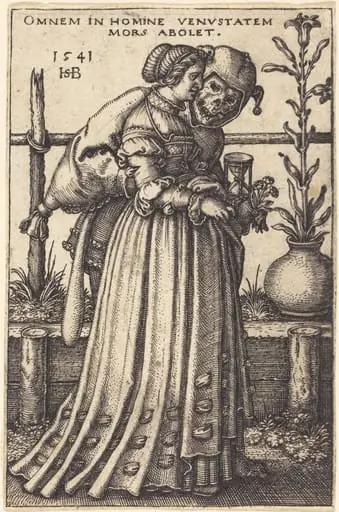
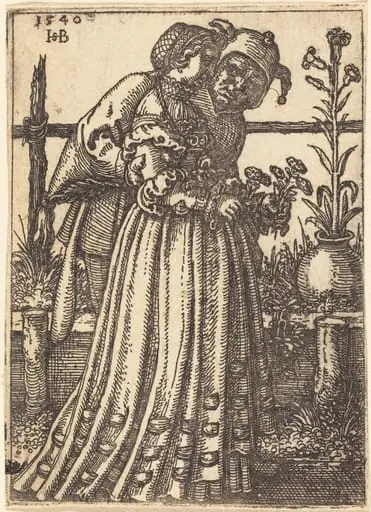
Peasant Woman at Market is an ink print by the Renaissance artist Sebald Beham. It dates from 1542 and is held in the collection of the National Gallery of Art.
About this work
Overview
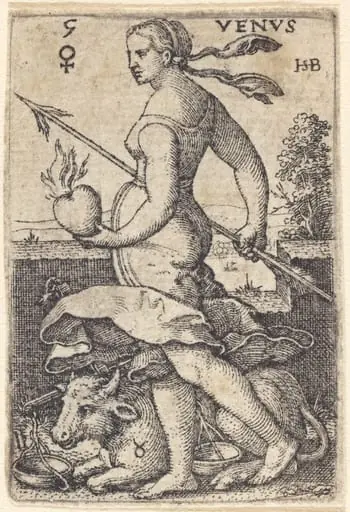
Peasant Woman at Market is an engraving created by Sebald Beham around 1542. It exemplifies the artist's skill in producing small-scale, detailed prints characteristic of the 'Little Masters,' a group of German printmakers active in the 16th century.
Subject & Meaning
The engraving depicts a peasant woman carrying a basket of onions and a bundle of sticks, with a barrel and jug behind her. The banner draped over her shoulder bears illegible text, adding to the enigmatic nature of the scene. Her serious expression and practical attire suggest a focus on everyday, laborious life.
Technique & Style
The print showcases Beham's expertise in engraving, a technique involving etching lines into metal plates. The resulting image is a detailed, black-and-white representation of the subject, highlighting Beham's ability to achieve intricate linework and texture.
History & Provenance
Sebald Beham worked primarily in Nuremberg before relocating to Frankfurt. As one of 252 engravings he produced, Peasant Woman at Market reflects his consistent output of modestly scaled, detailed prints during his career in the first half of the 16th century.
Artist & collection
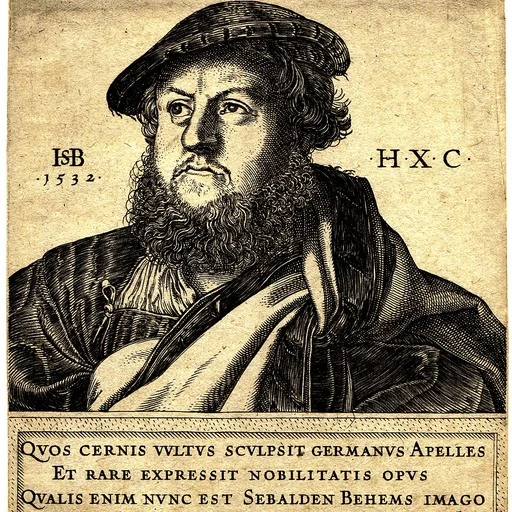
Artist
Sebald Beham (1500–1550) was a German painter and printmaker, mainly known for his very small engravings.