Artwork
Fourth Wise Virgin
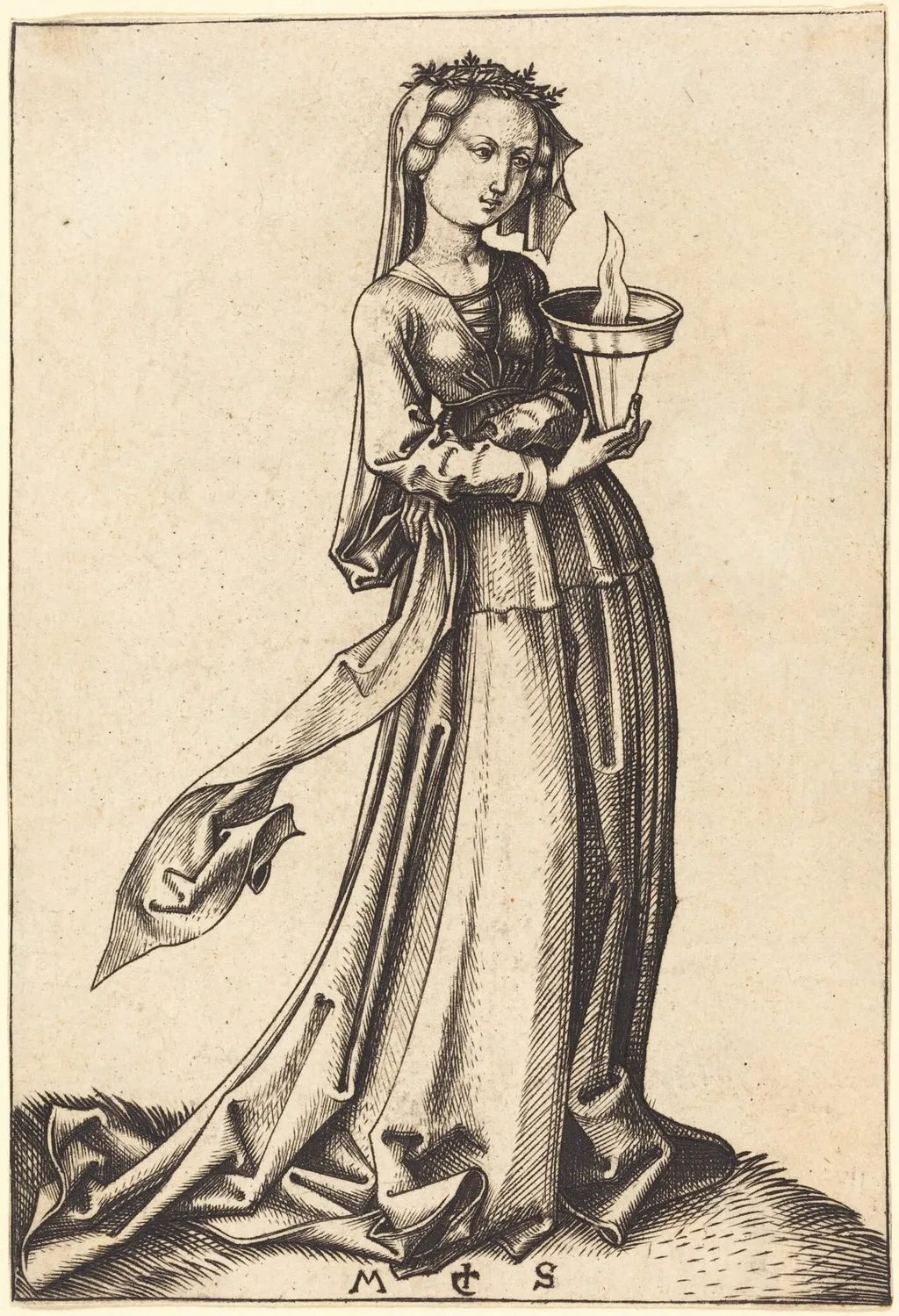
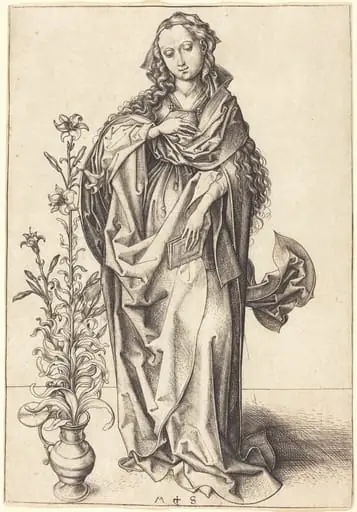
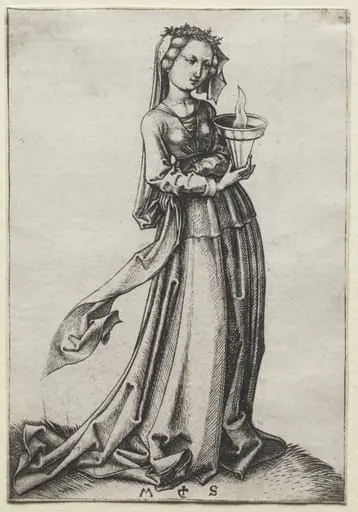
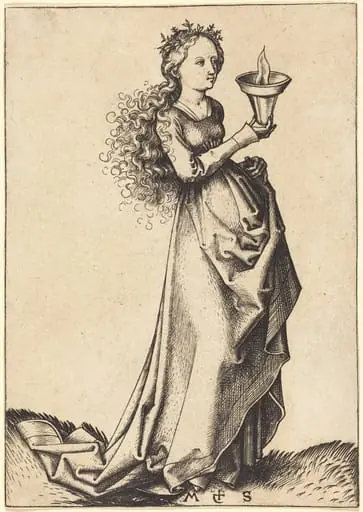
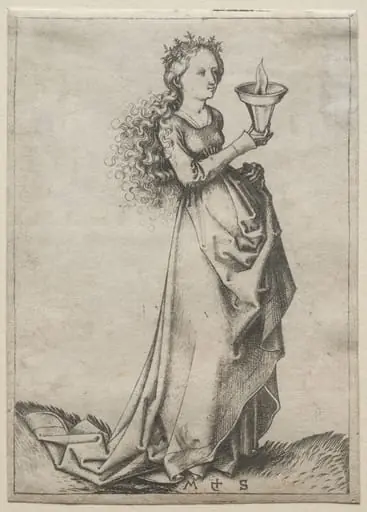
Fourth Wise Virgin is an ink print by the Renaissance artist Martin Schongauer. It dates from 1490 and is held in the collection of the National Gallery of Art.
About this work
Overview
Executed in copperplate, the work exemplifies Schongauer’s technical precision and his role as a leading printmaker in the Upper Rhenish region.
Created around 1490, this engraving by Martin Schongauer is one of a series illustrating the biblical Parable of the Ten Virgins. Executed in copperplate, the work exemplifies Schongauer’s technical precision and his role as a leading printmaker in the Upper Rhenish region. Unlike paintings, engravings allowed for wider distribution, making his imagery accessible beyond local audiences. The piece stands as a key example of late 15th-century Northern European print culture.
Subject & Meaning
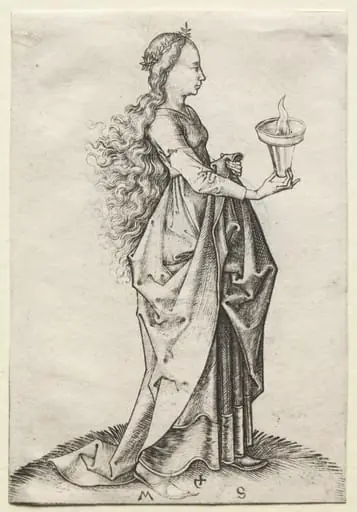
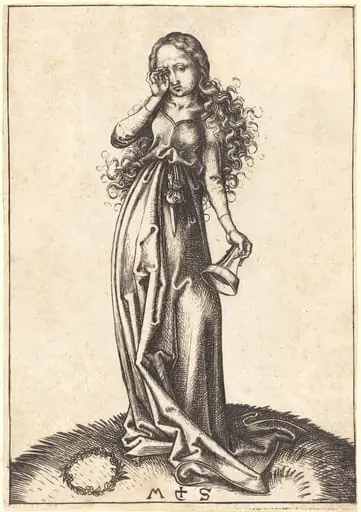
The figure represents one of the wise virgins from Matthew 25:1–13, who prepared for the bridegroom’s arrival by keeping their lamps lit. Her stillness and focused posture convey readiness and spiritual vigilance. The lit candle, held securely in a bowl, symbolizes faith and divine preparedness. The wreath on her head suggests purity and devotion, reinforcing the moral lesson of the parable through quiet, dignified presence rather than dramatic action.
Technique & Style
Schongauer employed fine, controlled lines to model form and texture, creating subtle gradations of light and shadow across the virgin’s robe and hair. The fabric’s folds are rendered with rhythmic, interwoven strokes that suggest weight and movement. Background elements are minimized, focusing attention on the figure’s calm demeanor. The engraving’s clarity and detail reflect mastery of metalplate carving, where each line was incised by hand to achieve tonal depth without wash or color.
History & Provenance
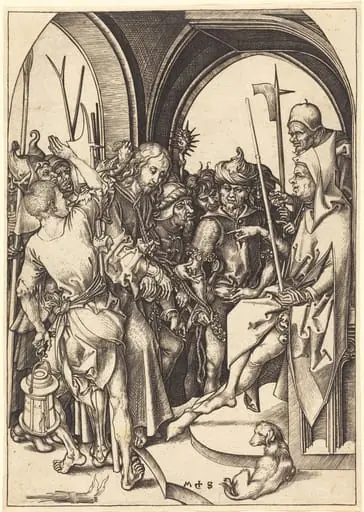
The engraving was produced in Colmar, where Schongauer maintained a workshop and trained apprentices. Though no early ownership records survive for this specific impression, similar prints from his series circulated widely across Germany and the Low Countries. Copies and studies by later artists, including Albrecht Dürer, attest to its influence. The work remains part of the broader legacy of Schongauer’s printed oeuvre, preserved in major European collections.
Context
In late 15th-century Europe, religious themes dominated printmaking, serving both devotional and didactic purposes. The Parable of the Wise and Foolish Virgins was a popular subject in sermons and illuminated manuscripts. Schongauer’s version, like others of its time, responded to a culture emphasizing personal piety and moral readiness. His engravings bridged the gap between ecclesiastical instruction and lay devotion, reaching audiences beyond church walls.
Legacy
Schongauer’s engravings, including this one, became foundational studies for younger Northern artists. Albrecht Dürer, among others, copied his compositions to refine draftsmanship and learn tonal modeling. His technical innovations in line work influenced the development of printmaking as a respected art form. Though his paintings are fewer, his engraved works ensured his reputation endured well into the 16th century, shaping the visual language of German Renaissance art.
Artist & collection

Artist
Martin Schongauer, also known as Martin Schön or Hübsch Martin by his contemporaries, was an Alsatian engraver and painter.