Artwork
The Lady and the Fool
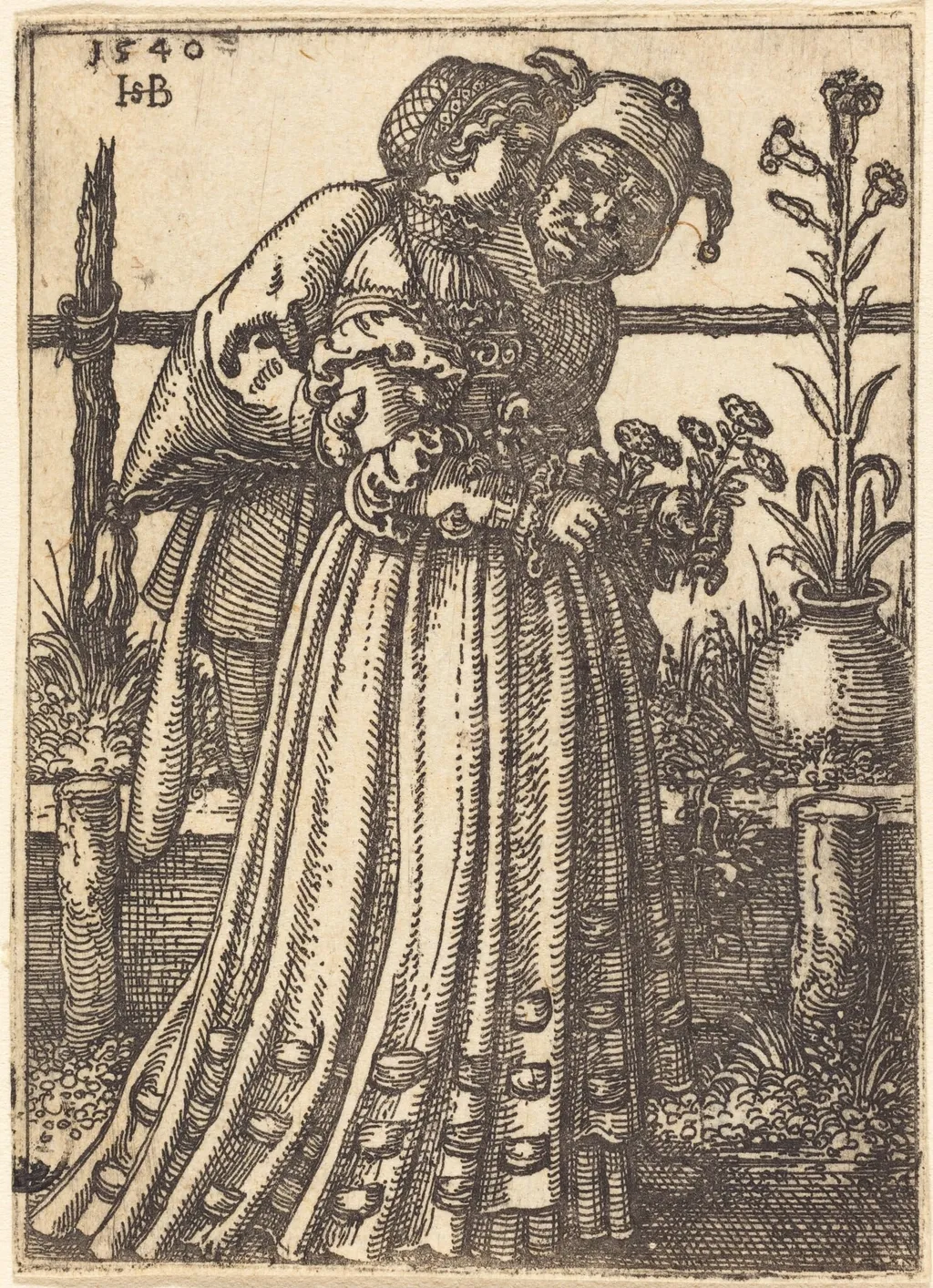
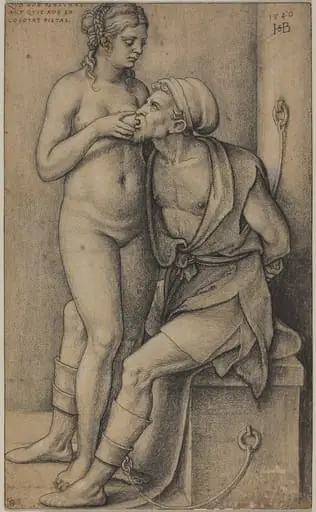
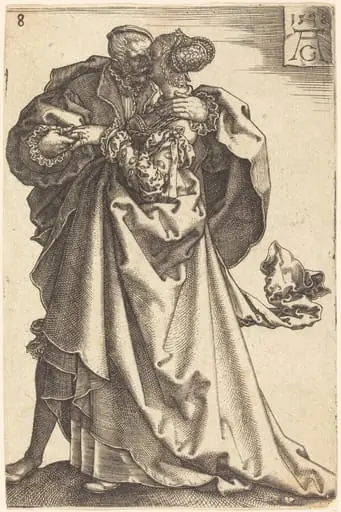
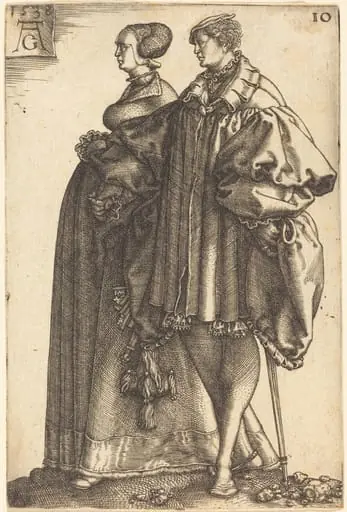
The Lady and the Fool is an ink print by the Renaissance artist Sebald Beham. It dates from 1540 and is held in the collection of the National Gallery of Art.
About this work
Overview
Executed in black ink on paper, the work belongs to a series of small-scale prints Beham produced during his career, primarily in Nuremberg and later Frankfurt.
Created around 1540 by Sebald Beham, *The Lady and the Fool* is an etching that exemplifies the precision and intimacy characteristic of the German Little Masters. Executed in black ink on paper, the work belongs to a series of small-scale prints Beham produced during his career, primarily in Nuremberg and later Frankfurt. Unlike paintings, etchings rely on incised metal plates to transfer fine lines, allowing for detailed imagery within a modest format.
Subject & Meaning
The scene depicts a poised woman in an elaborate gown, holding a fan, alongside a jester leaning against a tree. Their juxtaposition suggests a contrast between social decorum and playful irreverence. The presence of a birdhouse, potted plant, and tall grass situates the figures in a private, garden-like setting, possibly evoking themes of courtly life, fleeting amusement, or the tension between restraint and freedom.
Technique & Style
Beham employed etching to achieve fine, controlled lines, rendering textures with remarkable clarity—the folds of the woman’s dress, the bells on the jester’s cap, and the delicate blades of grass are all meticulously defined. The absence of color emphasizes tonal contrast and linear precision, hallmarks of his approach. His technique prioritizes detail over scale, transforming the small format into a space rich with visual narrative.
History & Provenance
Sebald Beham, active in the early 16th century, was among the first German artists to focus extensively on small-format prints. *The Lady and the Fool* is one of approximately 18 etchings he produced, reflecting his shift from painting to printmaking. While its early ownership is undocumented, the work survives as part of a broader corpus of Northern Renaissance prints circulated among collectors and artisans of the period.
Context
In mid-16th-century Nuremberg, printmaking flourished as a medium for both artistic expression and commercial distribution. Beham’s work emerged alongside humanist interests in individual character and social observation. His depictions of courtly and folk figures, like the jester and lady, reflect a fascination with social roles and the subtle dynamics of everyday life, distinct from religious or mythological themes common in larger works.
Legacy
Beham’s etchings, including *The Lady and the Fool*, influenced later generations of Northern European printmakers through their technical discipline and psychological nuance. Though not widely known today, his small-scale compositions helped establish printmaking as a legitimate vehicle for nuanced storytelling, bridging the gap between artisanal craft and artistic inquiry in the Renaissance.
Artist & collection
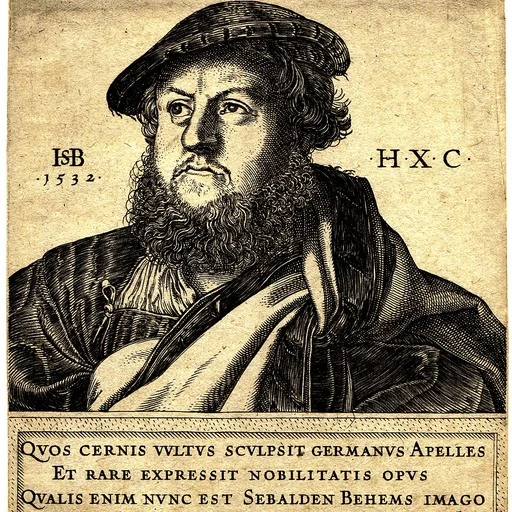
Artist
Sebald Beham (1500–1550) was a German painter and printmaker, mainly known for his very small engravings.