Artwork
Saint Philip
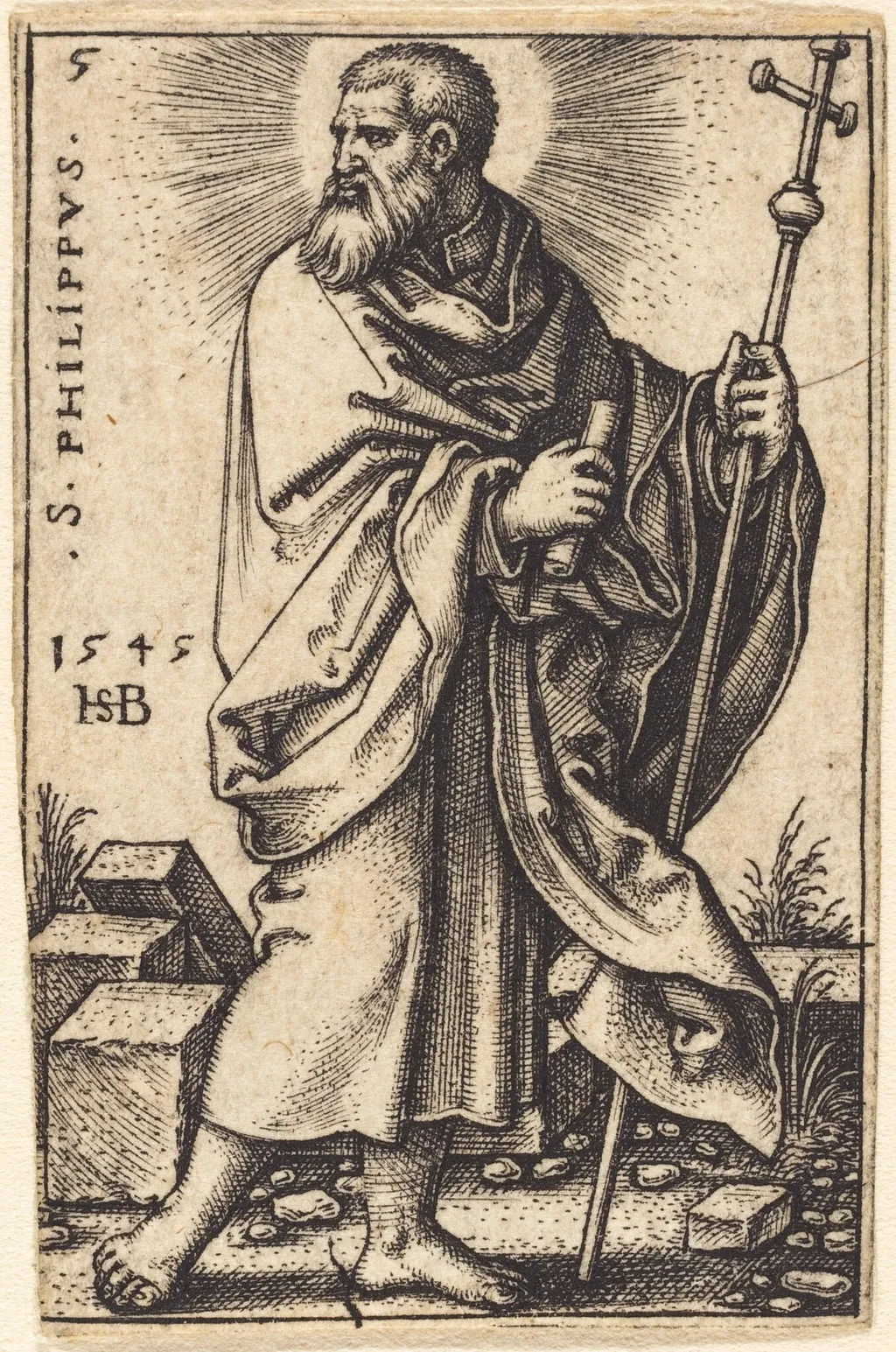
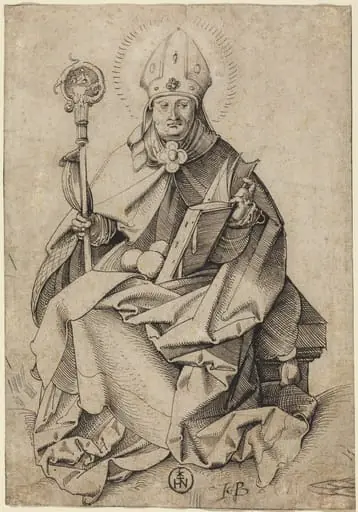
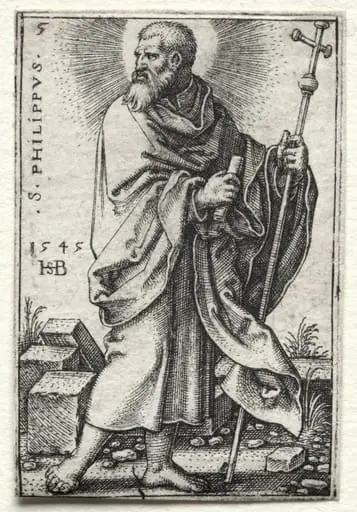
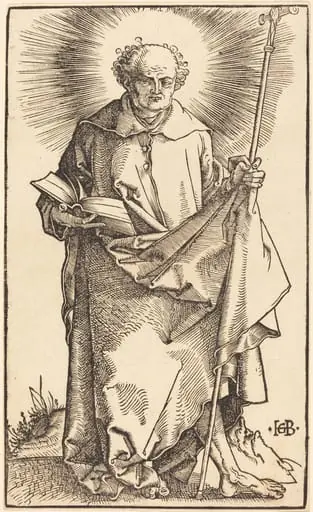
Saint Philip is an ink print by the Renaissance artist Sebald Beham. It dates from 1545 and is held in the collection of the National Gallery of Art.
About this work
Overview
Sebald Beham’s engraving titled Saint Philip was produced in 1545. Executed on a small plate, the print presents the apostle in a compact, highly detailed format that reflects Beham’s reputation for miniature works. The piece belongs to the religious genre, portraying the saint with characteristic attributes on a modestly scaled surface.
Subject & Meaning
The figure is shown in a long robe with a halo, indicating sanctity, and holds a staff in his right hand, a traditional symbol of apostolic authority. A draped cloak falls over his left shoulder, and he stands upon a rocky terrain with sparse vegetation, situating the saint in a simple, contemplative landscape.
Technique & Style
Beham employs fine cross‑hatching to render texture and model the forms, creating a nuanced play of light and shadow that gives the figure depth despite the limited scale. The engraving’s meticulous line work exemplifies the precision associated with the so‑called Little Masters of the German Renaissance.
History & Provenance
Born in Nuremberg, Beham worked there before relocating to Frankfurt, where he continued his prolific output of engravings, woodcuts, and etchings. Saint Philip is one of the many religious prints he produced during this period, reflecting his sustained engagement with devotional subjects.
Context
The work emerges from the mid‑16th‑century German print culture, a time when small, affordable engravings circulated widely among collectors and private patrons. Beham’s focus on miniature formats catered to a market that valued intricate detail within a portable, accessible medium.
Artist & collection
Artist
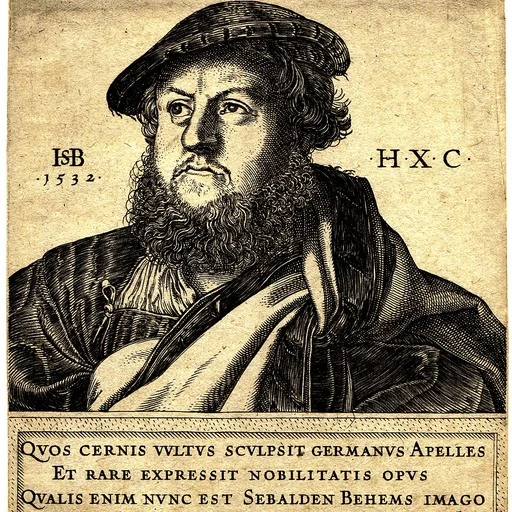
Sebald Beham (1500–1550) was a German painter and printmaker, mainly known for his very small engravings.