Artwork
The Penance of Saint John Chrysostom
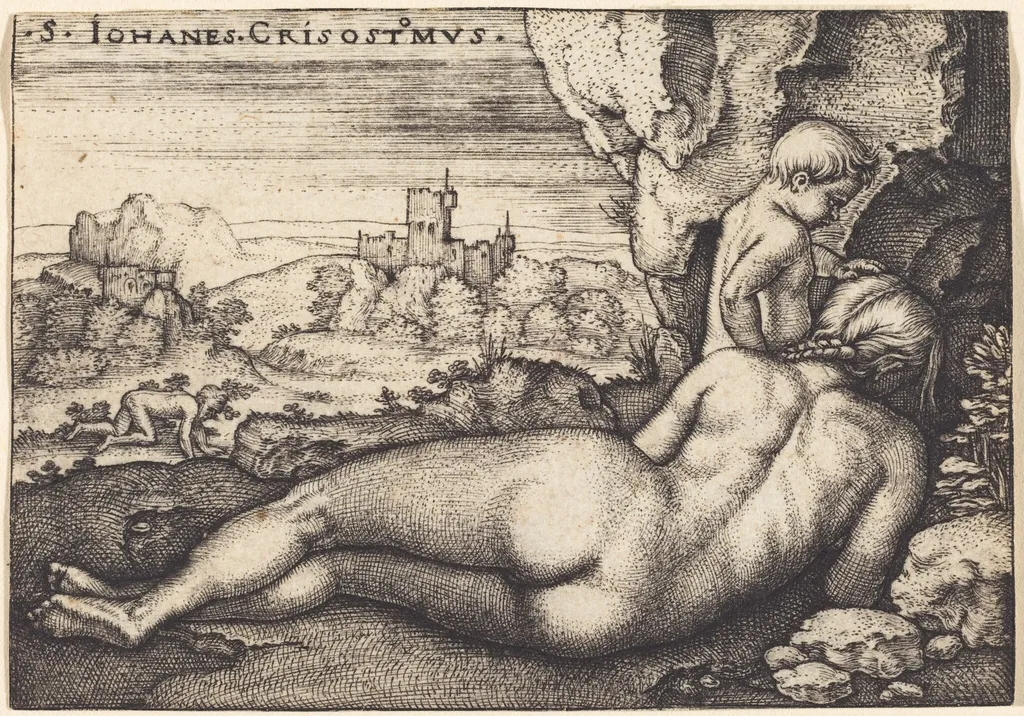
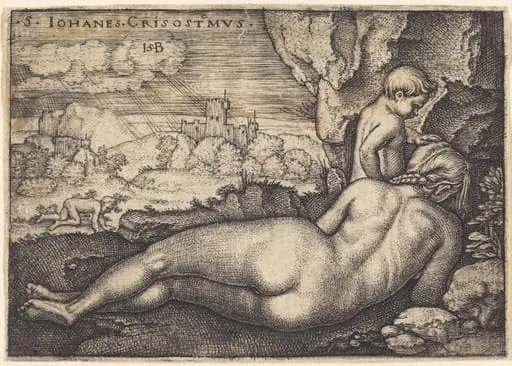
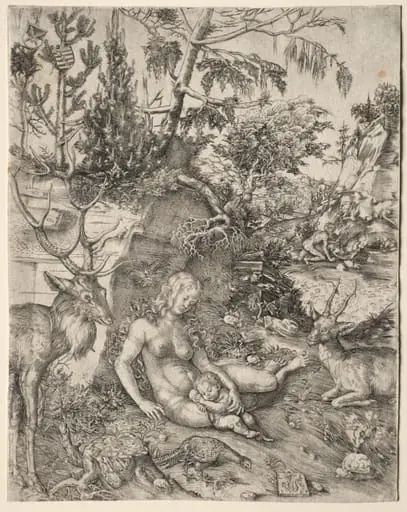
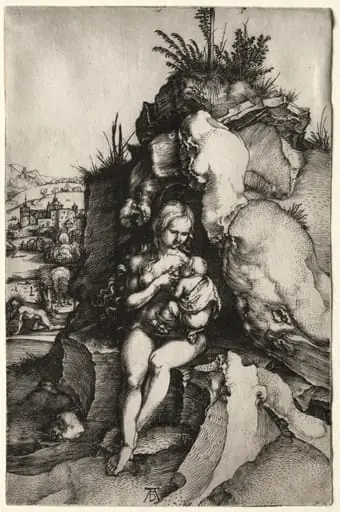
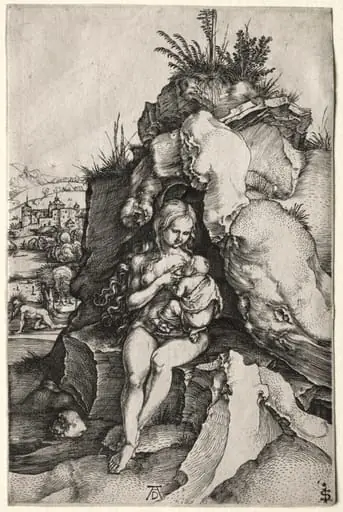
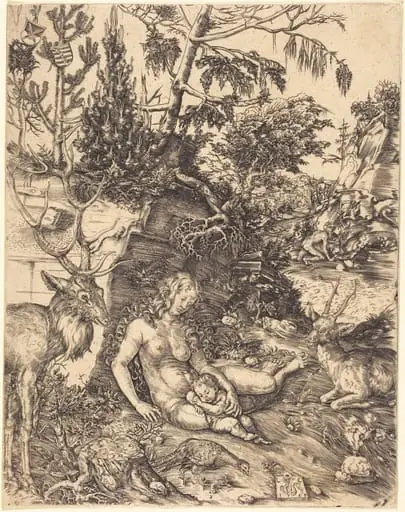
The Penance of Saint John Chrysostom is an ink print by the Renaissance artist Sebald Beham. It dates from 1538 and is held in the collection of the National Gallery of Art.
About this work
Overview
The work is rendered in fine black lines on paper, typical of the engraving technique, where incised grooves hold ink for printing.
Created around 1538 by Sebald Beham, this engraving depicts a moment from the life of Saint John Chrysostom. As one of approximately 250 engravings produced by the Nuremberg-based artist, it exemplifies the precision and compact scale characteristic of the Little Masters. The work is rendered in fine black lines on paper, typical of the engraving technique, where incised grooves hold ink for printing.
Subject & Meaning
The image illustrates the saint’s exile and spiritual torment, shown as he is dragged by a colossal serpent through a rugged landscape. The serpent symbolizes divine punishment for his outspoken criticism of ecclesiastical corruption. The distant castle suggests imperial authority, reinforcing the tension between moral conviction and political power in his story.
Technique & Style
Beham employed fine, controlled lines to render texture and movement, from the serpent’s scaled body to the jagged rocks and sparse foliage. His use of cross-hatching creates depth and shadow without tone, relying on line density alone. The composition is tightly packed, maximizing detail within a small format, a hallmark of his approach to printmaking.
History & Provenance
Beham worked primarily in Nuremberg before relocating to Frankfurt after religious and political tensions affected his standing. This engraving emerged during a period when Protestant reformers encouraged biblical imagery in print, making such works accessible to a broader audience. Though its early ownership is undocumented, it aligns with the circulation of devotional prints in 16th-century German territories.
Context
In the 1530s, printmaking became a key medium for disseminating religious narratives amid the Reformation. Artists like Beham translated scriptural stories into visual form for private devotion and education. The depiction of a saint’s suffering resonated with audiences grappling with themes of penance, authority, and divine justice in a fractured Christendom.
Legacy
Beham’s engravings, including this one, influenced later generations of Northern European printmakers through their technical rigor and narrative compression. Though less celebrated than contemporaries like Dürer, his work contributed to the standardization of small-scale religious imagery in print, bridging devotional tradition and emerging secular tastes in early modern Europe.
Artist & collection
Artist
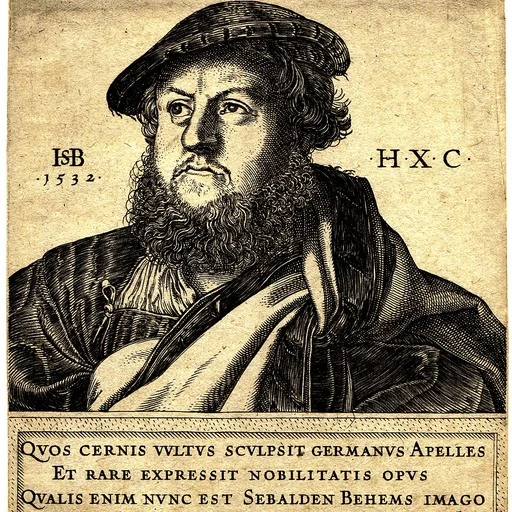
Sebald Beham (1500–1550) was a German painter and printmaker, mainly known for his very small engravings.