Artwork
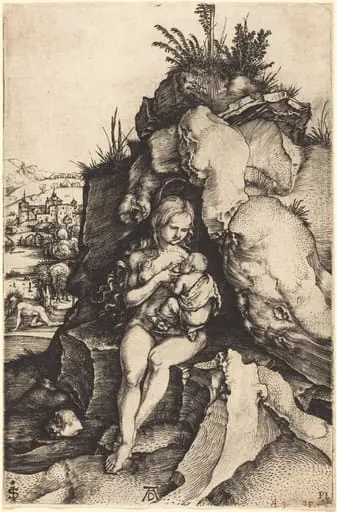
The Penance of St. John Chrysostom
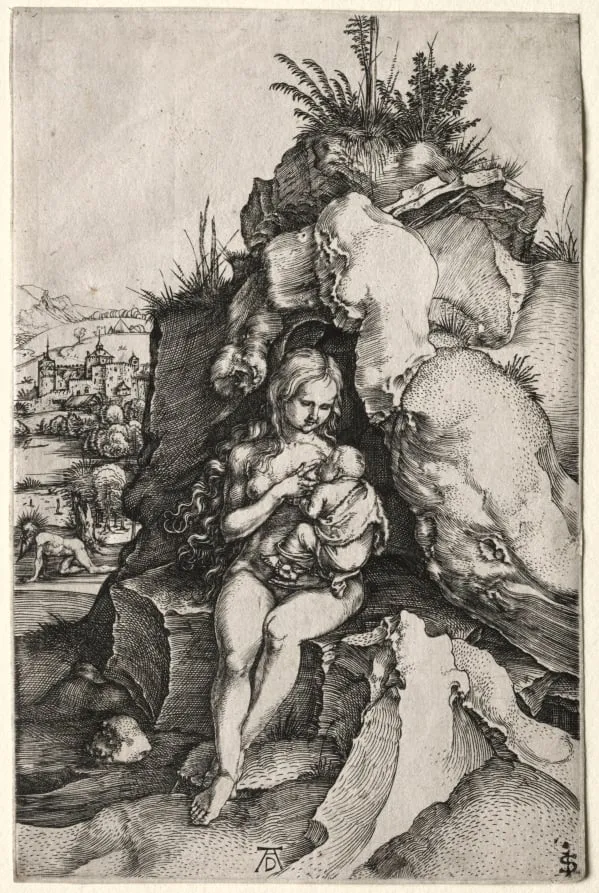
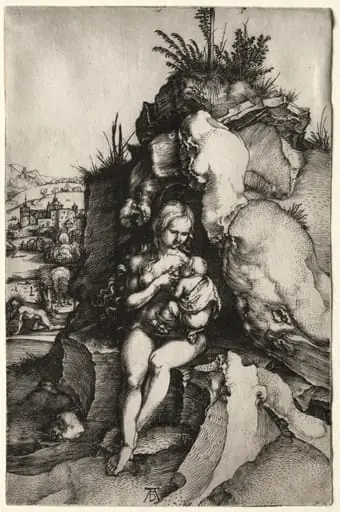
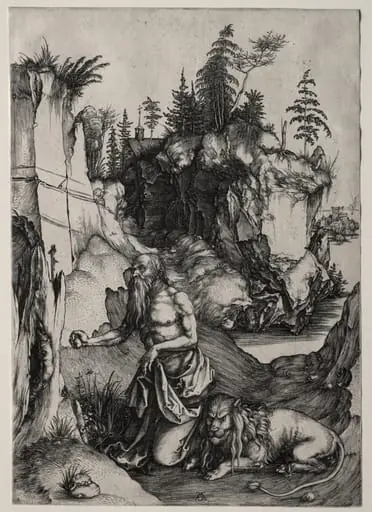
The Penance of St. John Chrysostom is a print by the Renaissance artist Albrecht Dürer. It dates from 1497 and is held in the collection of the Cleveland Museum of Art.
About this work
Overview
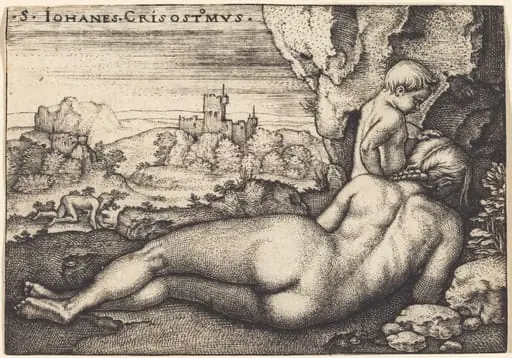
John Chrysostom, focusing not on the saint’s penance but on the unexpected reunion between the emperor’s daughter and her child in the wilderness.
Albrecht Dürer created a woodcut depicting a lesser-known episode from the legend of St. John Chrysostom, focusing not on the saint’s penance but on the unexpected reunion between the emperor’s daughter and her child in the wilderness. Unlike earlier depictions, Dürer centers the mother and infant, shifting narrative emphasis from guilt to maternal resilience. The scene unfolds in a rugged natural setting, rendered with meticulous detail and stark contrasts.
Subject & Meaning
The legend recounts how John Chrysostom, after breaking his vow of chastity, spent years crawling in penance. The daughter, presumed dead after being cast from a cliff, survived and bore a child. Dürer’s composition highlights their quiet reunion, suggesting redemption through maternal love rather than solely through suffering. The child’s presence transforms the scene from one of shame to one of quiet grace.
Technique & Style
Dürer employed fine, controlled lines and dramatic chiaroscuro to model form and depth in the woodcut. The textures of rock, fur, and fabric are rendered with precision, enhancing the rawness of the wilderness. The figures are arranged in a compact, intimate group, drawing attention to their physical and emotional connection while contrasting with the harsh, angular landscape surrounding them.
History & Provenance
The print was produced around 1500, during Dürer’s early career in Nuremberg, when he was deeply engaged with religious themes and Northern European devotional traditions. It likely circulated among educated patrons familiar with hagiographic legends. No early ownership records are known, but its technical sophistication suggests it was intended for a discerning audience rather than mass distribution.
Context
Late medieval hagiography often emphasized extreme penance, but Dürer’s focus on the female figure diverges from typical portrayals. While other artists depicted John’s suffering, he chose to highlight the daughter’s endurance and the sanctity of motherhood. This reflects broader shifts in Northern Renaissance art toward psychological nuance and human emotion within sacred narratives.
Legacy
Dürer’s interpretation influenced later depictions of the legend by centering maternal presence as a moral counterpoint to male sin. The print’s emotional restraint and technical mastery contributed to its enduring study among scholars of printmaking and religious iconography. It remains a rare example where a penitent saint’s narrative is reframed through the quiet strength of an overlooked figure.
Artist & collection
Artist
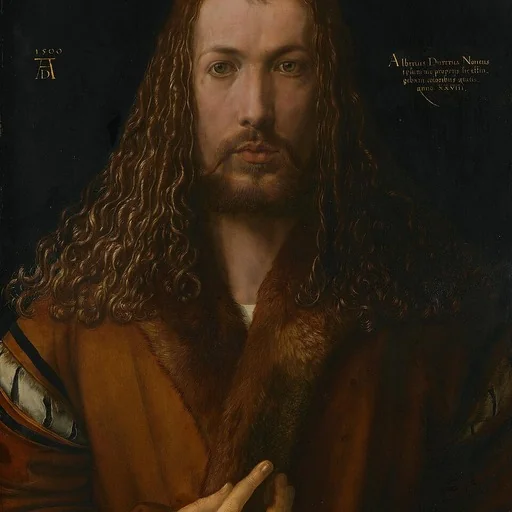
Albrecht Dürer spent his life in Nuremberg, a busy German city where artists traded prints like currency.

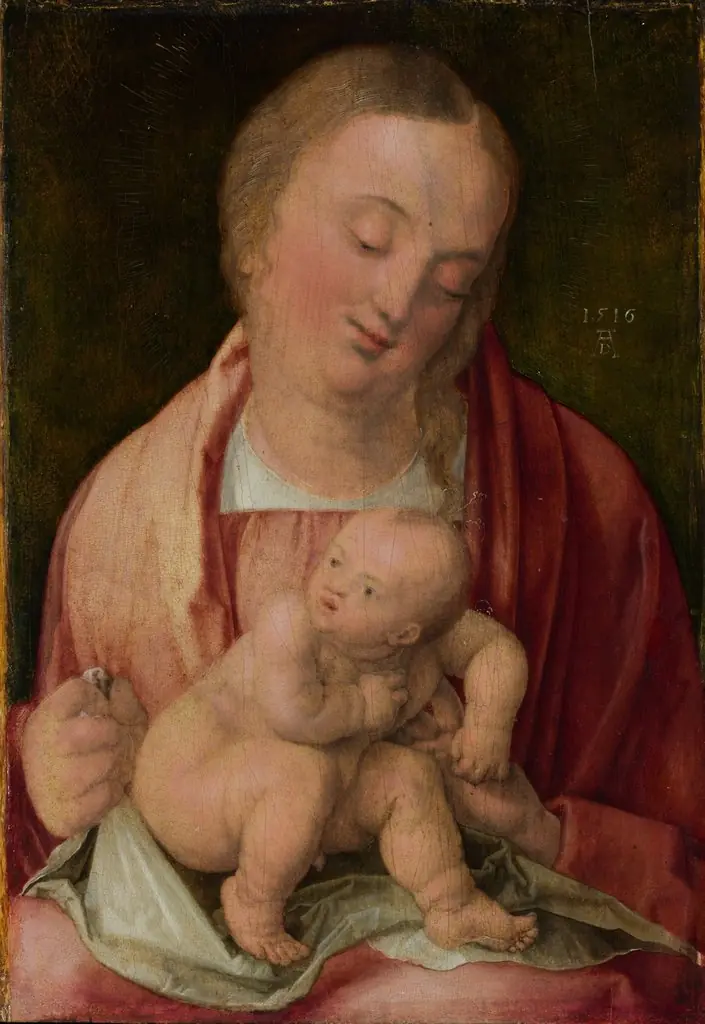
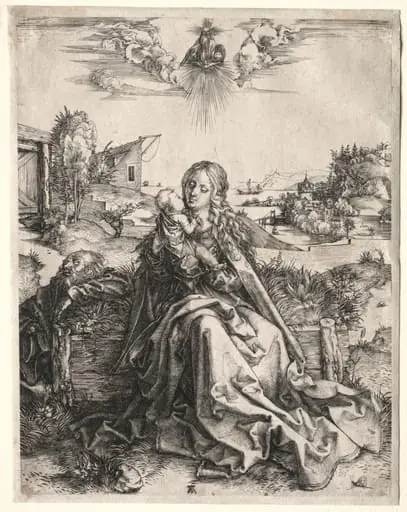
![Madonna and Child [obverse], by Albrecht Dürer](https://artifactworldgallery.com/img/albrecht-durer--madonna-and-child-obverse--d7b8ebf05d22ebe5-w320.webp)
![Lot and His Daughters [reverse], by Albrecht Dürer](https://artifactworldgallery.com/img/albrecht-durer--lot-and-his-daughters-reverse--b4ebf9b282faa17a-w320.webp)