Artwork
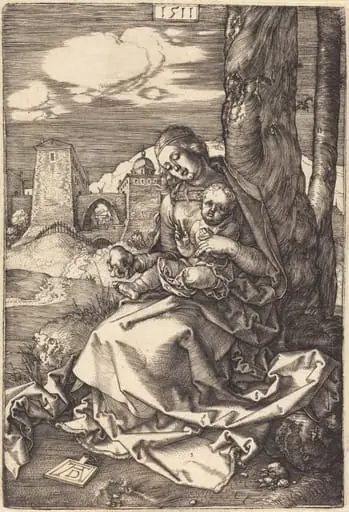
The Virgin, Holding a Pear, with the Child
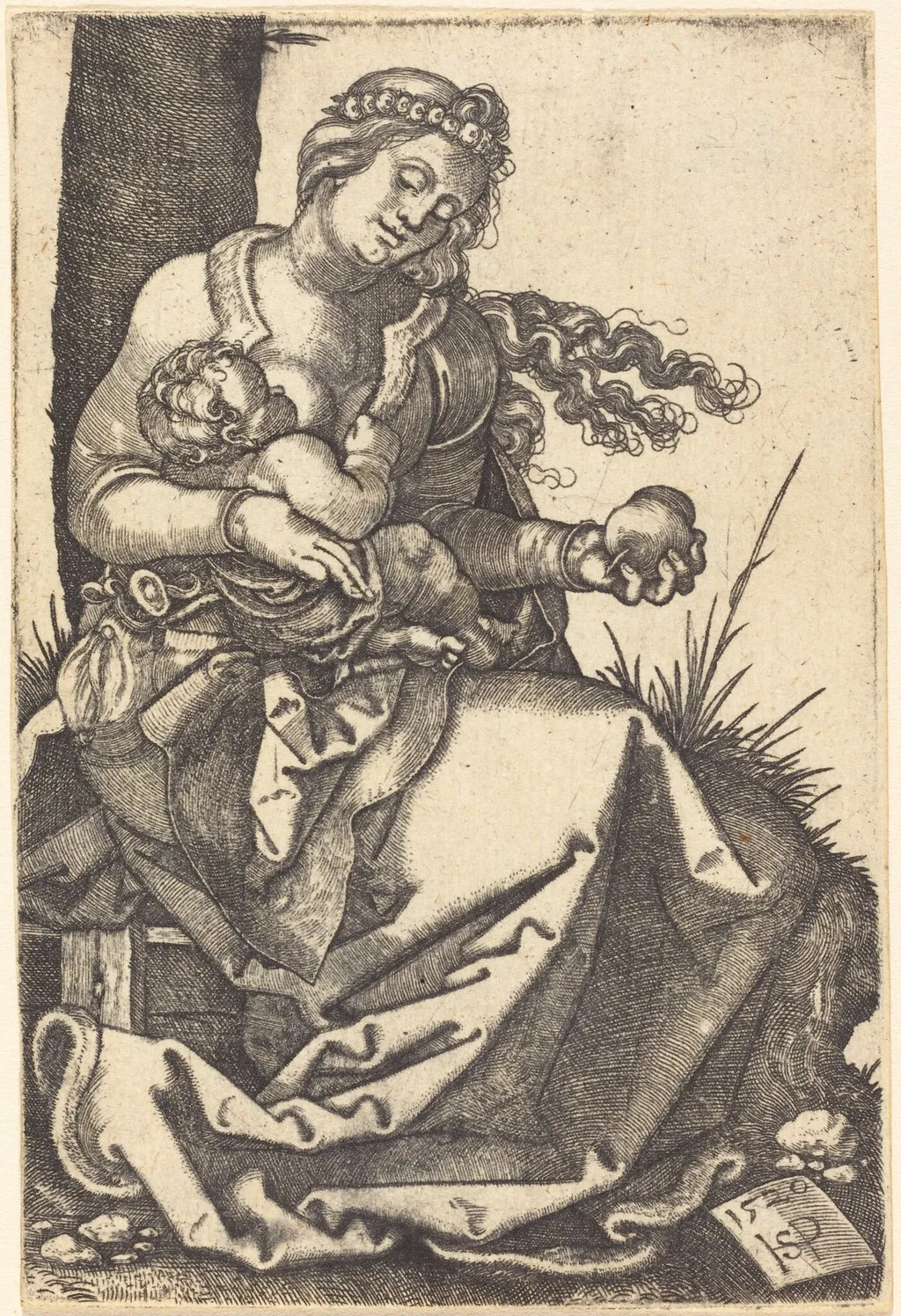
The Virgin, Holding a Pear, with the Child is an ink print by the Renaissance artist Sebald Beham. It dates from 1520 and is held in the collection of the National Gallery of Art.
About this work
Overview
Sebald Beham’s 1520 engraving depicts the Virgin Mary cradling a pear while holding the infant Jesus. Executed on a modestly sized copper plate, the image presents a quiet, intimate encounter between mother and child, rendered with precise linear detail characteristic of early German printmaking.
Subject & Meaning
The pear functions as a symbolic element, traditionally associated with the fall of man and the promise of redemption, thereby linking the infant’s presence to theological ideas of salvation. Mary’s gentle gaze toward her son underscores the devotional focus on maternal tenderness and the incarnation.
Technique & Style
Beham employed fine, controlled lines to model forms, using cross‑hatching to suggest volume and subtle shading. The engraving’s restrained composition and smooth contours reflect the “Little Masters” aesthetic, where meticulous detail and compact scale convey a serene, contemplative atmosphere without reliance on elaborate ornamentation.
History & Provenance
A native of Nuremberg, Beham produced roughly 250 prints, ranging from religious subjects to mythological scenes, before relocating to Frankfurt later in his career. This work belongs to his early period, when he was establishing his reputation for intricate, small‑format engravings that circulated among collectors of the German Renaissance.
Artist & collection
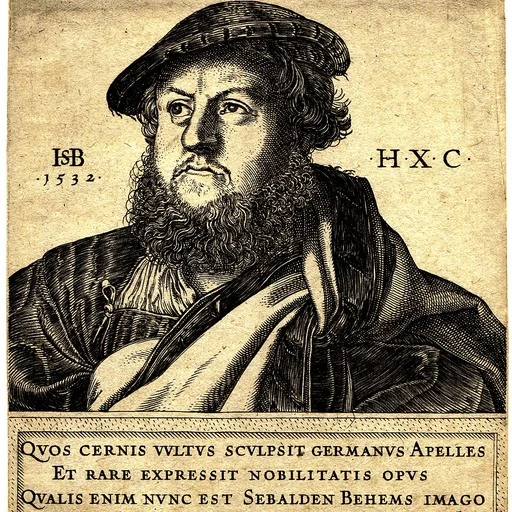
Artist
Sebald Beham (1500–1550) was a German painter and printmaker, mainly known for his very small engravings.


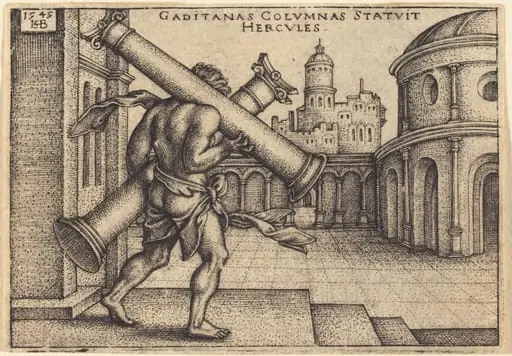
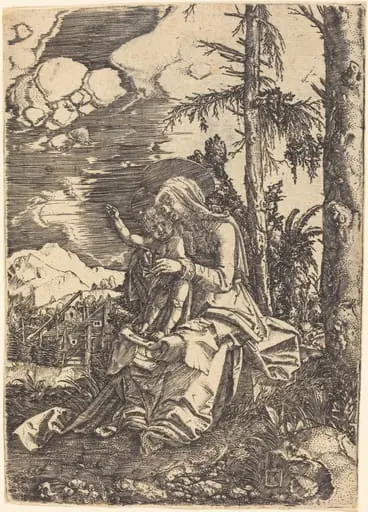 The Virgin with the Blessing Child in a Landscape
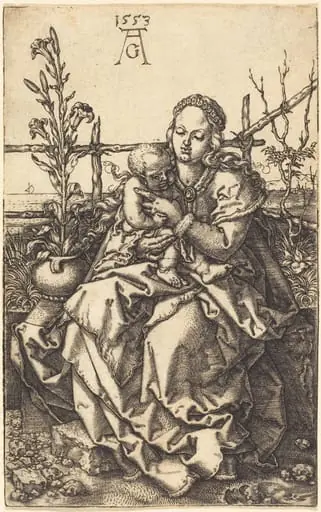 The Virgin Seated
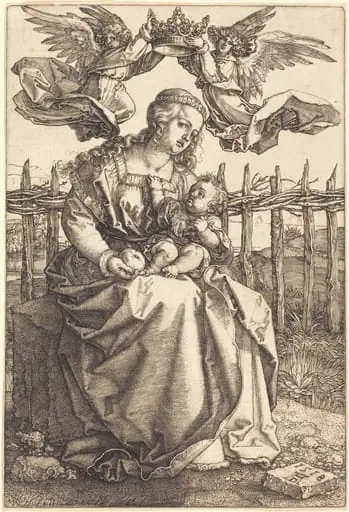 The Virgin and Child Crowned by Two Angels
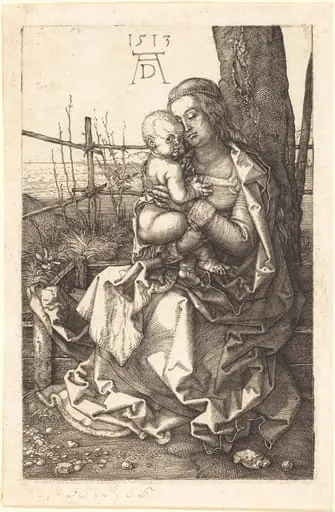 The Virgin and Child Seated by a Tree
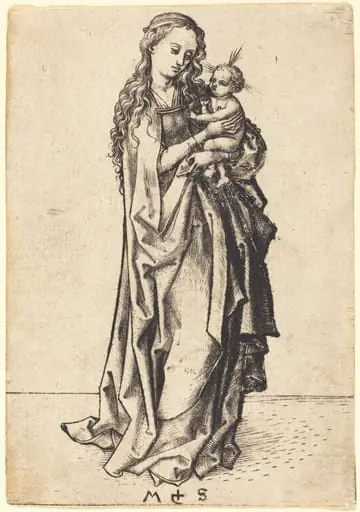 The Small Madonna and Child
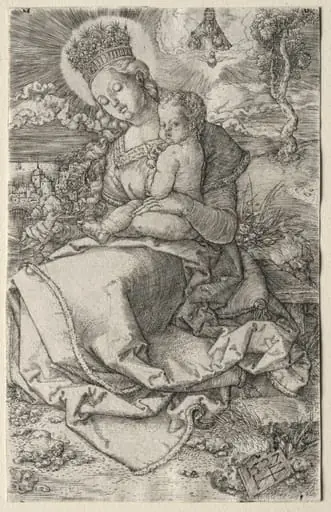 Virgin with a Crown of Stars
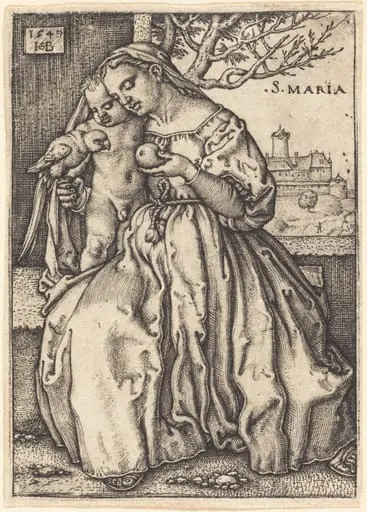 The Virgin and Child with a Parrot
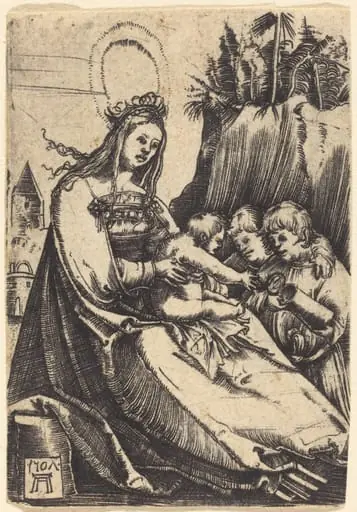 Virgin and Child with Two Boys
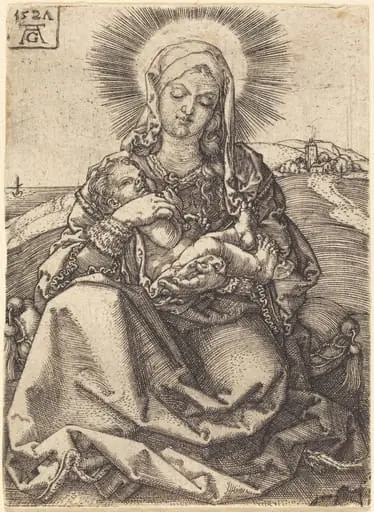 Madonna in a Landscape Sitting on a Cushion
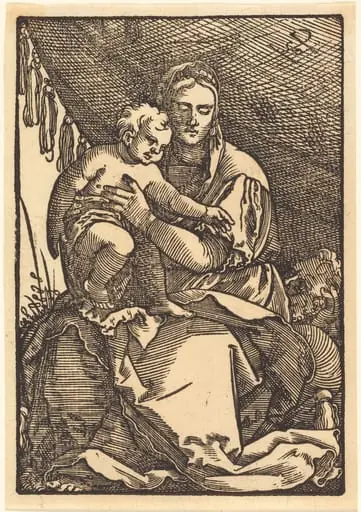 The Holy Family Under a Canopy
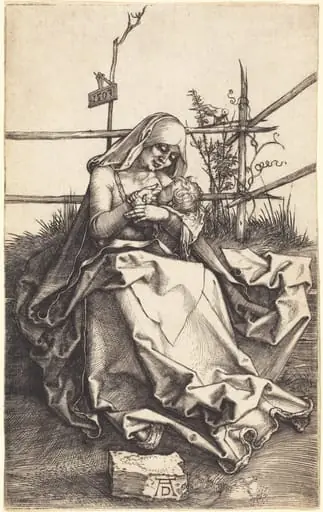 The Virgin and Child on a Grassy Bench
 The Virgin and Child with the Pear