Artwork
The Virgin and Child on a Grassy Bench
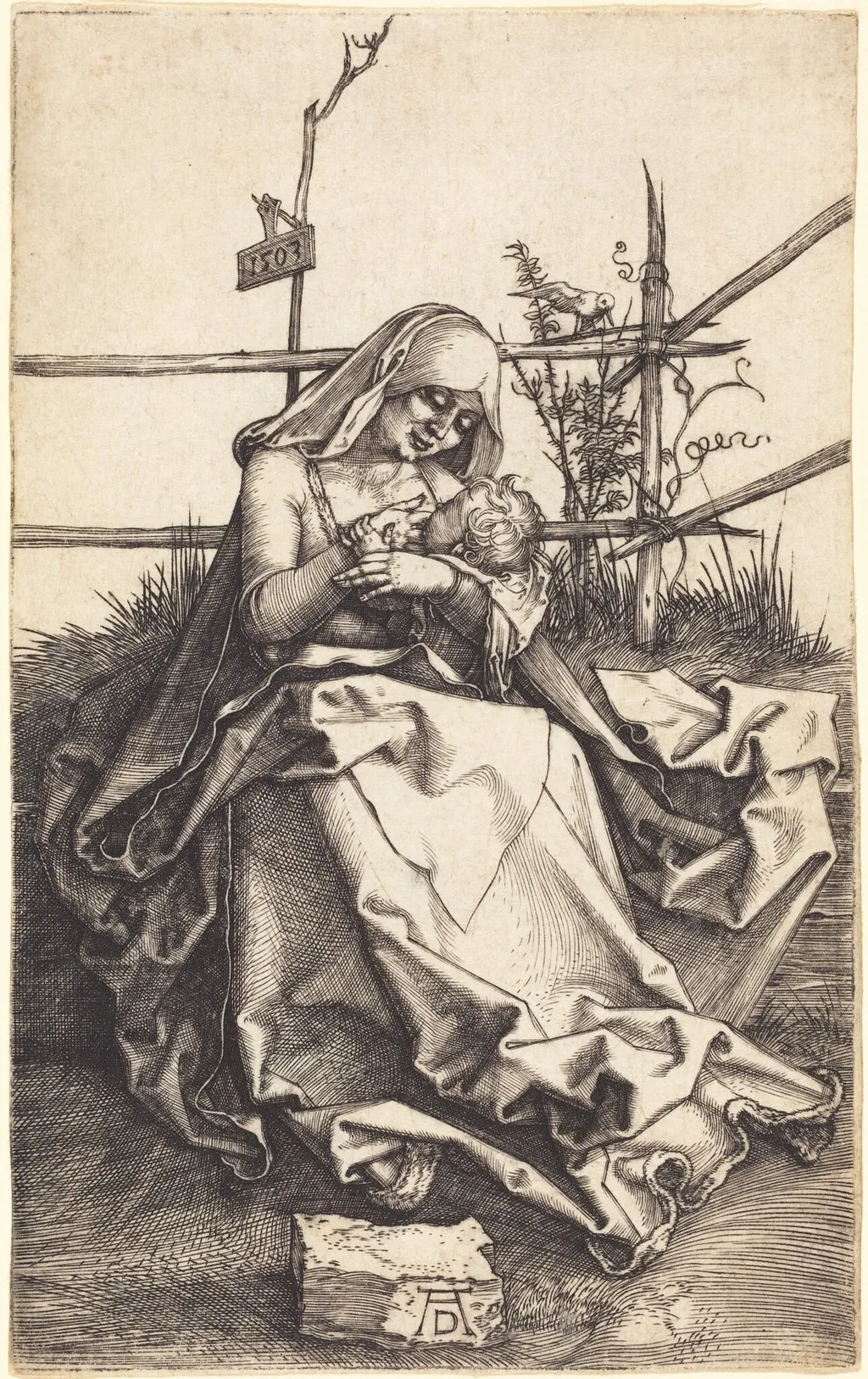
The Virgin and Child on a Grassy Bench is an ink print by the Northern Renaissance artist Albrecht Dürer. It dates from 1503 and is held in the collection of the Städel Museum.
About this work
Overview
The Virgin and Child on a Grassy Bench is a religious engraving created by Albrecht Dürer in 1503, executed on laid paper. The work portrays a serene scene of the Virgin Mary and the Christ Child.
Subject & Meaning
Mary is depicted seated on a grassy bench, holding the infant Jesus, who grasps a goldfinch—a symbol alluding to his future Passion. Both figures wear simple, realistically draped robes.
Technique & Style
The engraving showcases Dürer's mastery of cross-hatching, achieved with a sharp tool on a metal plate before printing. This technique imparts depth and dimensionality to the image without relying on color.
History & Provenance
Created in 1503, specific details about the engraving's original commission, early ownership, or exhibition history are not provided in the available information.
Context
This work reflects Dürer's contribution to the development of Northern European printmaking during the Renaissance, emphasizing detail and emotional intimacy in religious themes.
Legacy
The Virgin and Child on a Grassy Bench remains a notable example of Dürer's engraving skill, influencing subsequent generations of artists in their approach to religious subject matter and print technique.
Artist & collection
Artist
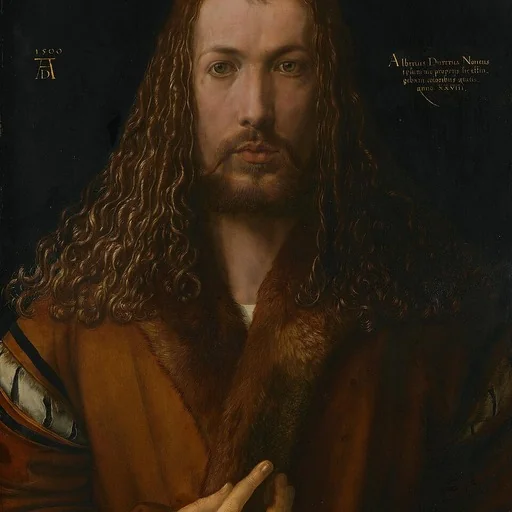
Albrecht Dürer spent his life in Nuremberg, a busy German city where artists traded prints like currency.

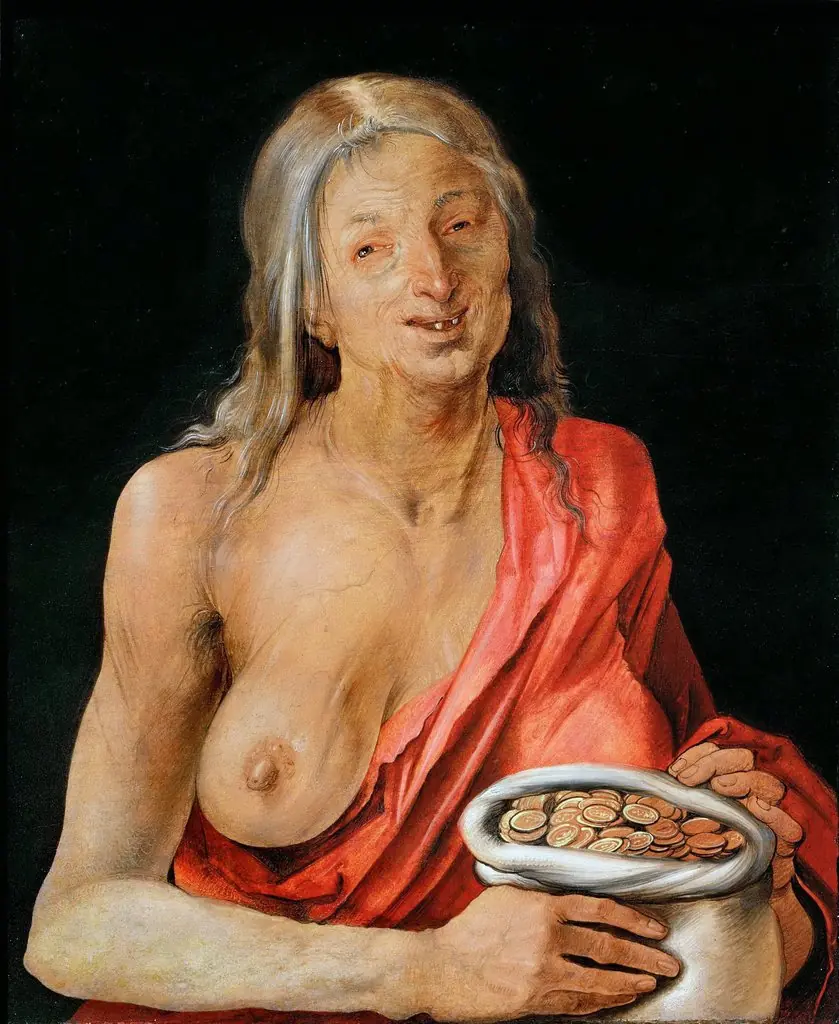
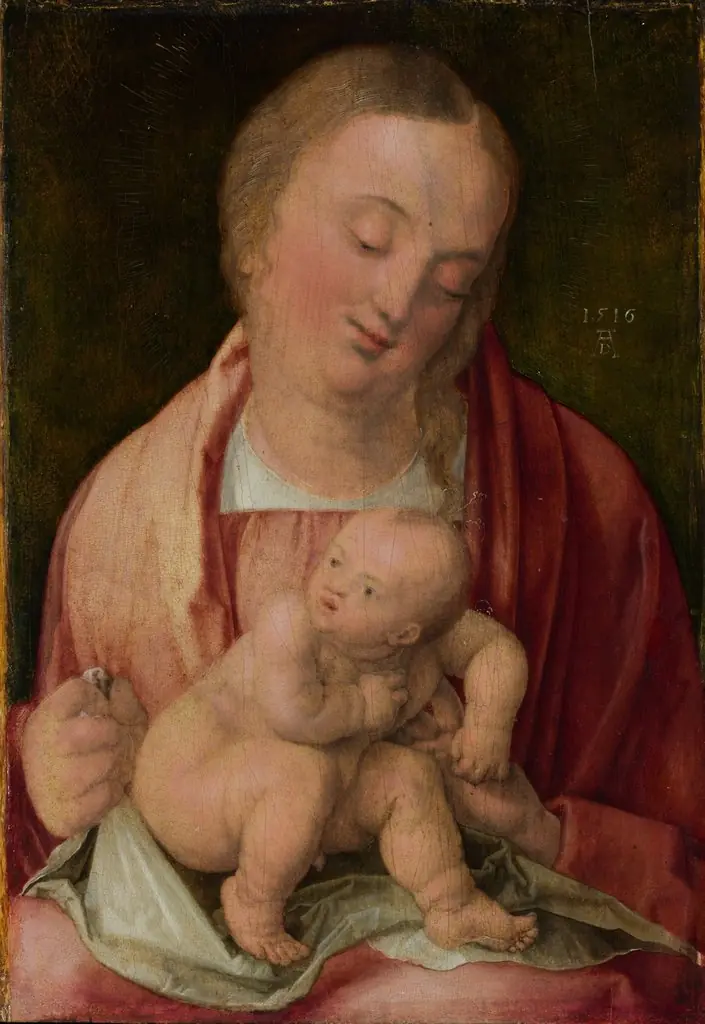
![Madonna and Child [obverse], by Albrecht Dürer](https://artifactworldgallery.com/img/albrecht-durer--madonna-and-child-obverse--d7b8ebf05d22ebe5-w320.webp)
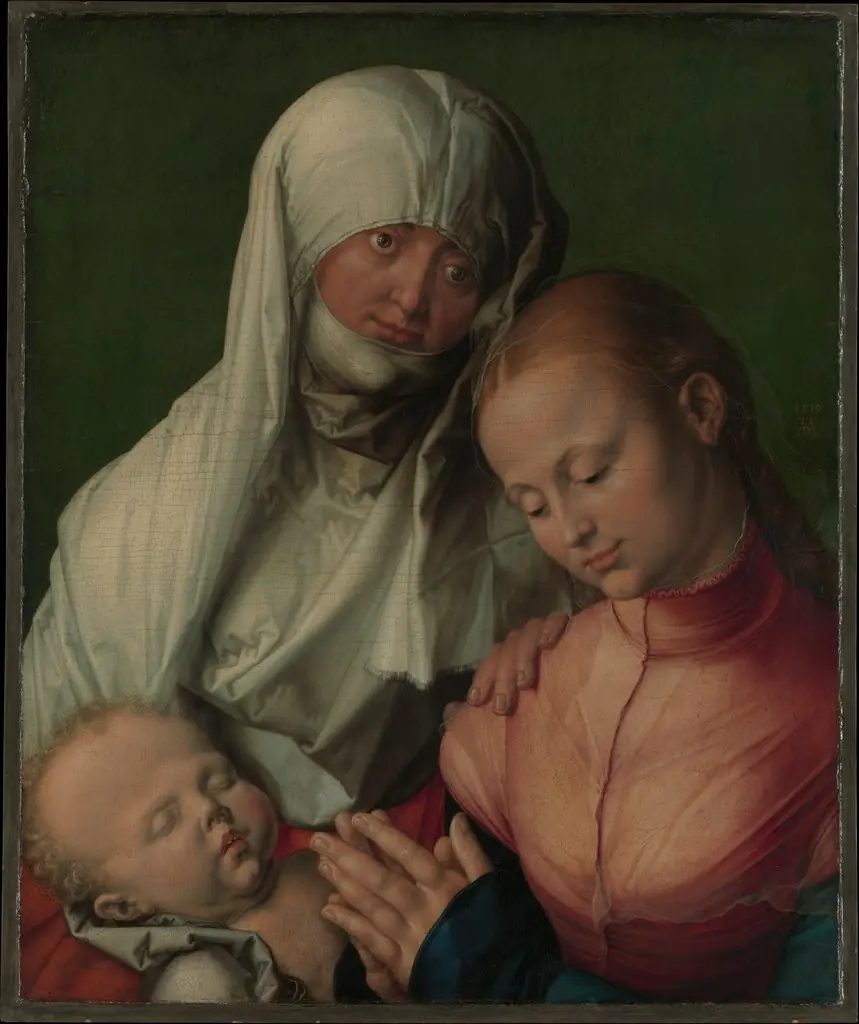
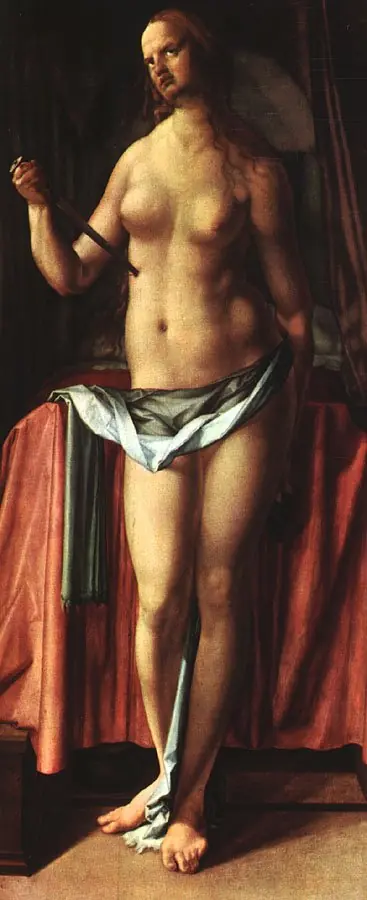
![Lot and His Daughters [reverse], by Albrecht Dürer](https://artifactworldgallery.com/img/albrecht-durer--lot-and-his-daughters-reverse--b4ebf9b282faa17a-w320.webp)
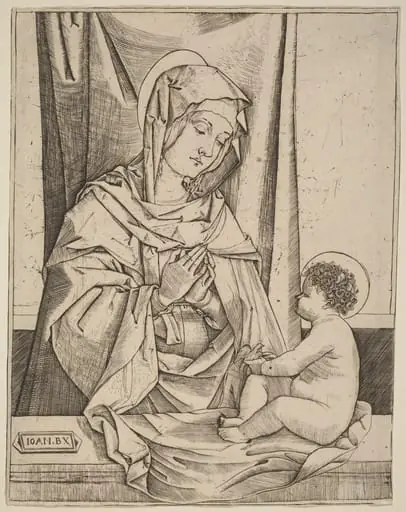 The Virgin and Child
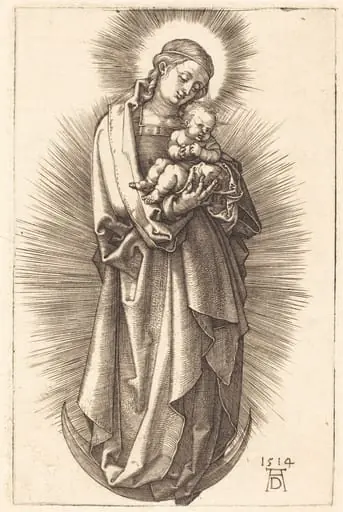 The Virgin and Child on a Crescent with a Diadem
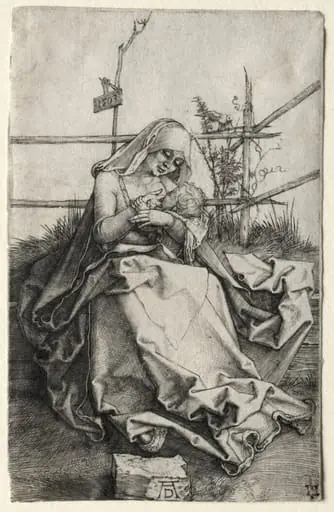 The Virgin and Child on a Grassy Bench
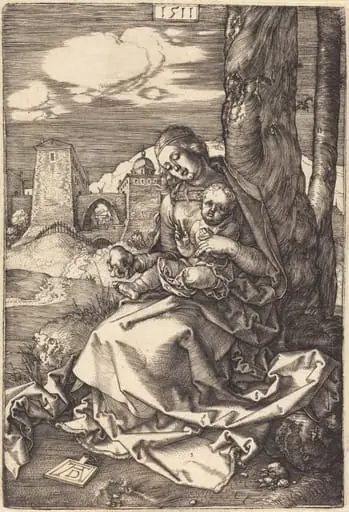 The Virgin and Child with the Pear
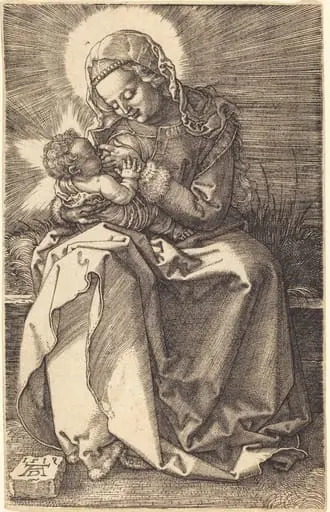 The Virgin Nursing the Child
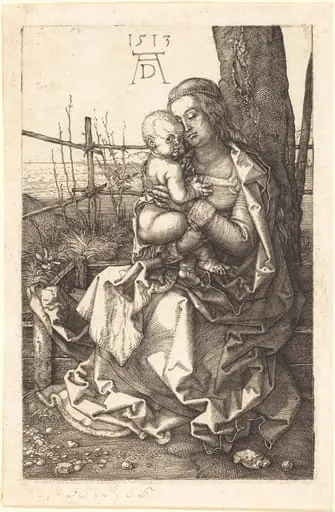 The Virgin and Child Seated by a Tree
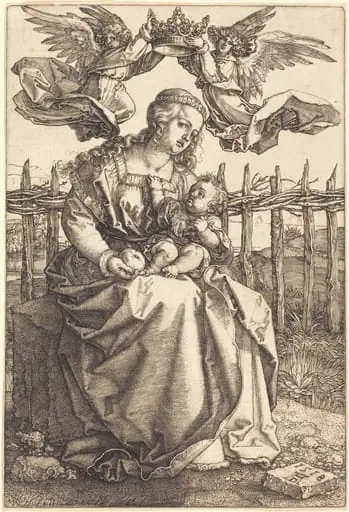 The Virgin and Child Crowned by Two Angels
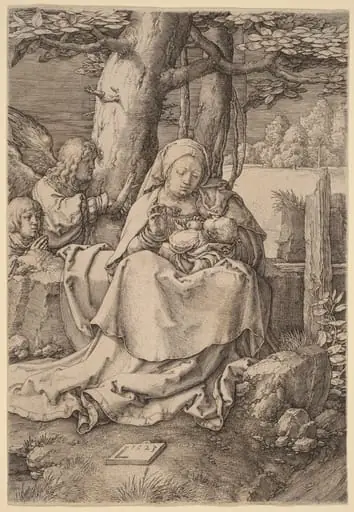 The Virgin and Child with Two Angels
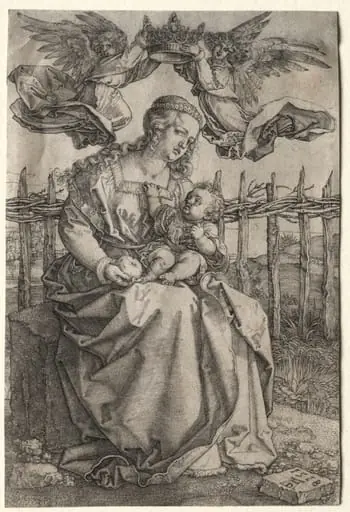 The Virgin Crowned by Two Angels
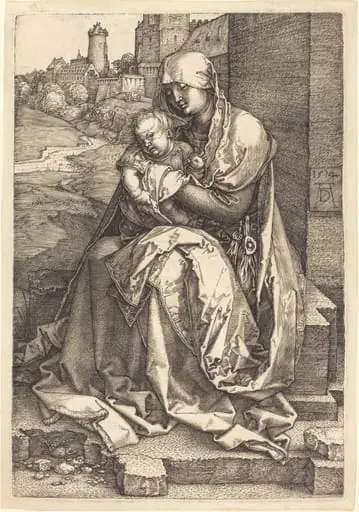 The Virgin and Child Seated by the Wall
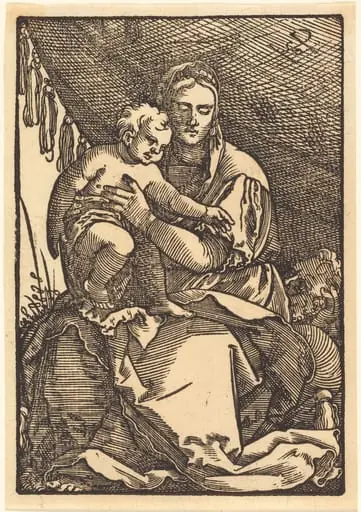 The Holy Family Under a Canopy
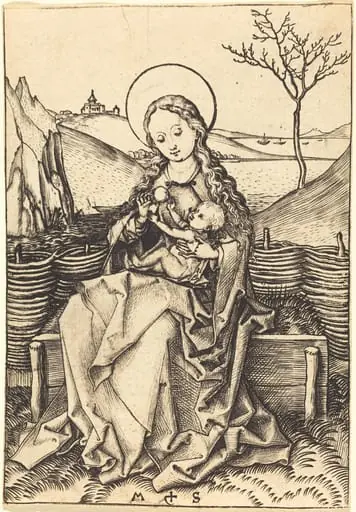 Virgin and Child on a Grassy Bench