Artwork
Triumphal Procession of Putti
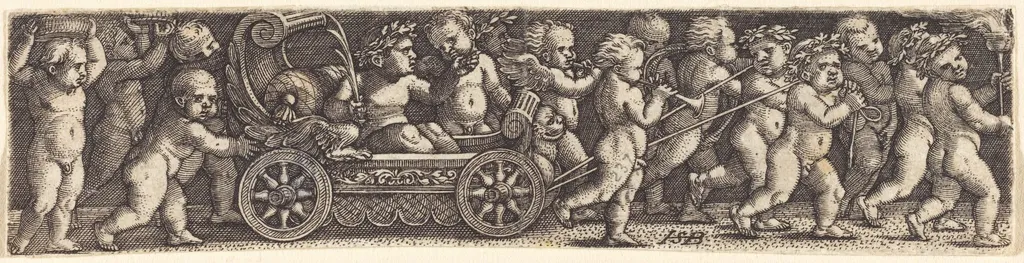
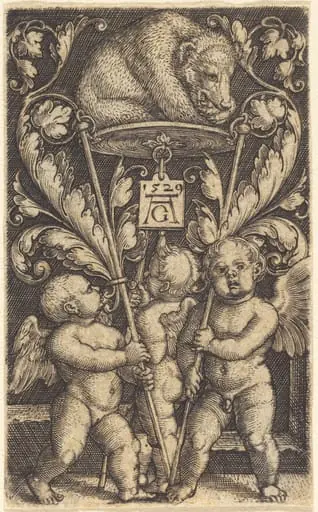
Triumphal Procession of Putti is an ink print by the Renaissance artist Sebald Beham. It dates from 1525 and is held in the collection of the National Gallery of Art.
About this work
Overview
Created in 1525 by the German artist Sebald Beham, this engraving belongs to a series of small-scale works that earned him a place among the Little Masters.
Created in 1525 by the German artist Sebald Beham, this engraving belongs to a series of small-scale works that earned him a place among the Little Masters. Executed with meticulous line work, the print captures a lively, crowded procession of putti, showcasing Beham’s skill in rendering fine detail on a compact format. His technique reflects the influence of Albrecht Dürer, though his style leans toward playful, intimate compositions rather than grand narratives.
Subject & Meaning
The scene portrays a whimsical parade of winged, nude putti drawing a decorated cart, some playing musical instruments while others observe. The figures, adorned only with leaves or feathers, evoke classical mythology and Renaissance allegory, suggesting a celebration of joy, music, or the carefree spirit of childhood. The absence of overt religious or political symbolism points to a decorative or humanist intent, common in secular prints of the period.
Technique & Style
Beham employed engraving to achieve extraordinary precision, using fine, controlled lines to model form and texture. The putti’s bodies, the cart’s ornate carvings, and the play of light and shadow are rendered through dense cross-hatching and delicate stippling. The composition is tightly packed, maximizing visual density without clutter, a hallmark of his approach to small-format printmaking that emphasized craftsmanship over scale.
History & Provenance
Sebald Beham, born in Nuremberg in 1500, was active in the city’s thriving print culture before moving to Frankfurt. His work circulated widely among collectors and artisans in early 16th-century Germany. While the specific early ownership of this engraving is undocumented, its survival in multiple museum collections suggests it was reproduced and appreciated during his lifetime and shortly after.
Context
In the decades following Dürer’s rise, German artists like Beham turned to intimate, finely detailed prints for a growing urban market. The Triumphal Procession of Putti reflects a broader trend: the use of mythological and allegorical subjects in secular art, often inspired by classical antiquity and humanist ideals. Such works catered to educated patrons seeking refined, decorative imagery outside religious contexts.
Legacy
Beham’s small engravings, including this one, helped define the aesthetic of the Little Masters, influencing later generations of printmakers who prioritized technical precision and narrative charm over monumental scale. Though less celebrated than his contemporaries, his work remains a key example of how intricate, miniature art could convey complex visual ideas in early modern Europe.
Artist & collection
Artist
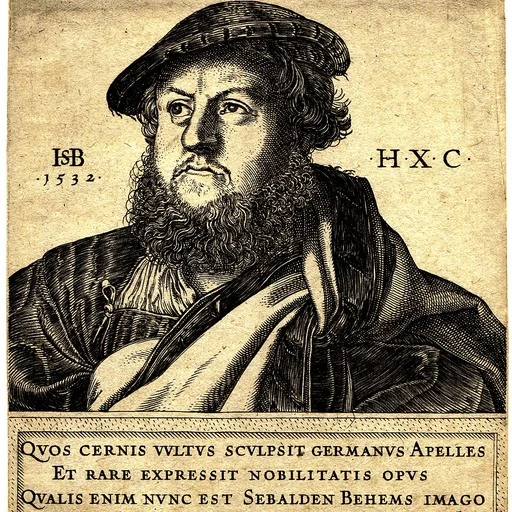
Sebald Beham (1500–1550) was a German painter and printmaker, mainly known for his very small engravings.