Artwork
Vomiting Peasant and a Second Peasant
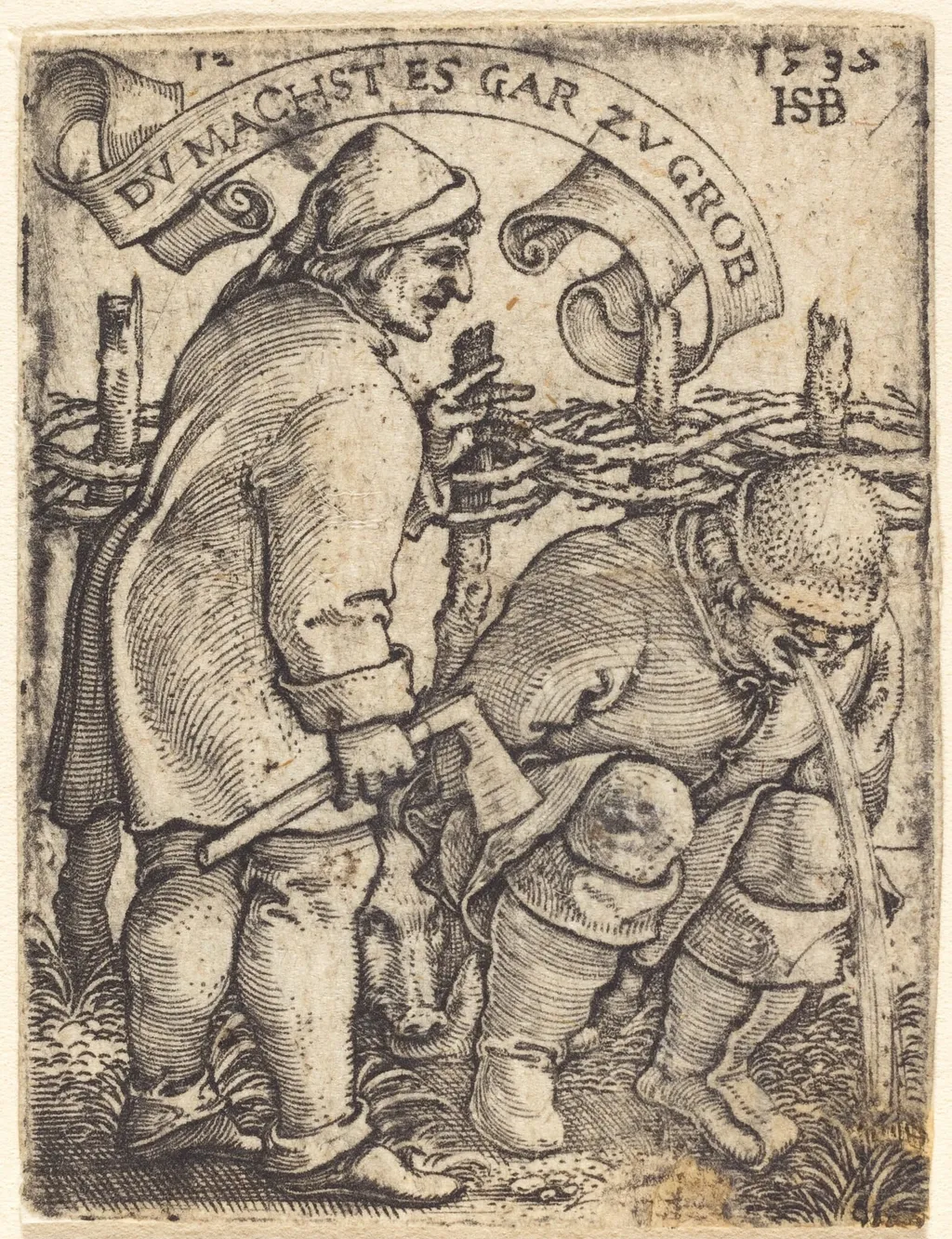
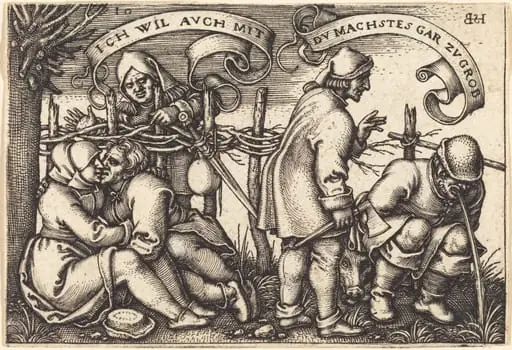
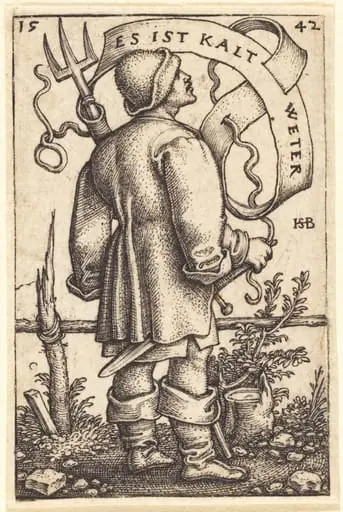
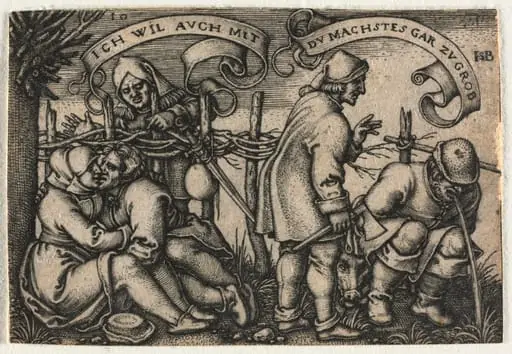
Vomiting Peasant and a Second Peasant is an ink print by the Renaissance artist Sebald Beham. It dates from 1537 and is held in the collection of the National Gallery of Art.
About this work
Overview
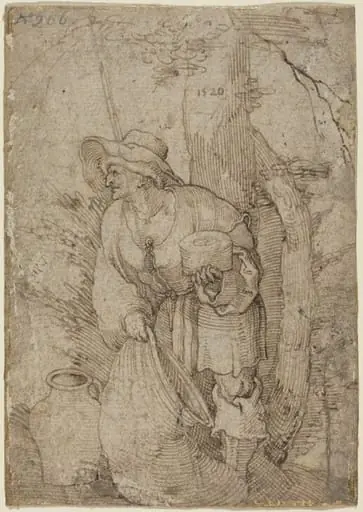
Sebald Beham’s 1537 engraving titled *Vomiting Peasant and a Second Peasant* presents a compact, highly detailed scene of two rural figures in a field. Executed in the fine line work typical of early modern printmaking, the image concentrates on the physical distress of one peasant while the companion watches passively.
Subject & Meaning
The composition depicts a peasant bent over in the act of vomiting, his face contorted with discomfort, while a second figure leans on a staff, observing with a weary stance. The stark contrast between the active suffering and the idle spectator invites reflection on the hardships of agrarian life and the human response to bodily distress.
Technique & Style
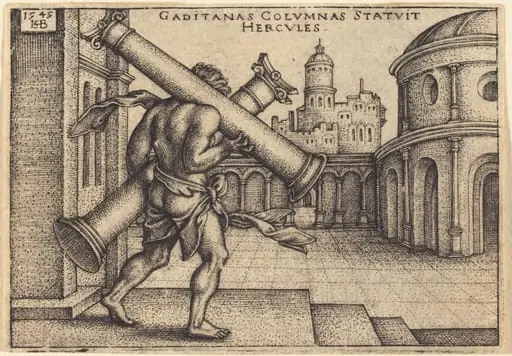
Beham employed the engraving process, incising intricate lines into a metal plate to create a dense network of hatching and cross‑hatching. This method allows subtle gradations of tone, rendering the loose, wrinkled clothing, the textured grass, and the background foliage with remarkable precision despite the work’s modest size.
History & Provenance
A member of the Nuremberg and Frankfurt artistic circles, Beham was counted among the “Little Masters,” a group noted for producing small‑scale, highly finished prints in large numbers. The 1537 plate reflects his prolific output of engravings, etchings, and woodcuts that circulated widely across the German lands during the Reformation era.
Context
The print emerges from a period when German printmakers frequently explored everyday subjects, moving beyond religious iconography to portray the lives of common people. Beham’s focus on a mundane, albeit uncomfortable, scene aligns with the broader Renaissance interest in naturalism and the observation of daily labor.
Artist & collection
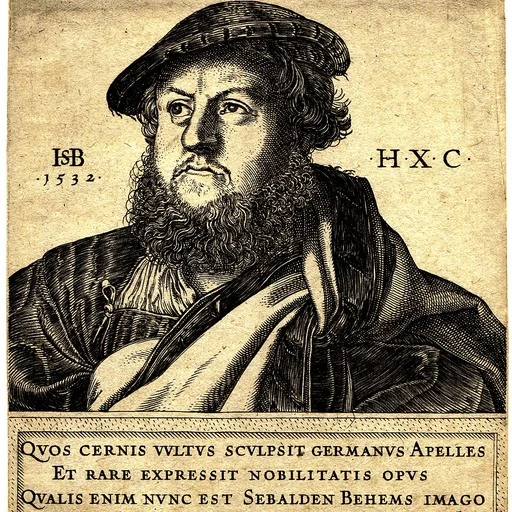
Artist
Sebald Beham (1500–1550) was a German painter and printmaker, mainly known for his very small engravings.