Artwork
Summer
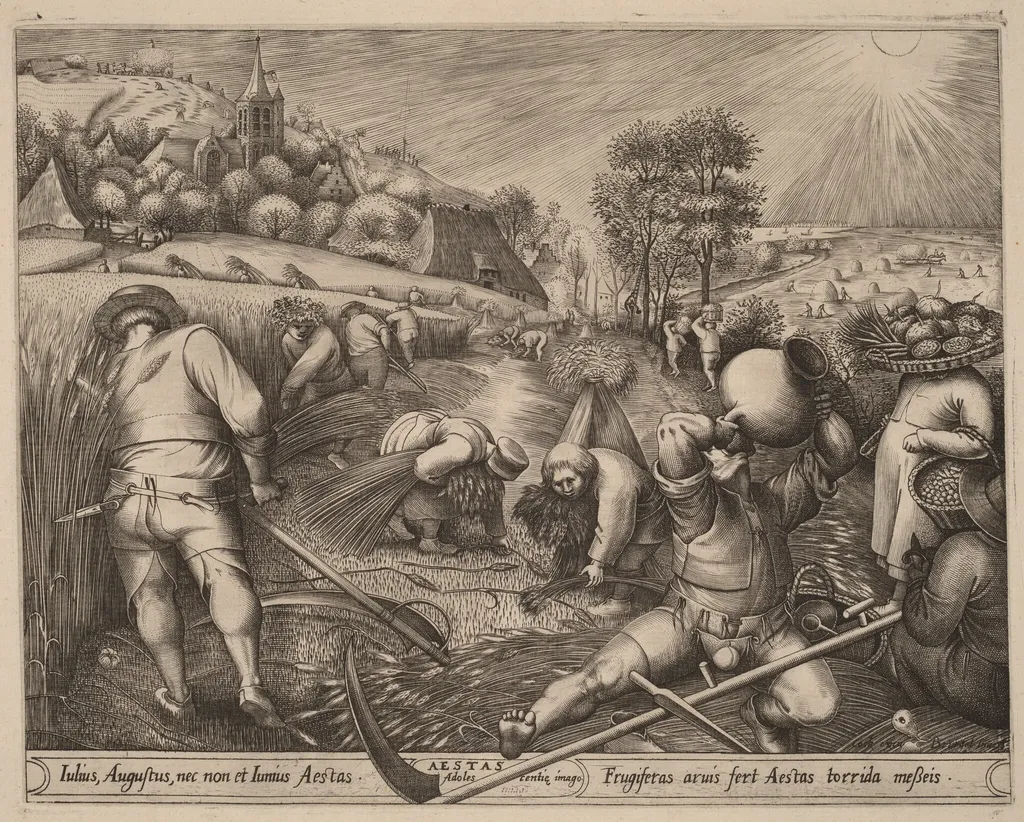
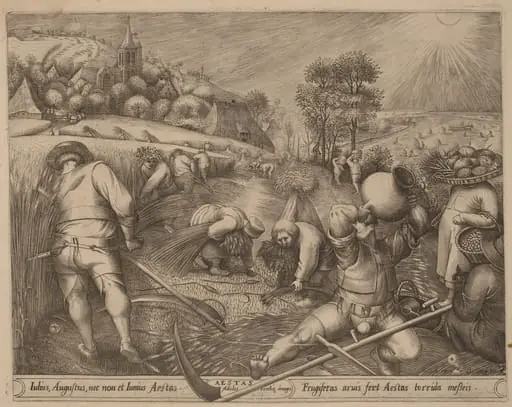
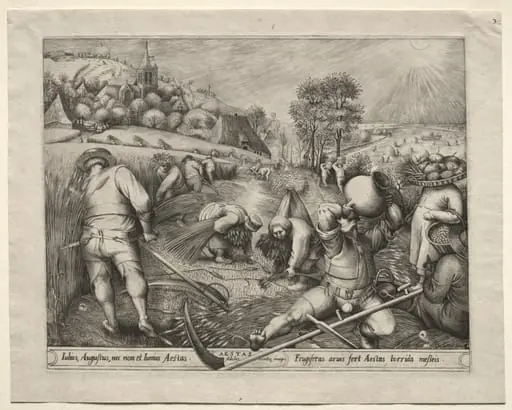
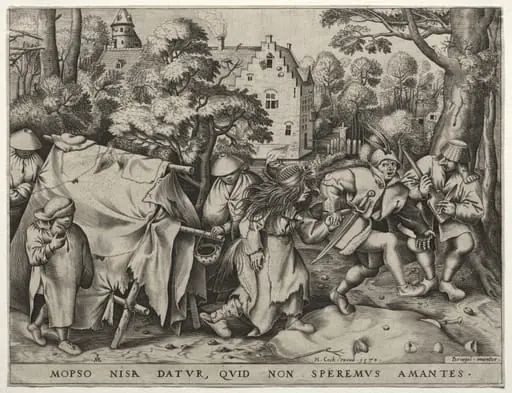
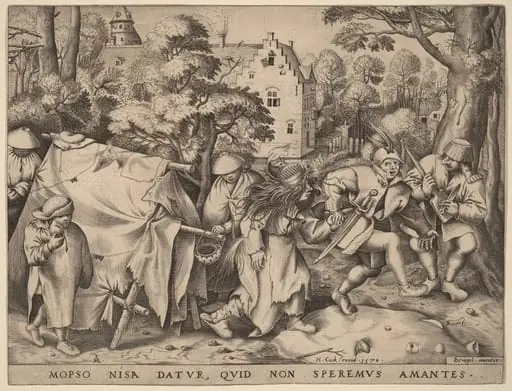
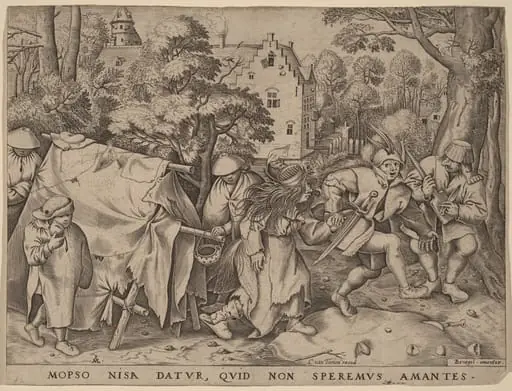
Summer is an ink print by the Renaissance artist Pieter van der Heyden. It dates from 1570 and is held in the collection of the National Gallery of Art.
About this work
Overview
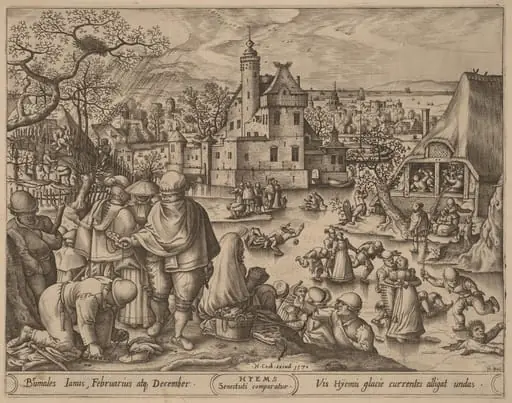
It belongs to a series illustrating the seasons, produced during a time when prints were vital for spreading visual culture across Europe.
Created around 1570 by Flemish engraver Pieter van der Heyden, *Summer* is a black-and-white print made using the engraving technique. It belongs to a series illustrating the seasons, produced during a time when prints were vital for spreading visual culture across Europe. Van der Heyden specialized in translating paintings into engraved forms, making high-quality imagery accessible beyond elite collections.
Subject & Meaning
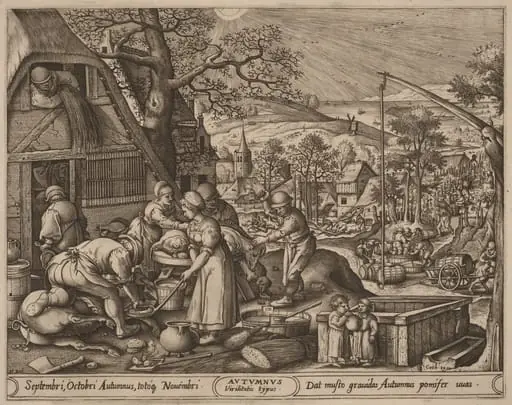
The scene portrays rural labor during the summer harvest: figures wield scythes to cut grass, carry bundled hay, and rest in the shade. A village with a church rises on a distant hill, while livestock graze in the foreground. The imagery reflects the cyclical rhythm of agricultural life, emphasizing communal effort and seasonal duty. The Latin inscription at the base suggests a literary or moral reference, possibly linking labor to broader themes of time or virtue.
Technique & Style
Van der Heyden employed fine, precise lines to model form and texture, using cross-hatching to build depth and shadow across the landscape. The density of lines varies to suggest light, volume, and distance—from the crisp edges of tools to the soft blur of distant hills. This meticulous approach, typical of Northern Renaissance engraving, prioritizes clarity and detail over expressive brushwork, creating a sense of ordered realism.
History & Provenance
The print was made during a flourishing period of Flemish printmaking, when workshops like van der Heyden’s reproduced compositions by leading painters for wider audiences. Though the original painting it may have followed is now lost, the engraving survives in multiple institutional collections, indicating its circulation among collectors and scholars in the late 16th and early 17th centuries.
Context
In the mid-1500s, prints like *Summer* served both decorative and educational roles, helping to standardize visual representations of the seasons across regions. They often drew from classical or biblical traditions of labor, aligning rural life with moral or philosophical ideals. Van der Heyden’s work reflects this trend, bridging artistic innovation with popular themes of nature and human industry.
Legacy
Though van der Heyden is less known today than the painters he reproduced, his engravings preserved and transmitted visual narratives of daily life in the Low Countries. *Summer* remains a documented example of how printmaking democratized imagery, influencing later depictions of rural labor and contributing to the enduring European tradition of seasonal iconography.
Own this work as a print
Artist & collection

Artist
Pieter van der Heyden (c. 1530 - after March 1572) was a Flemish printmaker who is known for his reproductive engravings after works by leading Flemish painters and designers of the 16th century.