Artwork
The Peasant Wedding or the Twelve Months: No. 10
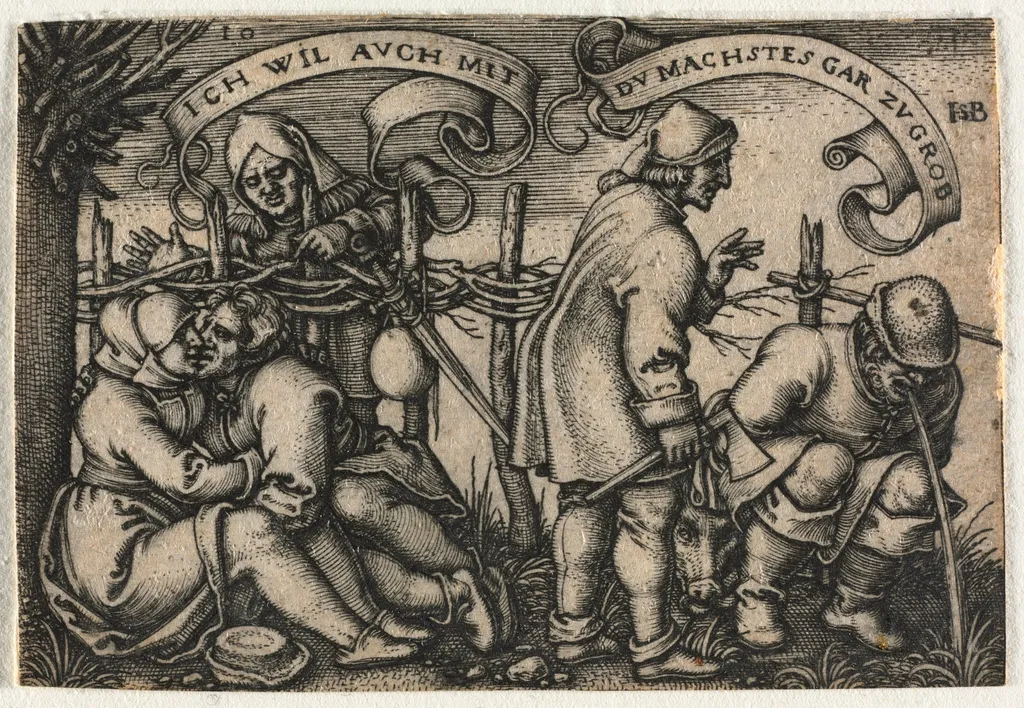
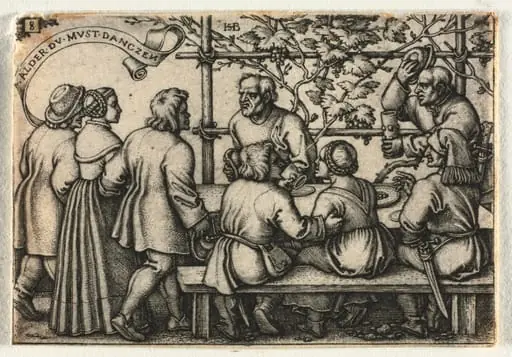
The Peasant Wedding or the Twelve Months: No. 10 is a print by the Renaissance artist Sebald Beham. It dates from 1546 and is held in the collection of the Cleveland Museum of Art.
About this work
Overview
Created in 1546 by Hans Sebald Beham, this small etching is the tenth in a series illustrating the months of the year.
Created in 1546 by Hans Sebald Beham, this small etching is the tenth in a series illustrating the months of the year. Beham, a Nuremberg-born artist known for his intricate miniatures, produced hundreds of engravings and woodcuts. This print, part of the Cleveland Museum of Art’s collection, captures a rural celebration with dense detail, reflecting the artist’s focus on intimate, narrative-driven scenes rather than grand historical themes.
Subject & Meaning
The scene depicts a peasant wedding, traditionally associated with late autumn or early winter, aligning with the tenth month. Rather than idealizing the event, Beham emphasizes communal chaos: figures lean, reach, and laugh in close proximity. The swirling banner above suggests a folk song or toast, grounding the image in oral tradition. The focus on gesture and expression implies a celebration of seasonal cycles and shared labor, not aristocratic pageantry.
Technique & Style
Beham employed fine-line etching to render minute textures—fabric folds, facial wrinkles, and grasping hands—with precision. The composition is tightly packed, using overlapping figures and diagonal lines to create a sense of motion within a confined space. The absence of strong chiaroscuro keeps attention on linear detail, characteristic of the 'Little Masters,' who prioritized craftsmanship and narrative clarity over dramatic lighting.
History & Provenance
Produced during Beham’s mature period in Frankfurt, the print was likely part of a commercial series sold to middle-class collectors interested in seasonal themes. Its survival in the Cleveland Museum of Art’s collection reflects its enduring appeal as an example of 16th-century German printmaking. No earlier ownership records are widely documented, but its inclusion in major collections confirms its recognized place in the printmaking canon.
Context
In mid-16th-century Germany, depictions of peasant life gained popularity among urban audiences, offering both moral instruction and entertainment. Beham’s series aligned with broader trends in Northern Renaissance art that valued observation of daily life. Unlike religious or mythological subjects, these scenes appealed to a growing literate class seeking relatable imagery, often tied to calendars and agricultural rhythms.
Legacy
Beham’s small-scale prints influenced later generations of Northern European artists interested in genre scenes. His ability to convey complex narratives in miniature formats demonstrated the expressive potential of printmaking beyond reproduction. While overshadowed by larger contemporaries, his work remains a key reference for understanding how everyday life was visualized in early modern Europe.
Artist & collection
Artist
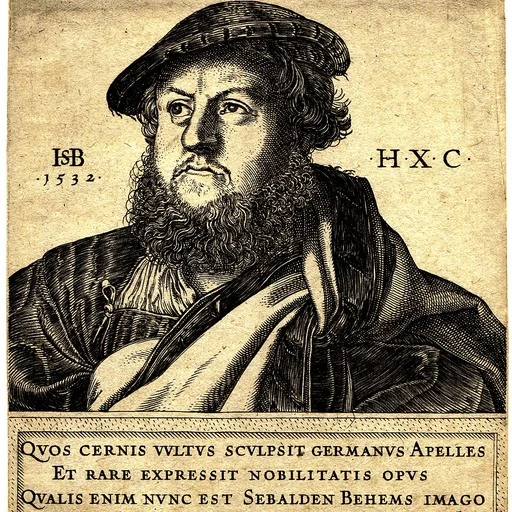
Sebald Beham (1500–1550) was a German painter and printmaker, mainly known for his very small engravings.


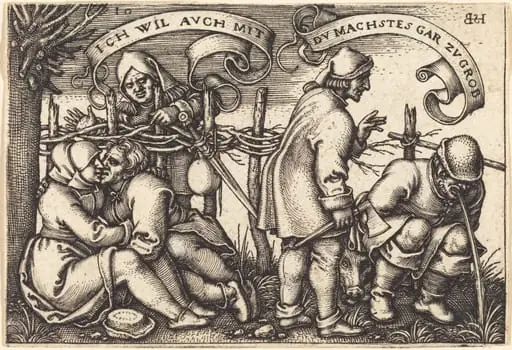 Peasants Behind the Fence
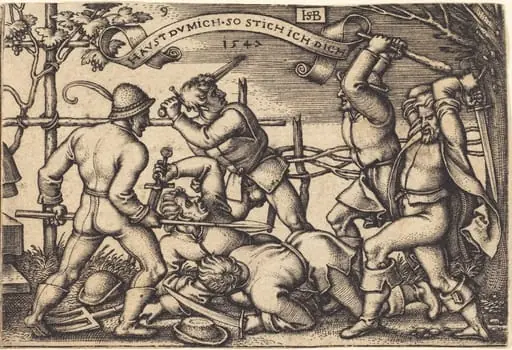 Peasants' Brawl
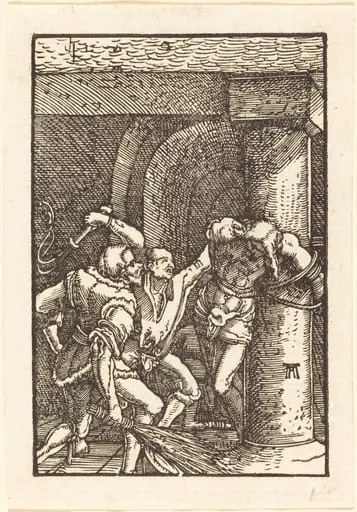 The Flagellation of Christ
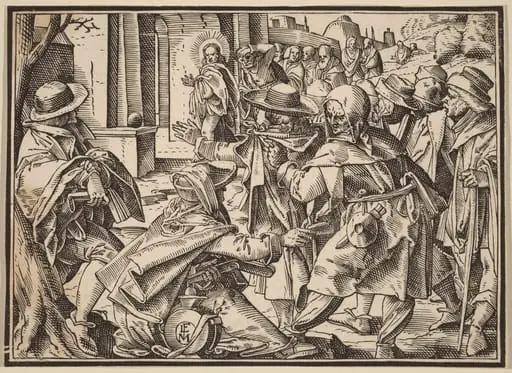 Christ Tells His Disciples of the Last Judgment
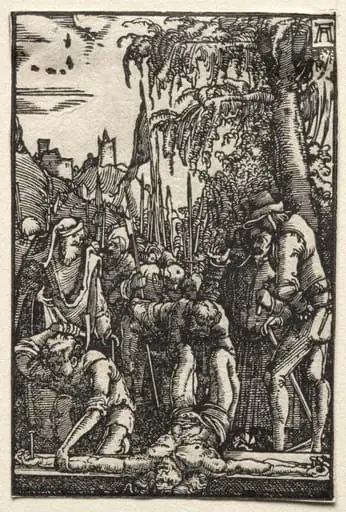 The Fall and Redemption of Man: Christ Nailed to the Cross
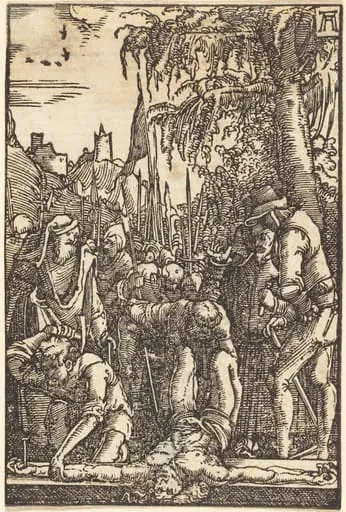 Christ Nailed to the Cross
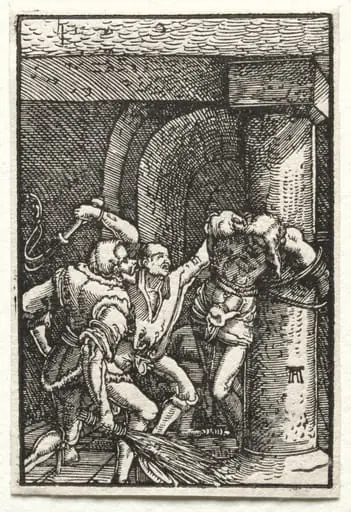 The Fall and Redemption of Man: Flagellation of Christ
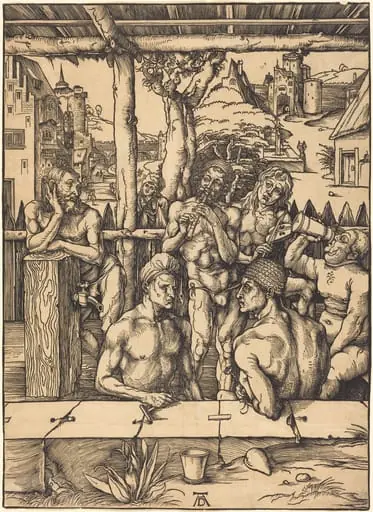 Bath House
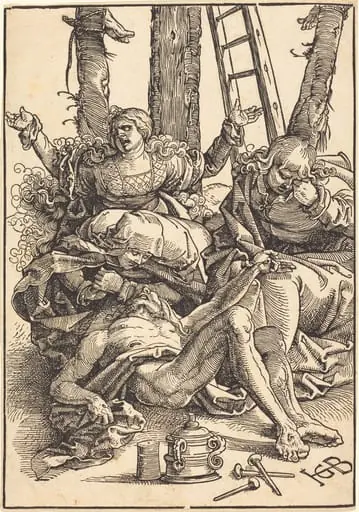 Lamentation for Christ
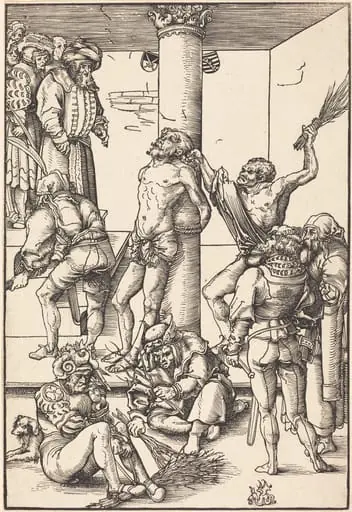 The Flagellation
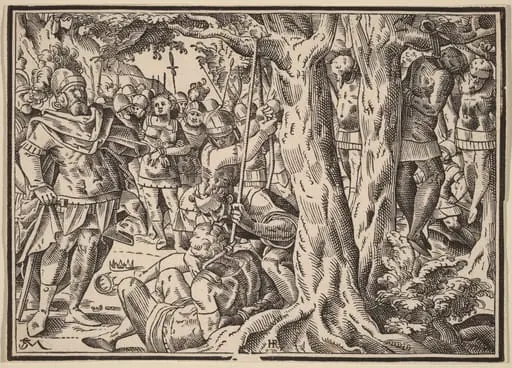 Christ Tells His Disciples of the Last Judgment
 The Peasant Wedding or the Twelve Months: No. 8