Artwork
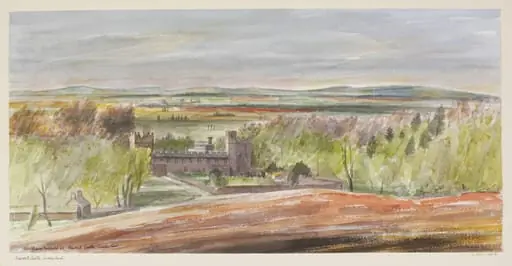
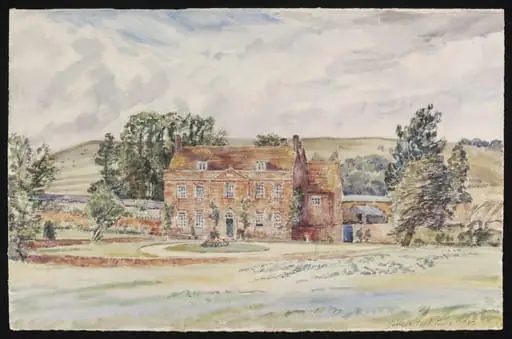
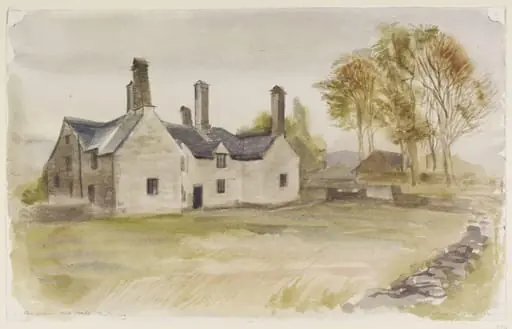
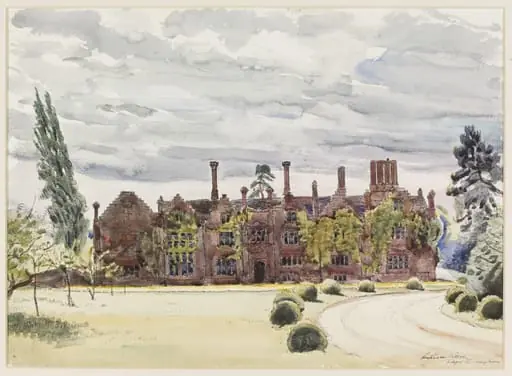
Askham Hall, Westmorland
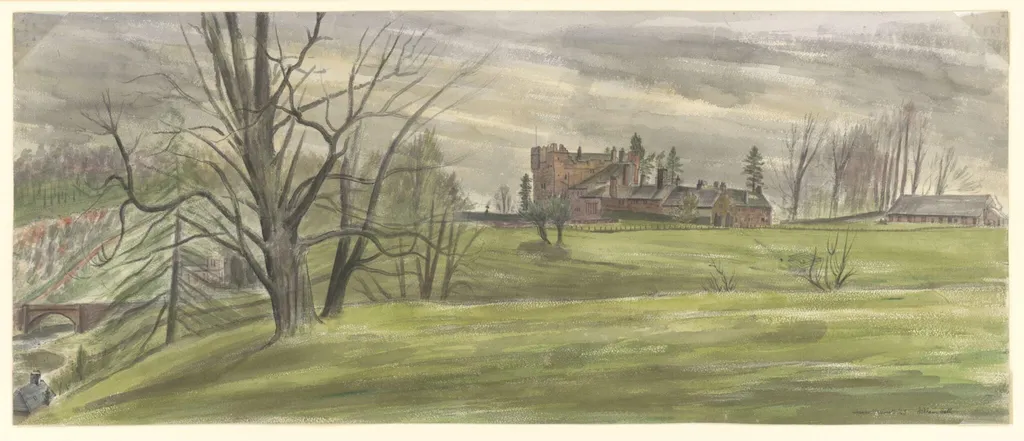
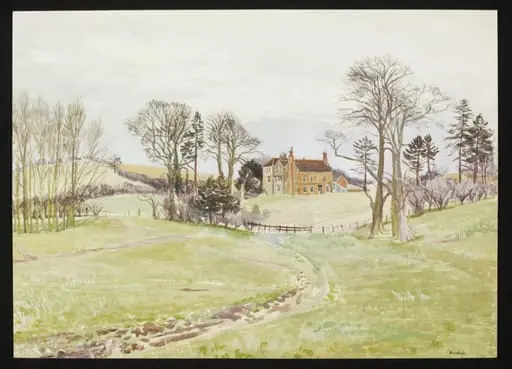
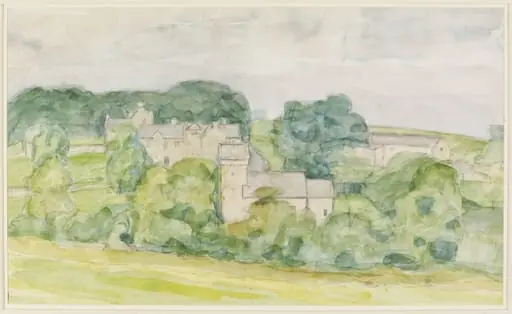
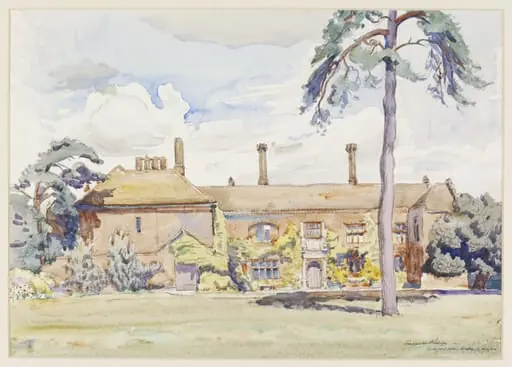
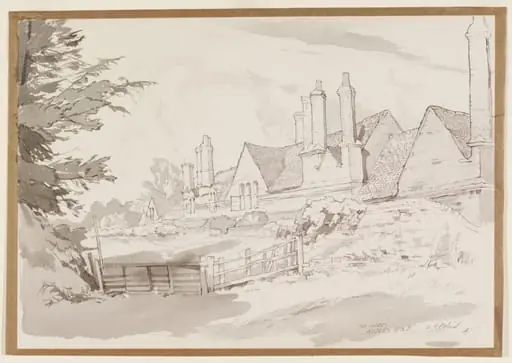
Askham Hall, Westmorland is a watercolor work on paper by Frances Macdonald. It is held in the collection of the Victoria and Albert Museum.
About this work
Overview
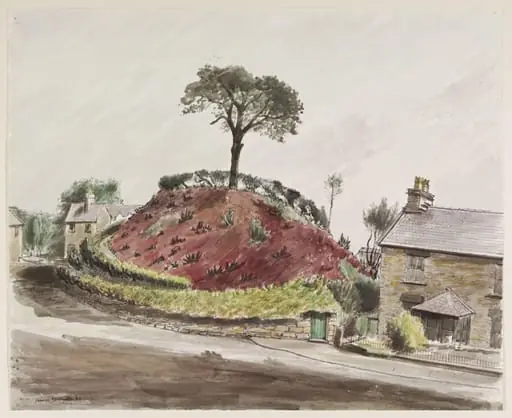
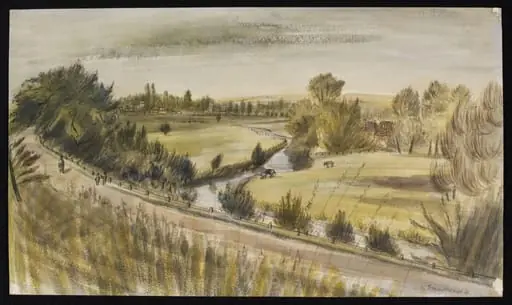
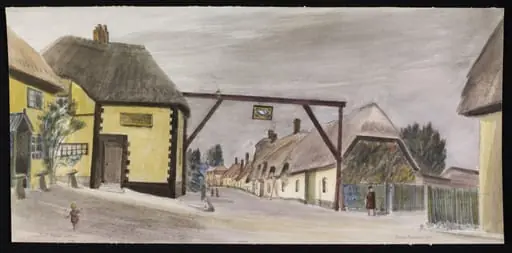
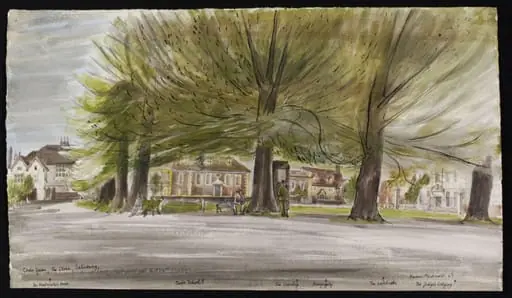
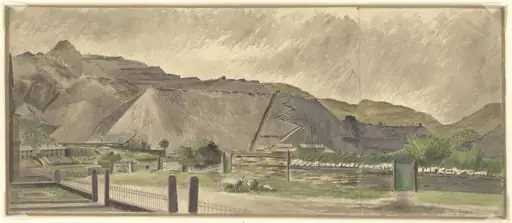
Frances Macdonald’s watercolour of Askham Hall, Westmorland, dates from 1943. Executed in a modest palette of earth tones, the composition presents the stone country house set within a tranquil rural landscape, framed by leaf‑less trees, a small bridge over a stream, and distant dwellings under a pale sky.
Subject & Meaning
The painting records the architectural form of Askham Hall and its surrounding countryside, emphasizing the enduring character of the Westmorland region. By documenting a familiar, unspoiled locale, the work conveys a sense of national continuity amid the uncertainties of wartime Britain.
Technique & Style
Macdonald employs loose, sketch‑like brushwork that suggests light and shadow rather than precise detail. The muted browns, greens, and grays create a subdued atmosphere, while the soft handling of foliage and water imparts a slightly dreamlike quality to the scene.
History & Provenance
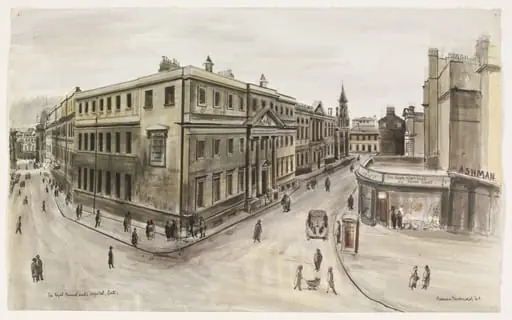
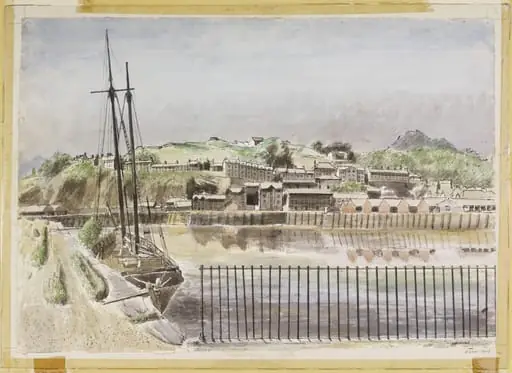
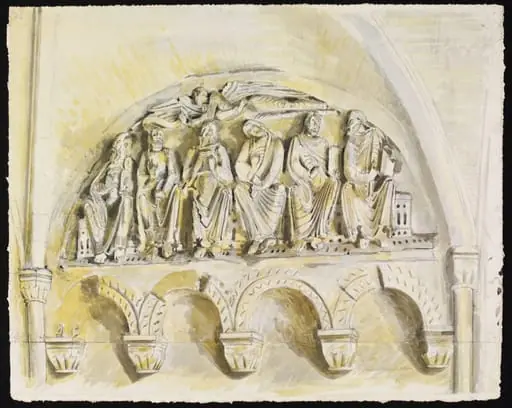
Created as part of the Recording Britain project, the watercolour was commissioned by the Pilgrim Trust under the direction of Sir Kenneth Clark. The initiative gathered more than 1,500 works from 97 artists between 1940 and 1943, aiming to preserve visual records of Britain’s landscape and architecture during World War II.
Context
The Recording Britain scheme responded to fears that aerial bombing and wartime development might alter or destroy historic sites. By enlisting artists like Macdonald, the project sought to capture the visual essence of places considered emblematic of the nation’s heritage.
Artist & collection
Artist
Frances Macdonald MacNair (24 August 1873 – 12 December 1921) was a Scottish artist whose design work was a prominent feature of the Modern Style (British Art Nouveau style) during the 1890s.