Artwork
Vulcan, Apollo and Cupid
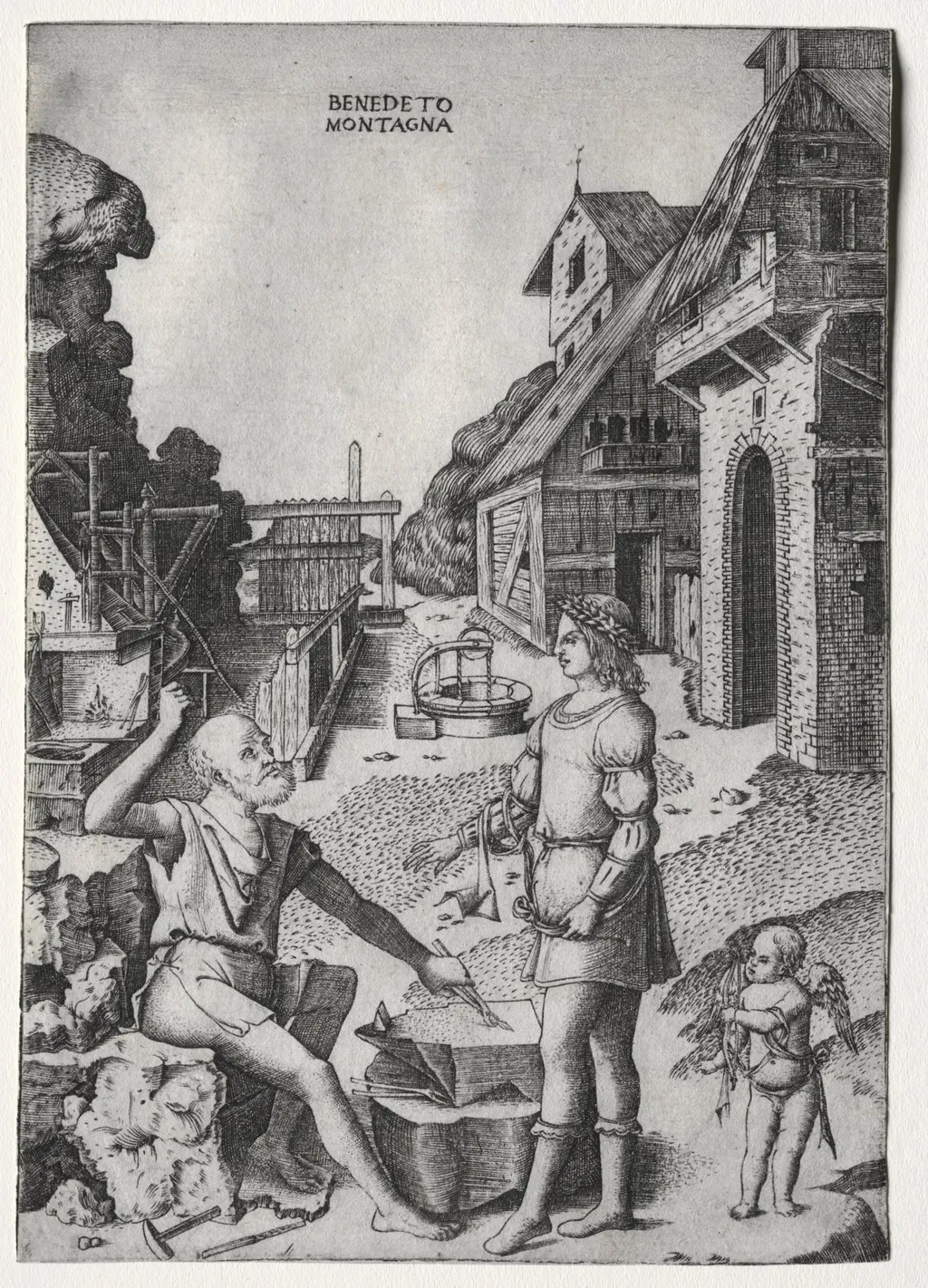
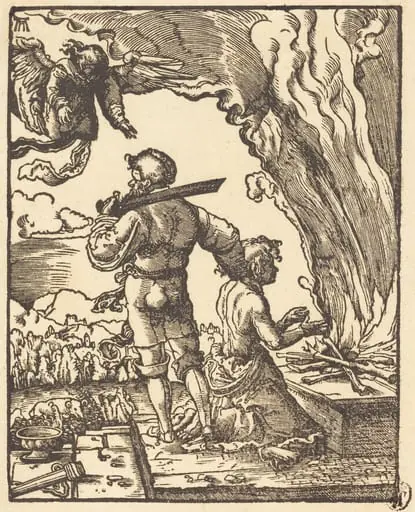
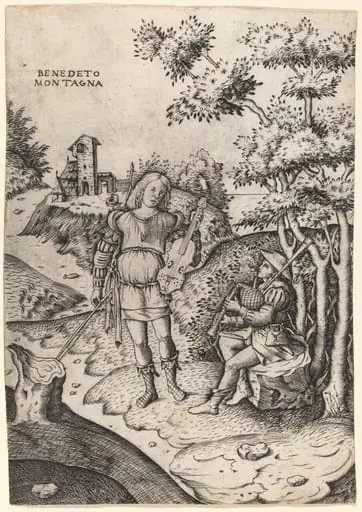
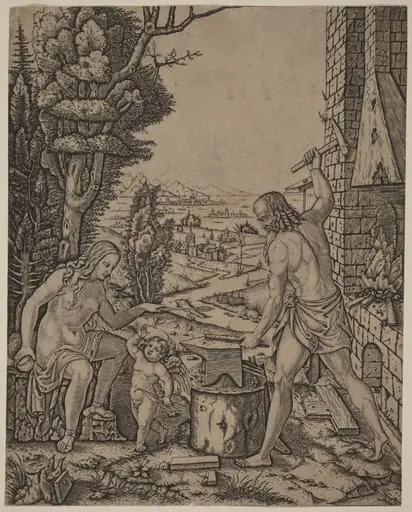
Vulcan, Apollo and Cupid is a print by the Renaissance artist Benedetto Montagna. It dates from 1518 and is held in the collection of the Cleveland Museum of Art.
About this work
Overview
The background features a partially constructed wooden structure, a loom, and a stone wall, blending domestic activity with classical narrative.
Created around 1518, this print by Benedetto Montagna depicts three mythological figures within a workshop setting. The composition includes an older bearded man kneeling beside a wool pile, a younger man in a tunic gesturing toward the floor, and a child clutching a bundle of sticks. The background features a partially constructed wooden structure, a loom, and a stone wall, blending domestic activity with classical narrative.
Subject & Meaning
The three characters represent the Roman gods Vulcan, Apollo, and Cupid, each associated with fire, light, and love respectively. Their placement amid tools of textile production suggests an allegorical link between divine forces and everyday labor, hinting at themes of creation, illumination, and affection intertwined within a quotidian environment.
Technique & Style
Executed as a print, Montagna’s work showcases fine line work and careful shading to render textures such as wool, wood, and stone. The figures are rendered with a balanced proportion and clear outlines, characteristic of early 16th‑century Northern Italian printmaking, while the spatial arrangement reflects a modest perspective typical of workshop scenes.
History & Provenance
The print bears the artist’s signature, confirming Montagna’s authorship. It entered the collection of the Cleveland Museum of Art, where it remains on display. Documentation traces its acquisition to the museum’s early 20th‑century purchases of Renaissance prints, though earlier ownership records are limited.
Context
Produced during the High Renaissance, the work reflects the period’s fascination with integrating classical mythology into contemporary settings. Montagna, active in Vicenza, often combined narrative content with detailed depictions of daily life, aligning with broader artistic trends that sought to humanize mythic subjects through relatable environments.
Artist & collection

Artist
Benedetto Montagna (c. 1480–1555/58) was an Italian engraver and painter. Montagna was born in Vicenza, the son of the leading painter of the city, Bartolomeo Montagna, with whom he trained and perhaps continued to…