Artwork
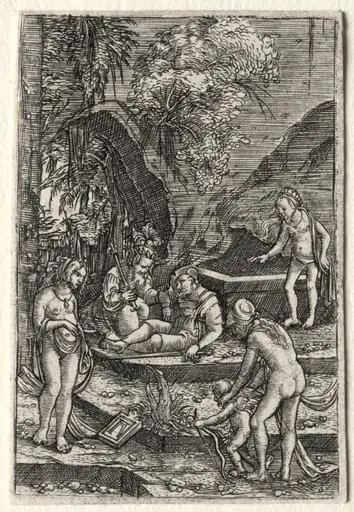
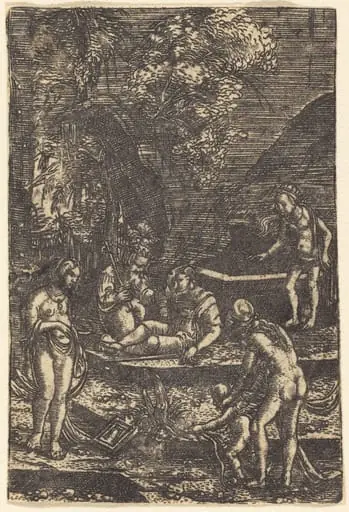
Vulcan, Venus, and Eros
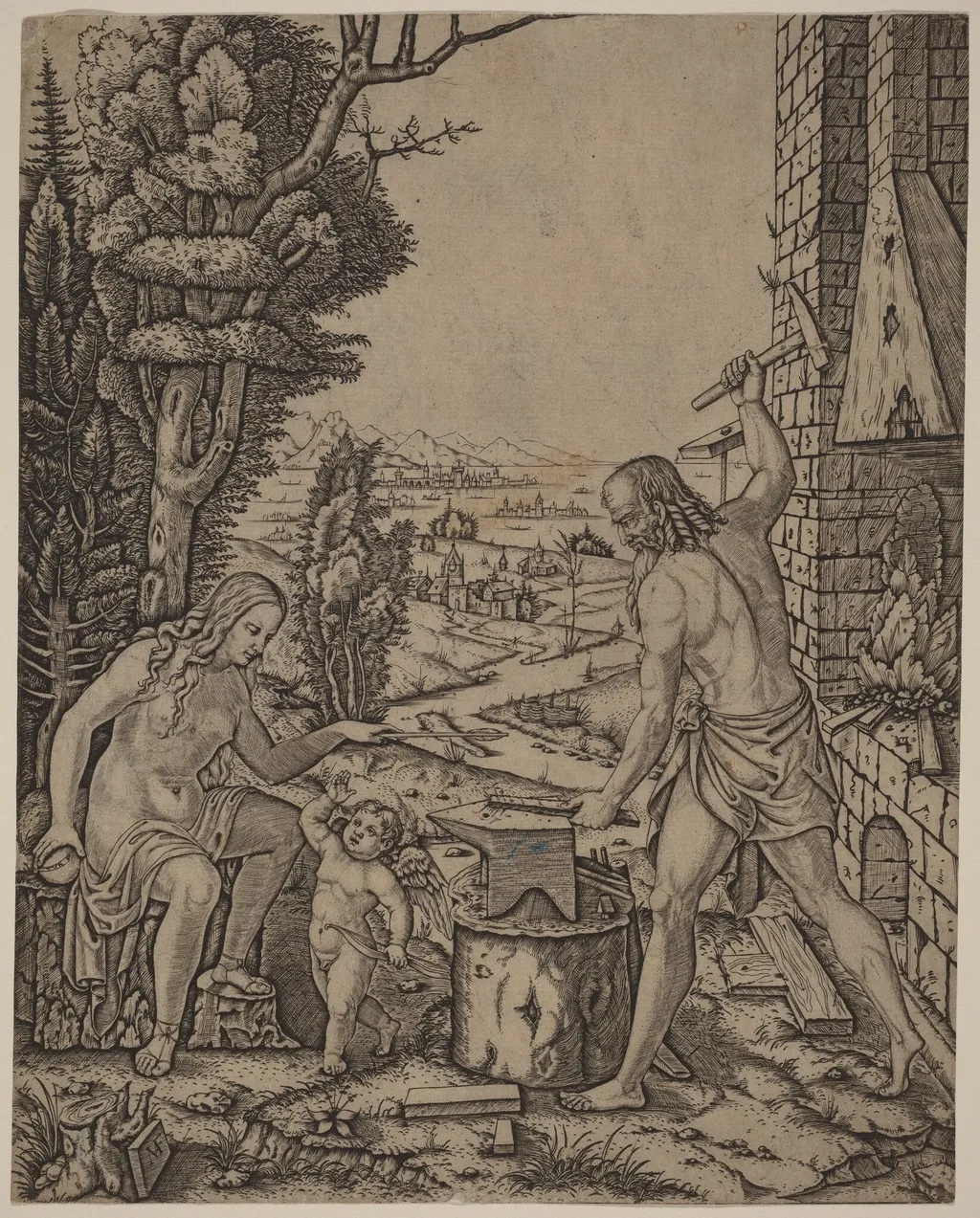
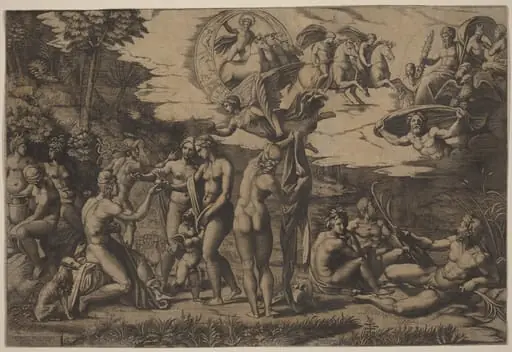
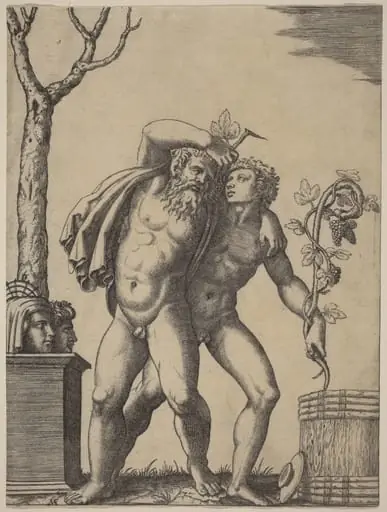
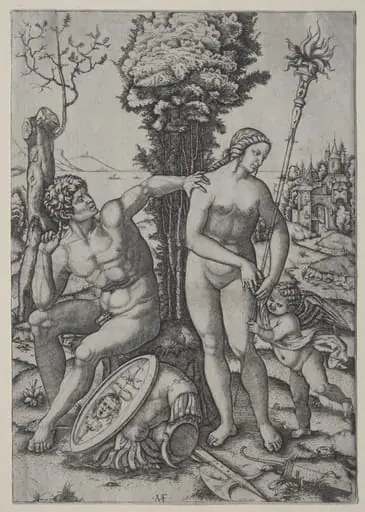
Vulcan, Venus, and Eros is an ink print by the Renaissance artist Marcantonio Raimondi. It dates from 1508 and is held in the collection of the National Gallery of Art.
About this work
Overview
Vulcan, Venus, and Eros is a 1508 engraving by Marcantonio Raimondi, a leading Italian printmaker of the late 15th to early 16th century. The work exemplifies his role as a pioneer in reproductive printmaking.
Subject & Meaning
The engraving portrays a mythological scene with Vulcan (a bearded man with a hammer by a smithy), Venus (a woman in flowing robes), and Eros (a small child reaching for a toolbox). The contrast between Vulcan's muscular build and the softer forms of Venus and Eros, set against a landscape with a distant town, suggests themes of fire, love, and secrecy.
Technique & Style
Executed using the engraving technique, the artist carved lines into a metal plate to produce the image. The piece reflects Raimondi's adaptation of painted designs for print, characteristic of his practice.
History & Provenance
Created in 1508, the engraving benefited from Raimondi's significant collaboration with Raphael, which elevated his career. The exact provenance is not detailed here, but its creation date and Raimondi's method are highlighted.
Context
Vulcan, Venus, and Eros was produced during a period of flourishing artistic collaboration in Italy. Raimondi's work, including this engraving, contributed to the dissemination of artistic designs through reproductive printmaking.
Legacy
As a key example of early 16th-century engraving, Vulcan, Venus, and Eros showcases Raimondi's technical skill and his role in advancing reproductive printmaking, influencing the spread of artistic themes and designs.
Artist & collection

Artist
Marcantonio Raimondi, often called simply Marcantonio (c. 1470/82 – c. 1534), was an Italian engraver, known for being the first important printmaker whose body of work consists largely of prints copying paintings. He…