Artwork
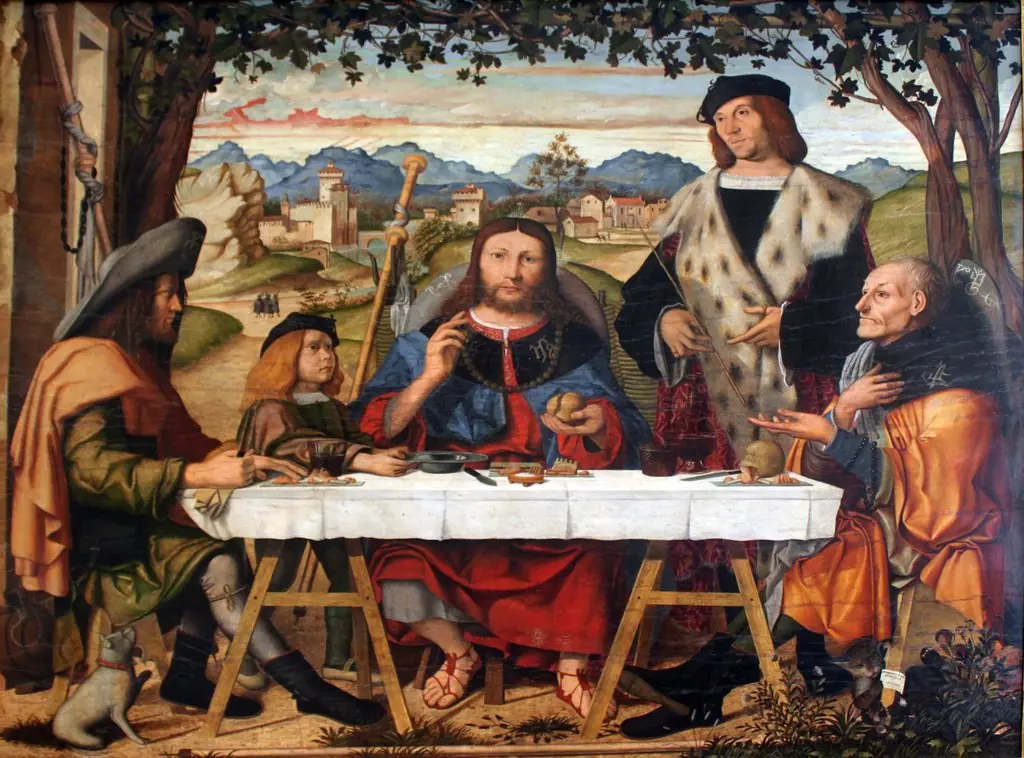
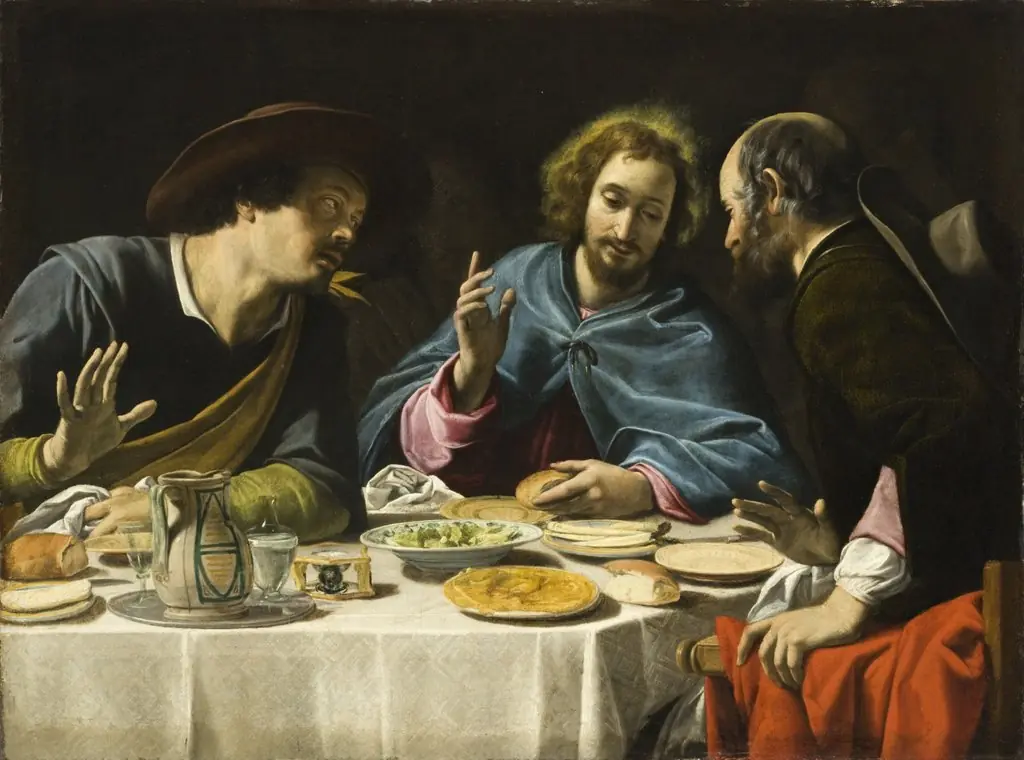
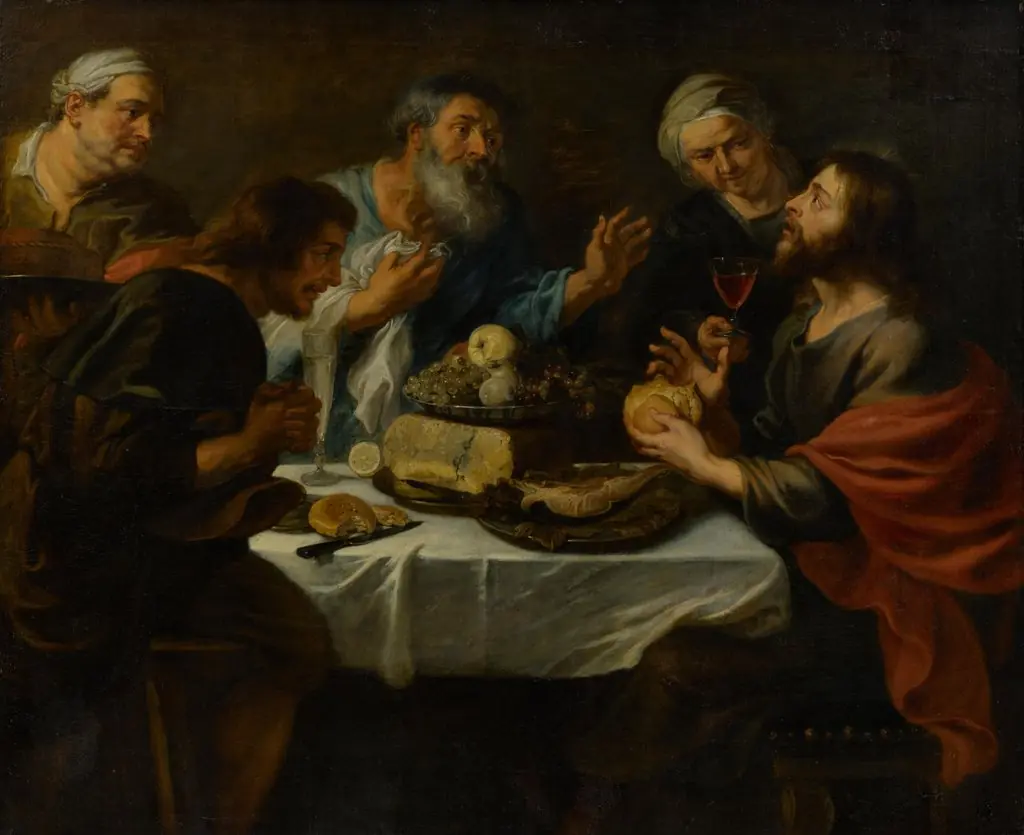
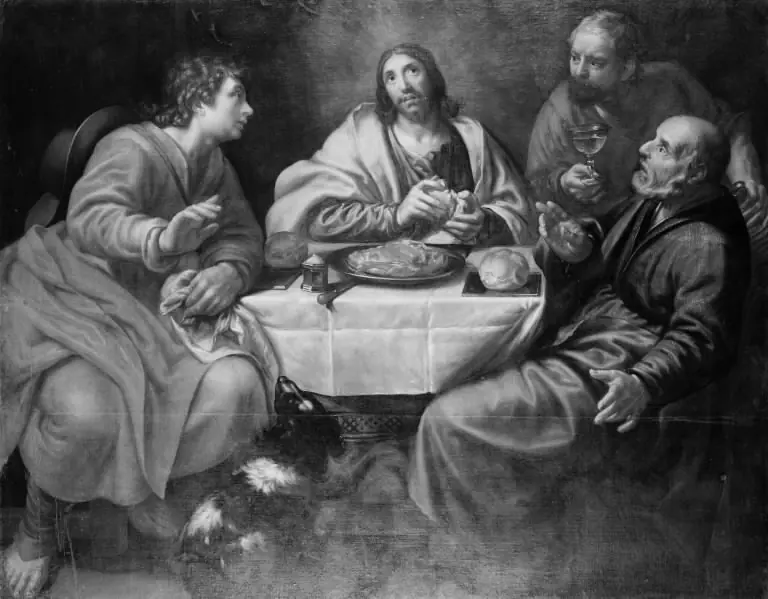
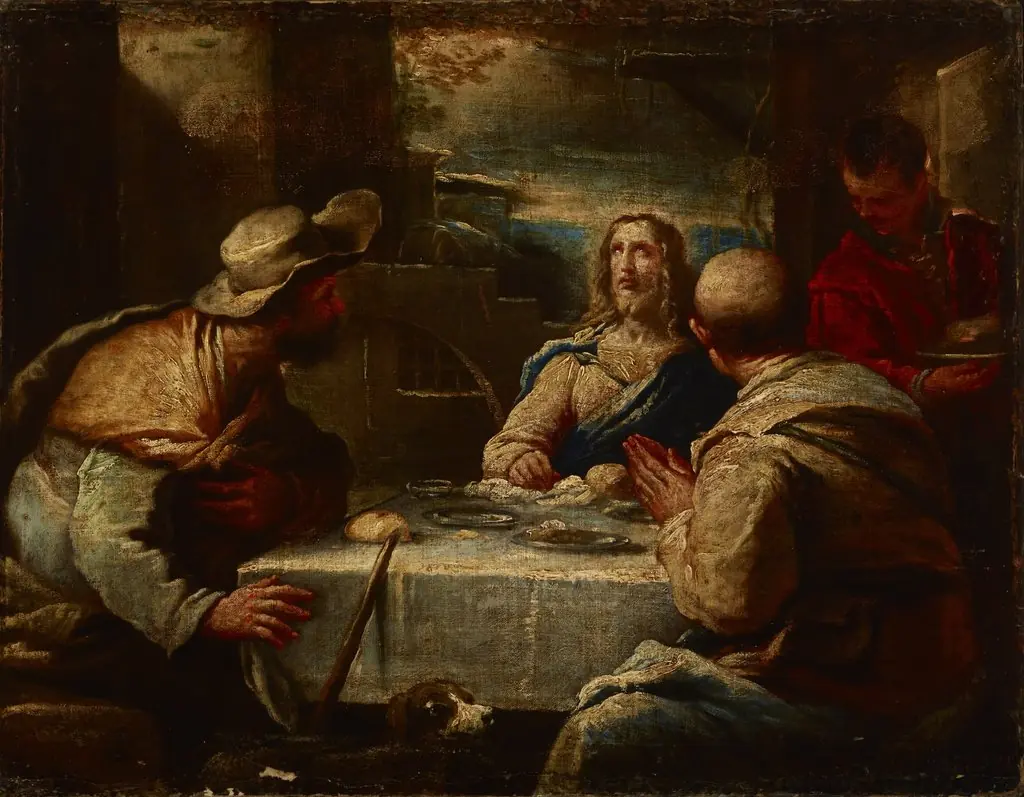
Christ in Emmaus
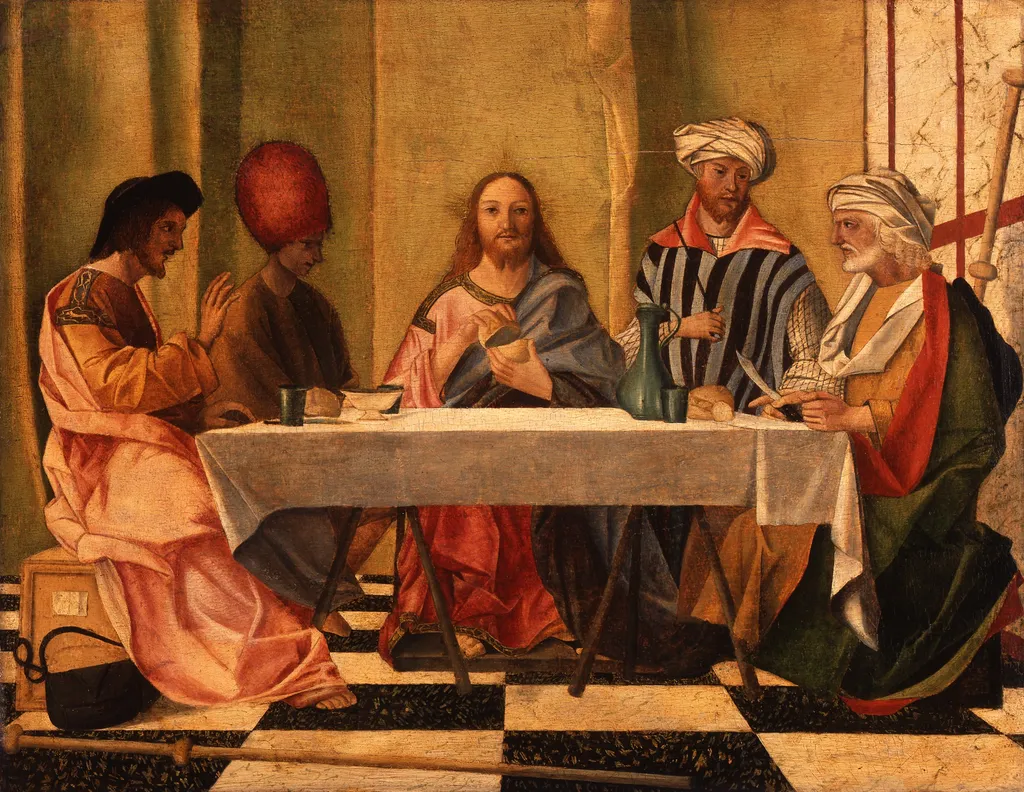
Christ in Emmaus is a paint painting by the Early Renaissance artist Benedetto Rusconi. It dates from 1496 and is held in the collection of the Gemäldegalerie Berlin.
About this work
Overview
Benedetto Rusconi, known as the Diana, created the painting *Christ in Emmaus* in 1496. Executed in paint, the work illustrates the biblical episode of the Supper at Emmaus, when the resurrected Christ reveals himself to two disciples. The composition is preserved in the Gemäldegalerie in Berlin.
Subject & Meaning
The scene shows five figures gathered around a long, white‑covered table. The central figure, identified as Christ, holds a round object that may represent bread, while the surrounding men react with varied gestures and expressions. The painting captures the moment of sudden recognition that defines the Emmaus narrative, emphasizing the contrast between calm divinity and human astonishment.
Technique & Style
Rusconi worked in both tempera and oil, employing the early Renaissance language of naturalistic detail and balanced composition. The figures are rendered with careful attention to clothing textures—a bright red hat, striped robe, and white headwrap—while the interior setting is rendered with a plain, clean backdrop, patterned floor, and muted wall, enhancing the focus on the figures.
History & Provenance
Active in Venice from the late 15th to early 16th century, Rusconi was a contemporary of artists such as Vittore Carpaccio and Giovanni di Niccolò Mansueti. After its creation, the painting entered various collections before becoming part of the Gemäldegalerie Berlin’s holdings, where it remains on display.
Own this work as a print
Artist & collection
Artist
Benedetto Rusconi, nicknamed the Diana, (c. 1460 – 1525) was an Italian Renaissance painter, a companion of Vittore Carpaccio and Giovanni di Niccolò Mansueti, who lived in the latter part of the 15th and early part of…