Artwork
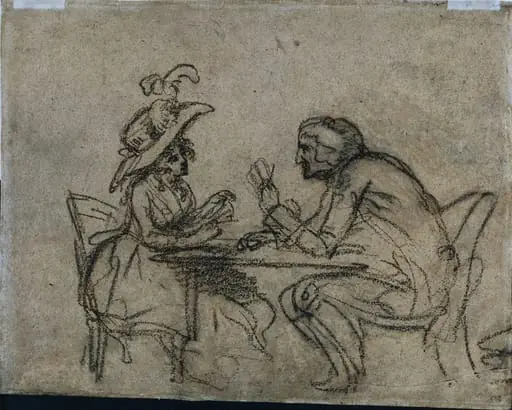
Head of a Screaming Man (recto); Woman and Man Playing Cards (verso)
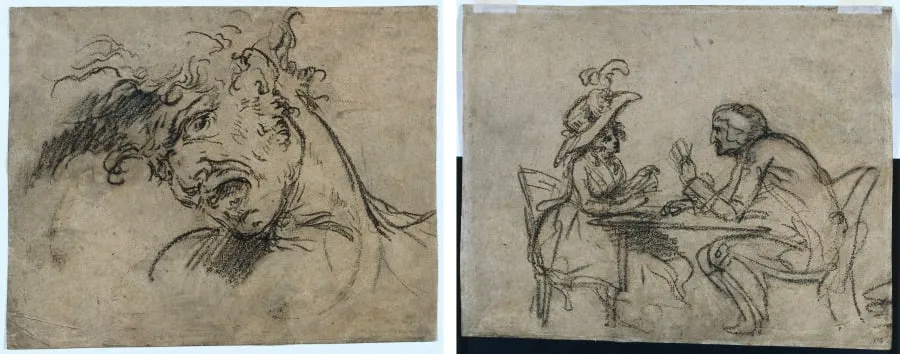
Head of a Screaming Man (recto); Woman and Man Playing Cards (verso) is a drawing by the Romanticist artist Benjamin West. It dates from 1792 and is held in the collection of the Cleveland Museum of Art.
About this work
Overview
The sheet contains two separate drawings by Benjamin West: on the recto a head rendered in a scream, and on the verso a casual scene of a woman and a man engaged in a card game. Both are executed quickly, suggesting preparatory studies rather than finished works, and they share the same light brown paper support.
Subject & Meaning
The screaming head functions as an exploration of extreme emotional expression, likely intended to inform a larger historical composition commissioned by King George III. The card‑playing figures present a more relaxed genre scene, perhaps serving as a compositional warm‑up or a study of everyday interaction.
Technique & Style
West employed bold, thick strokes to model the neck, jaw and brow of the screaming figure, emphasizing muscular tension. He used the mid‑tone of the paper as a base, adding darker crayon shadows beneath the chin and in the hair to suggest depth. The card players are rendered with looser, lighter lines, indicating a quicker, less formal approach.
History & Provenance
The screaming head study is linked to a now‑lost royal commission; its design echoes the teachings of French theorist Charles Le Brun on depicting passion.
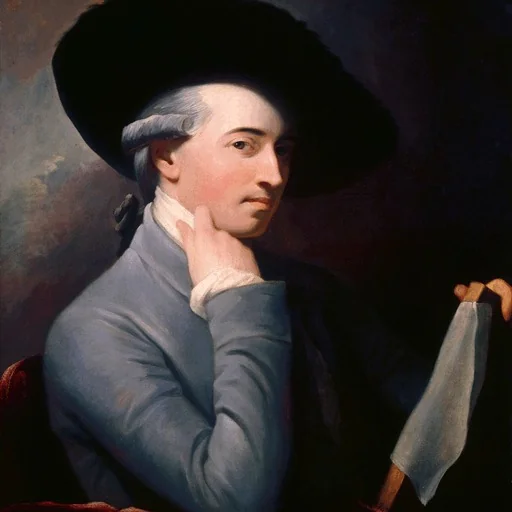
Born in Pennsylvania, trained in Italy and active in London, West became court painter in 1772. The screaming head study is linked to a now‑lost royal commission; its design echoes the teachings of French theorist Charles Le Brun on depicting passion. A related oil sketch of a pharaoh’s scream shows a similar pose, but a Boston drawing of the lost painting presents a different composition, leaving the exact role of this study uncertain.
Context
West’s transatlantic career placed him at the intersection of American colonial art and European academic tradition. His interest in dramatizing emotion aligns with contemporary French academic discourse on the passions of the soul, while his genre sketch of card players reflects the period’s growing interest in everyday subjects alongside grand historical narratives.
Artist & collection

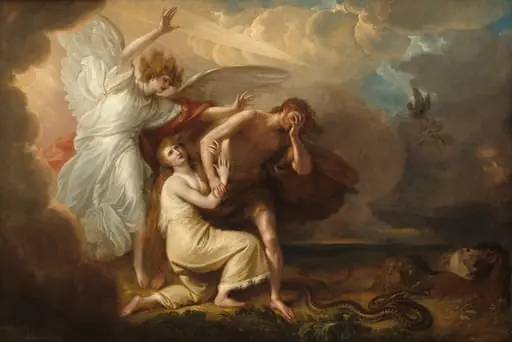 The Expulsion of Adam and Eve from Paradise
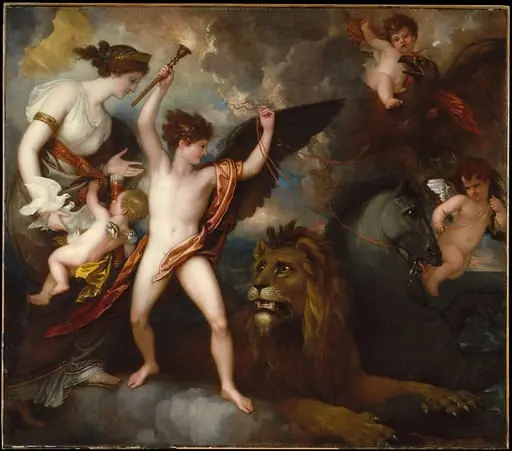 Omnia Vincit Amor, or The Power of Love in the Three Elements
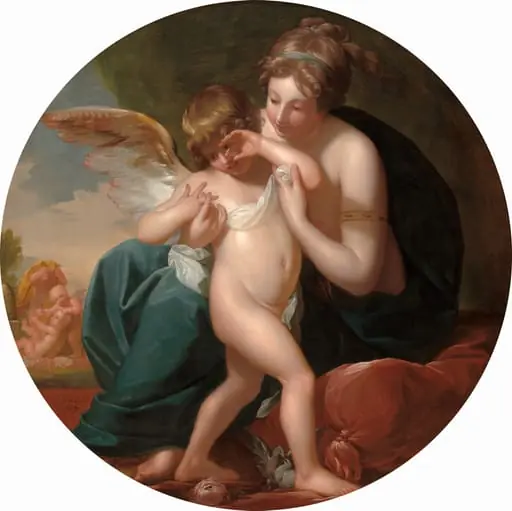 Cupid, Stung by a Bee, Is Cherished by his Mother
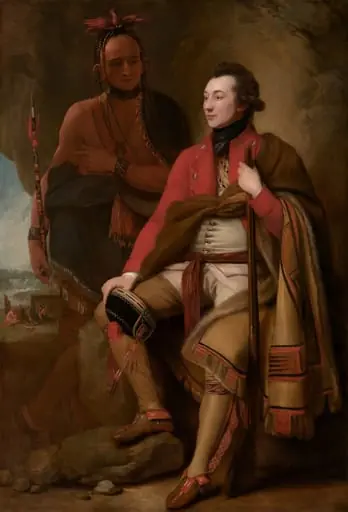 Colonel Guy Johnson and Karonghyontye (Captain David Hill)
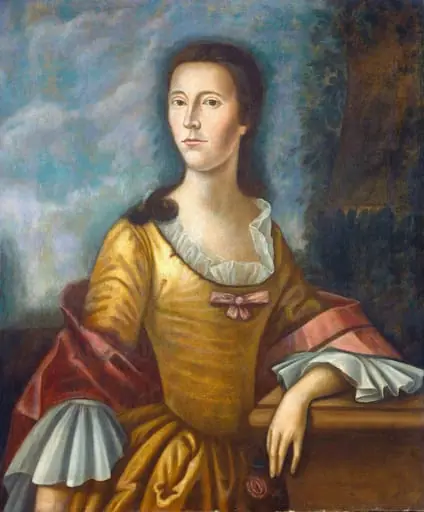 Mary Bethel Boude (Mrs. Samuel Boude)
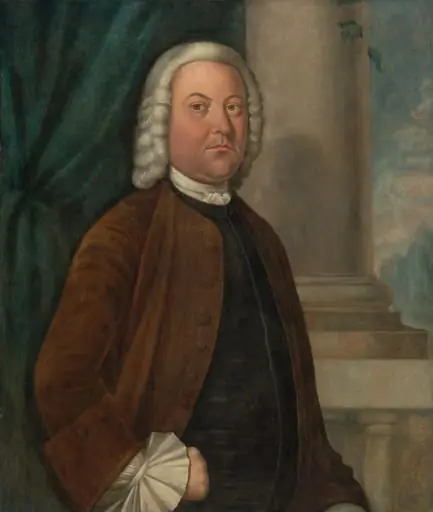 Dr. Samuel Boude
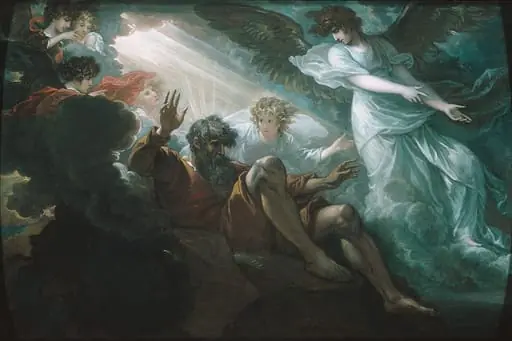 Moses Shown the Promised Land
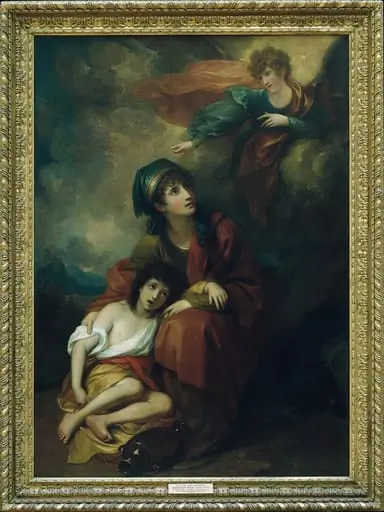 Hagar and Ishmael
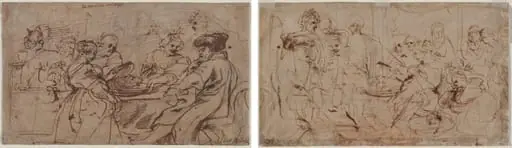 The Feast of Herod (recto); Tomyris with the Head of Cyrus (verso)
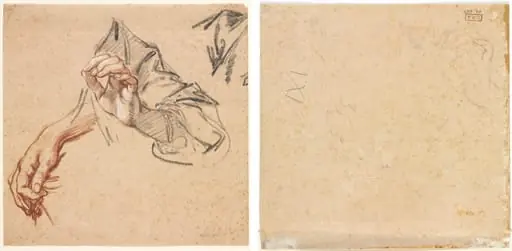 Study of Hands (recto); Sketch of a Hand (verso)
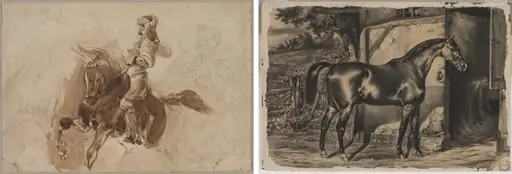 Armored Figure on Horseback (recto); Horse in Front of a Barn (verso)
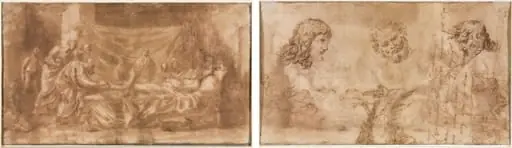 Extreme Unction (recto); Three Heads and Other Sketches (verso)
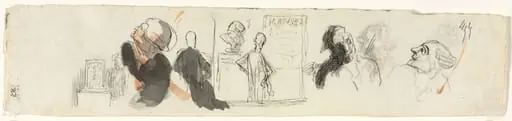 Sketches of Various Figures (verso)
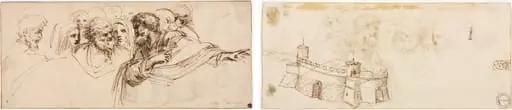 Study of Heads (recto); Crenelated Fortress (verso)
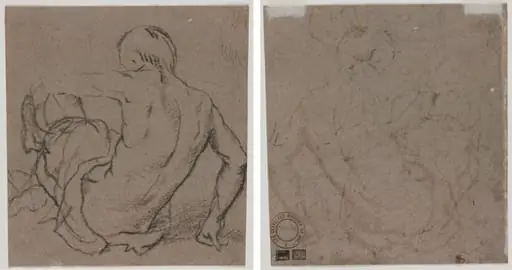 Man Seated on the Ground, Seen from Behind (recto); Sketch (verso)
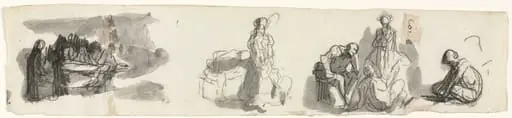 Sheet of Studies with a Group of Four Figures to the Right (recto)
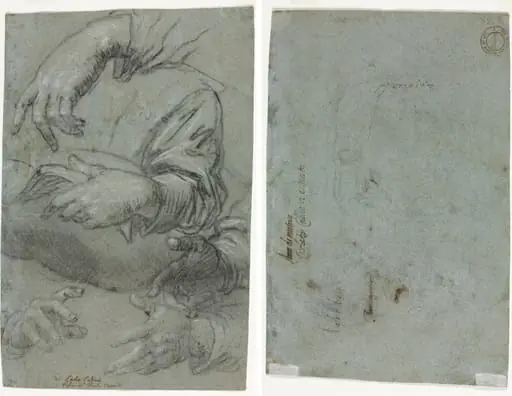 Studies of Hands (recto); Sketch of a Child's Head (verso)
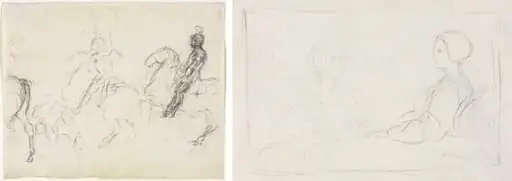 Battle Scene with Armored Figures on Horseback (recto) Two Seated Women (verso)
 Group of Six Children (recto); Sketch of a Village (verso)
 Woman and Man Playing Cards (verso)