Artwork
Battle Scene with Armored Figures on Horseback (recto) Two Seated Women (verso)
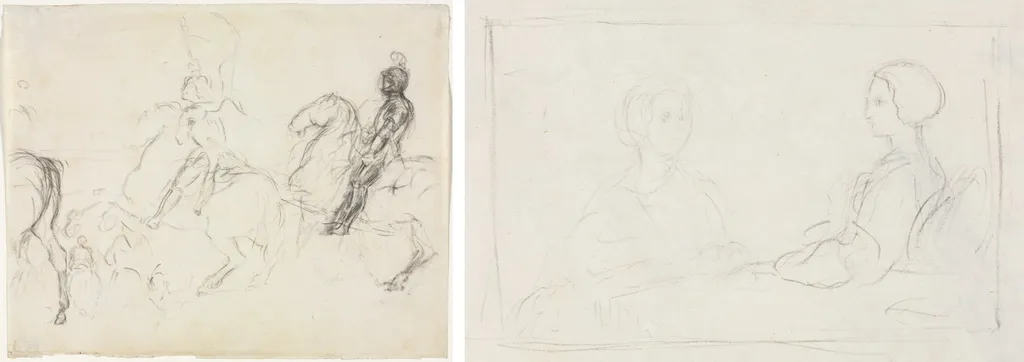
Battle Scene with Armored Figures on Horseback (recto) Two Seated Women (verso) is a drawing by the Impressionist artist Edgar Degas. It dates from 1858 and is held in the collection of the Cleveland Museum of Art.
About this work
Overview
Created in 1858, this paper drawing by Edgar Degas is part of the Cleveland Museum of Art’s collection. The sheet is used on both sides: the front (recto) depicts a brief battle scene with two armored riders, while the reverse (verso) contains a quick study of two women seated. Both images are executed in a sketchy, exploratory manner typical of Degas’s early practice.
Subject & Meaning
The recto presents a fleeting glimpse of cavalry combat, showing one horse rearing and the other standing still, each rider rendered in minimal outline. The opposing figures are reduced to essential forms that suggest movement without narrative detail. On the verso, two women are sketched in a relaxed pose, the drawing serving more as a visual note than a finished composition.
Technique & Style
Degas employed rapid, gestural lines to capture the dynamism of the mounted figures, using simple geometric shapes to indicate posture and motion. The reverse drawing is rendered with lighter, wavering strokes, indicating a provisional study. The lack of shading and the emphasis on contour reflect an early interest in capturing form quickly, prior to the artist’s later, more refined techniques.
History & Provenance
The work dates from Degas’s early period, before his mature Impressionist output, and illustrates his experimental approach to drawing. It entered the Cleveland Museum of Art’s holdings through acquisition (specific details of purchase are not recorded in the provided information). The dual-sided nature of the sheet offers insight into Degas’s practice of reusing paper for multiple studies.
Artist & collection
Artist
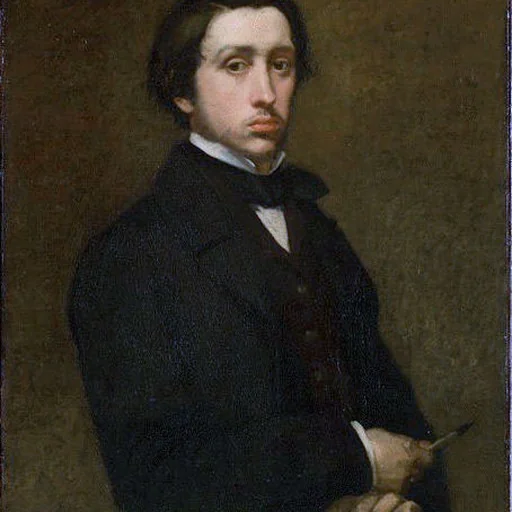
Born Hilaire-Germain-Edgar De Gas on 19 July 1834 in Paris, Edgar Degas came from an affluent banking family with aristocratic roots and spent his childhood among the cultivated circles of the French capital.

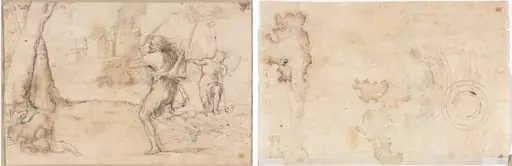 Romulus and Remus Found by Faustulus (recto) Concentric Circles (verso)
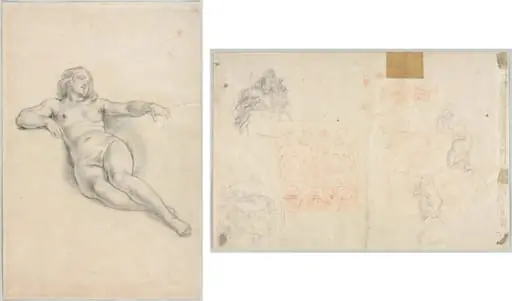 Reclining Female Nude (recto); Various Sketches of Figures and Plants (verso)
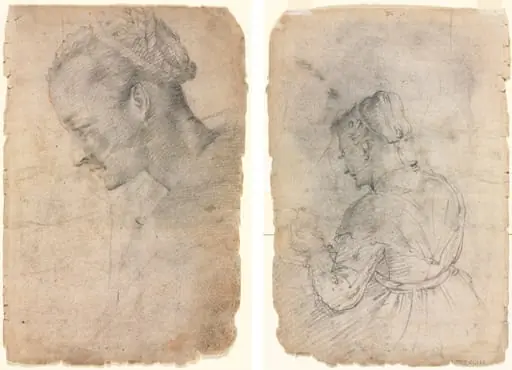 Profile of a Woman's Head (recto) A Kitchen Maid (verso)
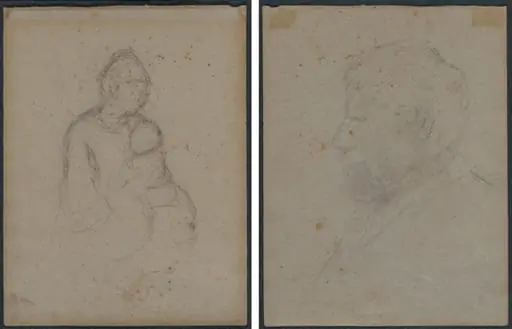 Mother and Child (recto); Profile Bust of a Man (verso)
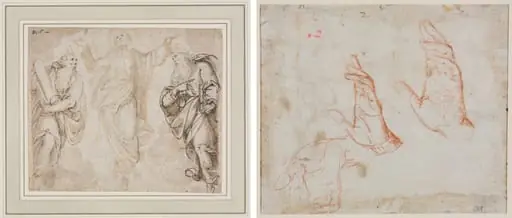 The Transfiguration (recto); Study of Hands (verso)
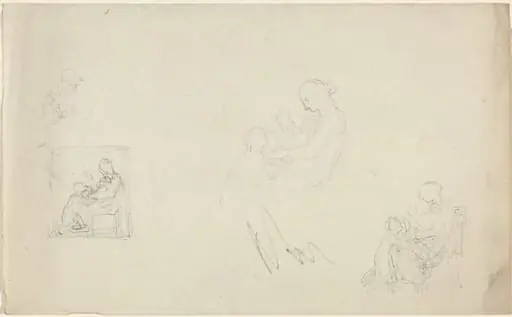 Four Studies of a Seated Woman with Children at Her Feet (Sketches for the Monument to Lady FitzHarris?)
 Extreme Unction (recto); Three Heads and Other Sketches (verso)
 Untitled