Artwork
Armored Figure on Horseback (recto); Horse in Front of a Barn (verso)
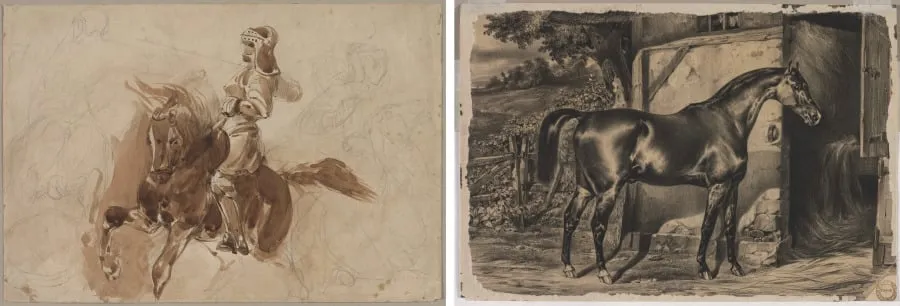
Armored Figure on Horseback (recto); Horse in Front of a Barn (verso) is a drawing by the Romanticist artist Eugène Delacroix. It dates from 1828 and is held in the collection of the Cleveland Museum of Art.
About this work
Overview
This drawing by Eugène Delacroix, created circa 1828, features two distinct compositions on its recto and verso. The recto depicts an armored figure on a rearing horse, while the verso shows a horse standing before a barn.
Subject & Meaning
The armored figure on horseback embodies dramatic and romantic themes characteristic of Delacroix's mature, Romantic-style work, evoking a sense of dynamic energy. The contrasting verso scene of a horse by a barn offers a serene, static counterpoint.
Technique & Style
Delacroix employed quick, loose lines for the armored figure, emphasizing movement and tension, particularly in the horse's tensed muscles. The barn scene utilizes strong chiaroscuro, with pronounced light and dark contrasts, reflecting the influence of Venetian and Rubens' styles on his work.
History & Provenance
Created around 1828, this drawing showcases Delacroix's shift towards emphasizing color, movement, and emotional depth over classical precision, aligning with the French Romantic school's values.
Context
This work reflects Delacroix's inspirations from Rubens and Venetian Renaissance painters, blending their stylistic elements with his own expressive, romantic approach to art.
Legacy
As part of Delacroix's oeuvre, this drawing contributes to the broader legacy of French Romanticism, illustrating the movement's focus on emotion, movement, and the expressive use of light and shadow.
Artist & collection
Artist
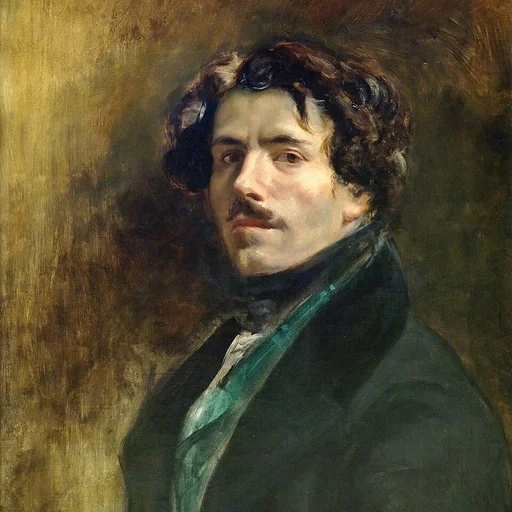
Ferdinand Victor Eugène Delacroix ( DEL-ə-krwah, -KRWAH; French: ; 26 April 1798 – 13 August 1863) was a French Romantic artist who was regarded as the leader of the French Romantic school.

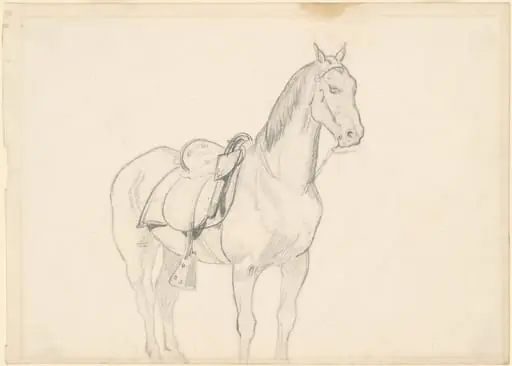 Horse
Horse Landscape with Cattle (recto) Cattle (verso)
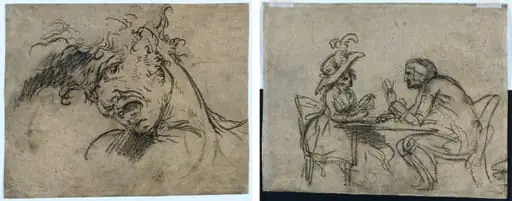 Head of a Screaming Man (recto); Woman and Man Playing Cards (verso)
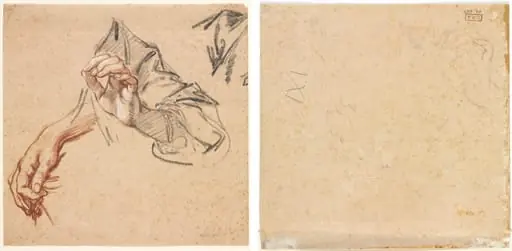 Study of Hands (recto); Sketch of a Hand (verso)
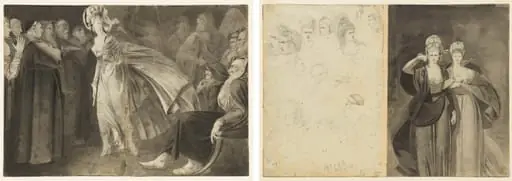 Woman Standing among the Friars (recto) Sketches of Heads (verso, left); Two Women (verso, right)
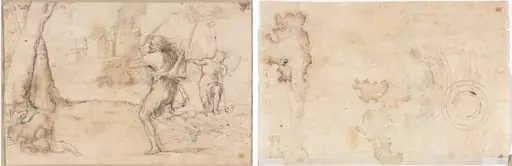 Romulus and Remus Found by Faustulus (recto) Concentric Circles (verso)
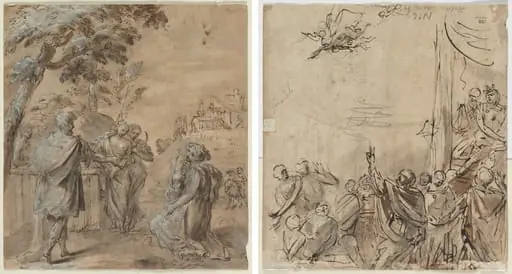 Ruth and Boaz (recto) The Fall of Simon Magus (verso)
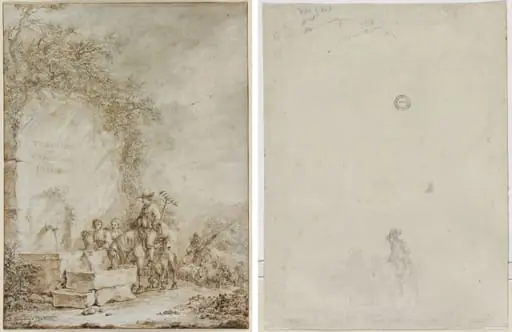 Frontispiece for an Album of Drawings: Peasants at a Fountain (recto); Sketch of Peasants at a Fountain (verso)
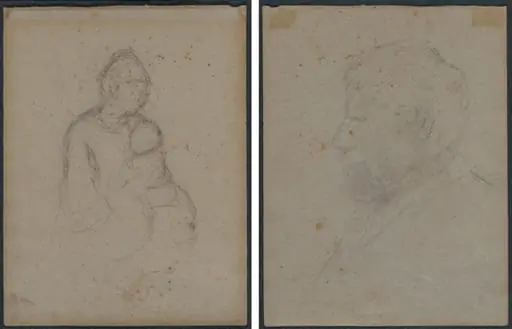 Mother and Child (recto); Profile Bust of a Man (verso)
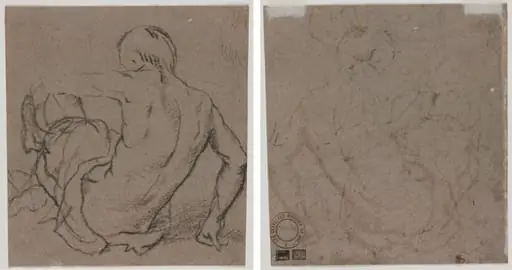 Man Seated on the Ground, Seen from Behind (recto); Sketch (verso)