Artwork
In the barn
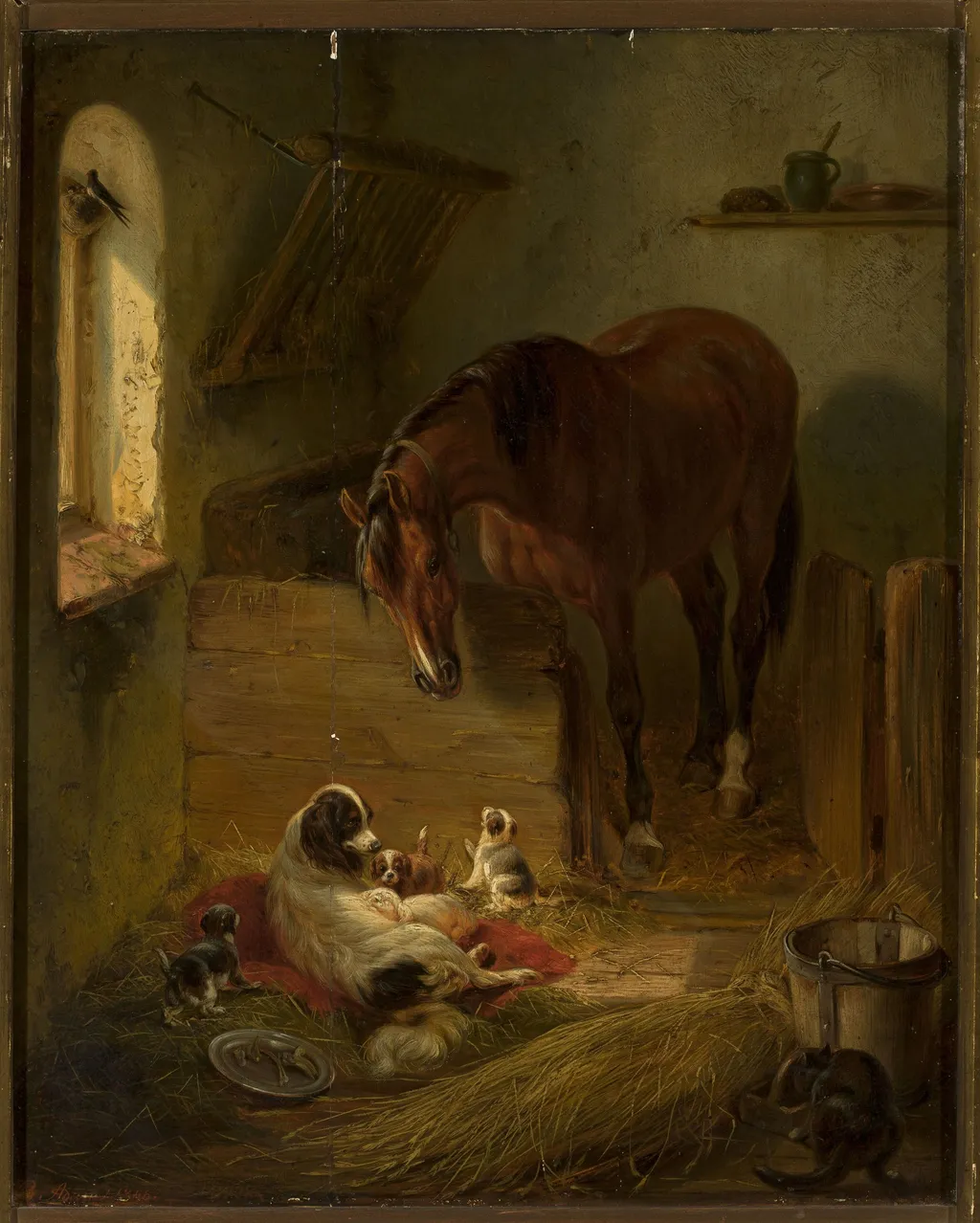
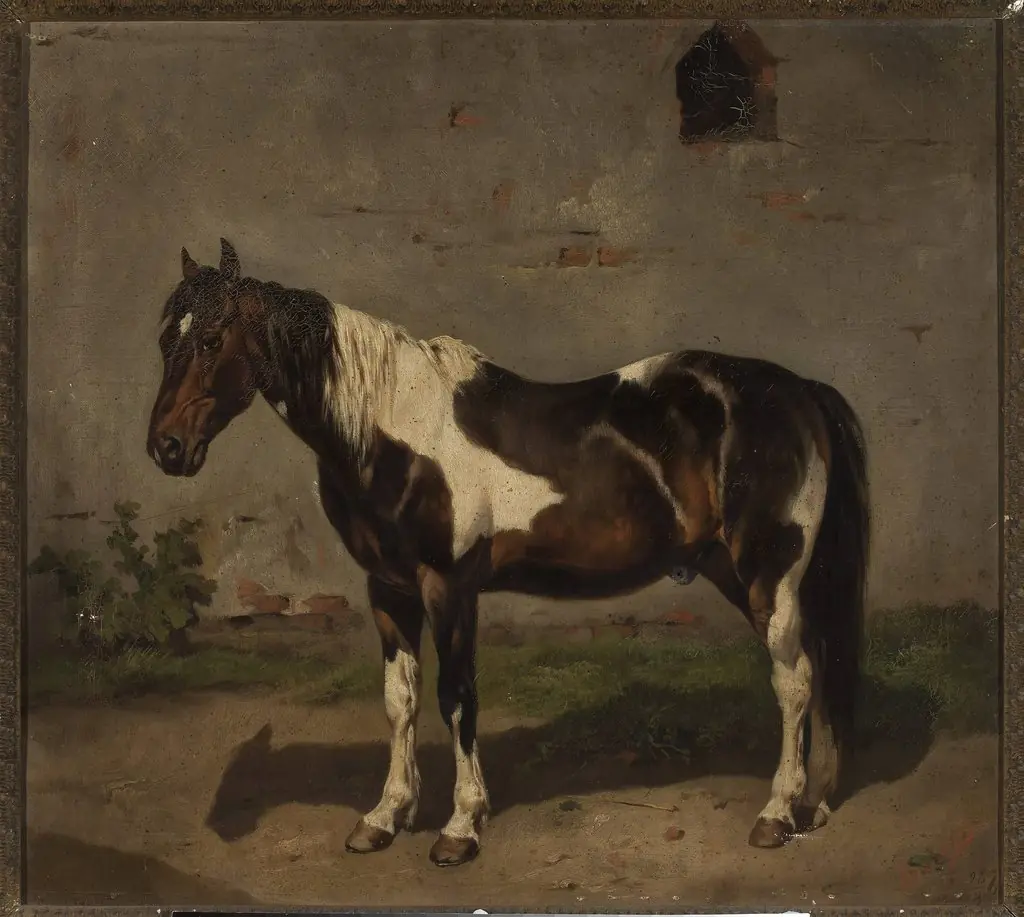
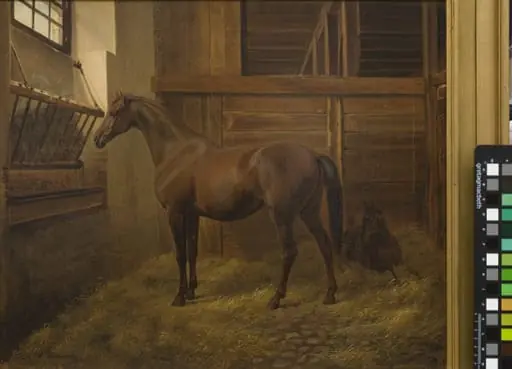
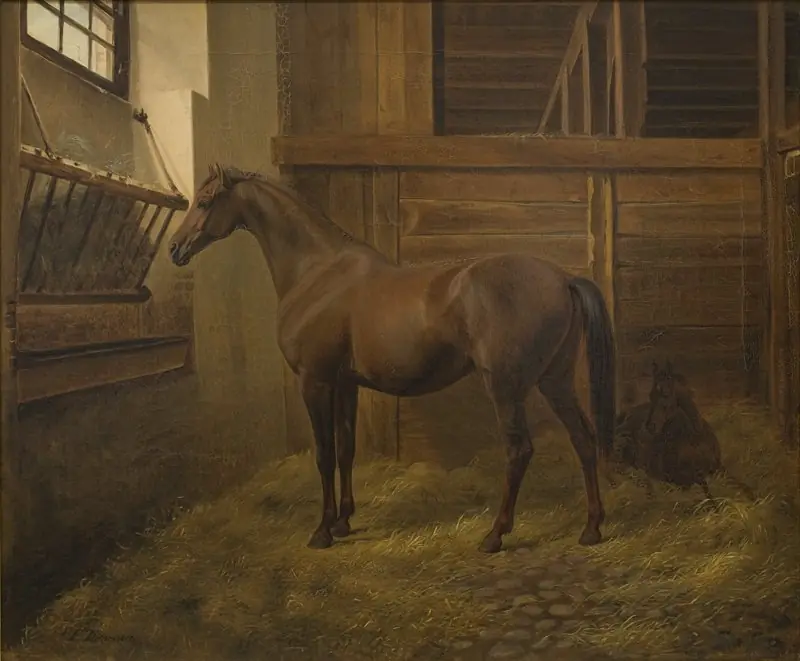
In the barn is an oil painting by Benno Adam. It dates from 1846 and is held in the collection of the National Museum in Warsaw.
About this work
Overview
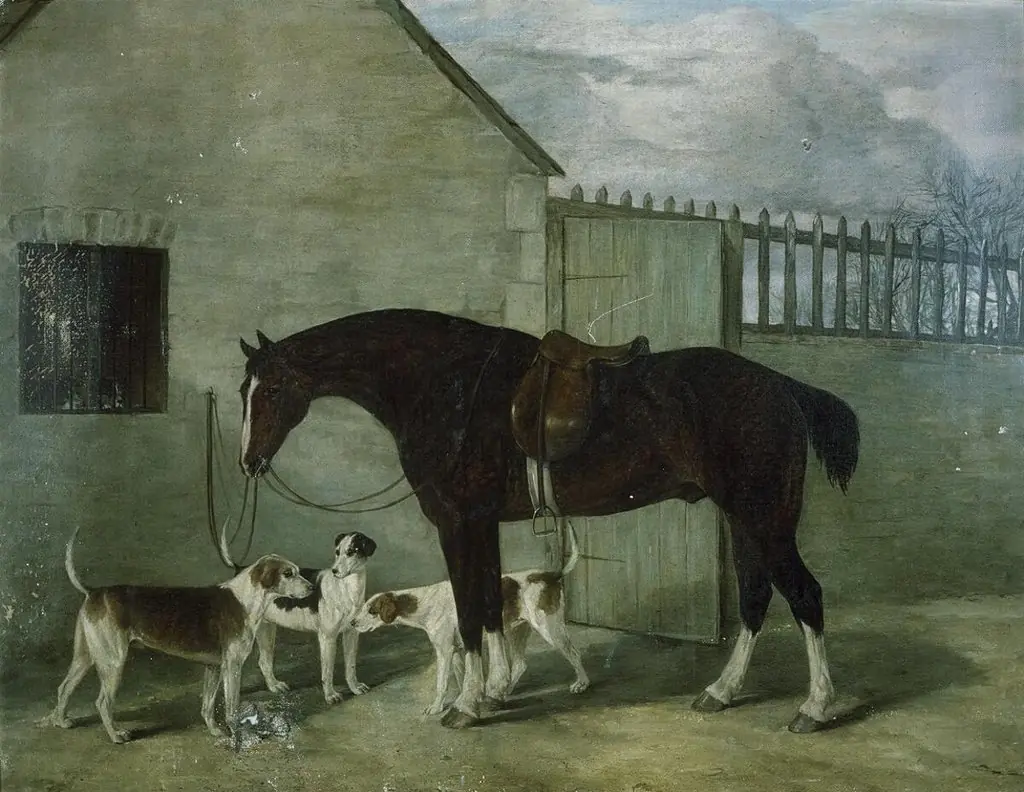
It captures a moment of stillness within a rural stable, focusing on the relationship between a horse and a small group of dogs.
Painted in 1846 by Benno Adam, In the Barn is an oil-on-canvas work depicting a quiet interior scene. The painting is part of the collection at the National Museum in Warsaw. It captures a moment of stillness within a rural stable, focusing on the relationship between a horse and a small group of dogs. The composition is grounded in naturalistic observation, with attention to light, texture, and spatial depth.
Subject & Meaning
The central figure is a dark brown horse with distinctive white markings, standing calmly as several dogs cluster near its hooves. One large dog, white with dark patches, appears dominant among the smaller animals. The scene conveys no overt narrative, but rather a sense of quiet coexistence. The absence of human figures emphasizes the animals’ autonomy, suggesting a quiet dignity in everyday rural life.
Technique & Style
Adam employs chiaroscuro to model form and suggest volume, with light filtering through a window on the left casting soft gradients across the horse’s coat and the scattered hay. Warm earth tones dominate the palette, enhancing the sense of enclosure and warmth. Brushwork is precise yet unobtrusive, favoring texture over detail—particularly in the fur of the dogs and the roughness of the wooden beams.
History & Provenance
The painting was completed in 1846 and entered the collection of the National Museum in Warsaw at an early date, likely through state acquisition or donation. Its presence in the museum’s holdings reflects 19th-century interest in genre scenes of rural life. No significant changes in ownership are documented, and the work has remained in public collection since its acquisition.
Context
Benno Adam worked during a period when European artists increasingly turned to everyday rural subjects, influenced by Romanticism and growing interest in national identity. In the Barn aligns with this trend, avoiding idealization in favor of quiet observation. Though not part of a major movement, the painting reflects broader cultural attention to the dignity of animals and agricultural life in mid-19th-century Central Europe.
Legacy
The painting remains a modest but enduring example of 19th-century animal genre painting in Poland. It has not been widely reproduced or studied outside institutional contexts, yet it continues to be displayed as representative of Adam’s skill in capturing tranquil, intimate moments. Its quiet realism contributes to the museum’s collection of works that document everyday life in pre-industrial rural settings.
Artist & collection