Artwork
The Arno in Florence with the Ponte Vecchio
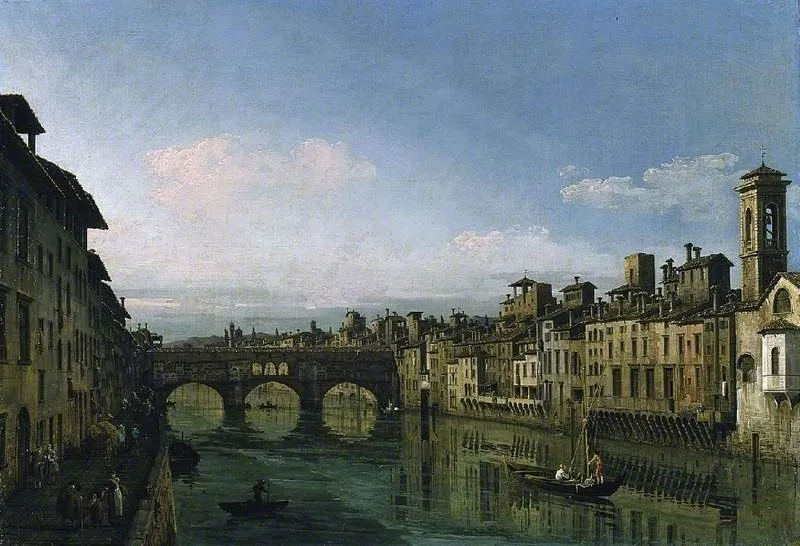
The Arno in Florence with the Ponte Vecchio is an oil painting by Bernardo Bellotto. It dates from 1745 and is held in the collection of the Fitzwilliam Museum.
About this work
Overview
The composition presents a quiet, observational perspective of the city’s urban landscape, rendered with precision and a restrained palette.
Painted in 1745, this oil work by Bernardo Bellotto captures a view of the Arno River in Florence, centered on the Ponte Vecchio. The composition presents a quiet, observational perspective of the city’s urban landscape, rendered with precision and a restrained palette. The painting is part of the Fitzwilliam Museum’s collection, where it remains a key example of 18th-century topographical painting.
Subject & Meaning
The scene depicts Florence’s most recognizable river crossing, the Ponte Vecchio, flanked by rows of buildings that line both banks. The bridge, with its three stone arches, anchors the composition, while the river reflects the sky and surrounding architecture. The absence of human activity emphasizes stillness, suggesting a contemplative record of the city’s physical form rather than a narrative moment.
Technique & Style
Bellotto employed fine brushwork to render architectural details—windows, balconies, and the tower’s masonry—with clarity. The sky, lightly tinted blue with scattered clouds, is mirrored in the calm water, enhancing spatial depth. Shades of gray and brown dominate the structures, creating a muted harmony. The inclusion of small boats adds subtle movement without disrupting the overall tranquility.
History & Provenance
Commissioned during Bellotto’s early career in Italy, the painting reflects his training under his uncle Canaletto and his growing reputation for accurate urban views. It entered the Fitzwilliam Museum’s collection in the 19th century, likely through a private acquisition, and has remained there since, serving as a reference for Florentine topography of the period.
Context
In the mid-18th century, views of Italian cities were sought after by northern European travelers on the Grand Tour. Bellotto’s works, including this one, catered to that demand by offering precise, unembellished depictions of urban landmarks. Unlike romanticized landscapes, his paintings functioned as visual documents, valued for their fidelity to place.
Legacy
This painting exemplifies Bellotto’s role in the tradition of veduta painting, bridging topographical accuracy and artistic composition. While less celebrated than his later works in Central Europe, this early piece demonstrates his command of light, structure, and spatial coherence, influencing subsequent generations of cityscape painters.
Artist & collection
Artist
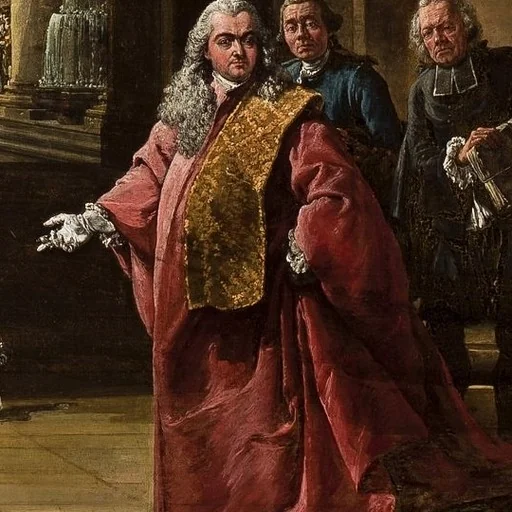
Bernardo Bellotto, was an Italian urban landscape painter or vedutista, and printmaker in etching famous for his vedute of European cities – Dresden, Vienna, Turin, and Warsaw.

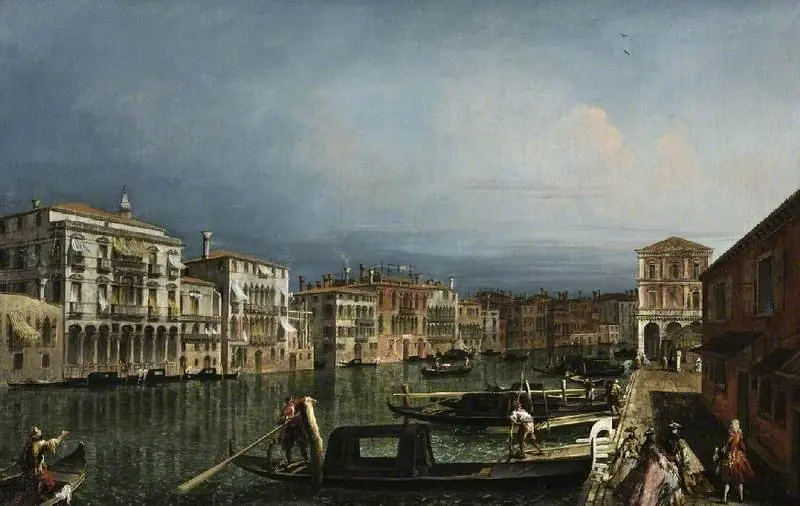 The Grand Canal, Venice, above the Rialto bridge
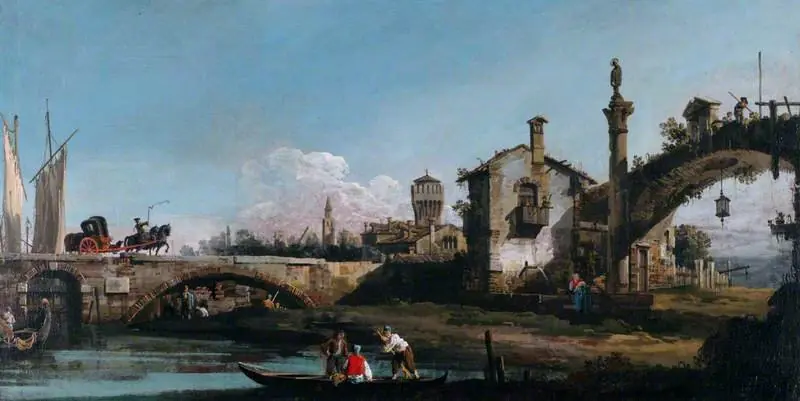 Capriccio with Two Bridges and Figures
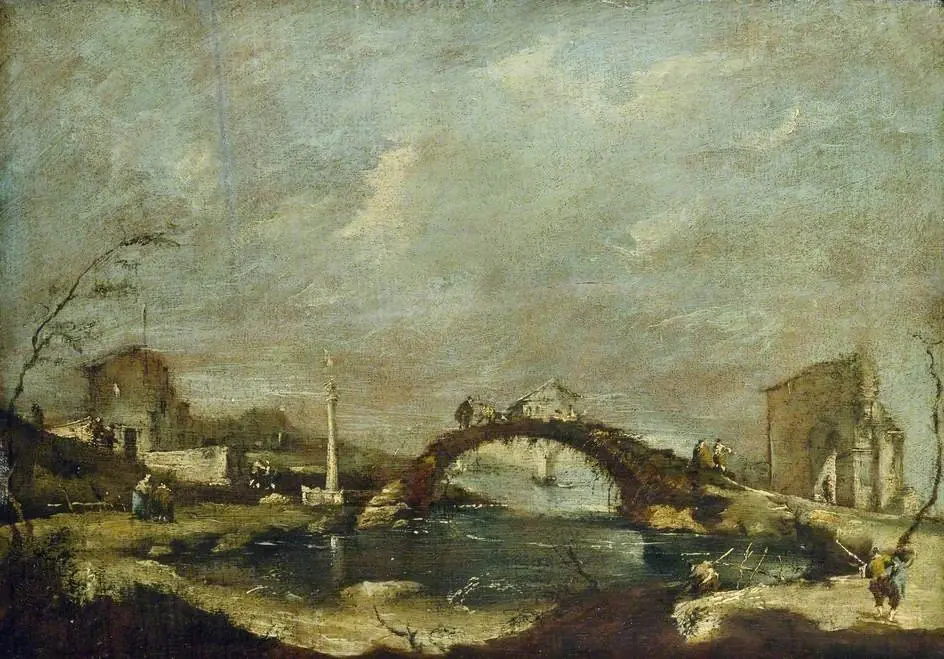 Capriccio Landscape
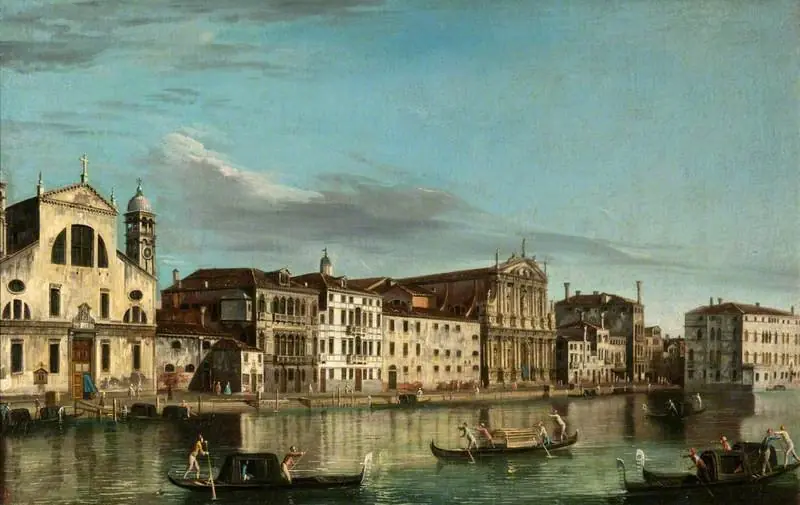 The Grand Canal: Santa Lucia and the Church of the Scalzi, Venice
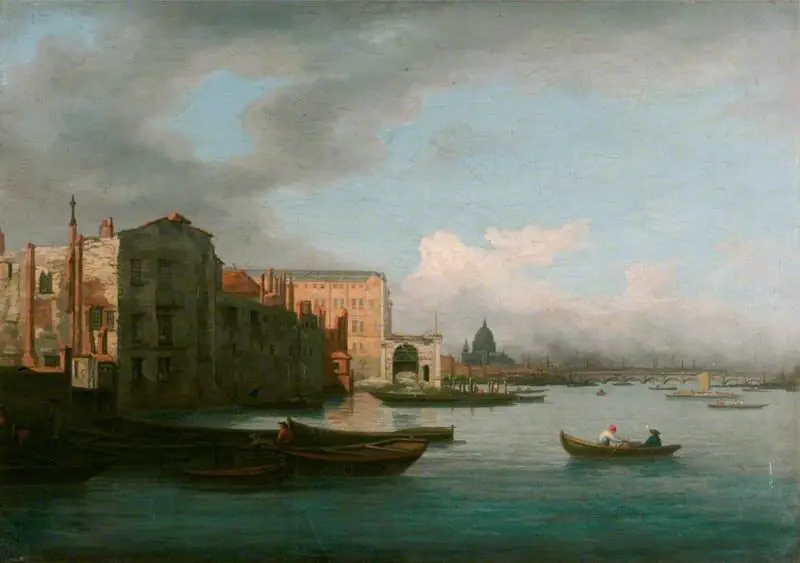 The Thames Looking Eastwards, with Somerset House
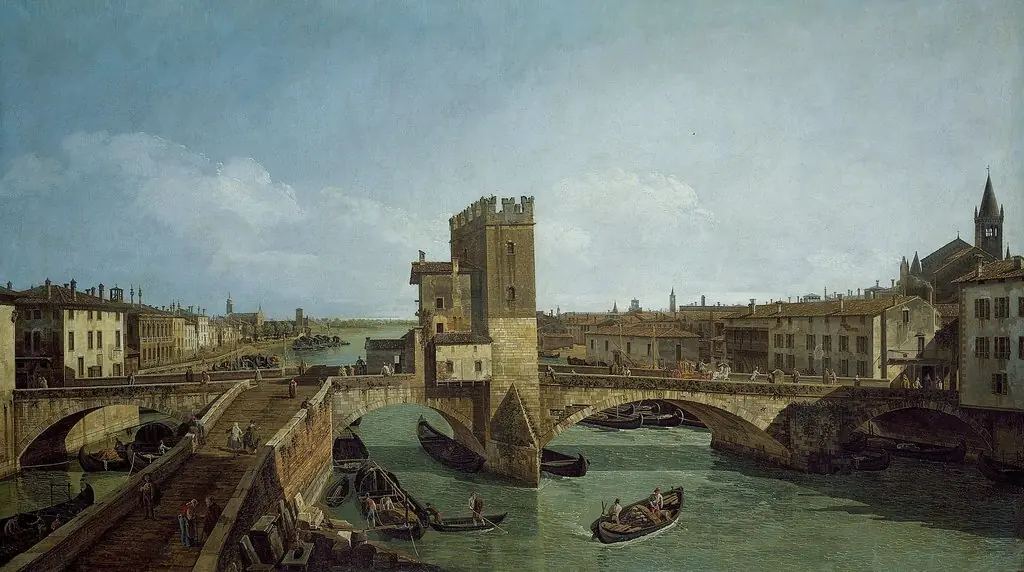 The Old Ponte delle Navi in Verona
 The Grand Canal, Venice, with S. Simeone
 View on the Tiber, Rome
 A View of Dolo on the Brenta Canal
 The Thames at Lambeth
 Fanciful View of the Castel Sant'Angelo, Rome
 The Arno in Florence with the Ponte Alla Carraia