Artwork
The Arno in Florence with the Ponte Alla Carraia
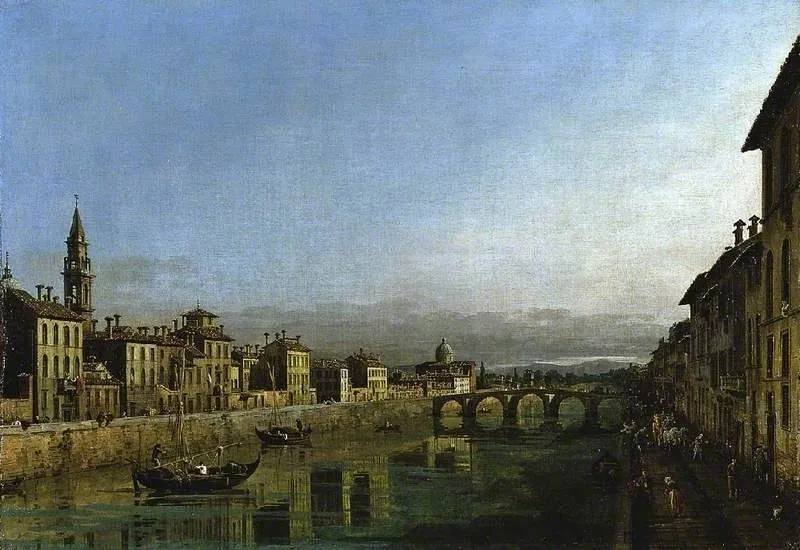
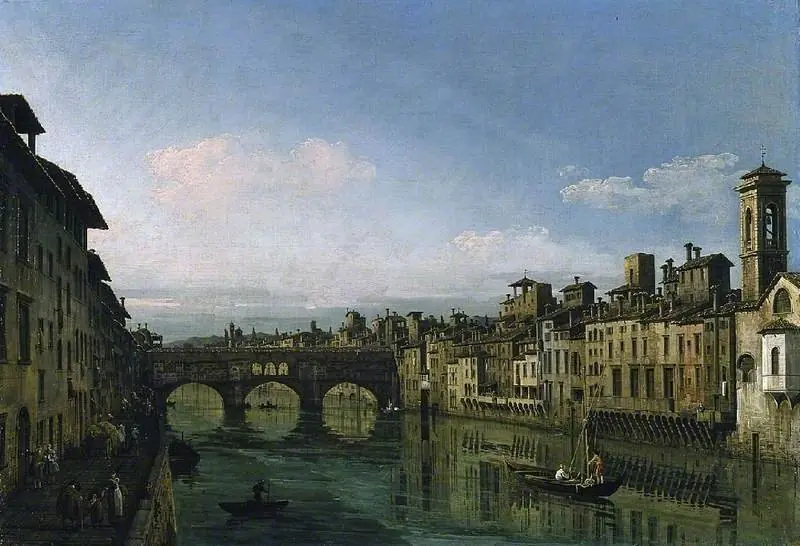
The Arno in Florence with the Ponte Alla Carraia is an oil painting by Bernardo Bellotto. It dates from 1745 and is held in the collection of the Fitzwilliam Museum. Painted in 1745, this oil on canvas depicts a view along the Arno River in Florence, centered on the Ponte alla Carraia.
About this work
Overview
Painted in 1745, this oil on canvas depicts a view along the Arno River in Florence, centered on the Ponte alla Carraia.
Painted in 1745, this oil on canvas depicts a view along the Arno River in Florence, centered on the Ponte alla Carraia. The work captures a quiet, early-morning atmosphere with minimal human activity. Bernardo Bellotto rendered the scene with precise architectural detail and careful attention to atmospheric conditions, reflecting his training in topographical painting and his family’s tradition of urban vedute.
Subject & Meaning
The painting presents Florence’s riverfront as a functioning urban space rather than a romanticized landmark. The bridge, buildings, and modest boats suggest daily life without grandeur or narrative. Bellotto’s focus on ordinary infrastructure implies a documentary intent—recording the city’s physical form as it existed, prioritizing accuracy over emotional or symbolic interpretation.
Technique & Style
Bellotto employed a restrained palette and controlled brushwork to model forms through subtle gradations of light. The water’s surface acts as a mirror, doubling the architectural lines and enhancing spatial depth. Soft cloud cover diffuses sunlight, casting gentle shadows that define the volume of facades and arches. His method aligns with the Venetian veduta tradition, emphasizing optical fidelity over dramatic effect.
History & Provenance
Created during Bellotto’s early career in Italy, the painting likely served as a commission or study for patrons interested in accurate city views. It entered the Fitzwilliam Museum’s collection in the 19th century, having passed through private hands in Europe. Its documented attribution to Bellotto and consistent condition support its reliability as a record of mid-18th-century Florence.
Context
In the 1740s, Italian cities were frequently depicted by artists to satisfy the tastes of Grand Tour travelers and local elites. Bellotto, working alongside his uncle Canaletto, refined a style that balanced topographical precision with aesthetic harmony. This painting reflects a broader trend of using art to document urban environments, not merely to celebrate them.
Legacy
Bellotto’s precise renderings of European cities became valuable historical references, later used by urban planners and historians. While less celebrated than his uncle’s works, this painting exemplifies his quieter, more analytical approach. It remains a key example of how 18th-century artists contributed to the visual archive of European urban life through disciplined observation.
Artist & collection
Artist
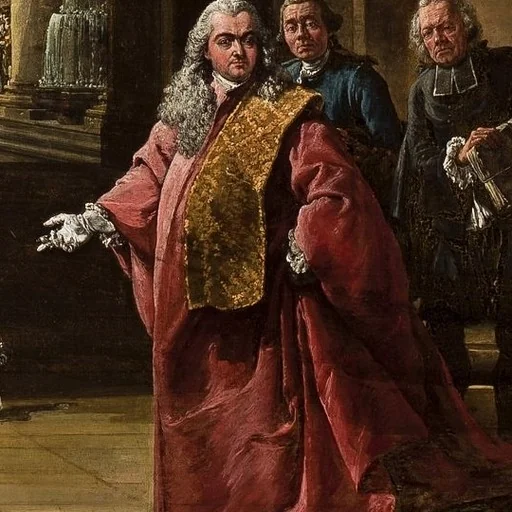
Bernardo Bellotto, was an Italian urban landscape painter or vedutista, and printmaker in etching famous for his vedute of European cities – Dresden, Vienna, Turin, and Warsaw.

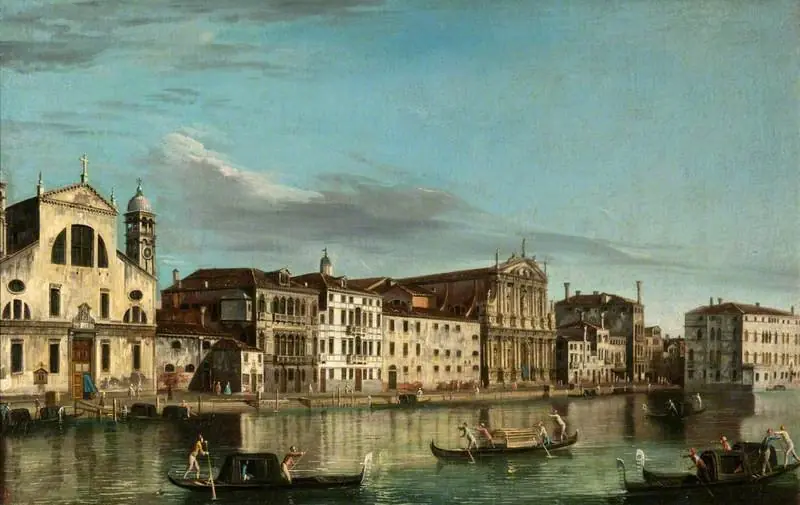 The Grand Canal: Santa Lucia and the Church of the Scalzi, Venice
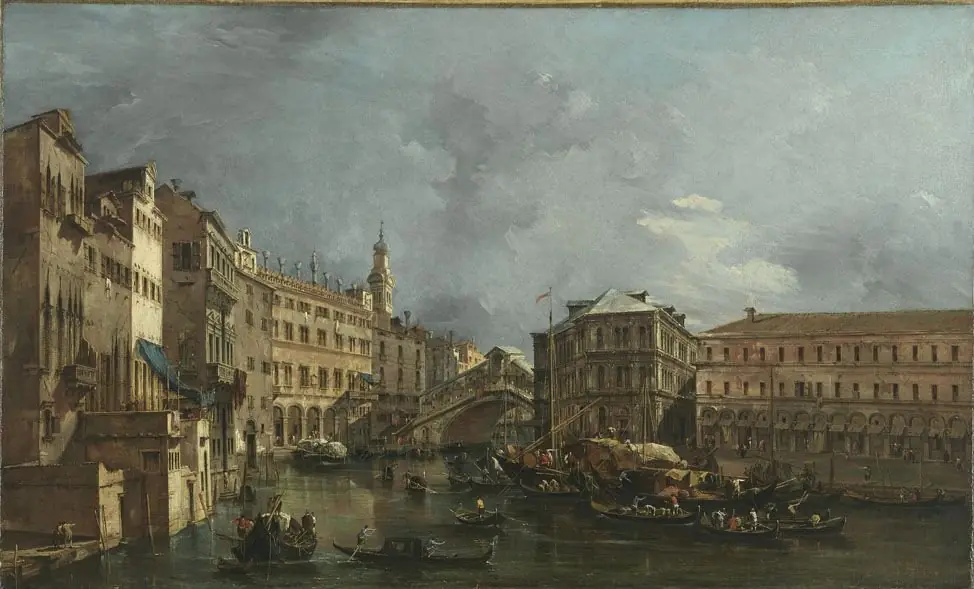 Blick auf den Rialto und den Palazzo dei Camerlenghi
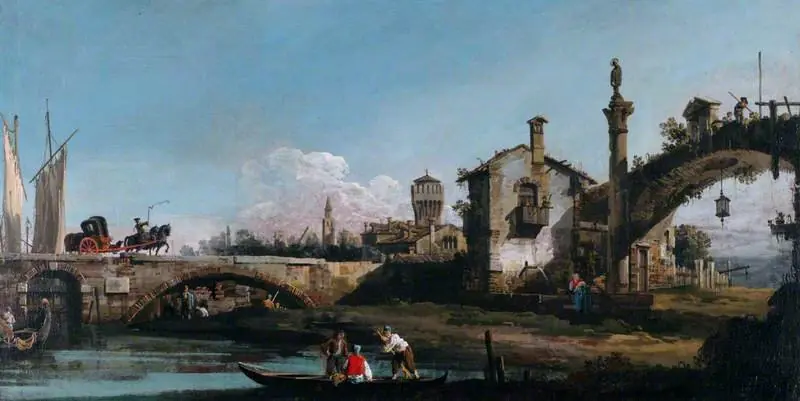 Capriccio with Two Bridges and Figures
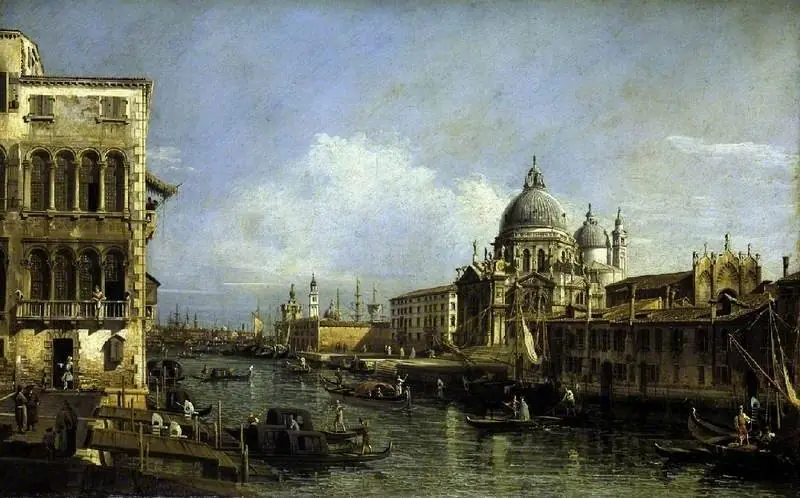 A View at the Entrance of the Grand Canal, Venice
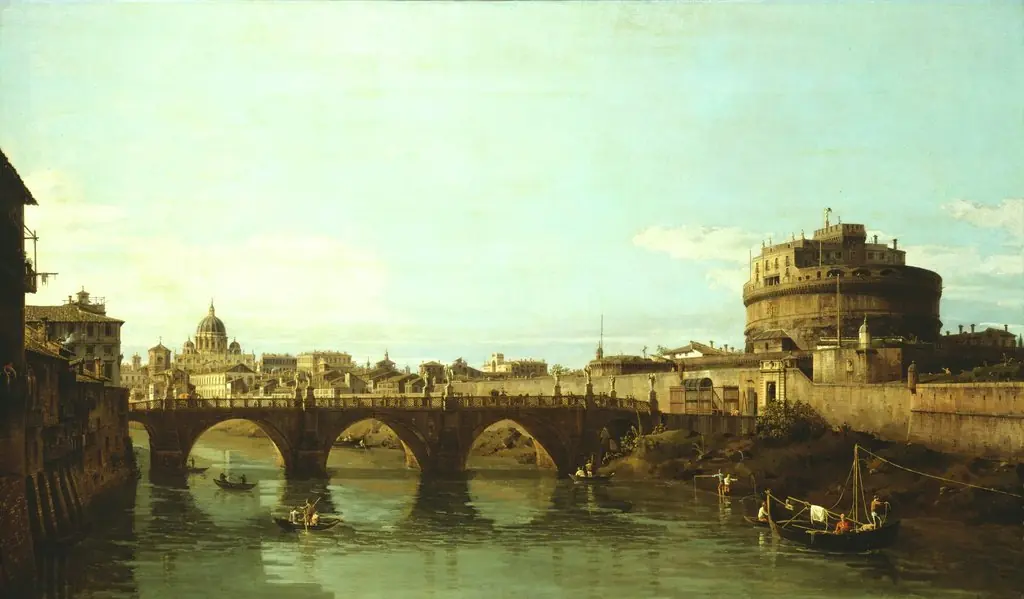 View of the Tiber in Rome with the Castel Sant'Angelo
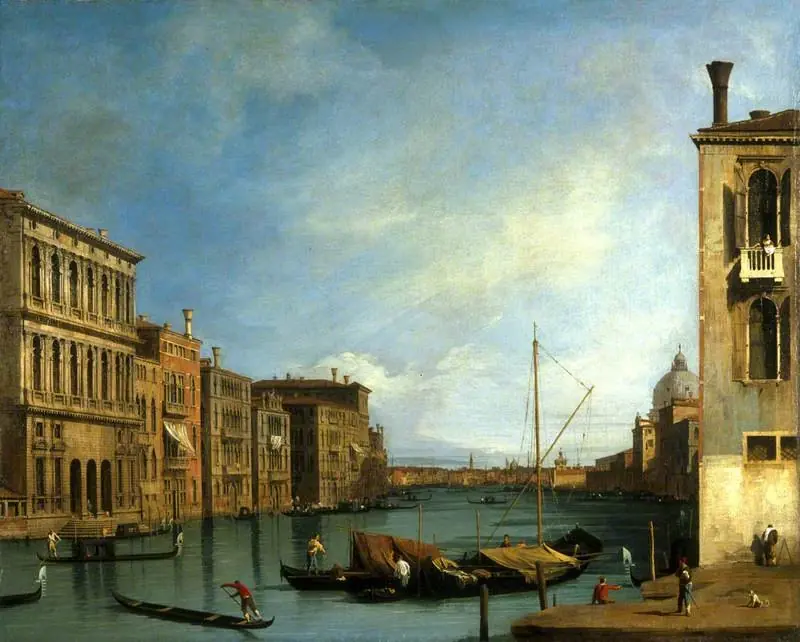 The Grand Canal from the Campo San Vio, Venice
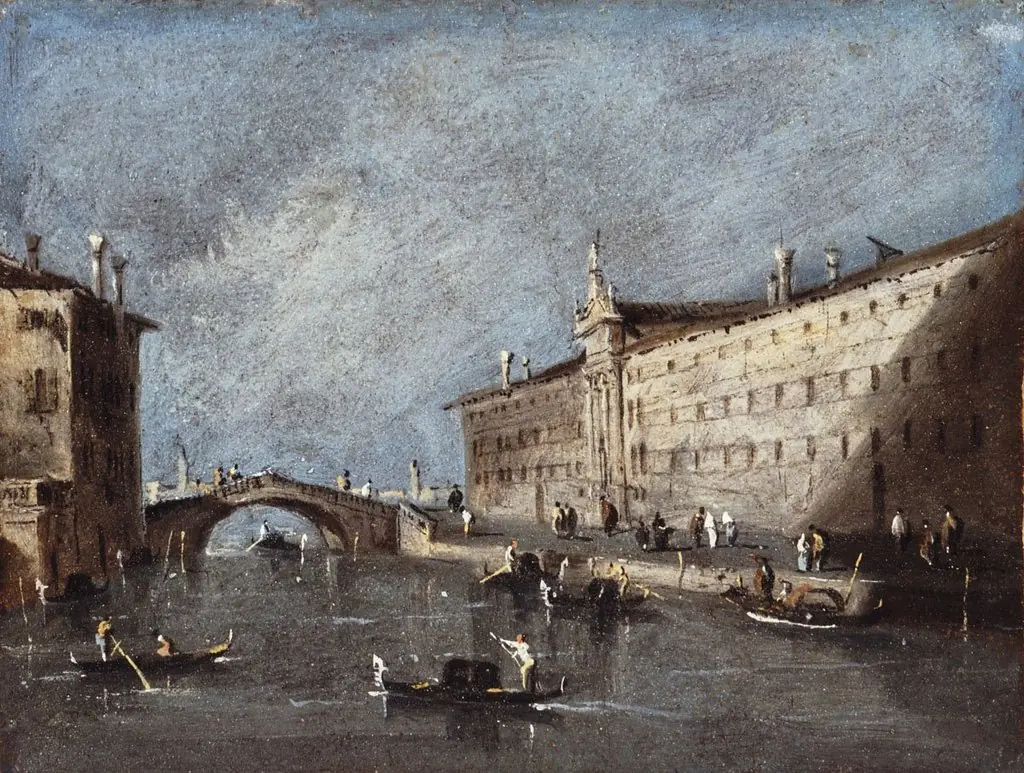 The Island S. Cristoforo di Murano
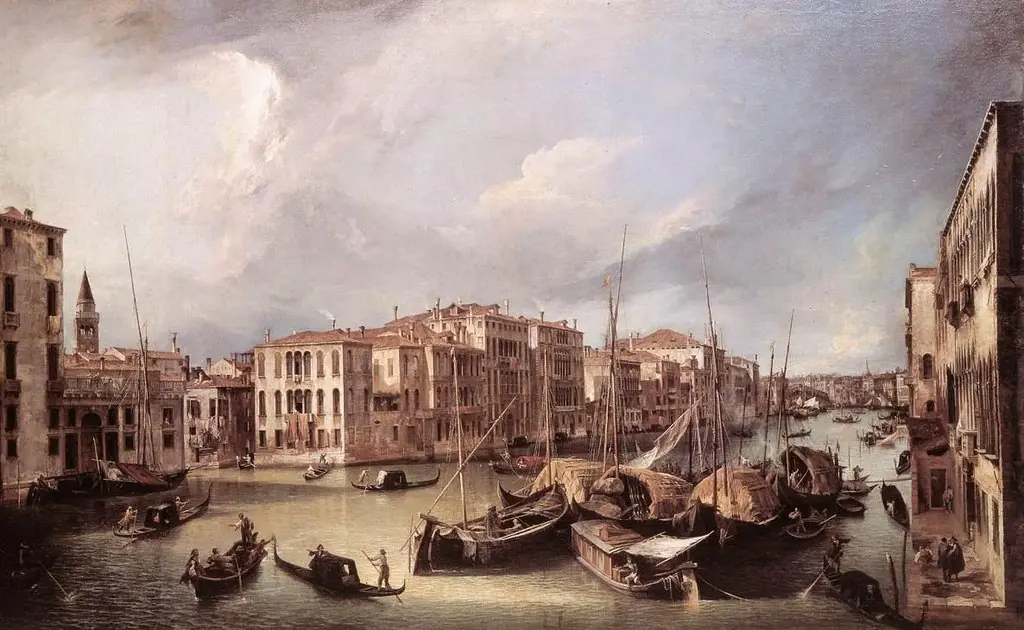 Grand Canal: Looking North-East toward the Rialto Bridge
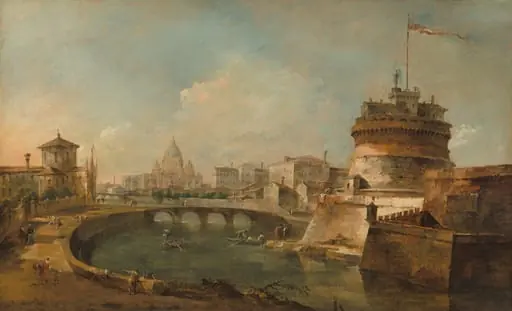 Fanciful View of the Castel Sant'Angelo, Rome
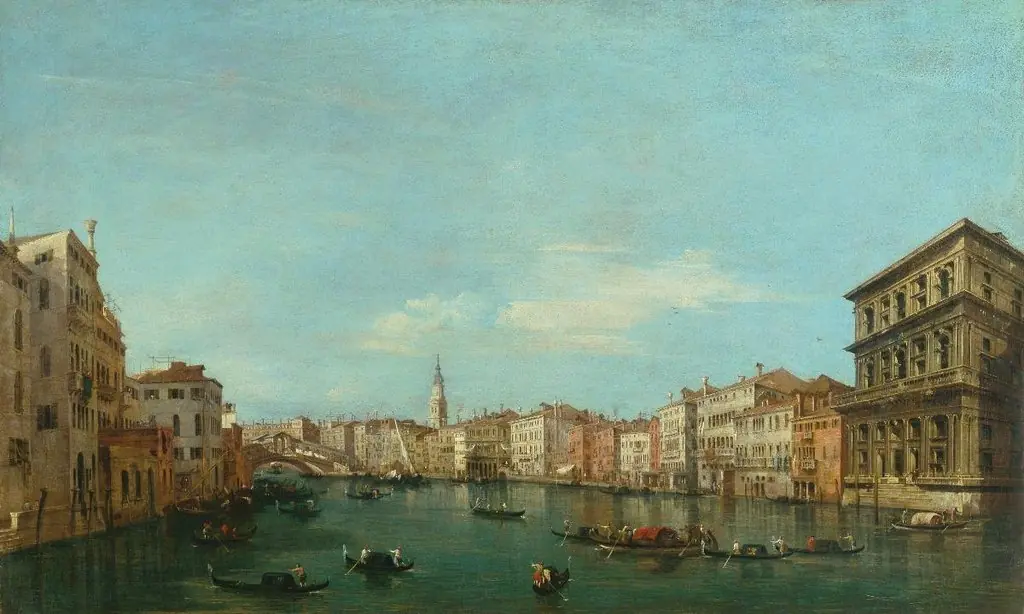 Il Canal Grande a palazzo Grimani, verso il ponte di Rialto
 The Old Ponte delle Navi in Verona
 The Arno in Florence with the Ponte Vecchio