Artwork
The Battle of Mohács
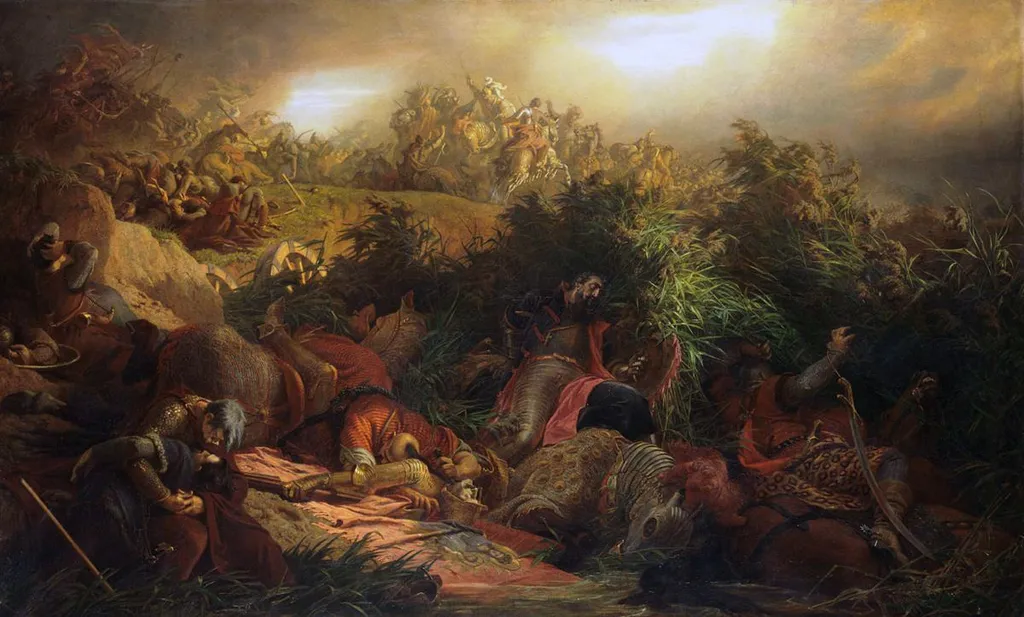
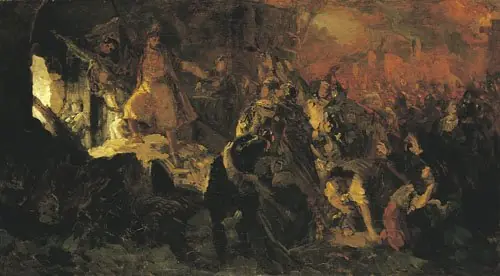
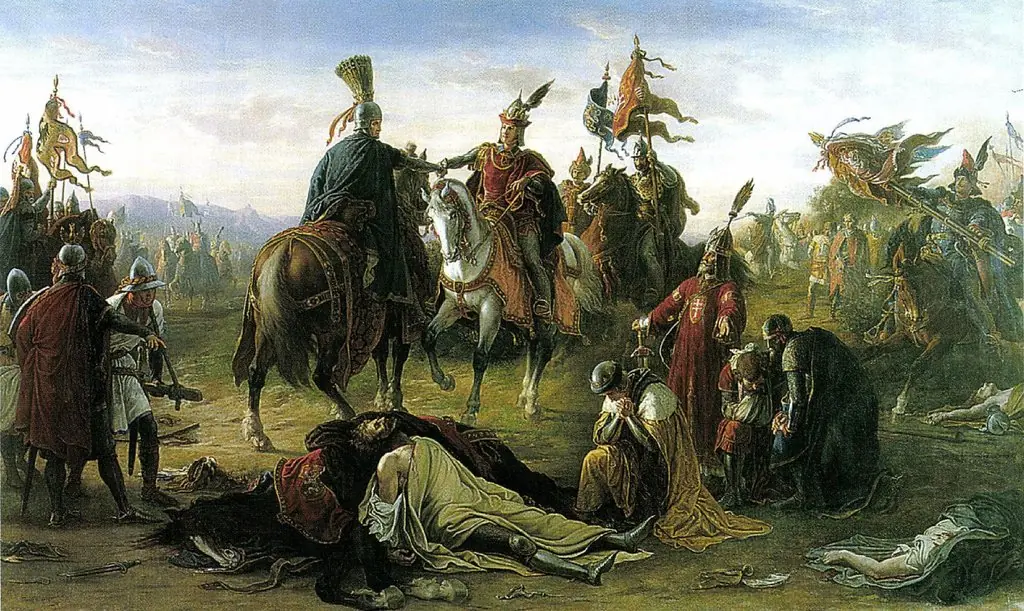
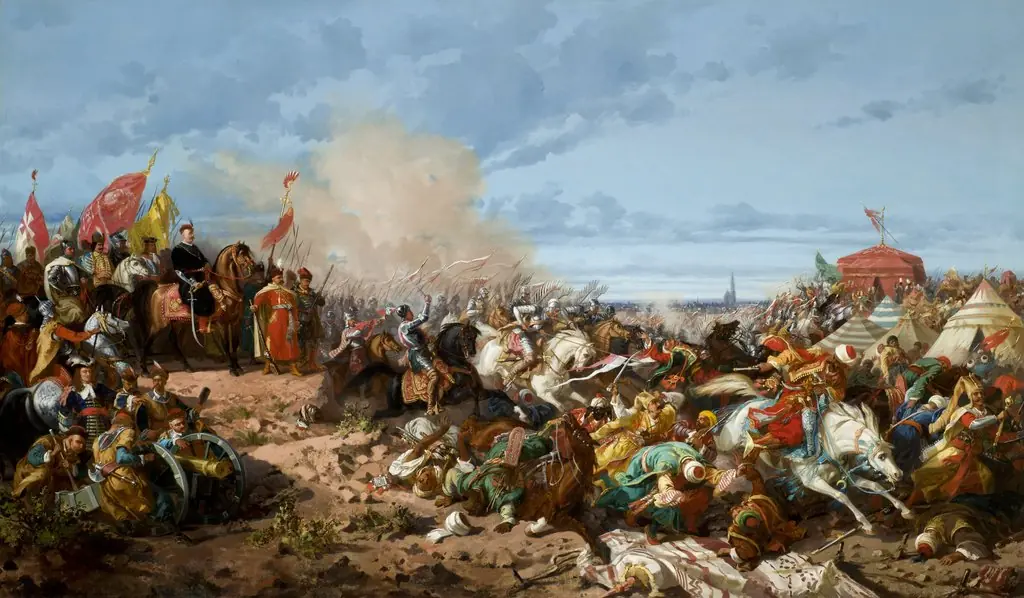
The Battle of Mohács is an oil painting by Bertalan Székely. It dates from 1862 and is held in the collection of the Hungarian National Gallery.
About this work
Overview
The work is a large-scale historical composition executed in the Academic tradition, reflecting Székely’s training and interest in national narratives.
Bertalan Székely completed this oil painting in 1862, depicting the 1526 Battle of Mohács, a decisive conflict between the Kingdom of Hungary and the Ottoman Empire. The work is a large-scale historical composition executed in the Academic tradition, reflecting Székely’s training and interest in national narratives. It resides in the Hungarian National Gallery in Budapest, where it remains a key example of 19th-century Hungarian historical painting.
Subject & Meaning
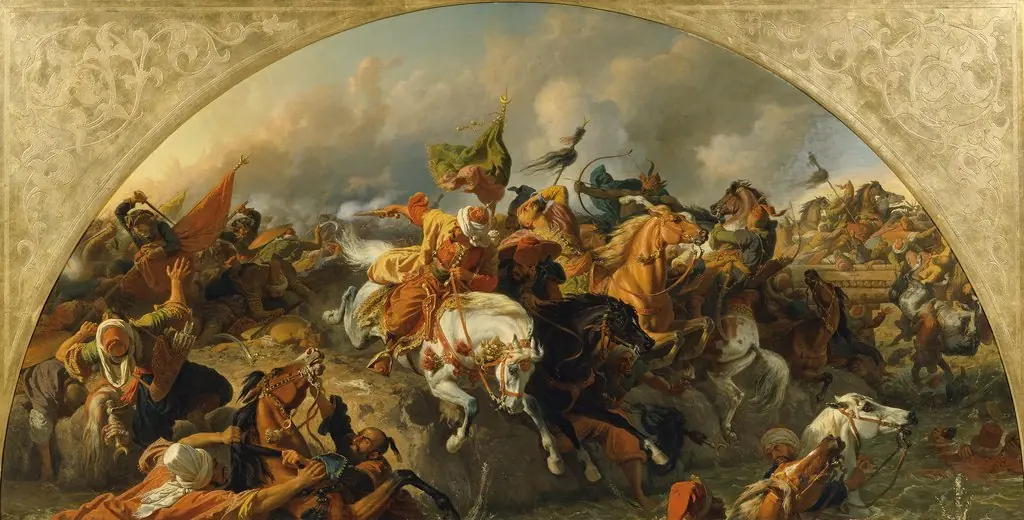
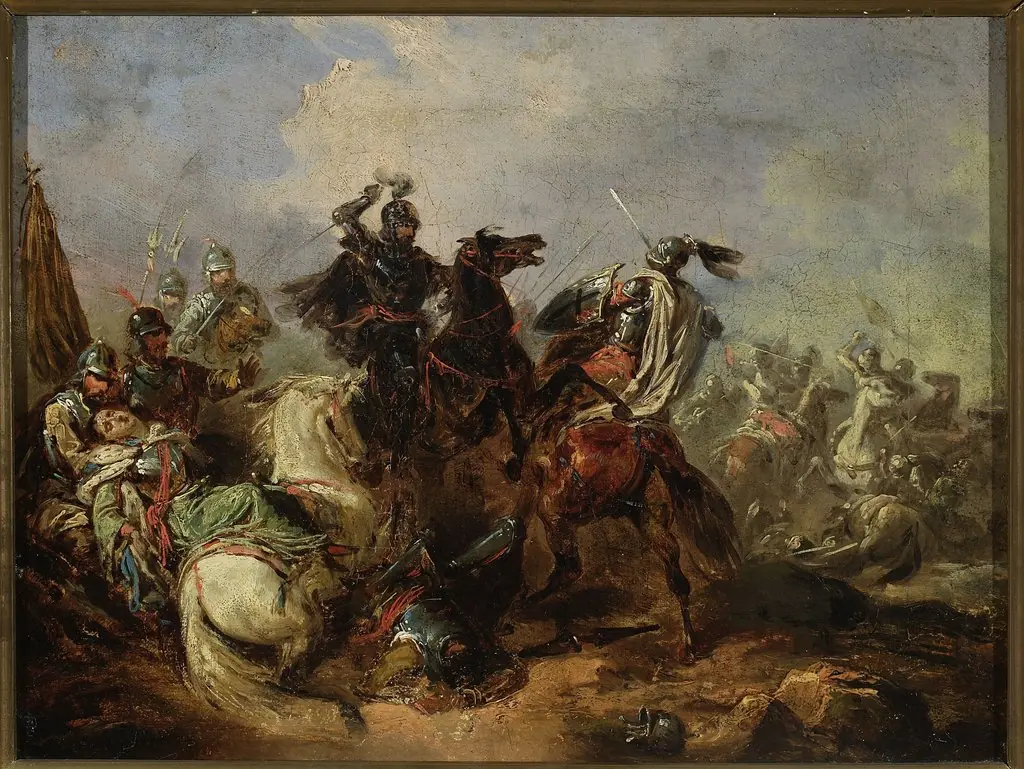
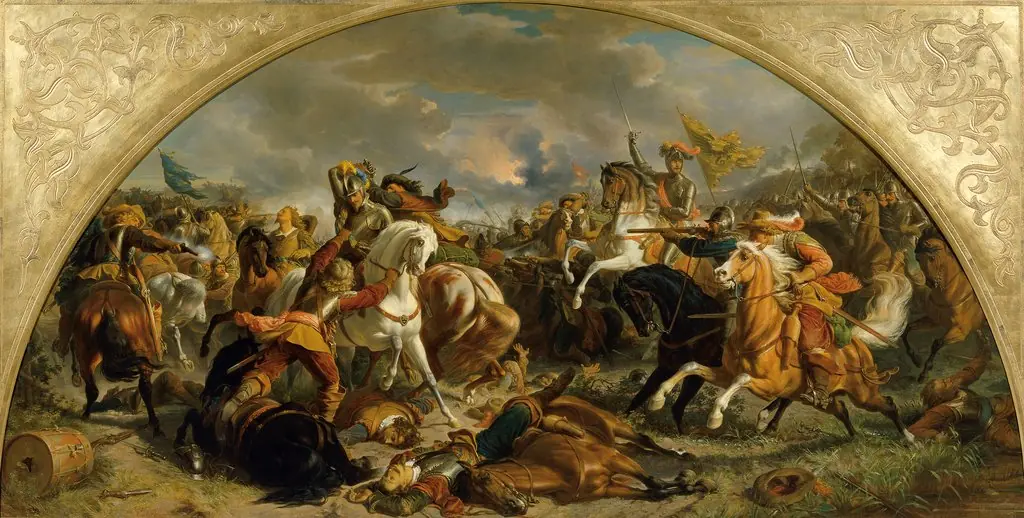
The painting captures the chaos of the battle’s climax, when Hungarian forces were overwhelmed by Ottoman troops. Figures are shown in disarray—fallen knights, rearing horses, and scattered weapons—emphasizing the collapse of royal resistance. Though not a literal record, the scene conveys national trauma, serving as a visual memorial to Hungary’s loss of sovereignty and the beginning of Ottoman dominance in the region.
Technique & Style
Székely employed detailed brushwork and layered pigments to render armor, fabric, and terrain with precision. The composition is crowded, with multiple focal points to convey battlefield confusion. Colors are restrained—dominated by earth tones and smoky grays—with selective use of crimson and gold to highlight key figures. The lighting is diffuse, enhancing the somber mood and reinforcing the Romantic emphasis on emotional weight over clarity.
History & Provenance
Commissioned during a period of rising Hungarian nationalism, the painting was completed shortly after the 1848–49 revolution and its suppression. It entered the Hungarian National Gallery’s collection in the late 19th century, where it has remained. Székely’s choice of subject aligned with state efforts to cultivate historical consciousness, and the work was exhibited publicly as part of a broader cultural project to define national identity.
Context
Painted during the Austro-Hungarian Compromise of 1867, the work emerged amid a cultural revival focused on Hungary’s medieval past. Artists like Székely turned to historical battles to evoke collective memory and resilience. While the Ottoman victory was a military defeat, its depiction in art served to frame national suffering as a foundation for future renewal, resonating with audiences seeking cultural continuity under Habsburg rule.
Legacy
Though overshadowed in later decades by modernist movements, the painting remains a reference point in Hungarian art history for its ambition and emotional gravity. It influenced subsequent generations of historical painters and continues to be studied for its representation of national trauma. Its presence in the National Gallery ensures its role as a touchstone in public memory of Hungary’s early modern conflicts.
Artist & collection
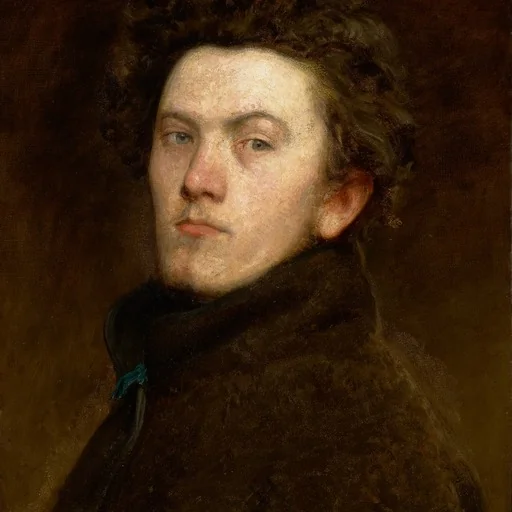
Artist
Bertalan Székely (8 May 1835, Kolozsvár, Transylvania, Kingdom of Hungary (now Cluj-Napoca, Romania) – 21 August 1910, Budapest, Transleithania, Austria-Hungary) was a Hungarian history and portrait painter who worked in the Romantic and…