Artwork
Madame Aman Jean
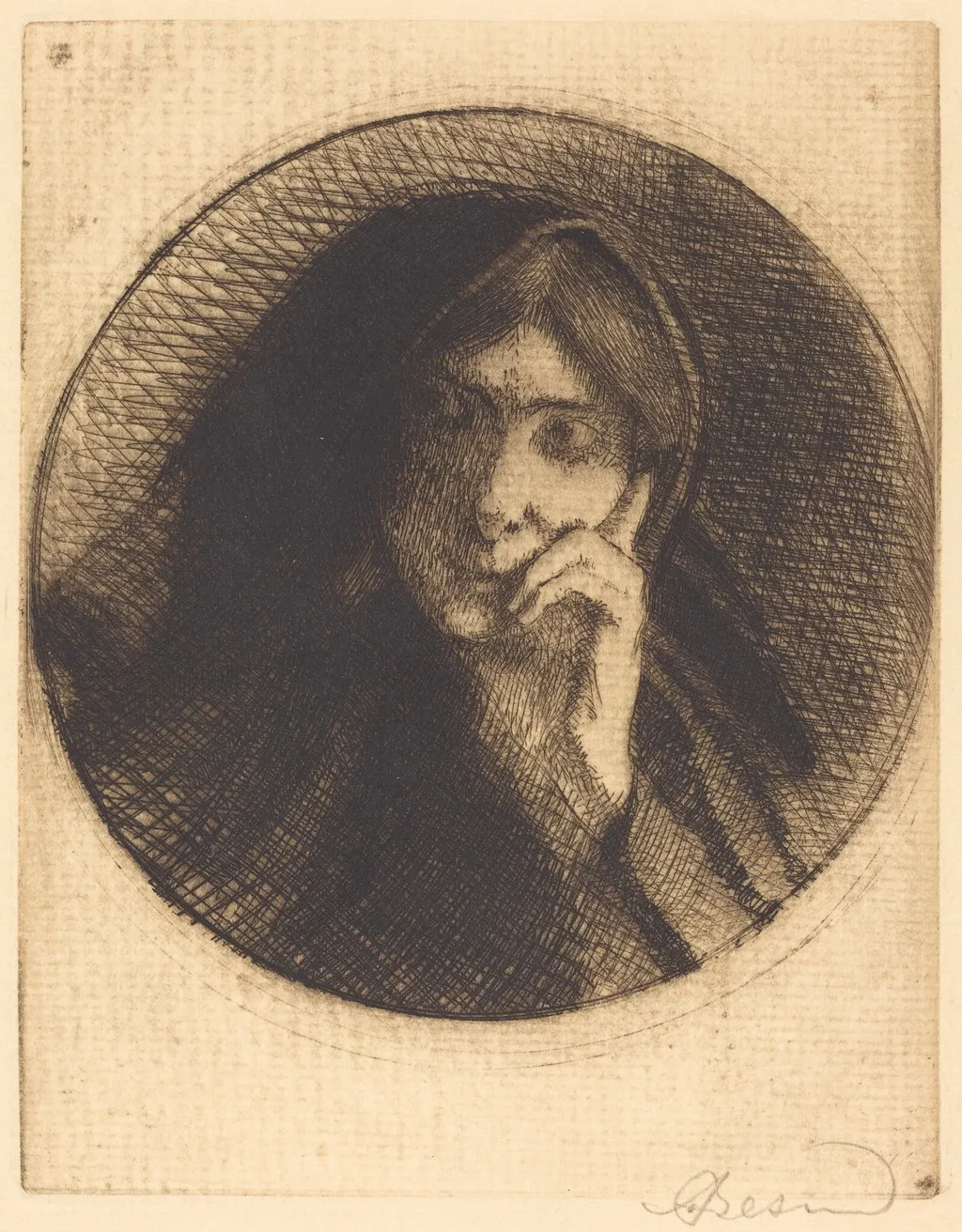
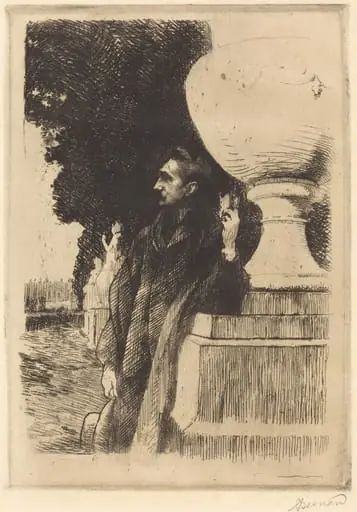
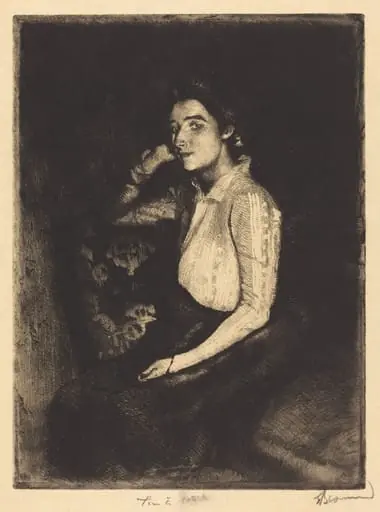
Madame Aman Jean is an ink print by the Impressionist artist Paul-Albert Besnard. It dates from 1898 and is held in the collection of the National Gallery of Art.
About this work
Overview
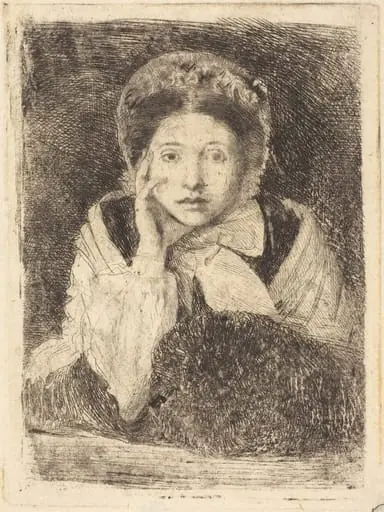
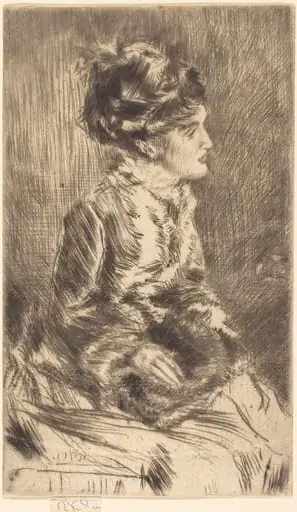
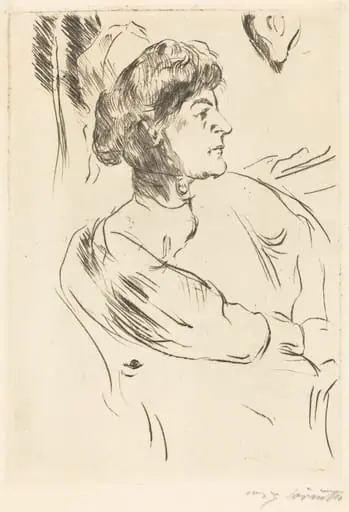
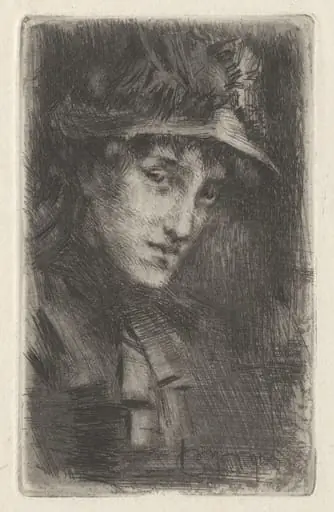
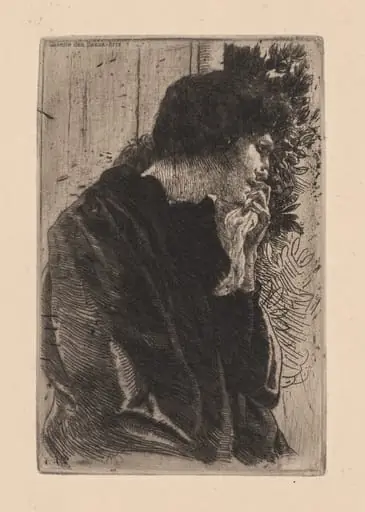
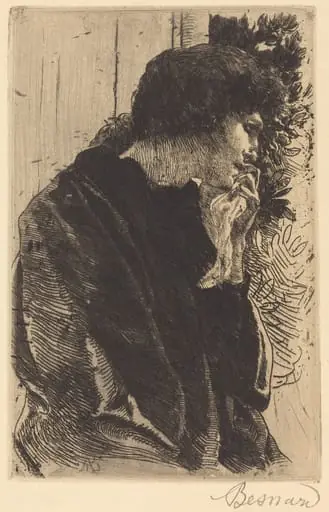
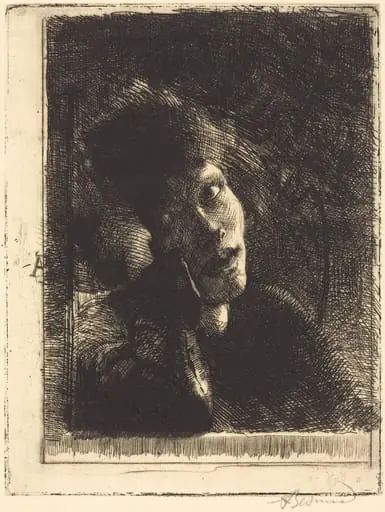
Albert Besnard created this 1898 etching on cream laid paper, capturing a close-up portrait of a woman identified as Madame Aman Jean.
Albert Besnard created this 1898 etching on cream laid paper, capturing a close-up portrait of a woman identified as Madame Aman Jean. The composition is tightly framed within a circular format, emphasizing the subject’s face and elaborate hat. The work is rendered in brown ink, with a dense network of fine, irregular lines that convey texture and depth through the etching process rather than broad tonal areas.
Subject & Meaning
The portrait depicts Madame Aman Jean, a woman of likely bourgeois standing, shown in profile with one hand gently supporting her chin. Her wide-brimmed hat dominates the frame, suggesting both fashion and social presence. The partial illumination of her face introduces a quiet introspection, while the hat’s intricate pattern may imply the play of light on fabric or the complexity of her identity, rendered without overt narrative.
Technique & Style
Besnard employed etching to scratch lines into a metal plate, which were then inked and printed. The surface is defined by a dense, scratchy network of fine, irregular strokes, particularly in the hat’s brim, where repeated marks simulate texture and shadow. The dark, uneven lines create a sketch-like immediacy, contrasting with the soft gradations of the face, revealing a deliberate balance between spontaneity and control.
History & Provenance
Executed in 1898, the print emerged during Besnard’s active period in Paris, where he was known for his intimate portraits and experimental printmaking. While specific early ownership records are not widely documented, the work aligns with the broader interest in etching among late 19th-century French artists seeking to elevate printmaking beyond reproduction into expressive art.
Context
This etching reflects the late 19th-century revival of etching as a fine art medium, particularly in France, where artists like Besnard moved away from rigid academic styles toward personal, atmospheric expression. The focus on a single figure, rendered with tactile line work, echoes contemporaneous trends in portraiture that valued psychological nuance over idealized form.
Legacy
Besnard’s etching contributed to the recognition of printmaking as a vehicle for psychological portraiture. Though not widely reproduced, the work remains a notable example of his mastery in capturing subtle light and texture through direct, hand-drawn marks. It continues to be studied for its technical precision and quiet emotional resonance within the context of French graphic art.
Artist & collection
Artist
Paul-Albert Besnard (1849–1934) was a French artist, born in 7th arrondissement of Paris.