Artwork
The Cup of Tea (La tasse de thé)
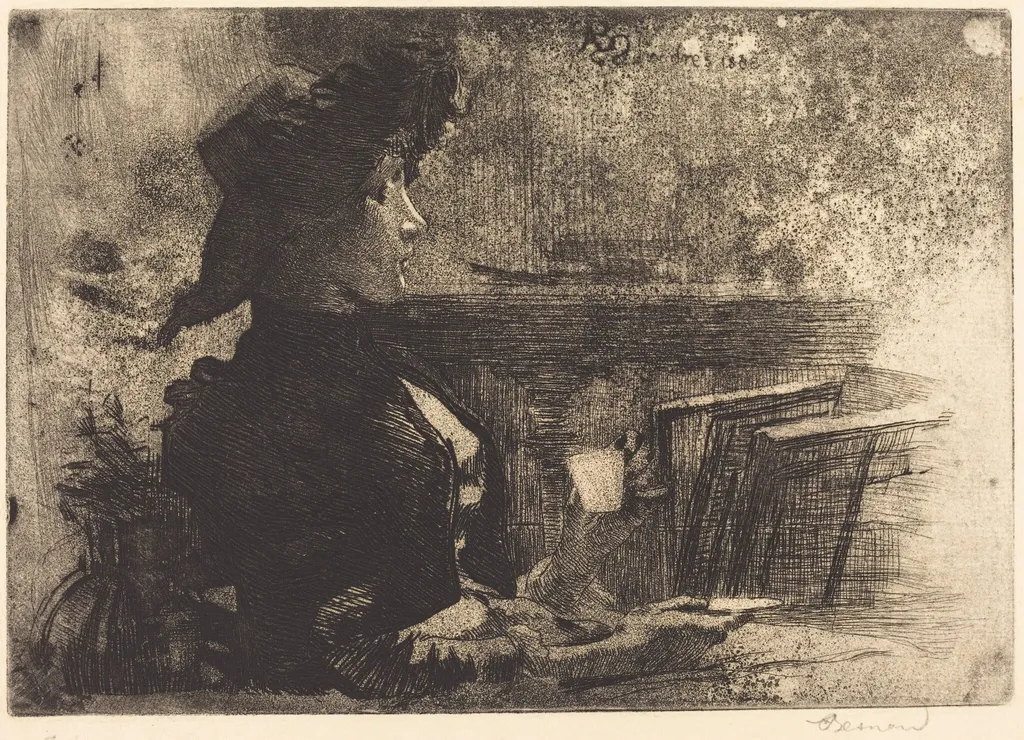
The Cup of Tea (La tasse de thé) is an ink print by the Impressionist artist Paul-Albert Besnard. It dates from 1883 and is held in the collection of the National Gallery of Art. Created in 1883, The Cup of Tea is an etching with aquatint by Albert Besnard, executed on Van Gelder laid paper.
About this work
The artist used shading to show depth, especially in the folds of her dress and the curtains.
This sketch shows a woman sitting at a small table, holding a teacup. Behind her, a window lets in dim light, and a chair is tucked under the table. The lines are loose and quick, like a hurried sketch.
The artist used shading to show depth, especially in the folds of her dress and the curtains. The date "1883" is written in the corner, and the paper looks aged.
Next, look up etching to see how artists like this one used acid and ink to create prints.
Overview
Created in 1883, The Cup of Tea is an etching with aquatint by Albert Besnard, executed on Van Gelder laid paper. It captures a quiet domestic moment with minimal detail, emphasizing atmosphere over narrative. The work belongs to a series of intimate interior scenes Besnard explored during this period, reflecting his interest in everyday life rendered with subtle tonal variation.
Subject & Meaning
A woman sits alone at a small table, cradling a teacup, her posture relaxed yet withdrawn. Behind her, a window filters muted light, and a chair rests neatly beneath the table, suggesting a pause in routine. The scene conveys solitude and stillness, not as a narrative climax but as a fleeting, unremarkable moment—typical of Besnard’s focus on private, untheatrical moments in domestic space.
Technique & Style
Besnard employed etching and aquatint to achieve soft gradations of gray, using acid to bite into the metal plate and create tonal depth. Loose, fluid lines suggest movement and spontaneity, while delicate shading defines the folds of fabric and the texture of curtains. The paper’s texture enhances the print’s tactile quality, reinforcing the intimacy of the scene without overt detail.
History & Provenance
The print was made in 1883 during Besnard’s early career, when he was increasingly engaged with printmaking alongside his painting. It was likely produced in small editions for collectors interested in modern graphic art. The date is inscribed in the lower corner, a common practice for artists of the time to authenticate and date their prints.
Context
In the 1880s, French artists turned toward intimate, unidealized subjects, moving away from grand historical themes. Besnard’s work aligned with this shift, influenced by Japanese prints and the realism of Degas. His etchings, like this one, captured the quiet rhythms of bourgeois life, contributing to a broader interest in domestic intimacy within the print revival of the period.
Legacy
The Cup of Tea exemplifies Besnard’s contribution to late 19th-century printmaking, where technical precision served emotional restraint. Though not widely exhibited during his lifetime, the work remains a quiet reference point in studies of French graphic art, illustrating how modest subjects could be elevated through nuanced technique and compositional restraint.
Artist & collection
Artist
Paul-Albert Besnard (1849–1934) was a French artist, born in 7th arrondissement of Paris.

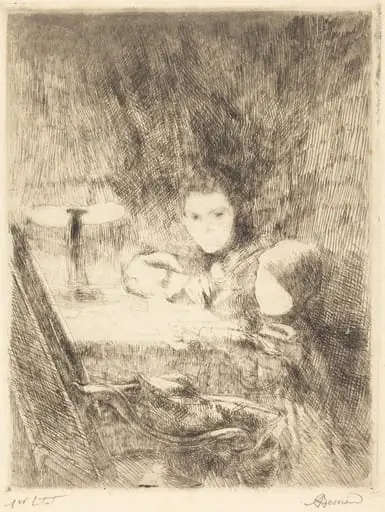 By the Lamp (Sous la Lampe)
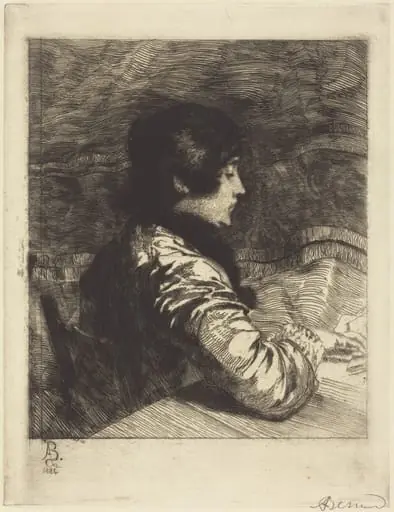 Madame Besnard
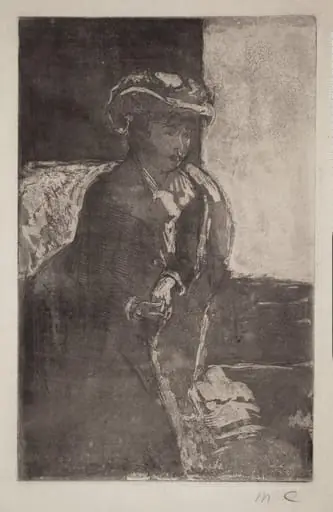 The Corner of the Sofa (No. 3)
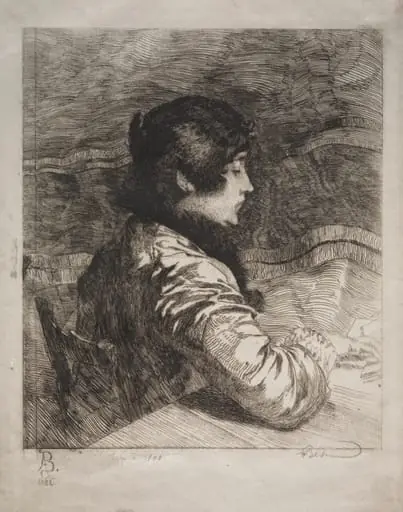 Madame Besnard
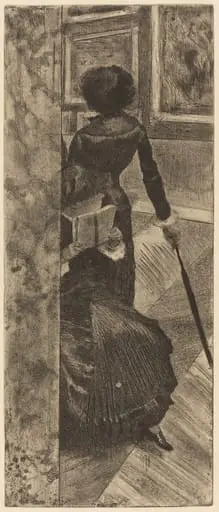 Mary Cassatt at the Louvre: The Paintings Gallery
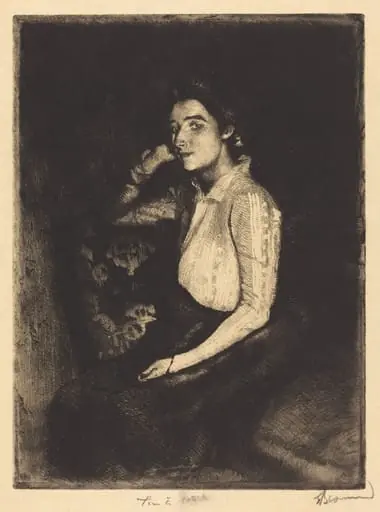 La Biarrote
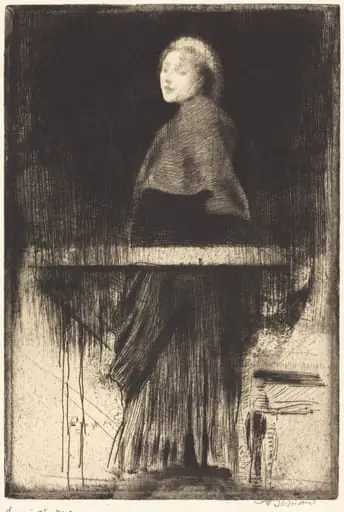 Woman in a Cape (La femme à la pèlerine)
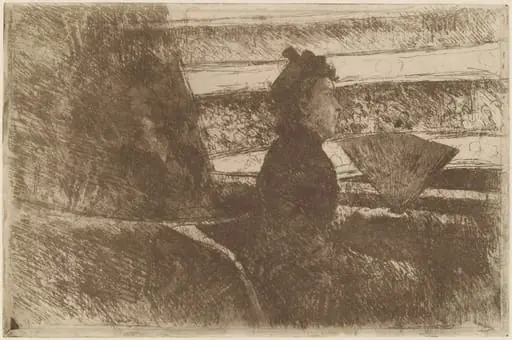 Lady in Black, in a Loge, Facing Right
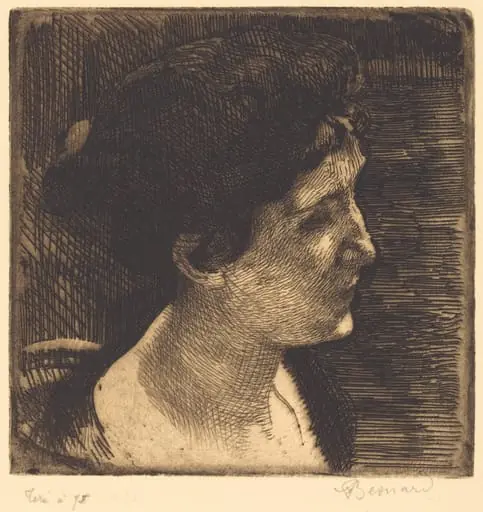 Woman in Full Profile (Grand profil de femme)
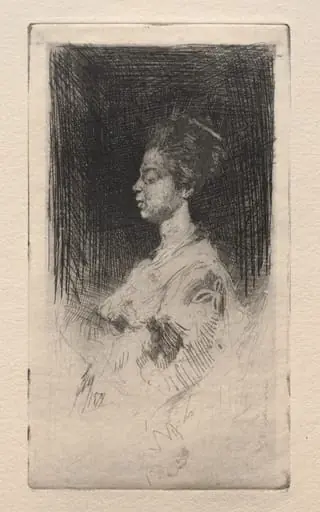 Profile Head of a Japanese Girl
![Woman Reading [Donna che legge], by Umberto Boccioni](https://artifactworldgallery.com/img/umberto-boccioni--woman-reading-donna-che-legge--d9496ecdedc4f414-w320.webp) Woman Reading [Donna che legge]
Woman Reading [Donna che legge]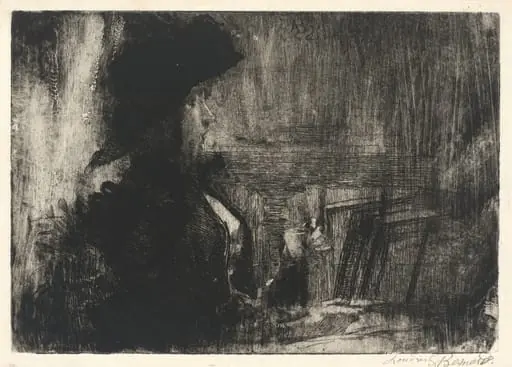 The Cup of Tea (La tasse de thé)