Artwork
Madame Besnard
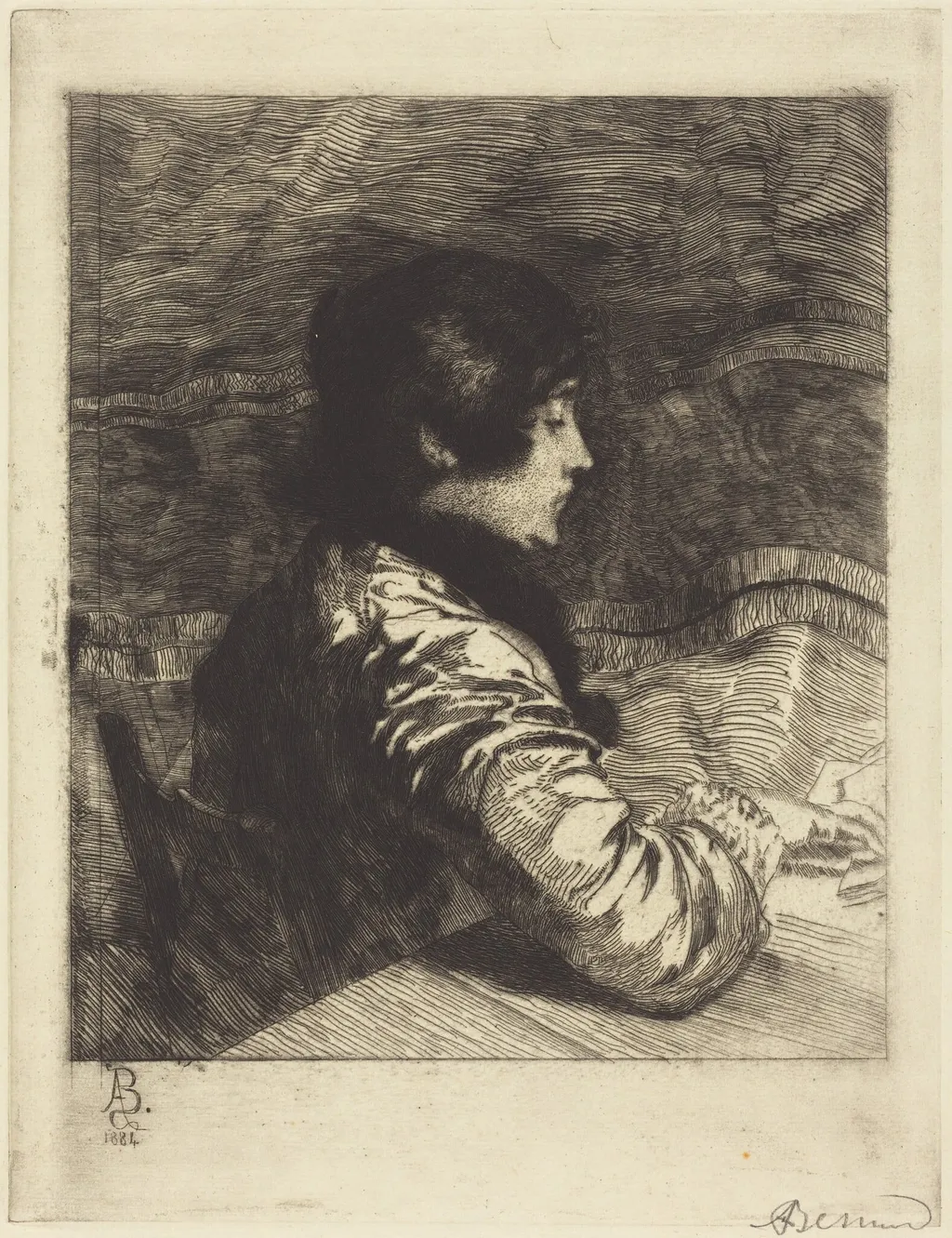
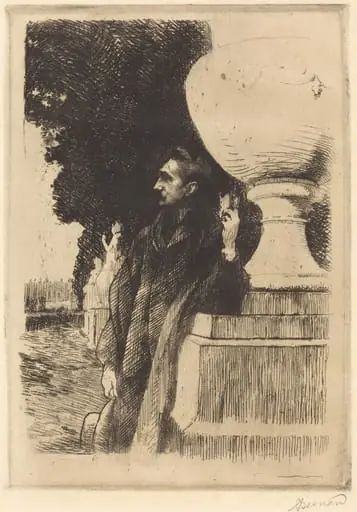
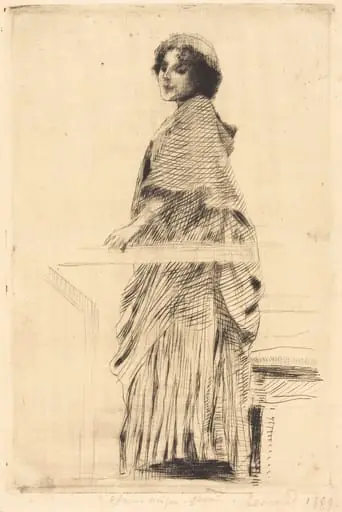
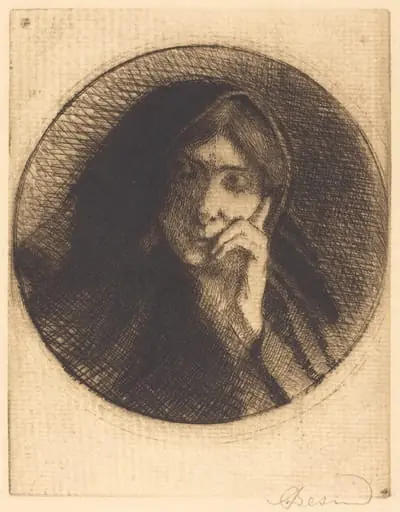
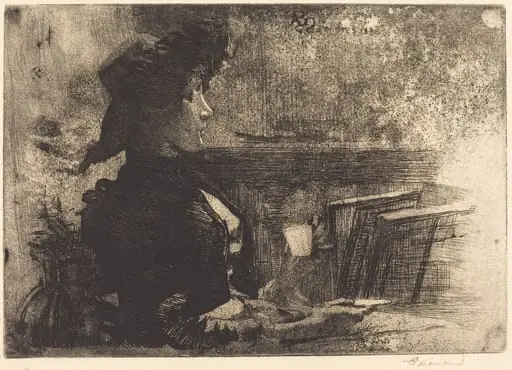
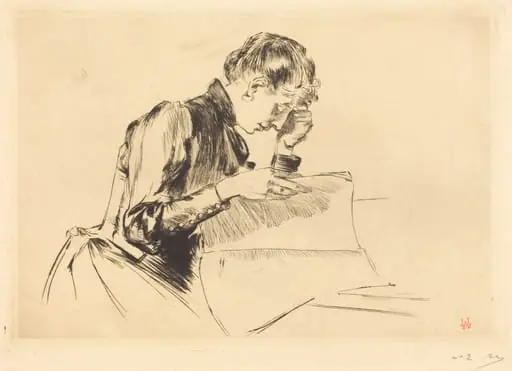
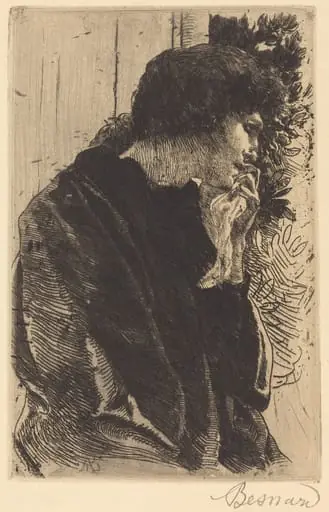
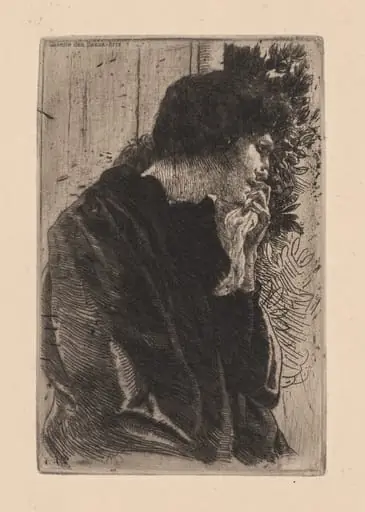
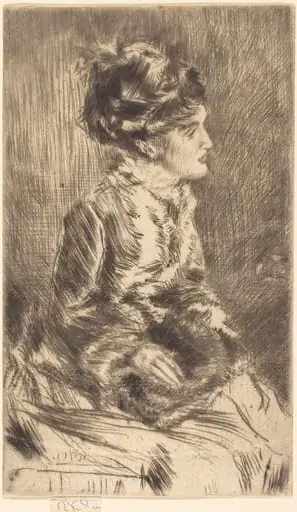
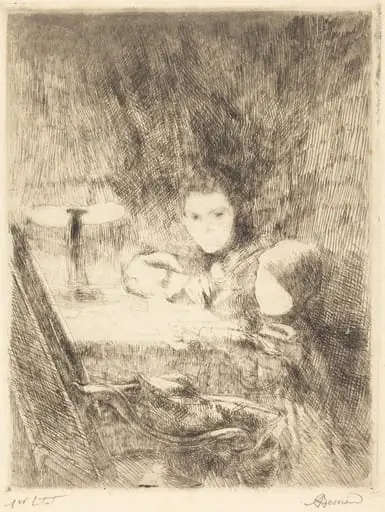
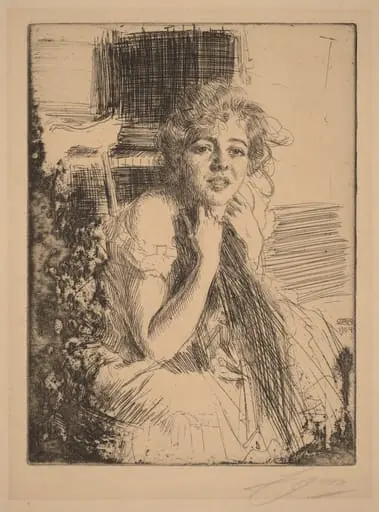
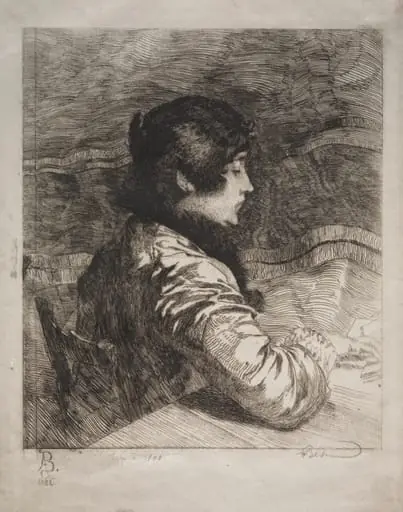
Madame Besnard is an ink print by the Impressionist artist Paul-Albert Besnard. It dates from 1884 and is held in the collection of the National Gallery of Art.
About this work
Overview
Albert Besnard created this etching in 1884, depicting a woman identified as Madame Besnard. Executed on laid paper, the work belongs to the printmaking tradition of late 19th-century France. Its intimate scale and focused composition reflect the artist’s interest in portraiture beyond grand historical themes, favoring quiet, personal moments rendered with technical precision.
Subject & Meaning
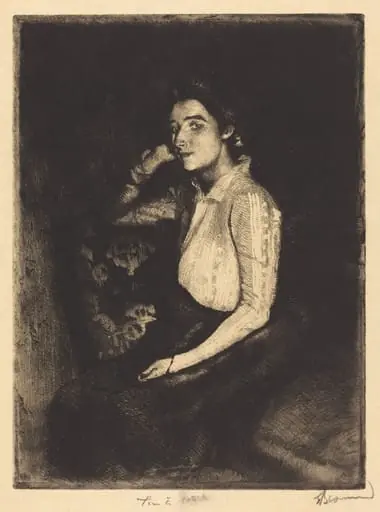
The subject is a woman seated at a table, her short dark hair and simple white dress with puffed sleeves indicative of contemporary fashion.
The subject is a woman seated at a table, her short dark hair and simple white dress with puffed sleeves indicative of contemporary fashion. Her posture—left arm resting, right arm out of frame—suggests a moment of pause rather than performance. The absence of narrative context invites contemplation of inner stillness, aligning the image with modernist tendencies to value psychological presence over theatricality.
Technique & Style
Besnard employed bold, incised lines and varied hatching to model form and suggest texture. The dark, granular background contrasts with the luminous white of the dress, enhancing the figure’s presence. The etching’s tonal range and loose yet deliberate mark-making reveal an affinity with the atmospheric effects of Impressionism, though executed through the controlled medium of print rather than paint.
History & Provenance
Created during Besnard’s early career, the etching was likely made for private circulation or as part of an artist’s portfolio. It was not widely exhibited at the time, and its provenance remains largely undocumented until later 20th-century acquisitions by institutions focused on French graphic arts. Its survival reflects a growing appreciation for etching as a legitimate artistic medium beyond reproductive purposes.
Context
In the 1880s, French artists increasingly turned to intimate subjects and experimental print techniques. Besnard, influenced by both academic training and emerging modernist sensibilities, joined peers in elevating etching to express personal observation. This work aligns with broader cultural shifts toward valuing domestic life and individual character over idealized or mythological themes.
Legacy
Though not among Besnard’s most widely known works, this etching exemplifies his contribution to the revival of etching as a vehicle for modern portraiture. It influenced later printmakers seeking to merge psychological depth with technical refinement. Today, it is studied for its synthesis of traditional craftsmanship and modern subjectivity in late 19th-century French art.
Own this work as a print
Artist & collection
Artist
Paul-Albert Besnard (1849–1934) was a French artist, born in 7th arrondissement of Paris.