Artwork
The Dancer of Tanjore (La bayadère de Tanjore)
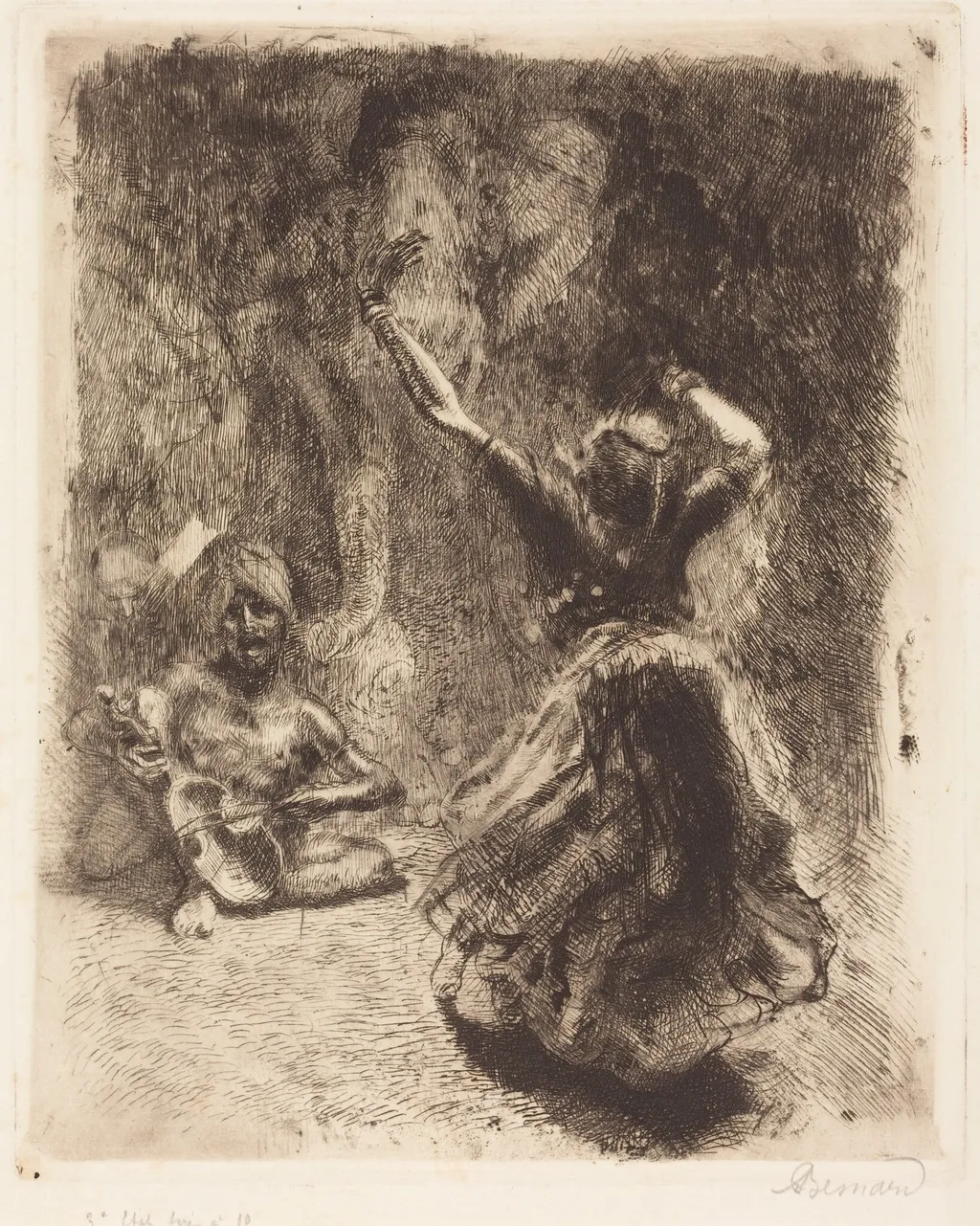
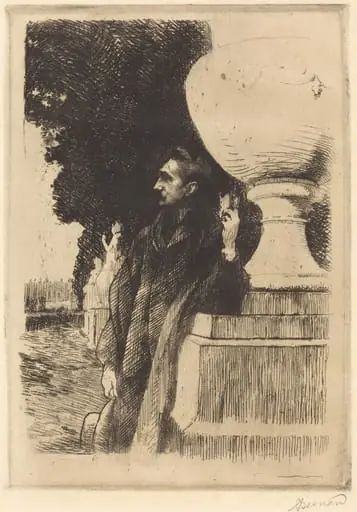
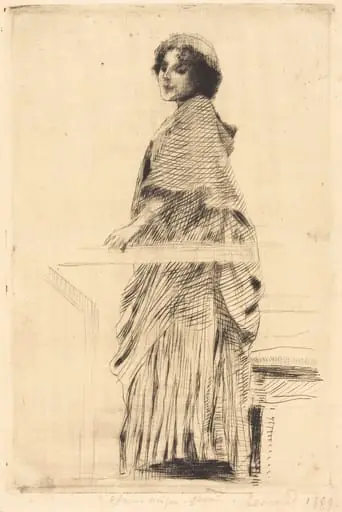
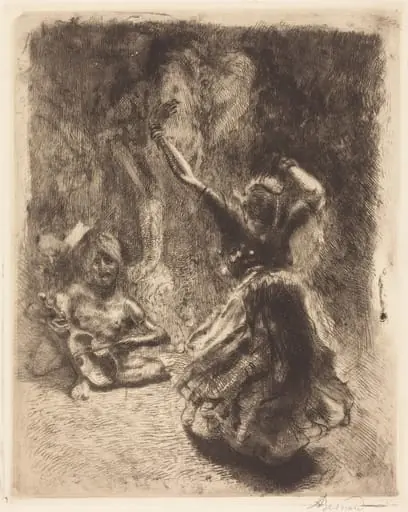
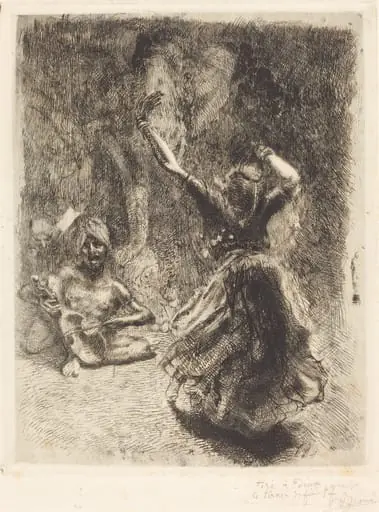
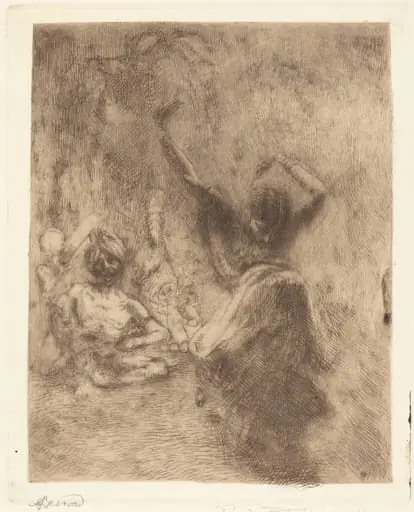
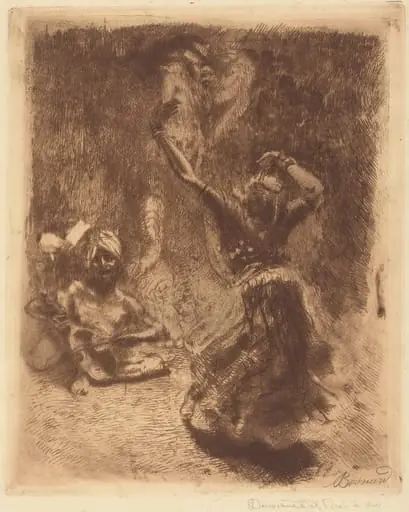
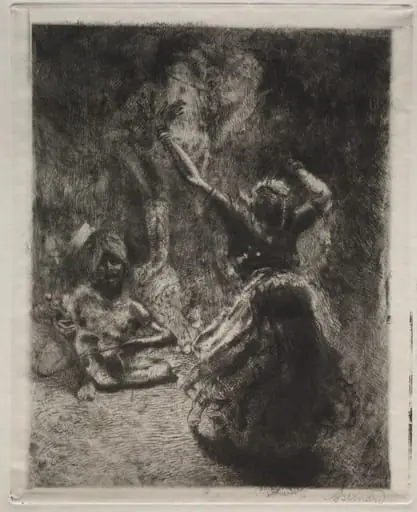
The Dancer of Tanjore (La bayadère de Tanjore) is an ink print by Paul-Albert Besnard. It dates from 1914 and is held in the collection of the National Gallery of Art.
About this work
Overview
Its intimate scale and tonal richness reflect Besnard’s interest in atmospheric effects and non-Western subjects during this period of his career.
Created in 1914, The Dancer of Tanjore is a print by French artist Albert Besnard, combining etching, drypoint, and printed tone on wove paper. The work captures a South Indian temple dancer in a moment of poised stillness, rendered through layered printmaking techniques that yield subtle gradations of light and shadow. Its intimate scale and tonal richness reflect Besnard’s interest in atmospheric effects and non-Western subjects during this period of his career.
Subject & Meaning
The figure is a bayadère, a temple dancer from the Tanjore region of South India, depicted in a static, ceremonial pose with arms curved elegantly and one hand resting at the hip. The costume’s vivid orange contrasts with the deep, muted background, emphasizing ritualistic grace over narrative action. Besnard’s focus on gesture and costume suggests an aesthetic fascination with Indian performance traditions, though the image avoids ethnographic detail in favor of poetic suggestion.
Technique & Style
Besnard employed three printmaking methods simultaneously: etching for fine lines, drypoint for velvety texture, and printed tone for soft, atmospheric washes. This layered approach creates a luminous effect, where the dancer’s sari seems to glow against the shadowed stage. The absence of hard outlines and the blending of tones evoke the warmth of stage lighting, enhancing the sense of presence without literalism.
History & Provenance
The print was produced in 1914, during a phase when Besnard was deeply engaged with print experimentation and exoticist themes. It entered the collection of the National Gallery of Art in Washington, D.C., where it remains accessible to the public. While its early ownership history is not fully documented, its inclusion in major institutional holdings underscores its recognition within early 20th-century print circles.
Context
In the early 1910s, European artists increasingly turned to non-Western cultures for inspiration, often filtered through colonial lenses. Besnard’s depiction aligns with broader Orientalist trends but diverges by prioritizing mood and technique over stereotypical representation. His use of printmaking—less common for such subjects—reflects a modernist interest in material experimentation and tonal nuance over overt narrative.
Legacy
The Dancer of Tanjore stands as a quiet example of Besnard’s mastery in printmaking and his engagement with global aesthetics during a time of artistic transition. Though not widely reproduced, it is cited in scholarly studies of early 20th-century European prints and remains a key work in understanding how Western artists interpreted non-Western subjects through formal innovation rather than exoticism.
Own this work as a print
Artist & collection
Artist
Paul-Albert Besnard (1849–1934) was a French artist, born in 7th arrondissement of Paris.