Artwork
The Dancer of Tanjore (La bayadère de Tanjore)
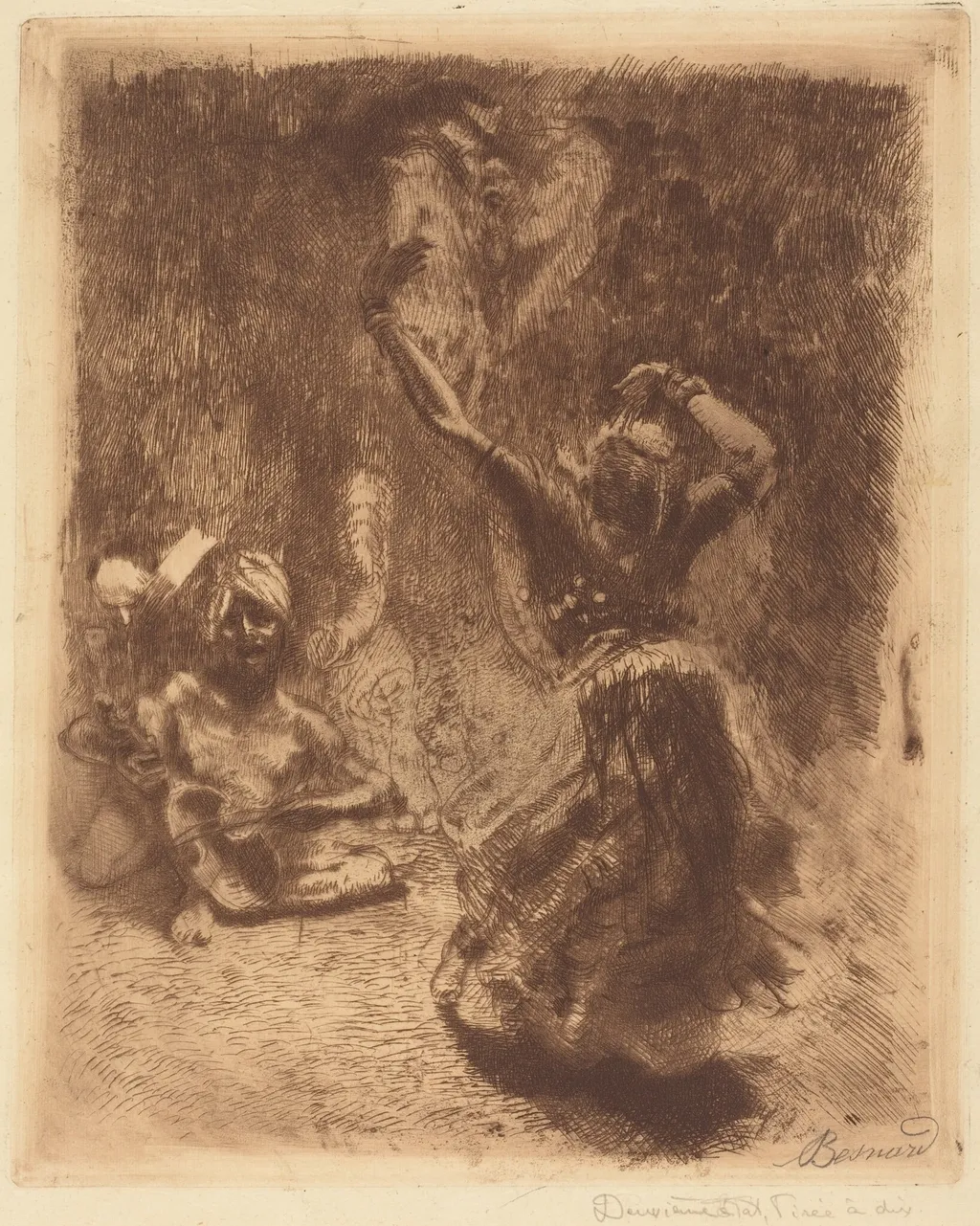
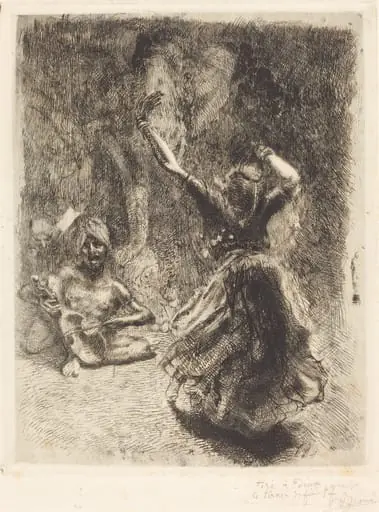
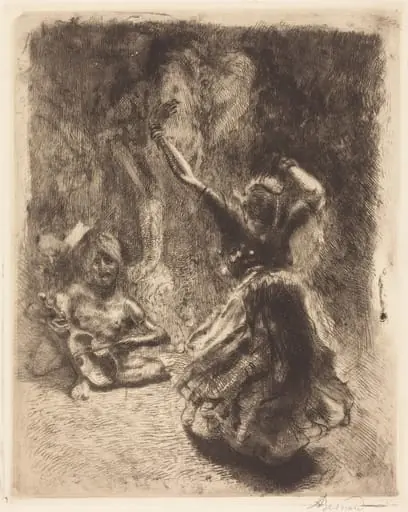
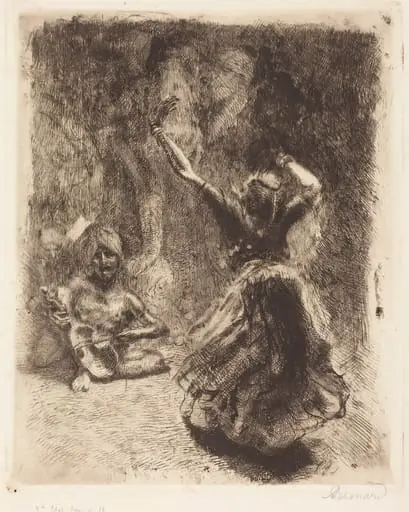
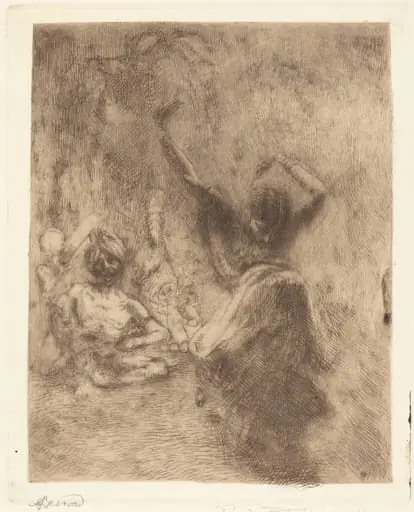
The Dancer of Tanjore (La bayadère de Tanjore) is an ink print by Paul-Albert Besnard. It dates from 1914 and is held in the collection of the National Gallery of Art.
About this work
Overview
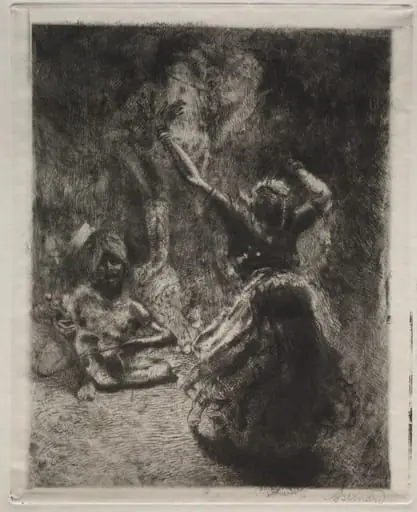
Albert Besnard’s 1914 print titled *The Dancer of Tanjore* (also known as *La bayadère de Tanjore*) presents a solitary figure in an elaborate, multi‑layered costume. The dancer’s arms rise in a sweeping curve, illuminated by a single lamp that highlights her face and forearms while the surrounding space recedes into muted shadow. The work is executed on wove paper using brown tones.
Subject & Meaning
The image captures a moment of poised performance, suggesting both ritual and theatricality inherent in Indian dance traditions. The solitary illumination may imply a focus on inner concentration or the fleeting nature of stage presence, while the surrounding darkness frames the figure as a focal point of cultural fascination for early‑twentieth‑century European audiences.
Technique & Style
Besnard combined three intaglio processes: traditional etching for precise linear detail, drypoint to produce soft, burr‑rich edges, and aquatint to achieve velvety tonal fields behind the dancer. This layered approach creates a nuanced interplay of light and shadow, allowing the brown ink to render both delicate textures of the costume and the deep, atmospheric background.
History & Provenance
Created during the First World War, the print reflects Besnard’s interest in exotic subjects that were popular in French artistic circles at the time. It was issued as a limited edition print, though specific details of its original exhibition or collection history remain sparse, typical of many early‑20th‑century commercial prints.
Artist & collection
Artist
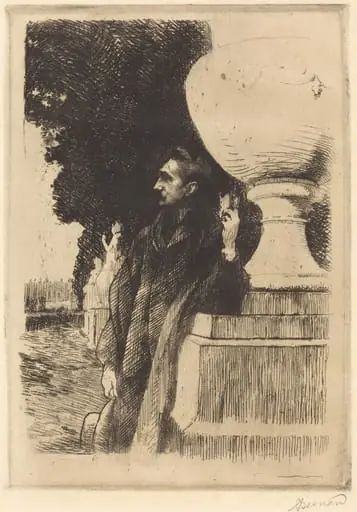
Paul-Albert Besnard (1849–1934) was a French artist, born in 7th arrondissement of Paris.