Artwork
The Dancer of Tanjore (La bayadère of Tanjore)
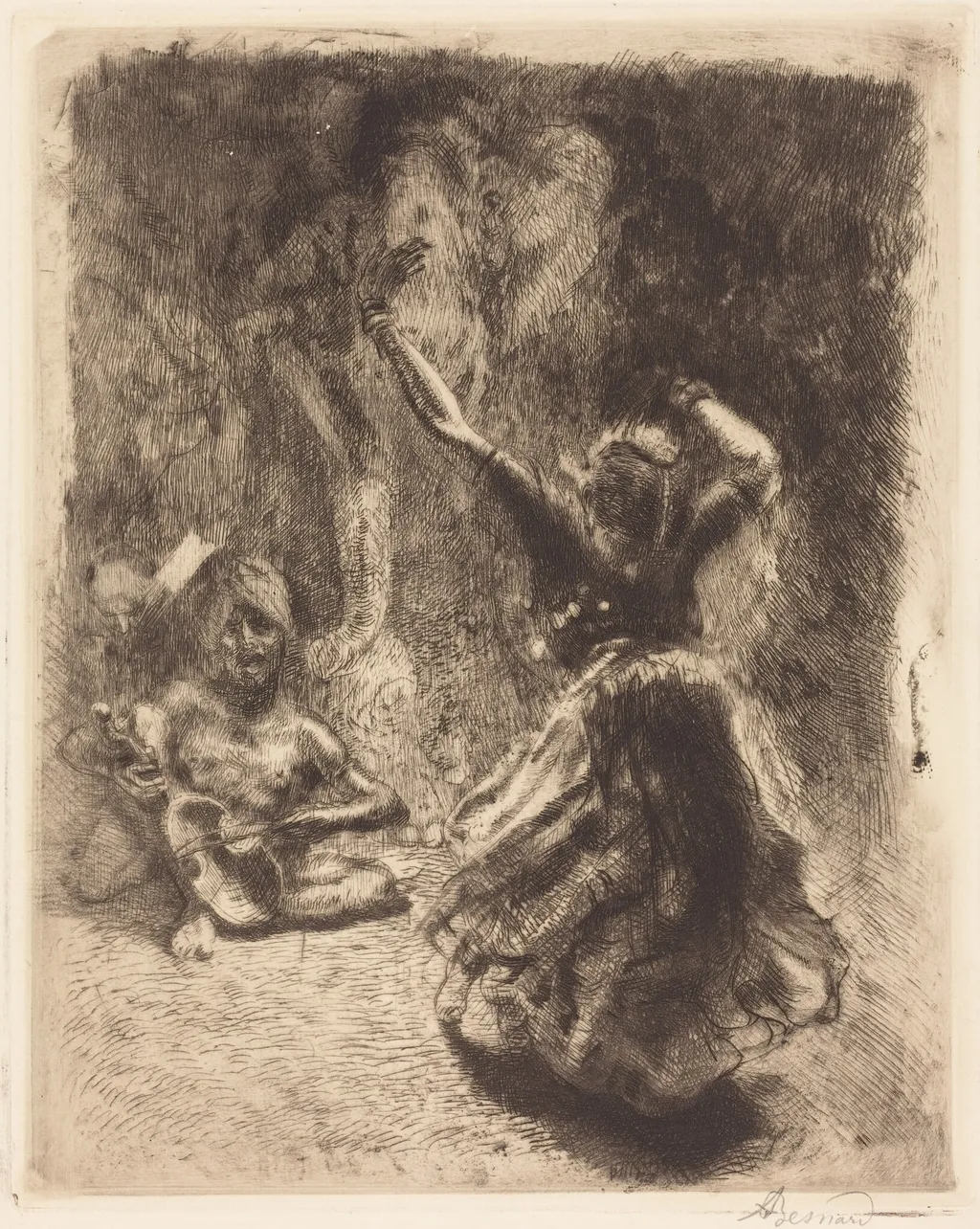
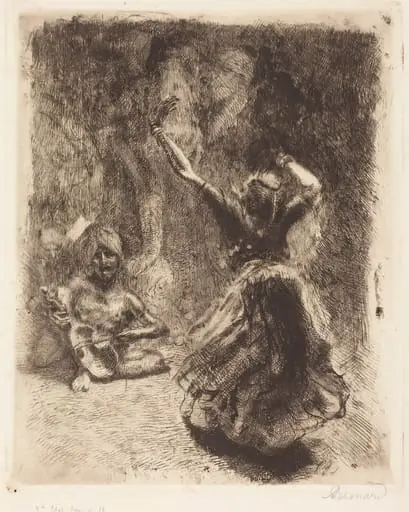
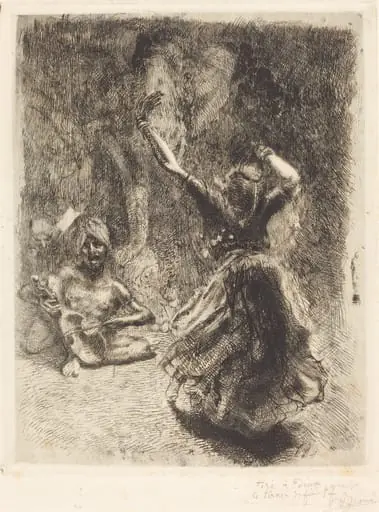
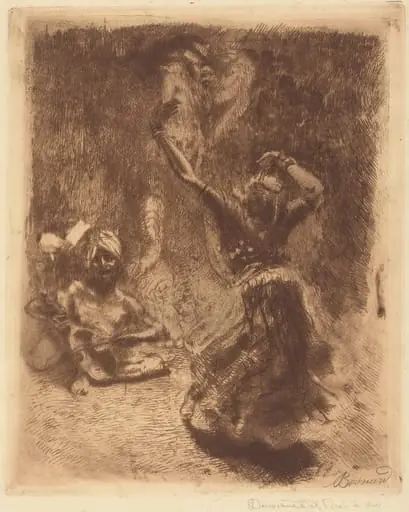
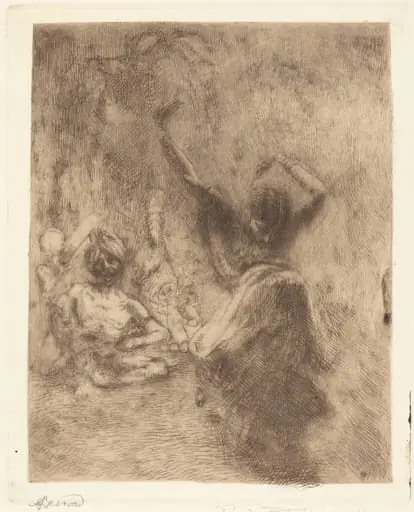
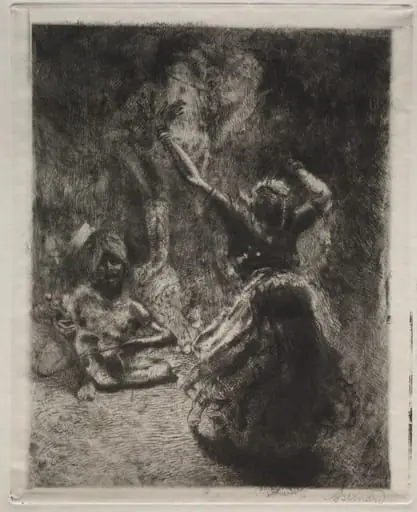
The Dancer of Tanjore (La bayadère of Tanjore) is an ink print by Paul-Albert Besnard. It dates from 1914 and is held in the collection of the National Gallery of Art.
About this work
The artist used three print methods here: etching, drypoint, and printed tone.
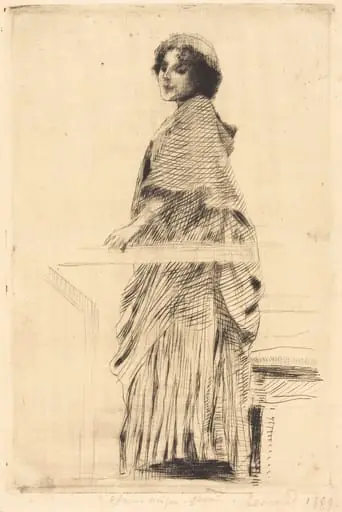
You see a woman in a blue sari dancing, her arms curved gracefully. Her jewelry catches the light, and behind her, a temple tower rises. The artist used three print methods here: etching, drypoint, and printed tone. That mix gives the print depth and soft shadows.
This isn’t just another dancer scene. The artist studied Indian art on a trip in 1914. He blended French style with Tanjore’s rich colors and sharp outlines.
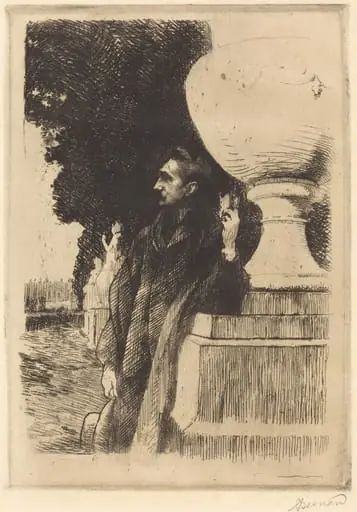
Look for another Besnard print at the National Gallery of Art, Washington.
Overview
Albert Besnard’s 1914 print titled *The Dancer of Tanjore* (also known as *La bayadère de Tanjore*) depicts a solitary female figure in a blue sari, poised in a graceful dance before the silhouette of a temple tower. Executed on wove paper, the work combines etching, drypoint, and printed tone to render subtle modelling and atmospheric depth.
Subject & Meaning
The composition centers on a dancer, her arms arched in an elegant gesture, her jewellery catching light as she moves. The presence of the temple spire in the background situates the scene within a South Indian cultural setting, suggesting a celebration of regional performance traditions and the visual allure of ritual attire.
Technique & Style
Besnard employed a hybrid printmaking approach: the primary lines were incised through traditional etching, while drypoint added rich, velvety edges, and printed tone supplied graduated shading. This combination produces a layered surface where the delicate folds of the sari and the glint of ornaments are rendered with nuanced tonal variation, reflecting the artist’s interest in merging French graphic sensibilities with Indian decorative motifs.
History & Provenance
The print emerged after Besnard’s 1914 visit to India, during which he studied local art and architecture. Upon his return, he incorporated observations of Tanjore’s vivid palette and crisp outlines into the work. Copies of the print have entered public collections, including a related Besnard piece held by the National Gallery of Art in Washington, D.C.
Context
Created amid the early twentieth‑century fascination with Orientalism, the image reflects a broader European trend of assimilating non‑Western visual elements into contemporary practice. Besnard’s exposure to Indian temple architecture and courtly dance informed his synthesis of French print techniques with the ornamental richness characteristic of South Indian artistic traditions.
Own this work as a print
Artist & collection
Artist
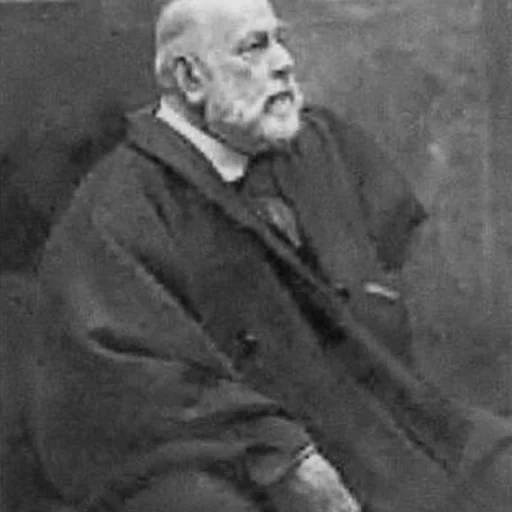
Paul-Albert Besnard (1849–1934) was a French artist, born in 7th arrondissement of Paris.