Artwork
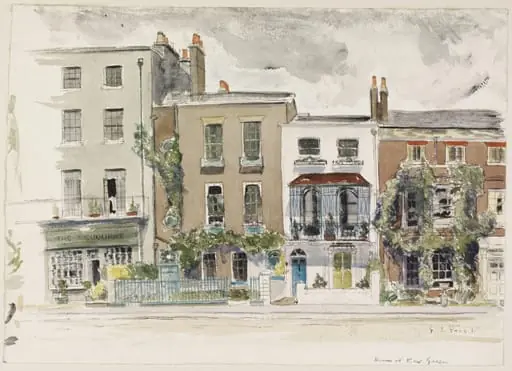
Houses in Hampstead
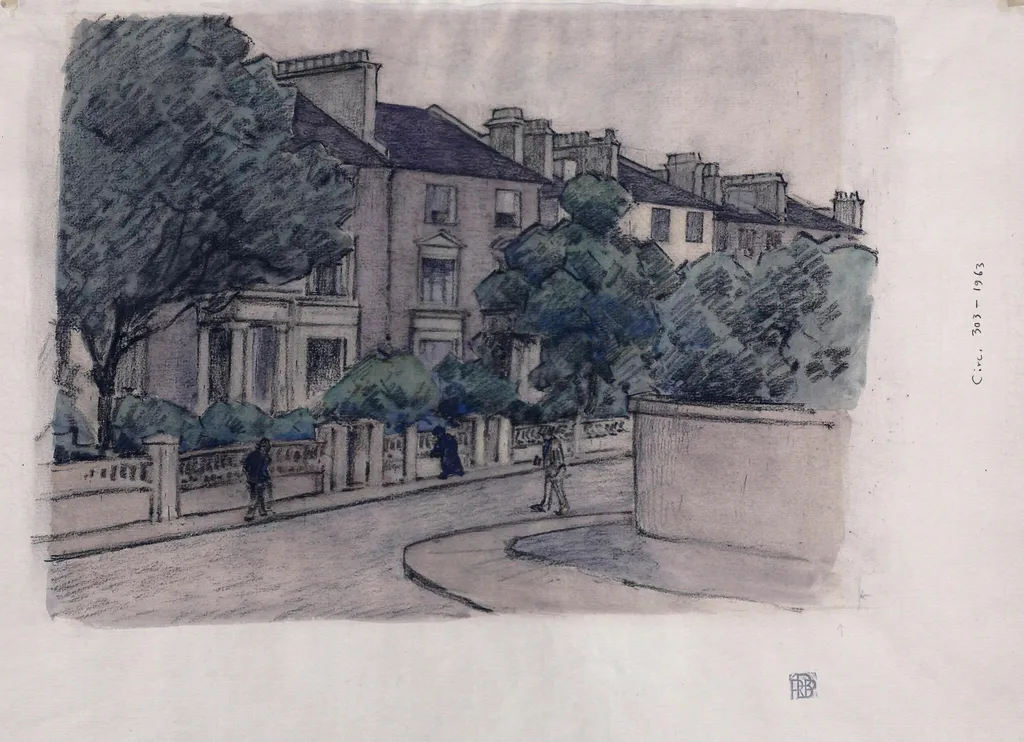
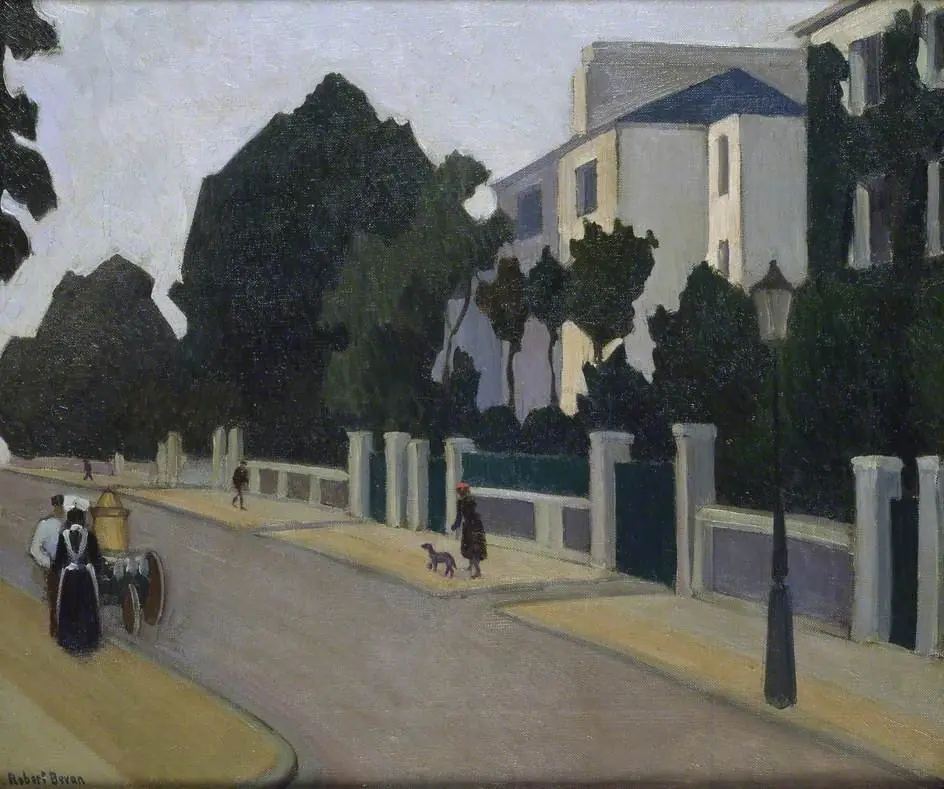
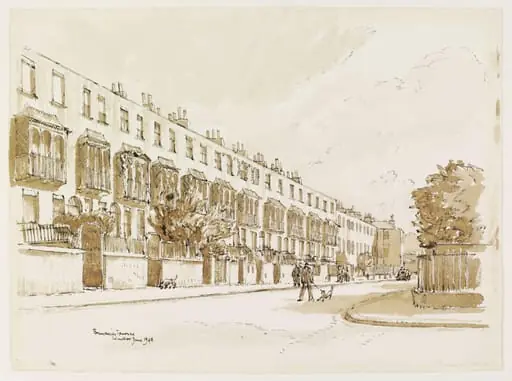
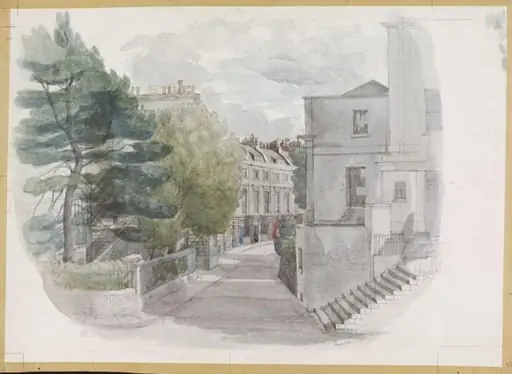
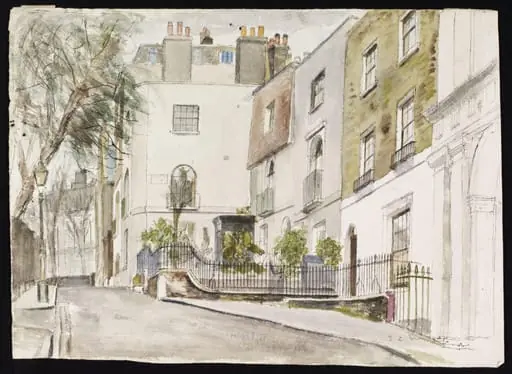
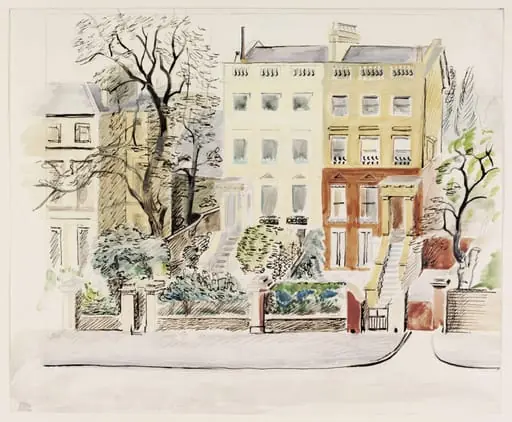
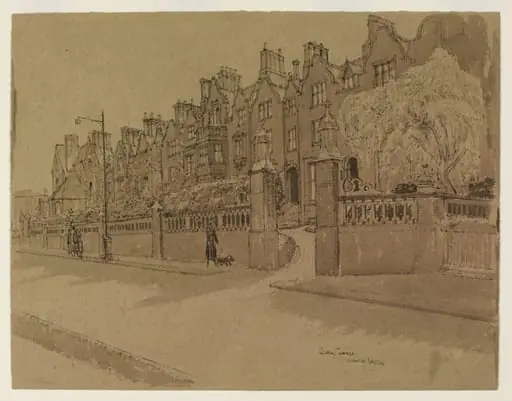
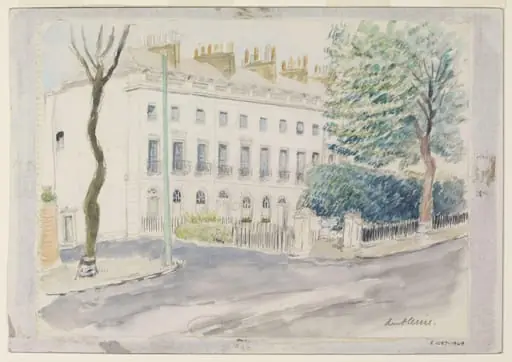
Houses in Hampstead is a watercolor work on paper by Robert Bevan. It dates from 1850 and is held in the collection of the Victoria and Albert Museum.
About this work
Overview
Painted around 1850, this watercolour by Bevan captures a quiet row of houses in Hampstead, a then-suburban district north of London. Executed in delicate washes, the work reflects a quiet observational approach to domestic architecture. It resides in the Victoria and Albert Museum’s collection, where it stands as an example of mid-19th-century British topographical watercolour.
Subject & Meaning
The scene presents a modest row of terraced homes, framed by a low stone wall and scattered shrubbery. No figures are present, emphasizing stillness and solitude. The composition avoids drama, instead conveying the unassuming rhythm of everyday life in a growing residential area. The absence of human activity invites contemplation of place rather than narrative.
Technique & Style
Bevan employed translucent watercolour washes to model the facades with subtle gradations of light and tone. Soft edges and muted earth tones—ochres, greys, and pale greens—create a hushed atmosphere. The play of shadow across walls suggests late afternoon light, while the minimal use of line keeps the focus on atmospheric effect rather than architectural detail.
History & Provenance
The painting was likely made during a period when Hampstead was becoming a desirable retreat for London’s middle class. It entered the Victoria and Albert Museum’s collection in the 19th century, possibly through donation or acquisition from a private collector. Its preservation reflects the institution’s interest in documenting domestic landscapes of the era.
Context
In the 1850s, Hampstead was transitioning from a rural village to a commuter suburb, its landscape shaped by expanding housing and improved transport. Artists like Bevan documented this shift with restrained realism, contrasting with the grander landscapes of the Romantic tradition. This work belongs to a broader trend of recording everyday English environments with quiet precision.
Legacy
Though not widely exhibited, the painting contributes to the understanding of British watercolour as a medium for intimate, non-heroic observation. It exemplifies how artists of the period found significance in ordinary scenes, influencing later generations interested in urban and suburban life as worthy subjects for art.
Own this work as a print
Artist & collection
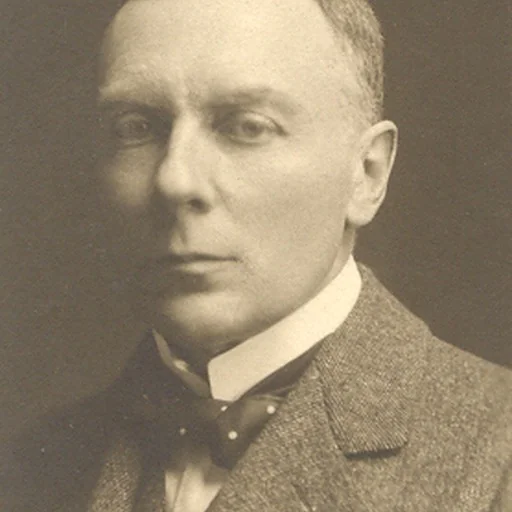
Artist
Robert Polhill Bevan (5 August 1865 – 8 July 1925) was a British painter, draughtsman and lithographer who was married to the Polish-born artist Stanisława de Karłowska.