Artwork
The Flight of the Vestal Virgins
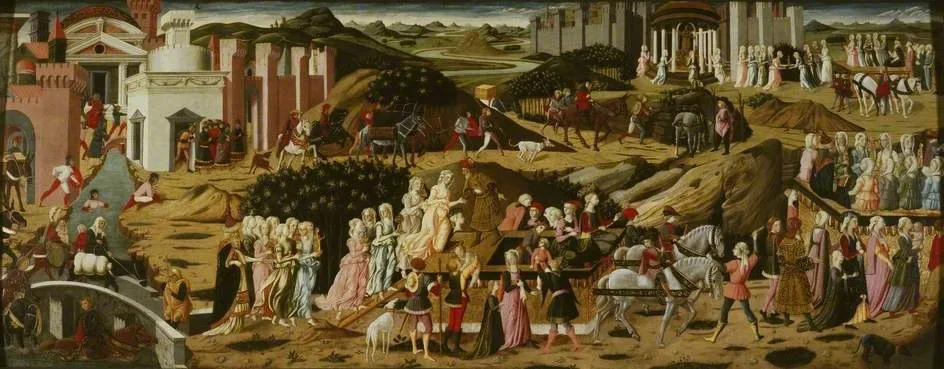
The Flight of the Vestal Virgins is an unspecified painting by the Early Renaissance artist Biagio d'Antonio. It is held in the collection of the Ashmolean Museum.
About this work
Overview
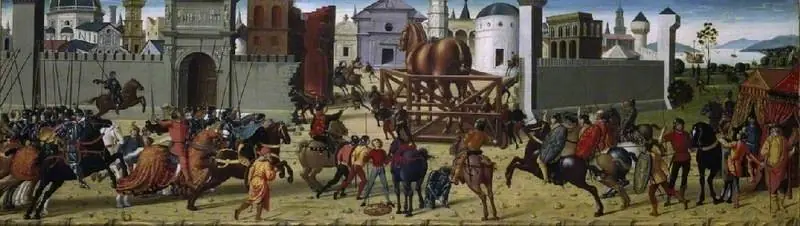
Biagio d’Antonio’s 1490 oil painting titled The Flight of the Vestal Virgins is part of the Ashmolean Museum’s collection. The work portrays a group of women, some mounted on horses and others on foot, moving across a varied landscape that includes distant architecture and a mountainous horizon. The composition conveys a moment of collective motion within a carefully structured setting.
Subject & Meaning
The scene illustrates the legendary escape of the Vestal Virgins, a narrative drawn from Roman myth where priestesses fled to avoid persecution. The figures are clothed in long, flowing robes of differing hues, some topped with modest head coverings, emphasizing their ritual status while also highlighting the urgency of their departure.
Technique & Style
Executed in a Renaissance idiom, the painting employs a balanced palette of earth tones softened by pastel accents. D’Antonio renders the fabrics and terrain with fine detail, using subtle gradations of light to model volume. The arrangement of foreground riders against a receding architectural backdrop demonstrates the period’s interest in spatial depth and controlled perspective.
History & Provenance
Created in the late 15th century, The Flight of the Vestal Virgins entered the Ashmolean Museum’s holdings through acquisition in the early 20th century, though the exact chain of ownership prior to its museum purchase remains sparsely documented. Its presence in the collection reflects the institution’s focus on Italian Renaissance painting.
Context
The work belongs to a broader tradition of Renaissance artists revisiting classical antiquity, translating ancient stories into contemporary visual language. By depicting the Vestal Virgins, d’Antonio aligns with humanist interests of the era, using historical subject matter to explore themes of piety, sacrifice, and communal resilience.
Artist & collection



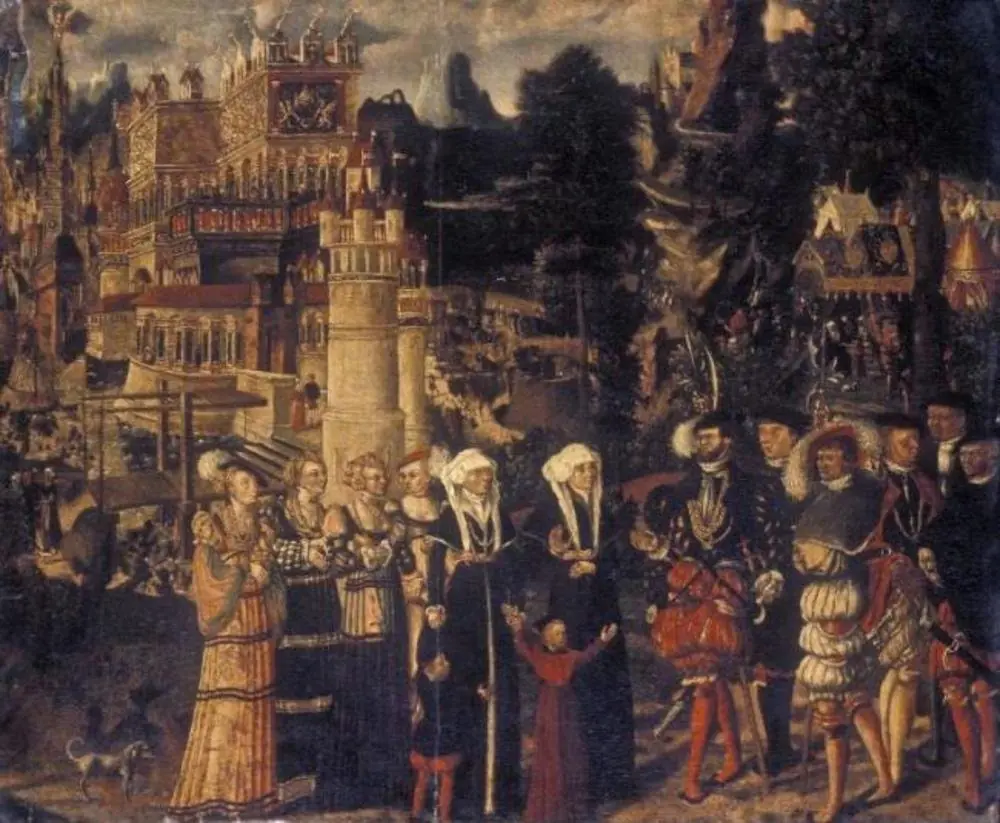 An historical scene
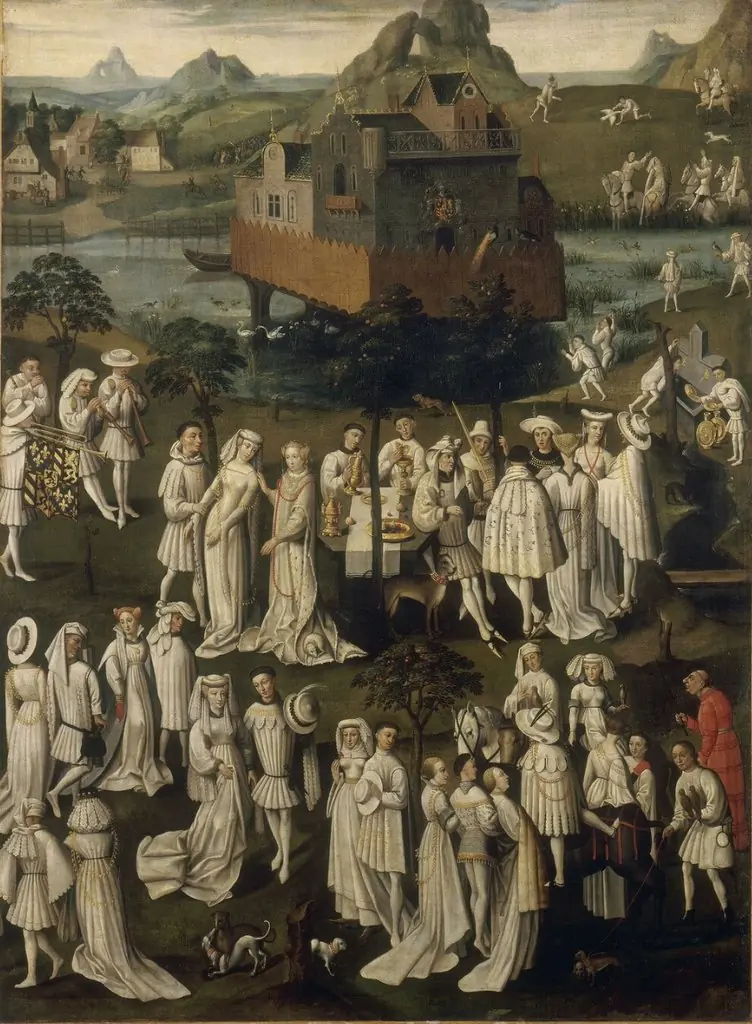 Garden of love at the court of Philippe the Good, Duke of Burgundy
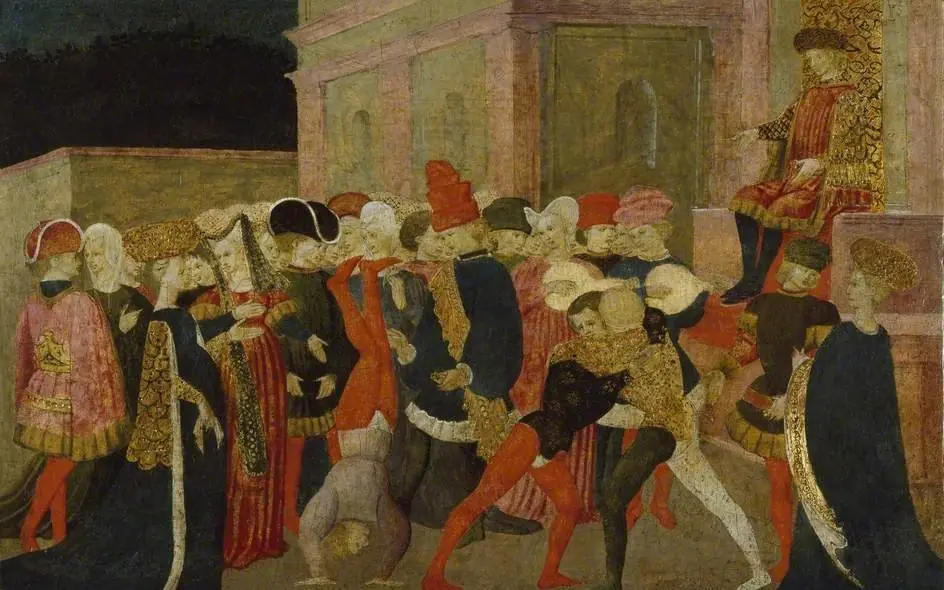 The Rape of the Sabine Women
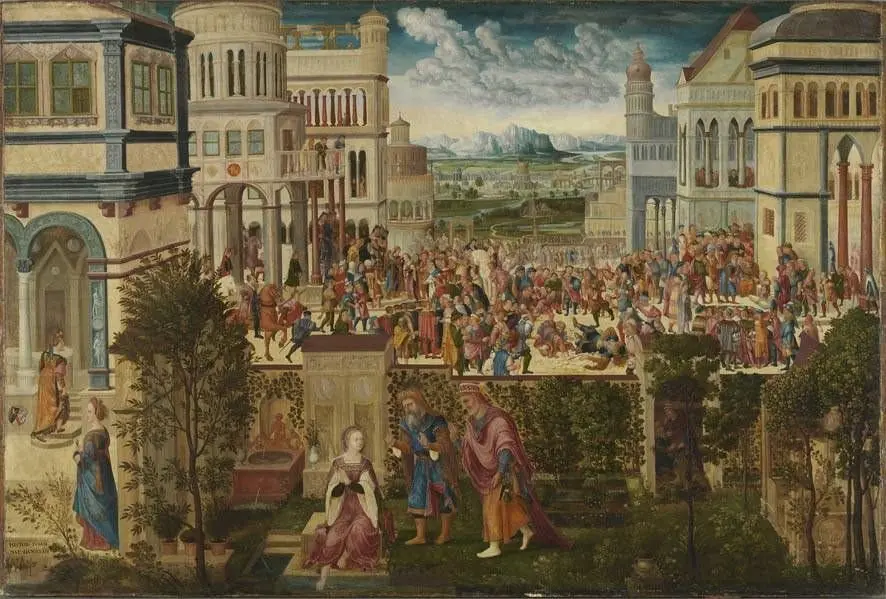 Historienzyklus: Geschichte der Susanna
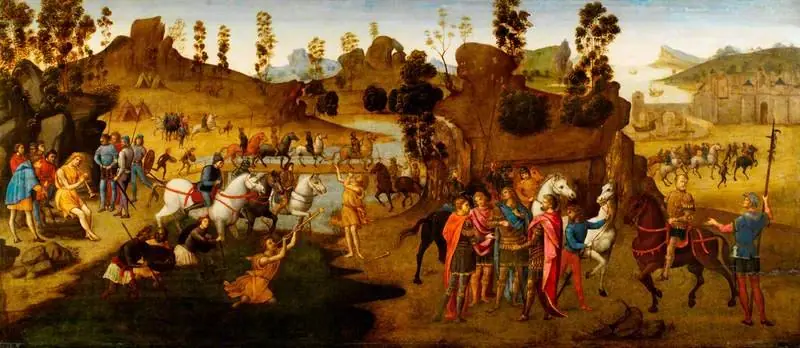 Julius Caesar and the Crossing of the Rubicon (scene from the story of Alexander the Great)
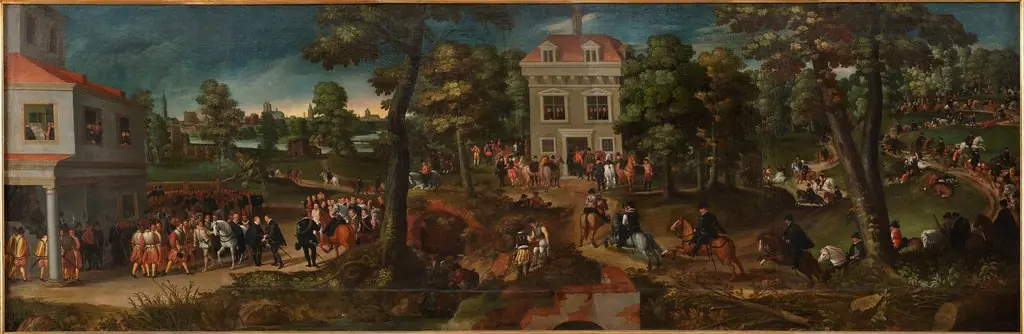 Postreise Erzherzog Ferdinands II. (1529-1595) nach Brüssel
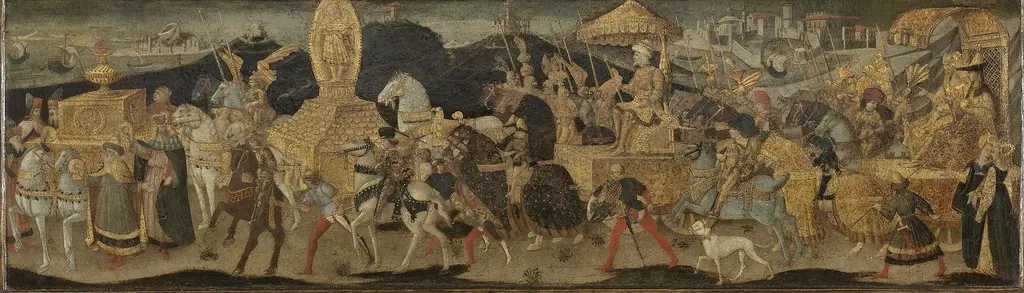 Darius Marching to the Battle of Issus
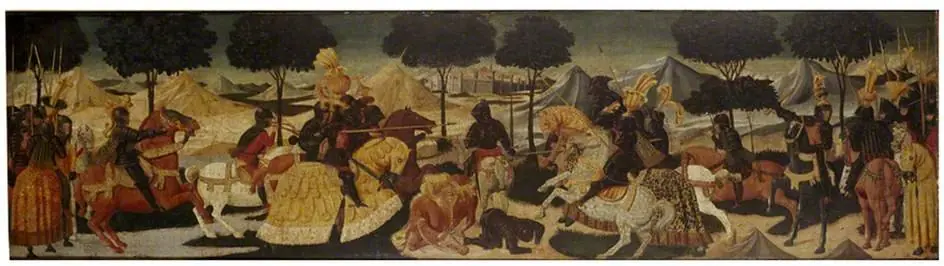 A Tournament
 Christ carrying the Cross
 The Taking of Pisa
 Representation from the Life of the Young Tobias I