Artwork
Pinacotheca Hamptoniana
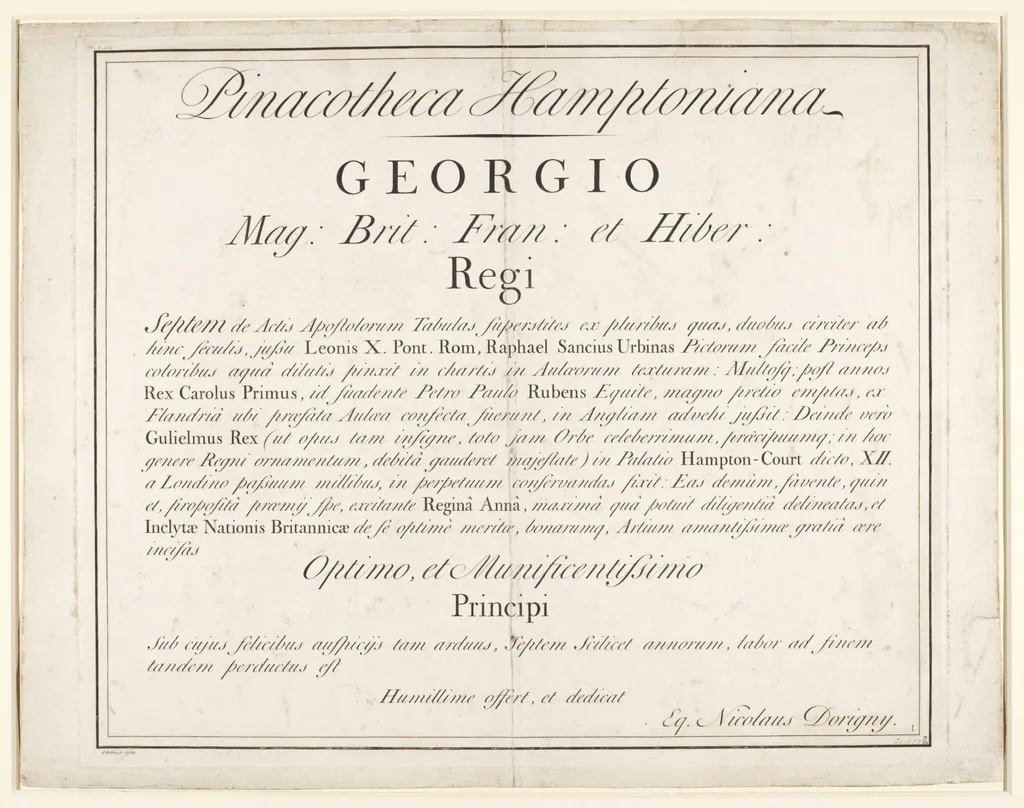
Pinacotheca Hamptoniana is a print by the Baroque artist George Bickham. It dates from 1719 and is held in the collection of the Victoria and Albert Museum.
About this work
Overview
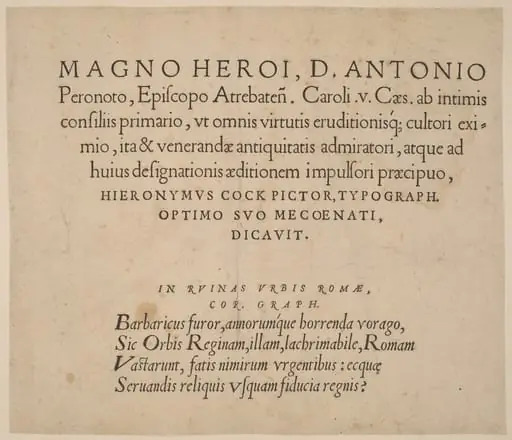
The work is the Latin title page of a printed volume that reproduces the famous Raphael Cartoons, a series of seven monumental designs created for tapestry weaving in the early 16th century. The title page introduces the collection of prints that render these large-scale biblical scenes for a book format.
Subject & Meaning
The original cartoons depict narrative episodes from the lives of Saint Peter and Saint Paul, drawn by Raphael to fulfill a papal commission for tapestries. The title page summarizes this program, noting the biblical source material and the intended function of the images as decorative furnishings for royal interiors.
Technique & Style
The prints were produced by the French engraver Nicholas Dorigny, whose work represents an early example of large‑scale reproductive printmaking. Dorigny’s plates translate Raphael’s complex compositions into line and tone, a process that required seven years to complete and involved multiple intaglio techniques.
History & Provenance
The cartoons were commissioned by Pope Leo X and later acquired for the English royal collection on the advice of Peter Paul Rubens, becoming part of the future King Charles I’s holdings. In the 17th century King William placed them in Hampton Court Palace for safekeeping, and the printed volume has remained in the royal collection, on loan to the museum since 1865.
Context
The title page reflects the early modern interest in disseminating Renaissance masterpieces through prints, a practice that began shortly after the cartoons’ completion in 1516. Dorigny’s edition was discussed in the Spectator of 19 November 1711, highlighting its reputation as an invaluable record of Raphael’s designs.
Artist & collection

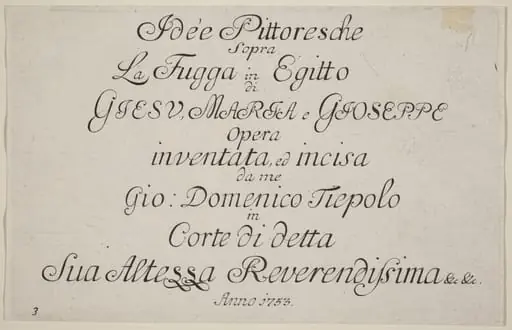 Title Page
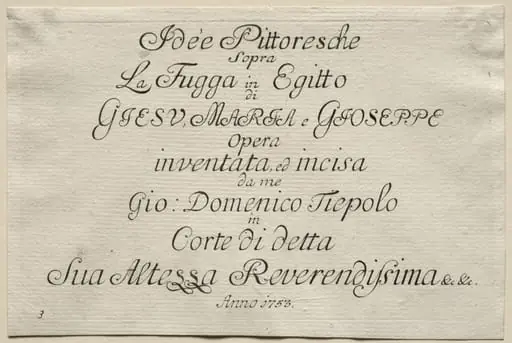 Flight into Egypt: Title Page
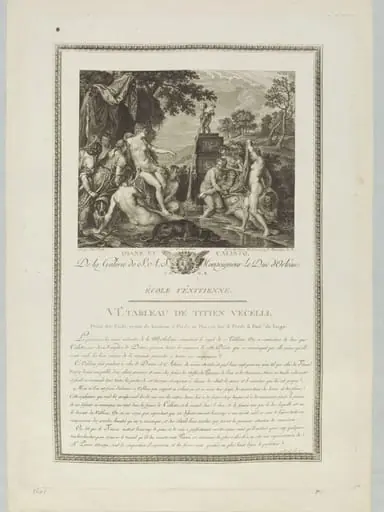 Diana and Callisto
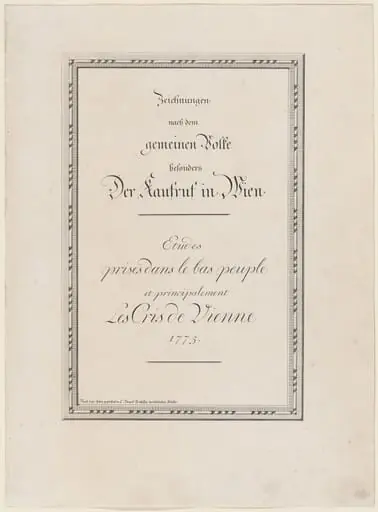 Zeichnungen nach dem gemeinen Volke besonders Der Kaufruf in Wien
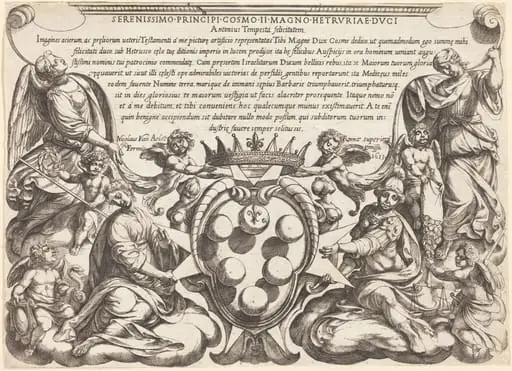 Frontispiece
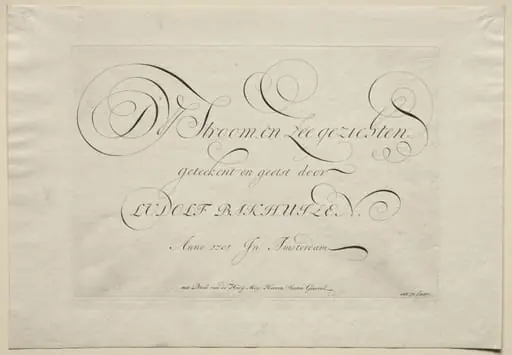 The River IJ and Seascapes
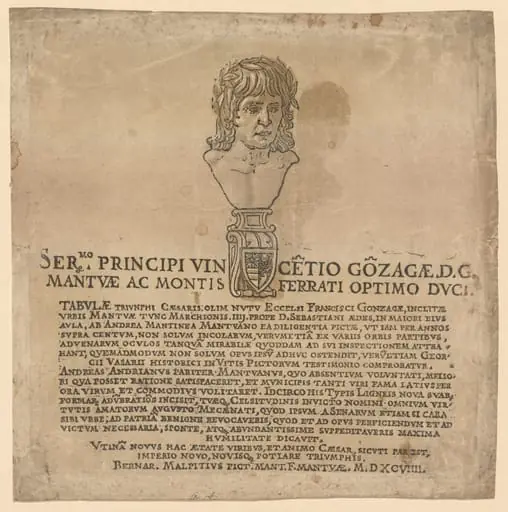 The Triumph of Julius Caesar
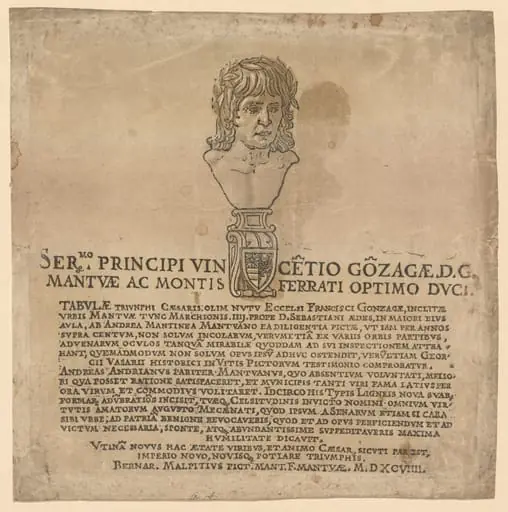 The Triumph of Julius Caesar: Frontispiece
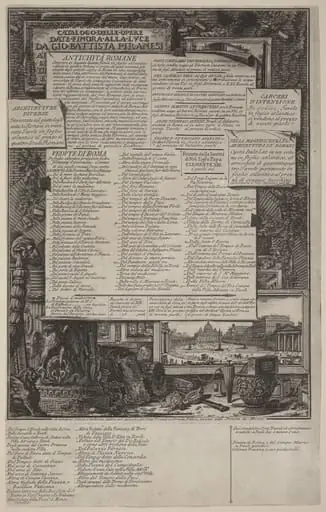 Catalogo delle Opere
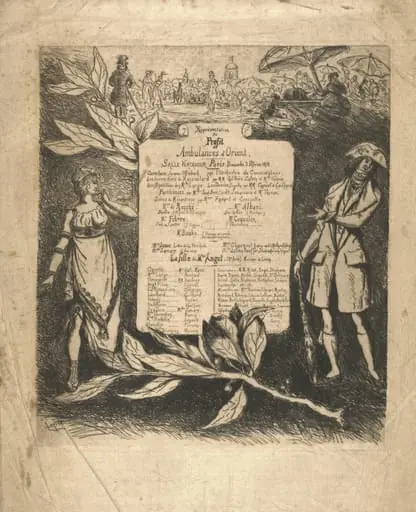 Programme de la représentation du 3 février 1878, salle Ventadour
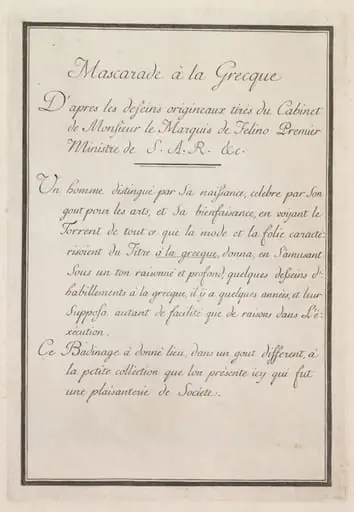 Mascarade à la Grecque: Title Page, Plate 1
 Dedication Page