Artwork
The Triumph of Julius Caesar: Frontispiece
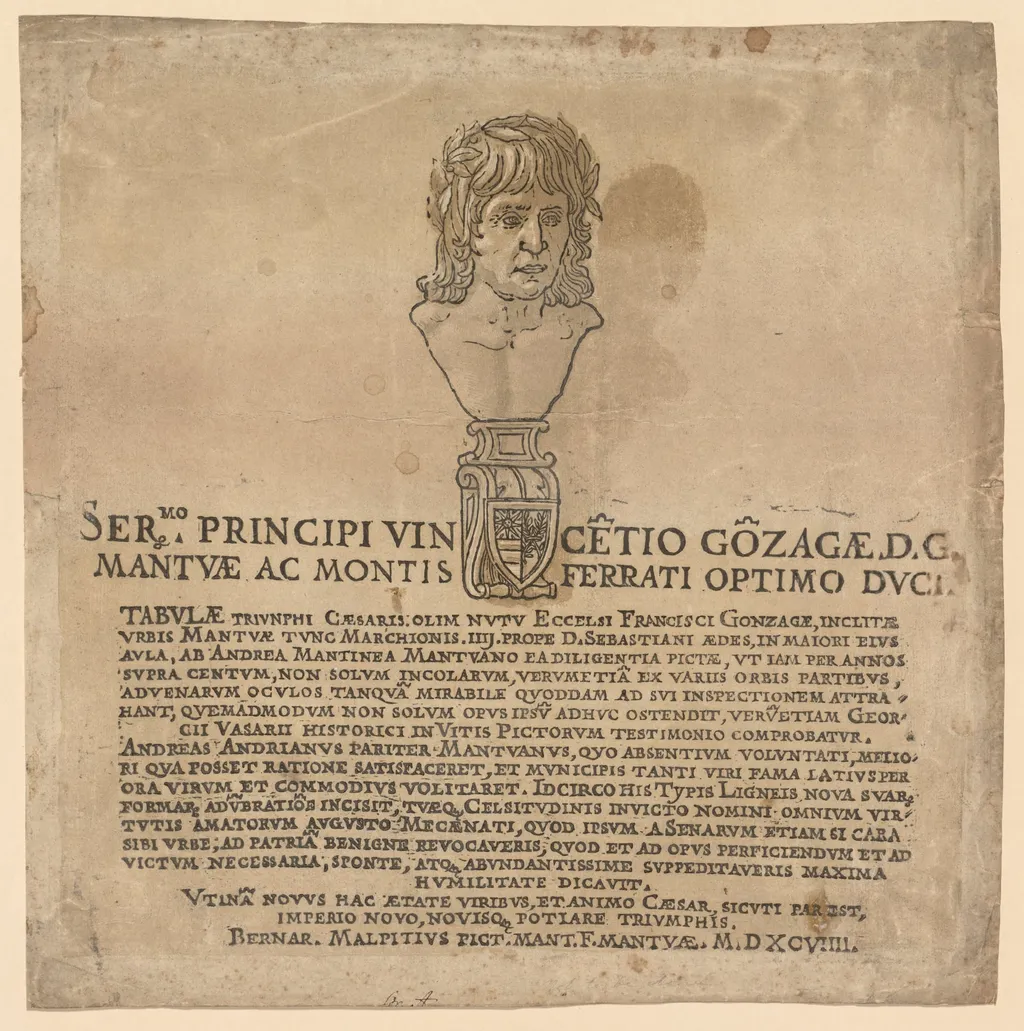
The Triumph of Julius Caesar: Frontispiece is a print by the Renaissance artist Andrea Andreani. It dates from 1596 and is held in the collection of the Cleveland Museum of Art.
About this work
Overview
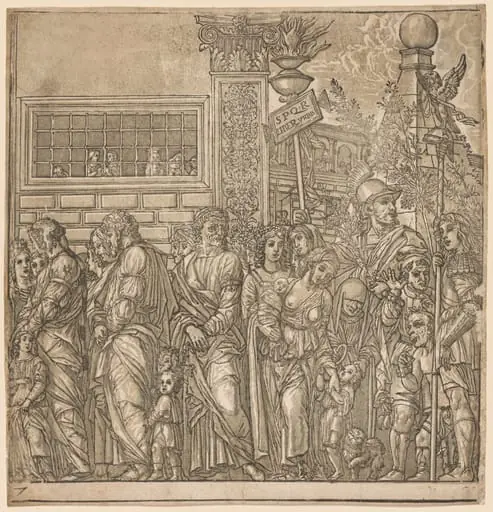
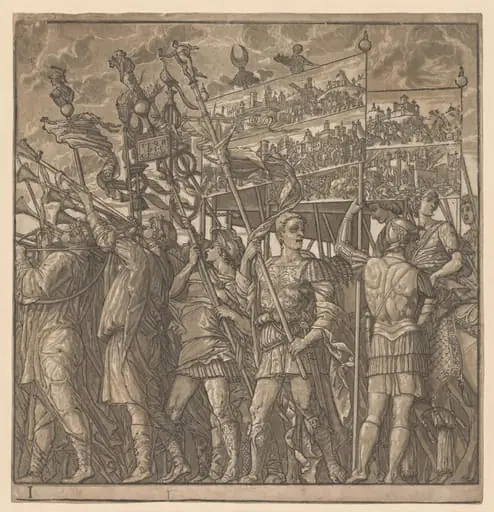
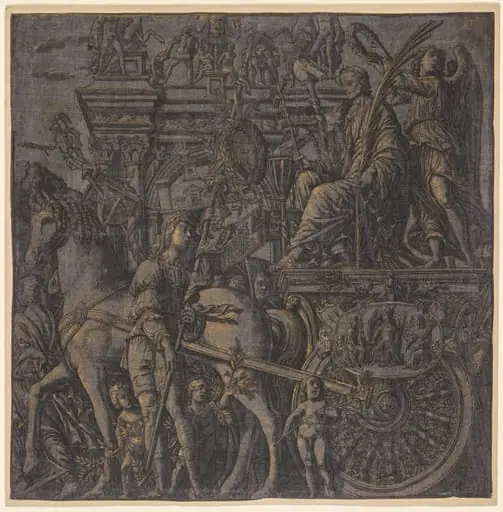
The Triumph of Julius Caesar: Frontispiece is a chiaroscuro woodcut from a series reproducing Andrea Mantegna’s 15th-century painted Triumph of Julius Caesar. Commissioned by Duke Vincenzo Gonzaga, it depicts Caesar’s triumphal procession after conquering Gaul in 52 BC.
Subject & Meaning
The print illustrates a Roman triumph, a ceremonial procession sanctioned by the Senate, showcasing spoils of war, statues, and captives. The scene is densely populated with figures in togas, musicians, exotic animals, and precious artifacts like ornate vases.
Technique & Style
Executed as a chiaroscuro woodcut, the print utilizes brown ink and carved wood blocks to achieve deep shadows and defined shapes, distinguishing it from the original painting. The technique enhances the visual impact of the crowded, detailed procession.
History & Provenance
Originally painted by Mantegna (now lost), the design was later reproduced in woodcuts. The frontispiece features Mantegna’s portrait and boasts the popularity of his paintings. Printed by Andreani, sets were often displayed as decorative friezes, sometimes augmented with detachable classical columns.
Context
Intended for decorative display, often as a continuous frieze, the woodcuts catered to a demand for reproductions of renowned artworks. The inclusion of detachable architectural elements, like the orange-colored columns flanking the fourth scene, reflects a desire for versatility in home decoration.
Legacy
As a reproduction of a lost masterpiece, the woodcut series preserves Mantegna’s composition while showcasing 16th-century printmaking innovations, particularly in chiaroscuro. It remains a significant example of how prints disseminated famous artworks to a broader audience.
Artist & collection

Artist
Andrea Andreani (1540–1623) was an Italian engraver on wood, who was among the first printmakers in Italy to use chiaroscuro, which required multiple colours.

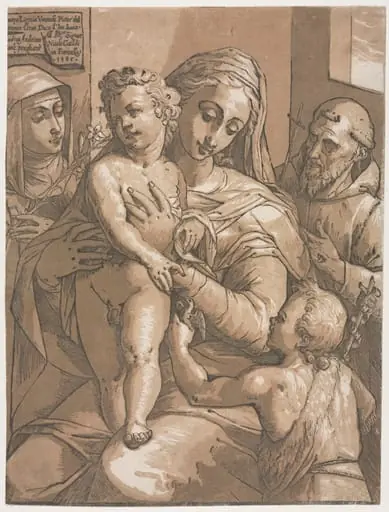 Virgin and Child with St. John, St. Catherine of Siena and St. Francis
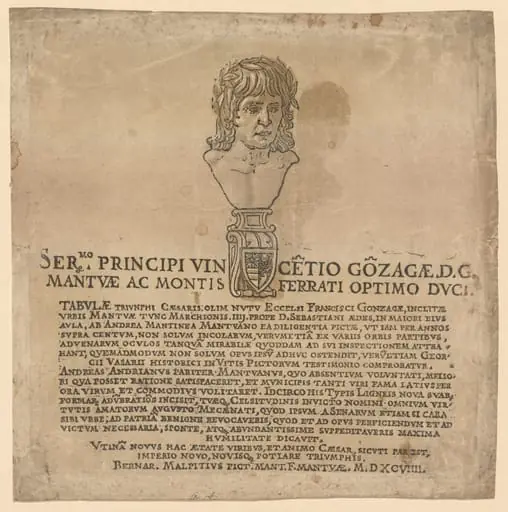 The Triumph of Julius Caesar
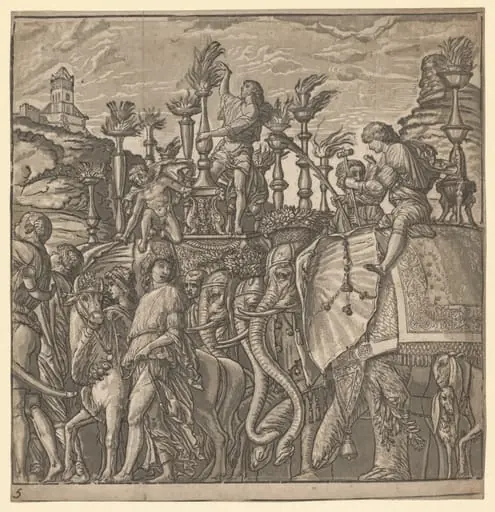 The Triumph of Julius Caesar: Elephants Carrying Torches
 The Abduction of the Sabine Women
 The Triumph of Julius Caesar: Procession of Men, Women and Children
 The Triumph of Julius Caesar: Soldiers Carrying the Pictures of War
 The Triumph of Julius Caesar: Caesar Triumphant
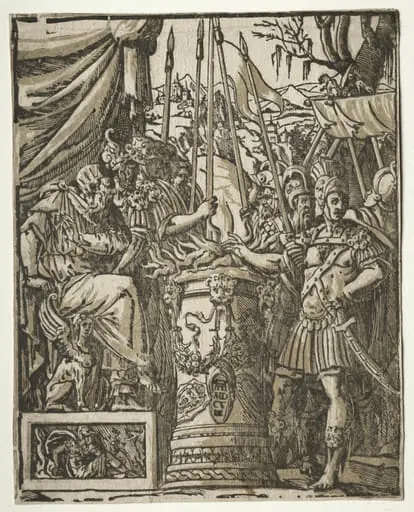 Mucius Scaevola
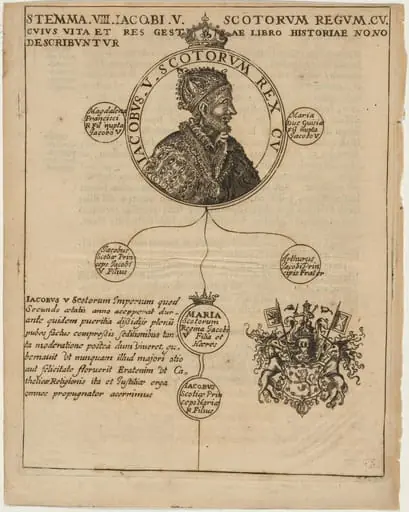 James V of Scotland with Geneology
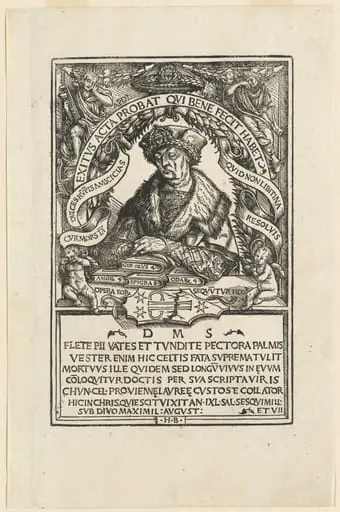 Conrad Celtis
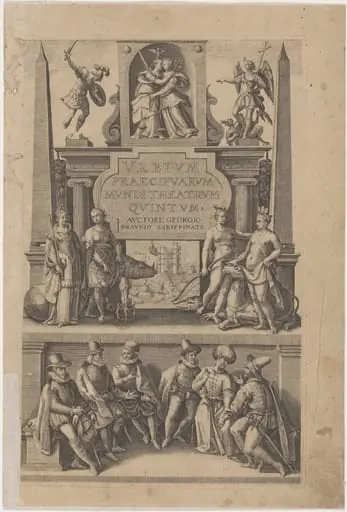 Title Page to Urbium Praecipuarum Mundi Theatrum Quintum
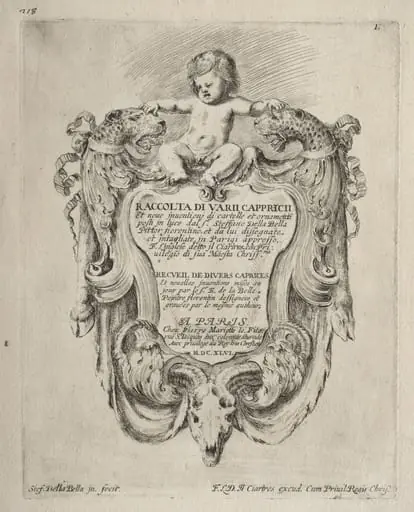 Collection of Various Caprices and New Designs of Cartouches and Ornaments: No 1, Title Page
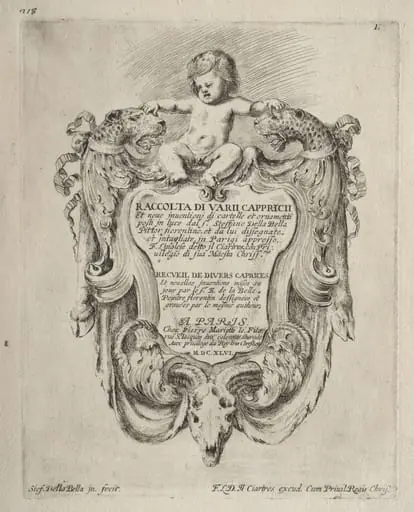 Collection of Various Caprices and New Designs of Cartouches and Ornaments
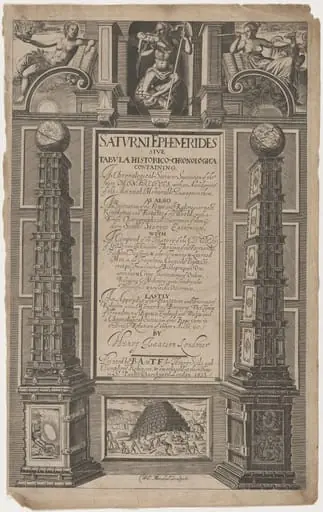 Title Page to Saturne Ephemerides by Henry Isaacson
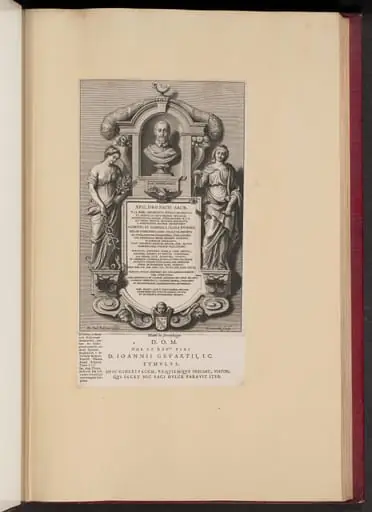 Epitaph of Claude Jean Gevaert
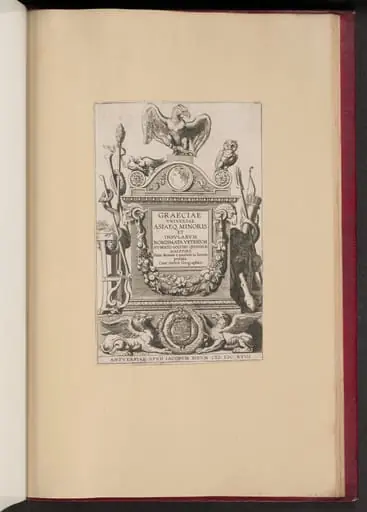 Title Page for Hubert Goltzius, Graeciae Vniversae Asiaeq. Minoris et Insularum Nomismata
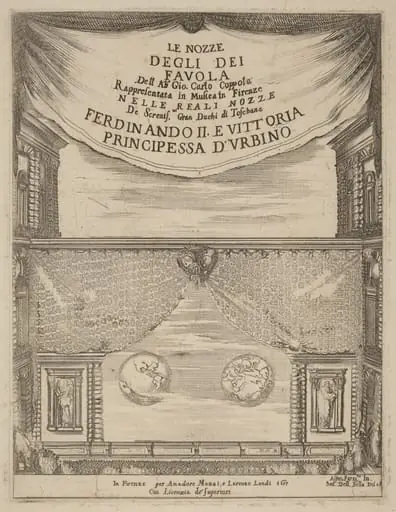 Le Nozze degli Dei: Frontispiece
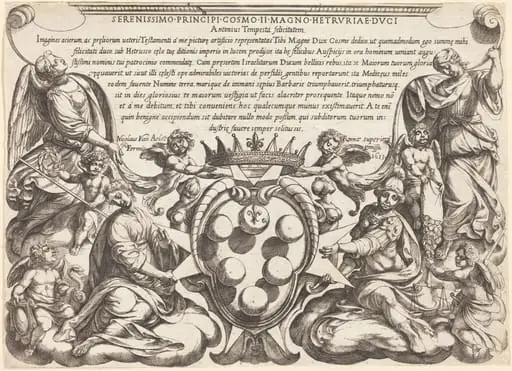 Frontispiece