Artwork
Frontispiece
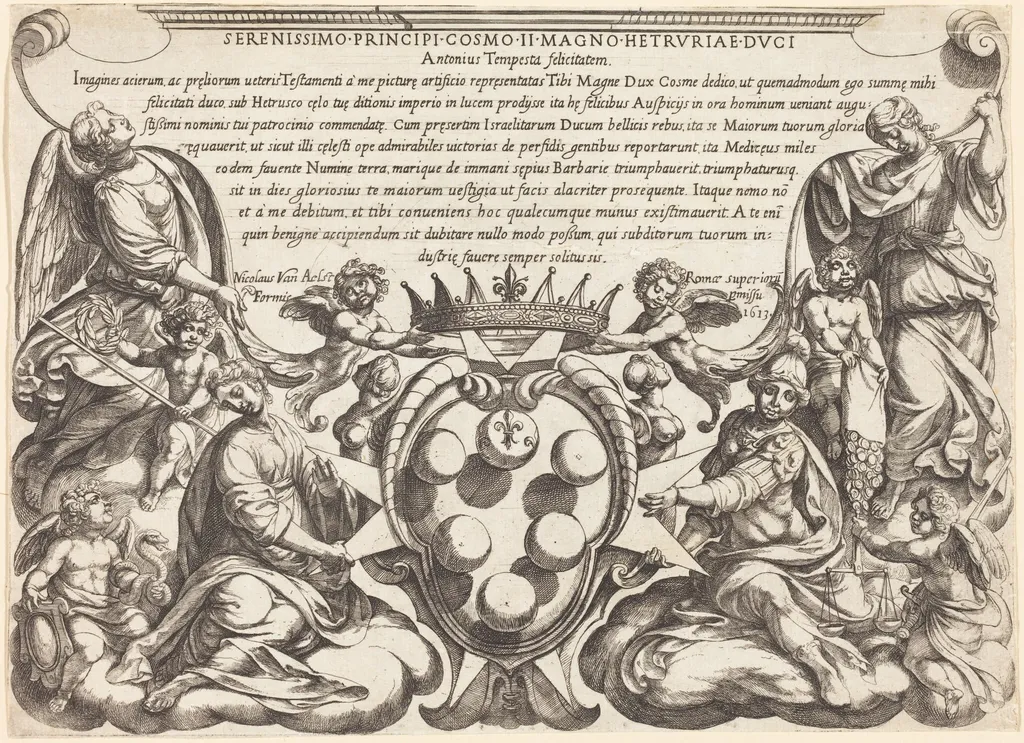
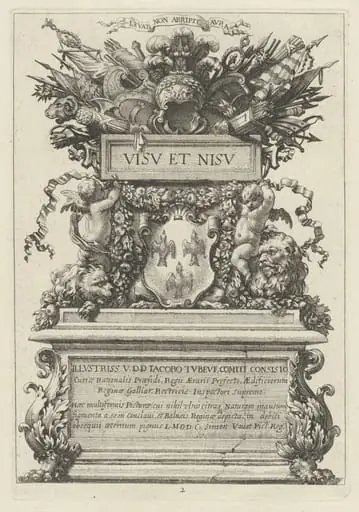
Frontispiece is an ink print by the Baroque artist Antonio Tempesta. It dates from 1613 and is held in the collection of the National Gallery of Art.
About this work
Overview
Antonio Tempesta’s 1613 etching titled *Frontispiece* exemplifies the artist’s prolific output during the transitional phase from the late Renaissance to the early Baroque. Executed in a single plate, the print presents a densely populated scene that intertwines human figures, fantastical forms, and symbolic objects such as a crown and a ship, all rendered with a vigorous, linear energy.
Subject & Meaning
The composition centers on two robed figures flanking a Latin dedication, suggesting a dedication to a high‑ranking patron, likely a ruler. Below them, a tangled mass of individuals and creatures spirals around regal and maritime symbols, evoking themes of authority, triumph, and the complexities of power that were common in both classical myth and contemporary historical narratives.
Technique & Style
Tempesta employs a fine, incised line to generate a bustling, almost chaotic surface, where minute details emerge from the densely cross‑hatched background. The sharp, overlapping strokes create a sense of movement and depth, characteristic of his work that bridges the disciplined composition of Roman art with the dynamic, ornamental vigor associated with Antwerp’s printmaking tradition.
History & Provenance
Created in 1613, the etching reflects Tempesta’s established reputation as “il Tempestino,” a moniker derived from his frequent depictions of battle scenes. While the original ownership records are sparse, the work has been documented in several early‑modern collections of Italian prints, indicating its circulation among connoisseurs of narrative engraving in the seventeenth century.
Context
*Frontispiece* belongs to a period when Italian artists were increasingly influenced by Northern European print techniques, especially those of Antwerp. Tempesta’s integration of elaborate figural crowds and allegorical motifs mirrors the broader Baroque fascination with theatricality and the visual representation of political power.
Legacy
The etching illustrates Tempesta’s role in transmitting a hybrid visual language that combined Roman classicism with the exuberant detail of Northern prints. Its complex composition and narrative density anticipate later Baroque prints that emphasize dramatic storytelling through densely packed imagery.
Artist & collection
Artist
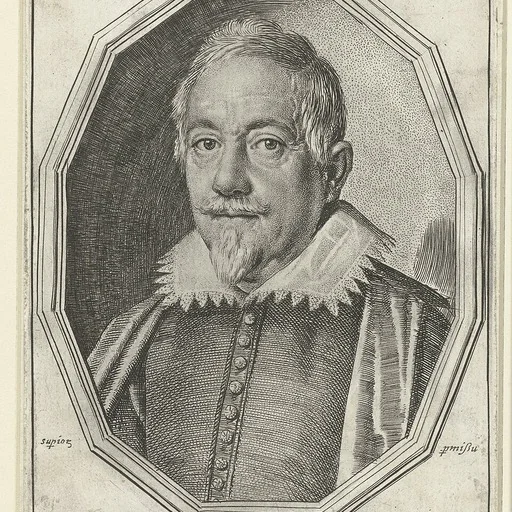
Antonio Tempesta, also called il Tempestino (1555 – 5 August 1630), was an Italian painter and engraver, whose art acted as a point of connection between Baroque Rome and the culture of Antwerp.

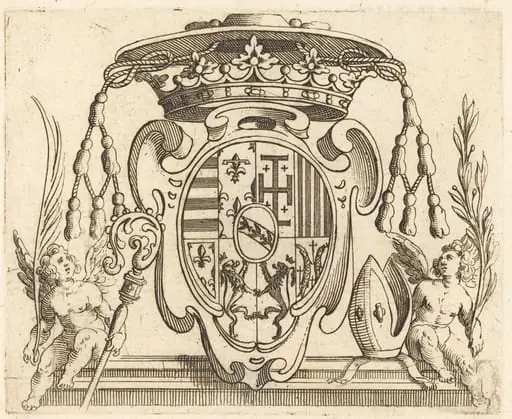 Coat of Arms of Nicolas Francis of Lorraine
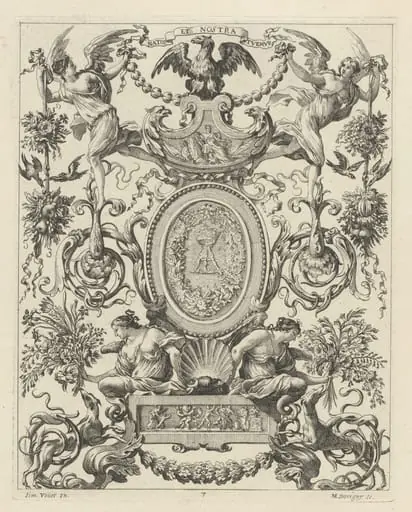 Ornamental Panel Surmounted by an Eagle and the Motto NATOS ET NOSTRA TUEMUR
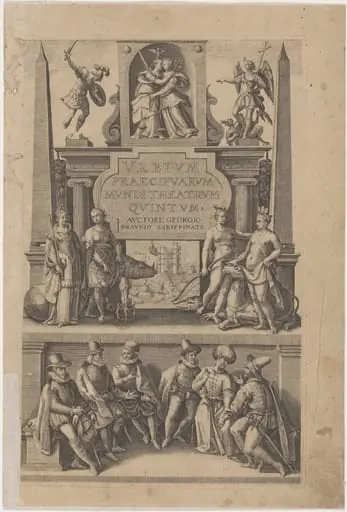 Title Page to Urbium Praecipuarum Mundi Theatrum Quintum
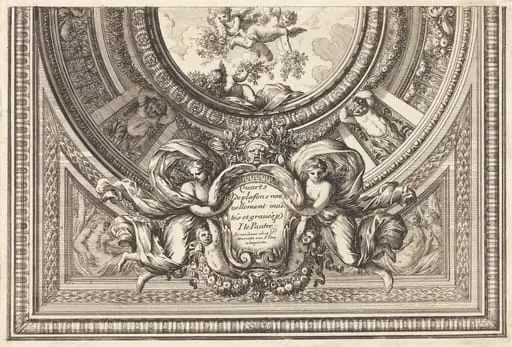 Title Page
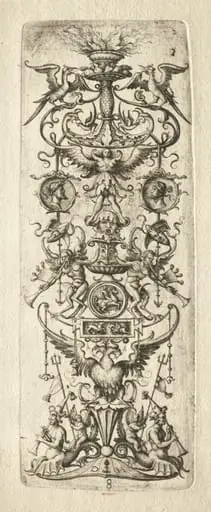 Ornament Fillet
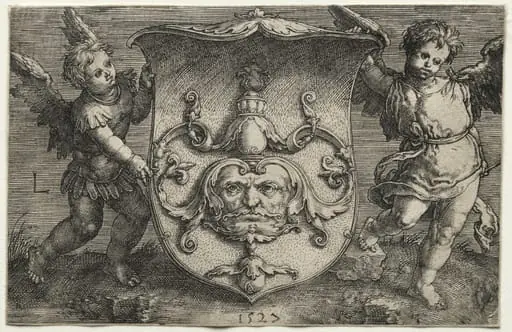 A Shield Bearing a Mask Supported by Two Genii
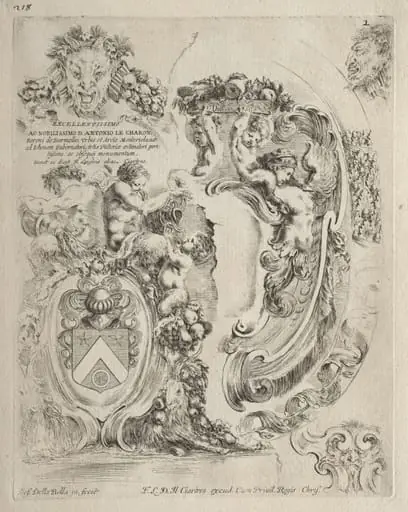 Collection of Various Caprices and New Designs of Cartouches and Ornaments: No. 2, Dedication Page
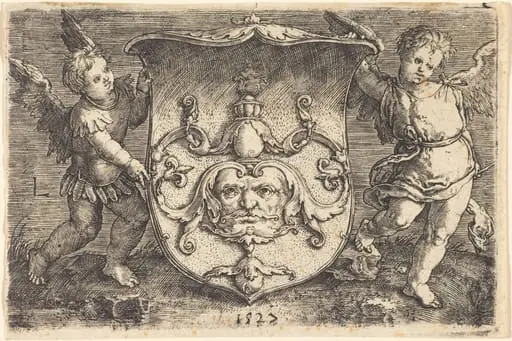 Shield with Mascaron
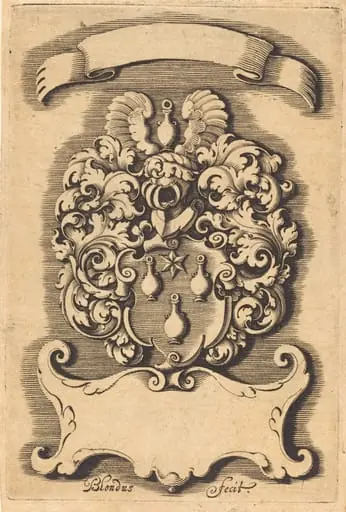 Crest
Crest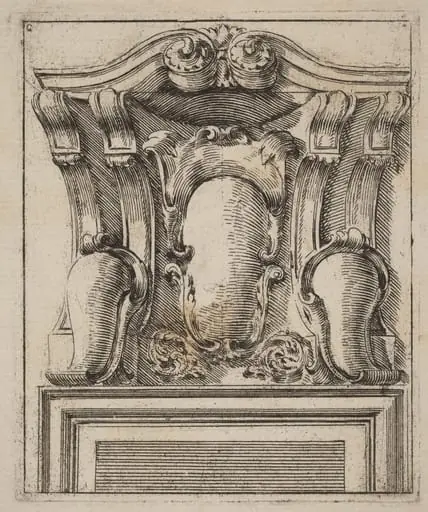 Architectural Motif with Three Shields
 Architectural Motif with a Drape with Fruit
 Frontispiece