Artwork
Țărancă săsoaică
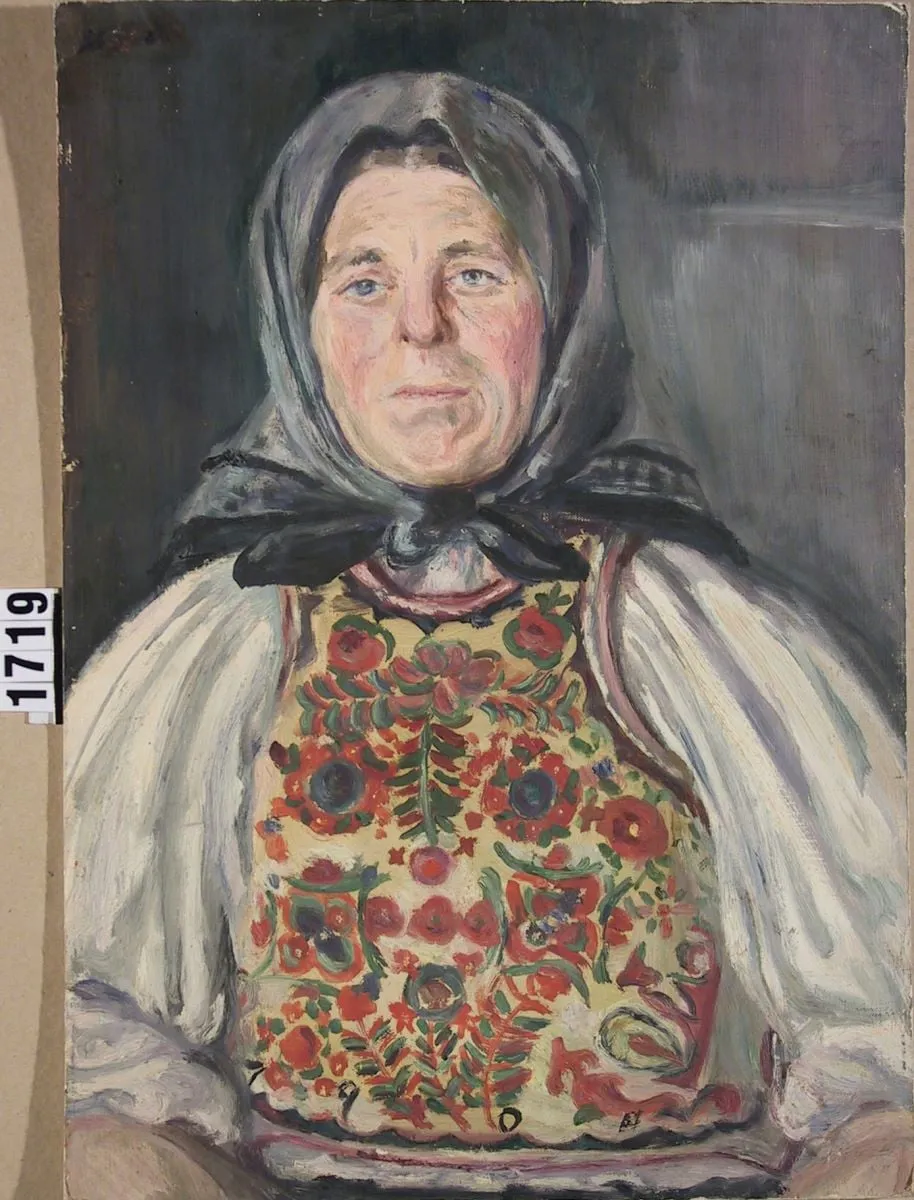
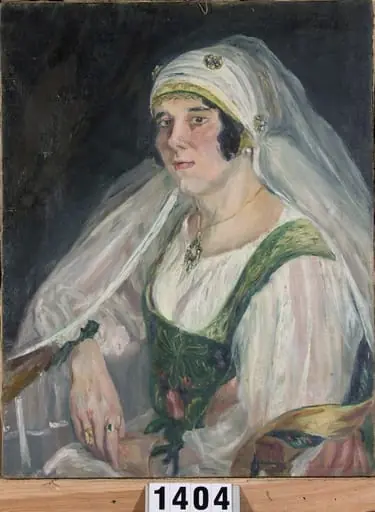
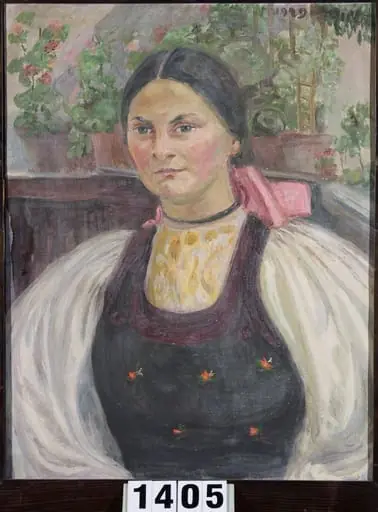
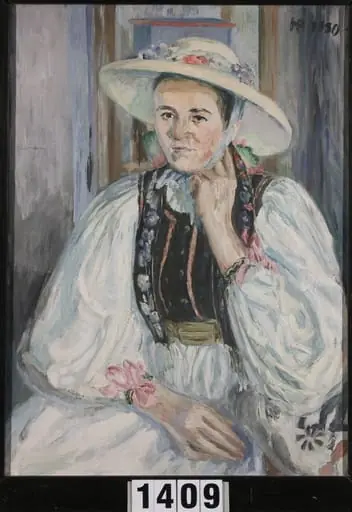
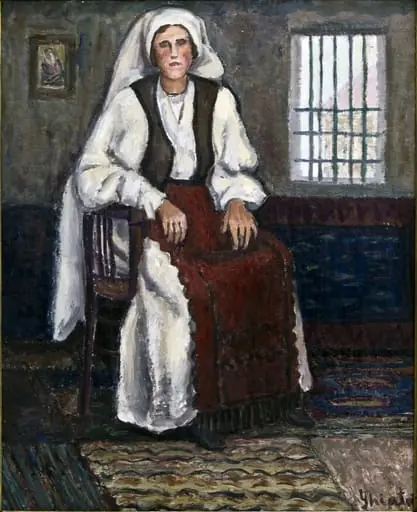
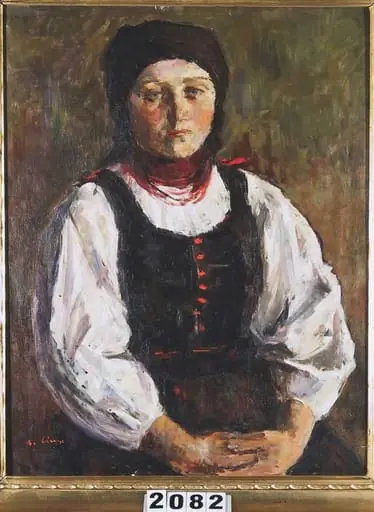
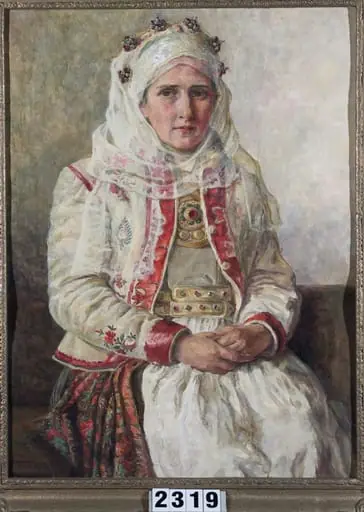
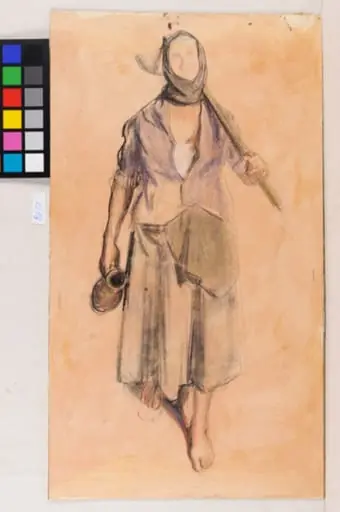
Țărancă săsoaică is an unspecified painting by Henriette Bielz. It is held in the collection of the Brukenthal National Museum. This portrait depicts a woman from a rural Romanian community, rendered with directness and emotional restraint.
About this work
Overview
This portrait depicts a woman from a rural Romanian community, rendered with directness and emotional restraint.
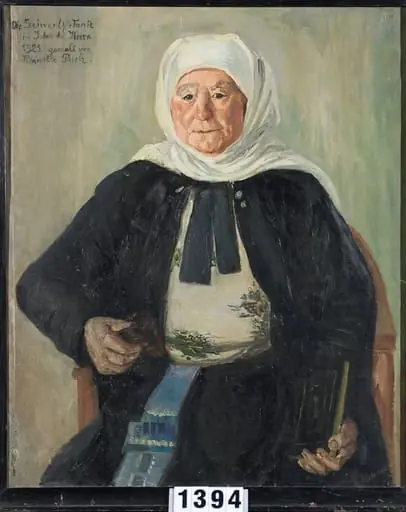
This portrait depicts a woman from a rural Romanian community, rendered with directness and emotional restraint. The composition isolates her against a dark, unmodeled background, emphasizing her presence without distraction. Her attire and expression suggest a life shaped by labor and tradition, captured with unadorned realism. The artist focuses on texture and color contrast rather than narrative detail.
Subject & Meaning
The figure is likely a peasant woman, identified by her traditional dress and headscarf. Her serious gaze conveys dignity and quiet resilience, avoiding idealization. The floral pattern on her dress may reflect regional embroidery customs, grounding her identity in local culture. The absence of context or setting shifts focus to her individuality and the weight of her daily existence.
Technique & Style
Thick, tactile brushstrokes apply paint in impasto, giving the dress and scarf a physical presence. The red floral motifs are rendered with bold, saturated pigment, contrasting sharply against the white ground. The dark background is thinly painted, enhancing the figure’s relief. The technique prioritizes materiality over smooth finish, reinforcing the subject’s tangible reality.
History & Provenance
The work originates from early 20th-century Romanian art, likely created during a period when rural life was being documented with renewed attention. It was probably painted by an artist engaged with national identity and folk traditions. Its survival suggests it was retained within private or institutional collections focused on regional heritage.
Context
This painting emerged amid broader European movements that turned to rural subjects as cultural anchors. In Romania, artists sought to affirm national character through depictions of peasant life, often avoiding romanticism. The work aligns with efforts to record traditional dress and social roles before rapid modernization altered rural communities.
Legacy
The painting contributes to a visual archive of Romanian peasant women, preserving details of attire and demeanor that might otherwise have faded. Its unembellished approach influenced later artists interested in authenticity over ornament. It remains a reference point in discussions of identity, class, and representation in Eastern European art.
Artist & collection
Artist
Henriette Bielz painted scenes of everyday life in late-19th-century Transylvania.