Artwork
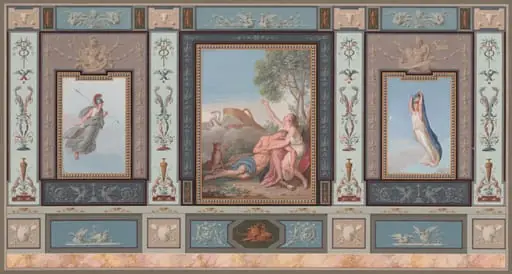
Elaborate Wall Decoration with Endymion and Hebe
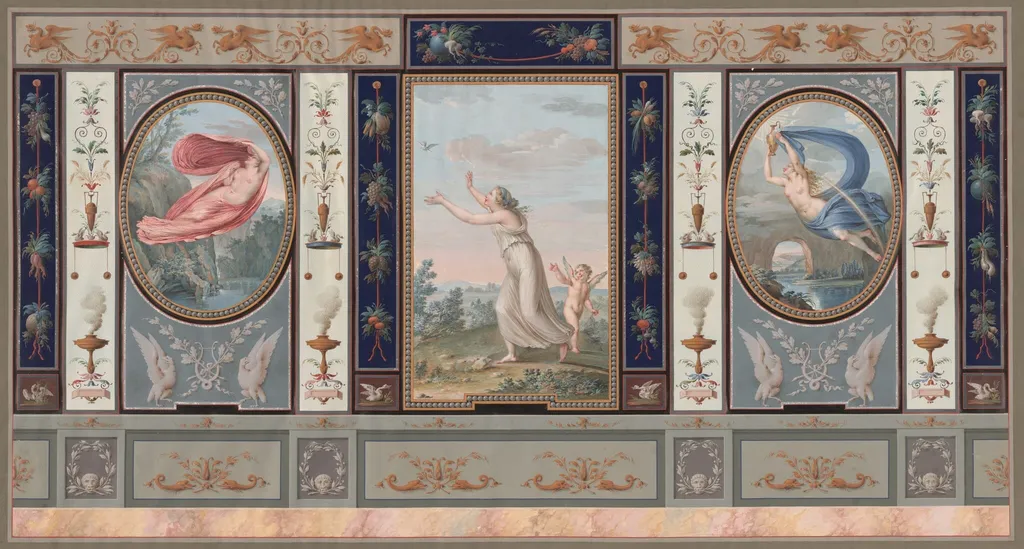
Elaborate Wall Decoration with Endymion and Hebe is a gouache drawing by the Romanticist artist Tommaso Bigatti. It dates from 1800 and is held in the collection of the National Gallery of Art.
About this work
Overview
Elaborate Wall Decoration with Endymion and Hebe is a gouache drawing on a swan‑skin support, executed around 1800 by the Italian artist Tommaso Bigatti. The work comprises three oval panels, each set within a gold‑trimmed, dark‑blue border, and is intended as a decorative wall piece rather than a portable easel painting.
Subject & Meaning
The right panel features a winged male figure moving backward while grasping a blue cloth, suggesting a narrative transition between the two deities.
The left panel depicts a red‑haired woman reclining beneath a tree, evoking the mythic lover Endymus. The central scene shows a white‑dressed female figure holding a child's hand, identified as Hebe, the goddess of youth. The right panel features a winged male figure moving backward while grasping a blue cloth, suggesting a narrative transition between the two deities. Small cherubic figures, vases, and floral motifs link the scenes, reinforcing a theme of pastoral harmony.
Technique & Style
Bigatti employed gouache mixed with gum arabic, a medium that yields an opaque, matte finish while allowing fine detail. The pigment is applied to a fine mammalian parchment treated to resemble avian skin, giving the surface a smooth, slightly luminous quality. Delicate rendering of the cherubs’ curled toes, the fluidity of the garments, and the soft cloud formations demonstrate the artist’s control of thin, translucent layers.
Context
Created at the turn of the 19th century, the piece reflects the neoclassical taste for mythological subjects combined with decorative interior design. While the exact commission remains undocumented, the work’s format and luxurious materials suggest it was intended for an aristocratic domestic setting. The drawing is presently catalogued within a collection of Italian decorative arts, preserving its original function as a wall adornment.
Artist & collection


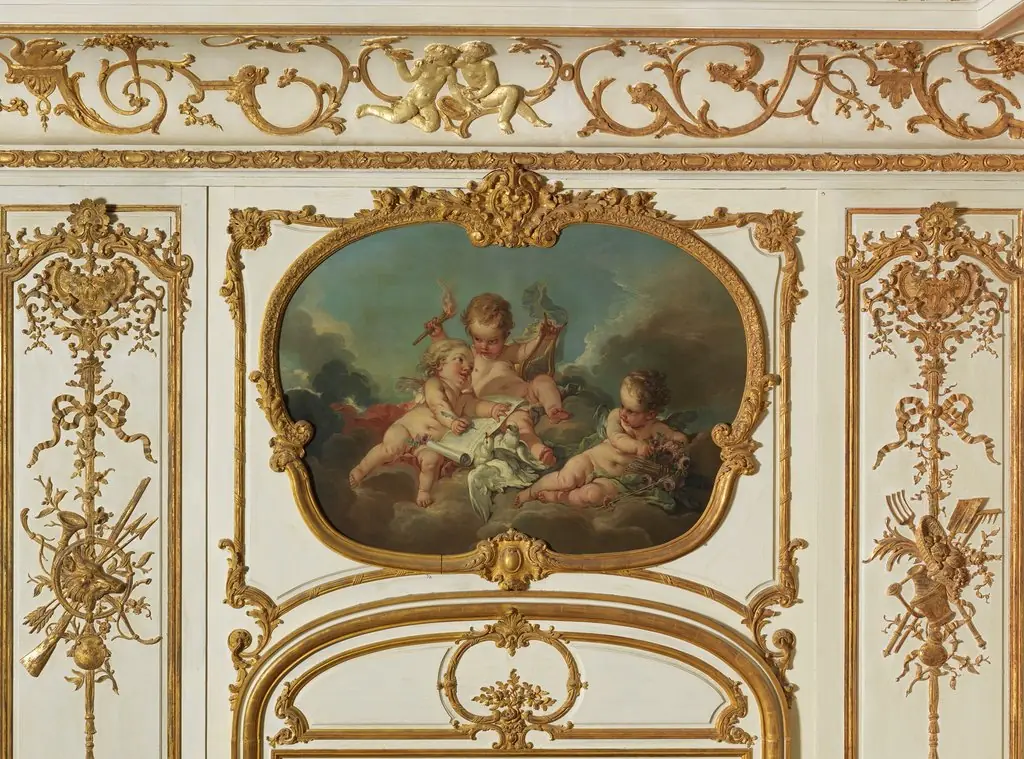 Allegory of Lyric Poetry
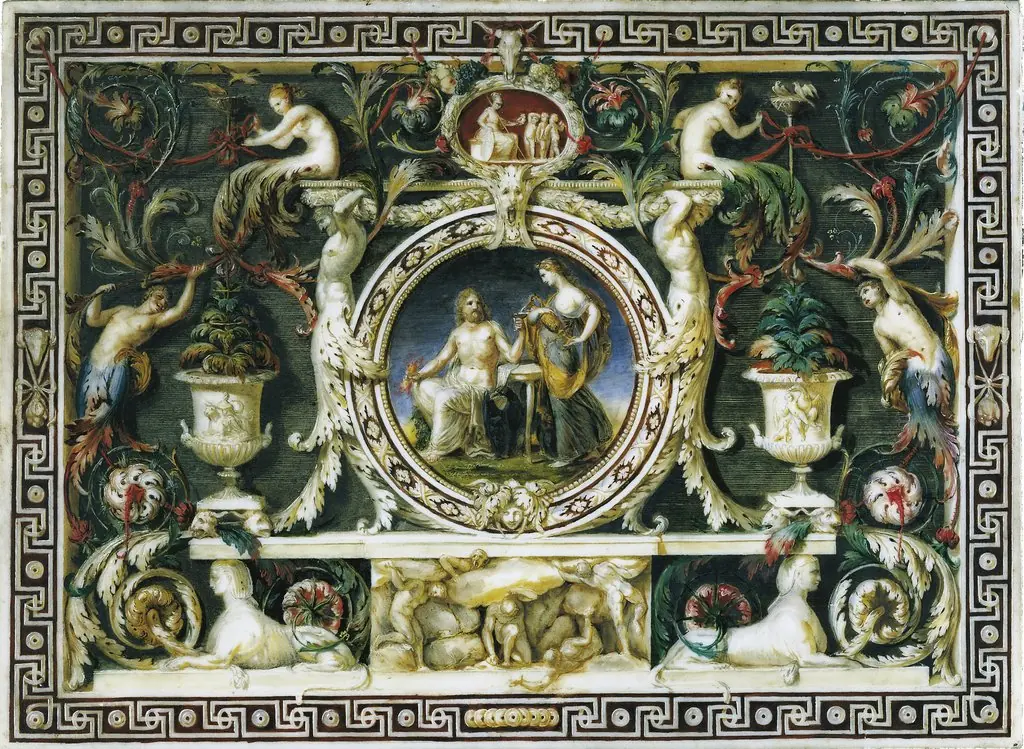 Jupiter and Hebe
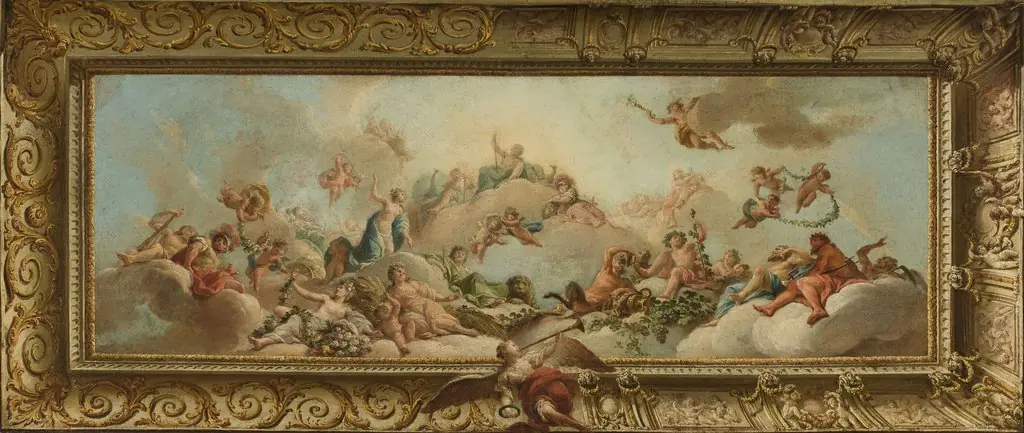 Greeting of Venus at Mount Olympus
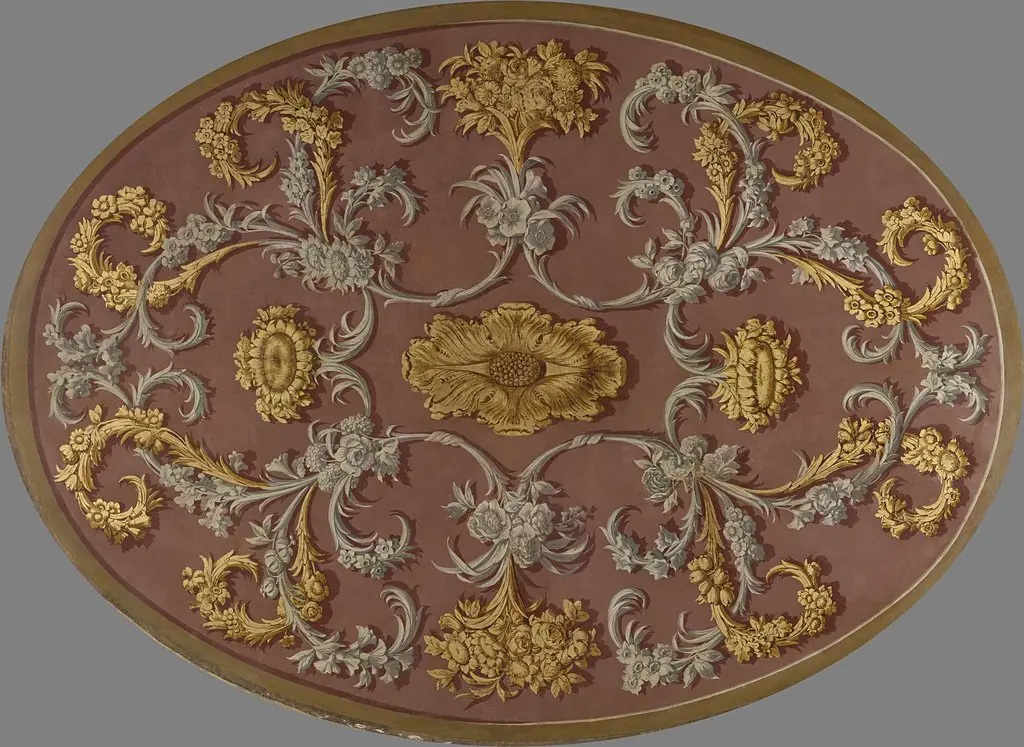 Lacquer room
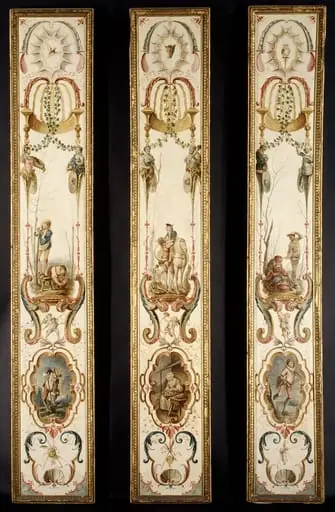 November and December (part of a set illustrating the months of the year)
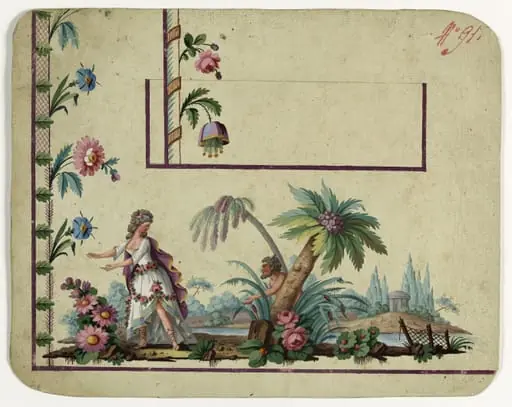 Gilet décor Flore et le faune, projets de broderies de gilet, XVIIIème siècle
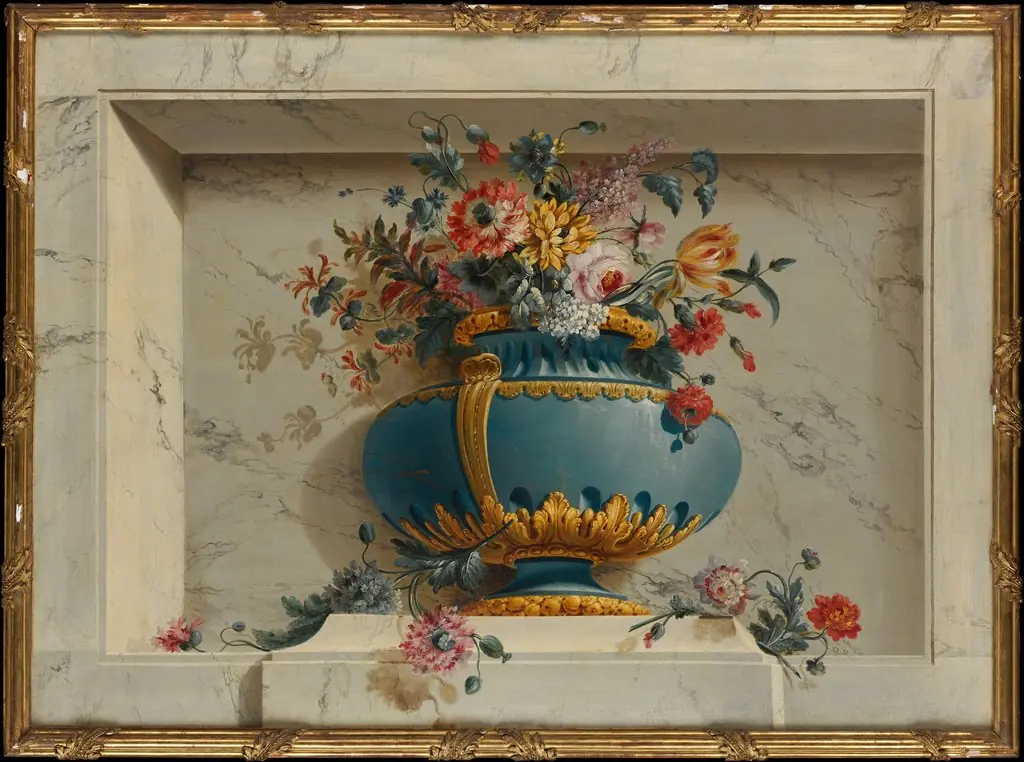 Vase of Flowers in a Niche
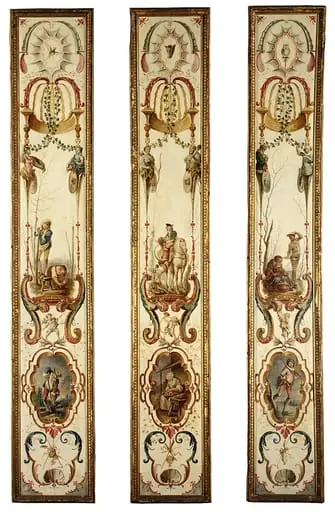 January and February (part of a set illustrating the months of the year)
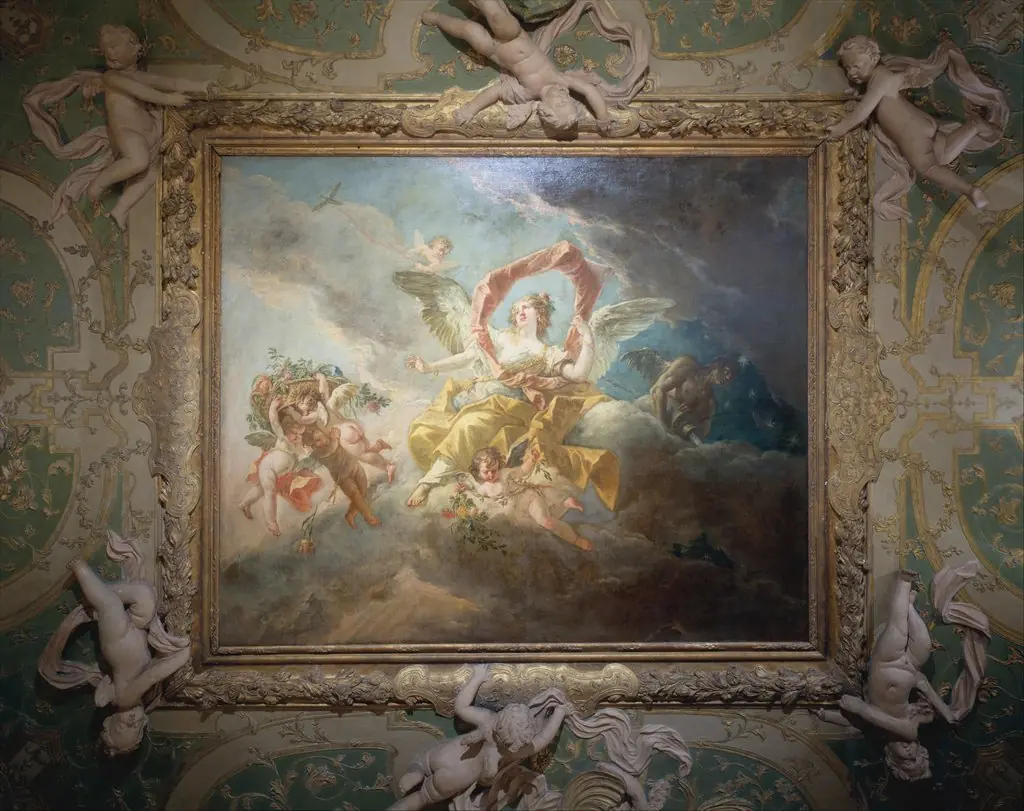 Dawn
Dawn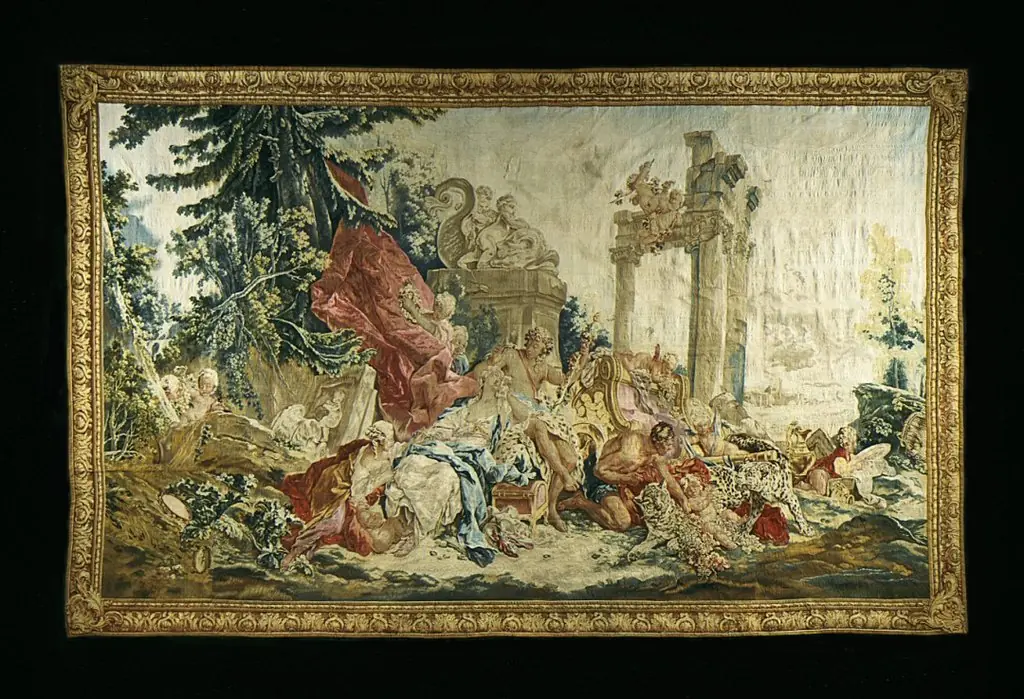 Bacchus and Ariadne
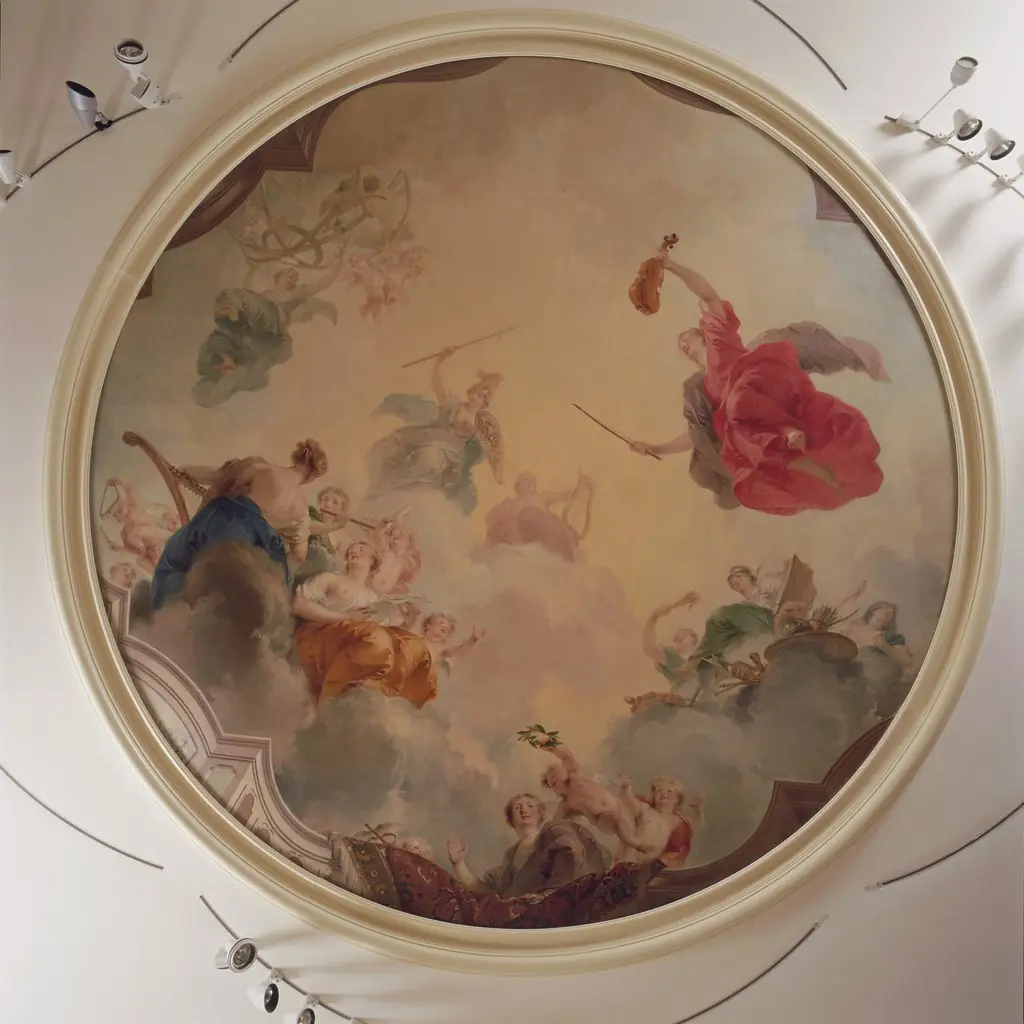 Apollo in the clouds with Minerva and the nine muses
 Elaborate Wall Decorations with Venus and Adonis