Artwork
Tippoo
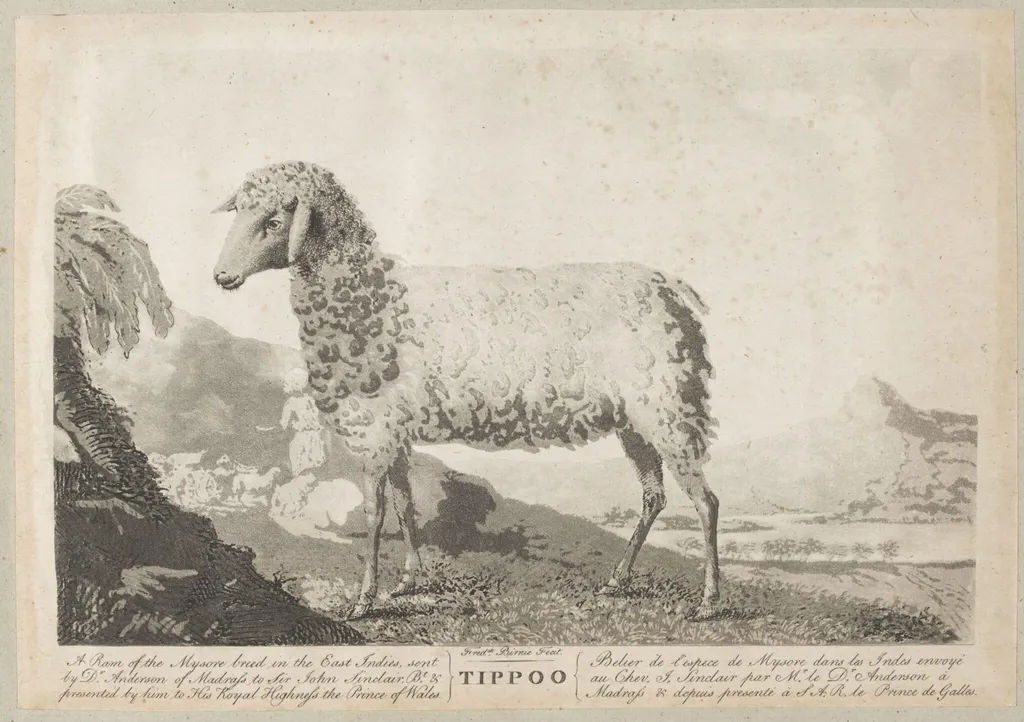
Tippoo is a print by Frederick Birnie. It dates from 1750 and is held in the collection of the Victoria and Albert Museum.
About this work
Overview
This print portrays a single ram named Tippoo, bred in Mysore and presented to the Prince of Wales during the late 18th century.
This print portrays a single ram named Tippoo, bred in Mysore and presented to the Prince of Wales during the late 18th century. Rendered in profile, the animal stands calmly in a pastoral setting with distant hills and a sparse tree. The composition emphasizes the sheep’s physical presence, with its thick, curled fleece rendered in delicate tonal gradations. Below the image, inscriptions confirm its origin in India and its status as a diplomatic gift.
Subject & Meaning
Tippoo represents a tangible link between British royalty and colonial India, symbolizing the exchange of rare livestock as tokens of goodwill. The ram’s calm demeanor and detailed rendering suggest an intent to document its unique breed rather than idealize it. Its presentation to the Prince of Wales underscores the role of animals in imperial diplomacy, where natural specimens served as markers of territorial knowledge and cultural connection.
Technique & Style
The artist employed soft, graduated shading to model the ram’s wool, creating a subtle sense of volume without sharp outlines. The background is minimized—rolling hills and a faint sky suggest depth without distraction. A single tree with sparse branches anchors the composition, while the text at the base provides factual context. The overall approach is observational, prioritizing accuracy over dramatic effect.
History & Provenance
Tippoo was among several animals sent from Mysore to Britain as gifts following political agreements in the 1790s. The ram was presented to the future George IV during his time as Prince of Wales, likely as part of a broader effort to showcase regional biodiversity. The print was produced to commemorate the animal’s arrival and to circulate its image among British audiences unfamiliar with South Indian livestock.
Context
During the late 18th century, British collectors and institutions took growing interest in specimens from colonial territories, including flora, fauna, and textiles. Prints like this one served both scientific and propagandistic purposes, framing colonial encounters as orderly and benevolent. Tippoo’s depiction aligns with a trend of documenting exotic animals as symbols of imperial reach and natural curiosity.
Legacy
The print remains a quiet artifact of colonial-era natural history, preserved in institutional collections such as the Victoria and Albert Museum. Unlike grander imperial monuments, it offers a modest record of cross-cultural exchange through a single animal. Its survival reflects the value placed on documenting biological diversity, even in the absence of overt political narrative.
Artist & collection
Artist
Frederick Birnie’s late-eighteenth-century prints capture people and places with sharp lines and clear detail.

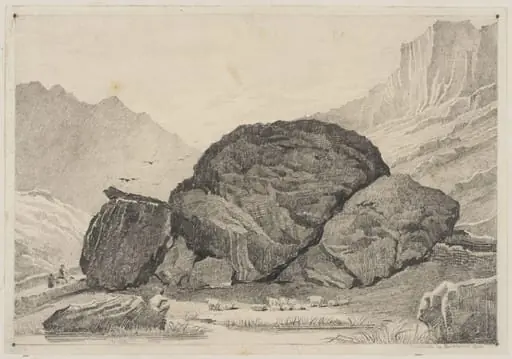 Cromlech, Pass of Llanberis
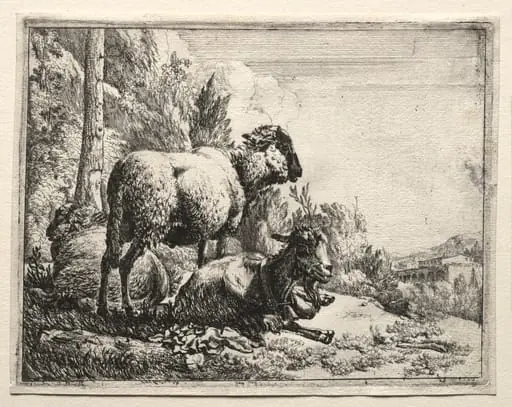 Goat with Bell
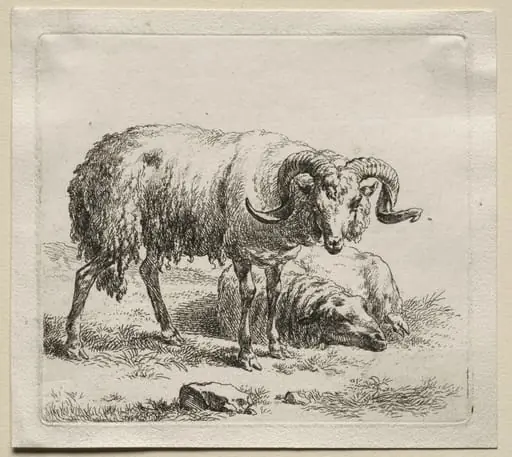 Animalia: Ram and Sheep
 A Shepherd Sleeping while His Dog Guards His Flock
 Flock of Sheep Resting
 Reynard Returns Home, Accompanied by the Ram and the Rabbit
 Sheepcote
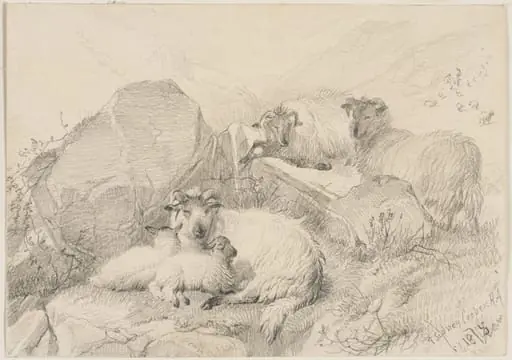 Sheep and their lambs in a mountain landscape
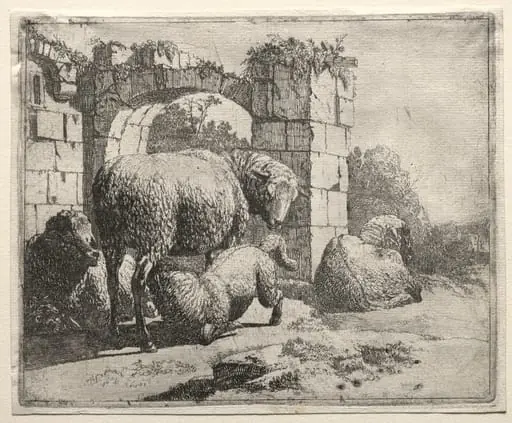 Sheep Near the Ruins of an Arch
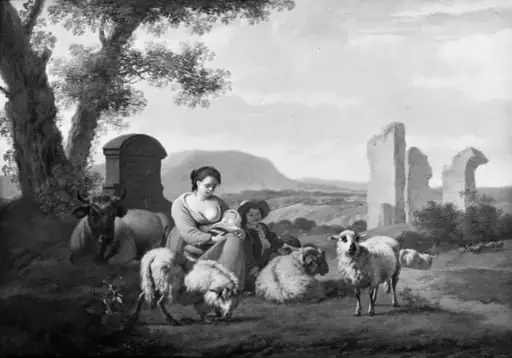 Shepherdess with her Flock
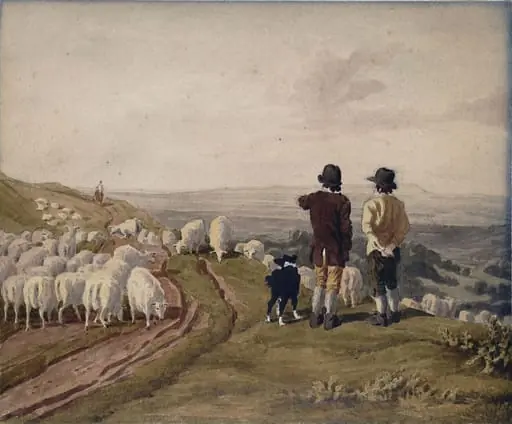 Landscape with Sheep and Figures
 Two Girls Conversing: One Standing and Spinning