Artwork
Two Girls Conversing: One Standing and Spinning
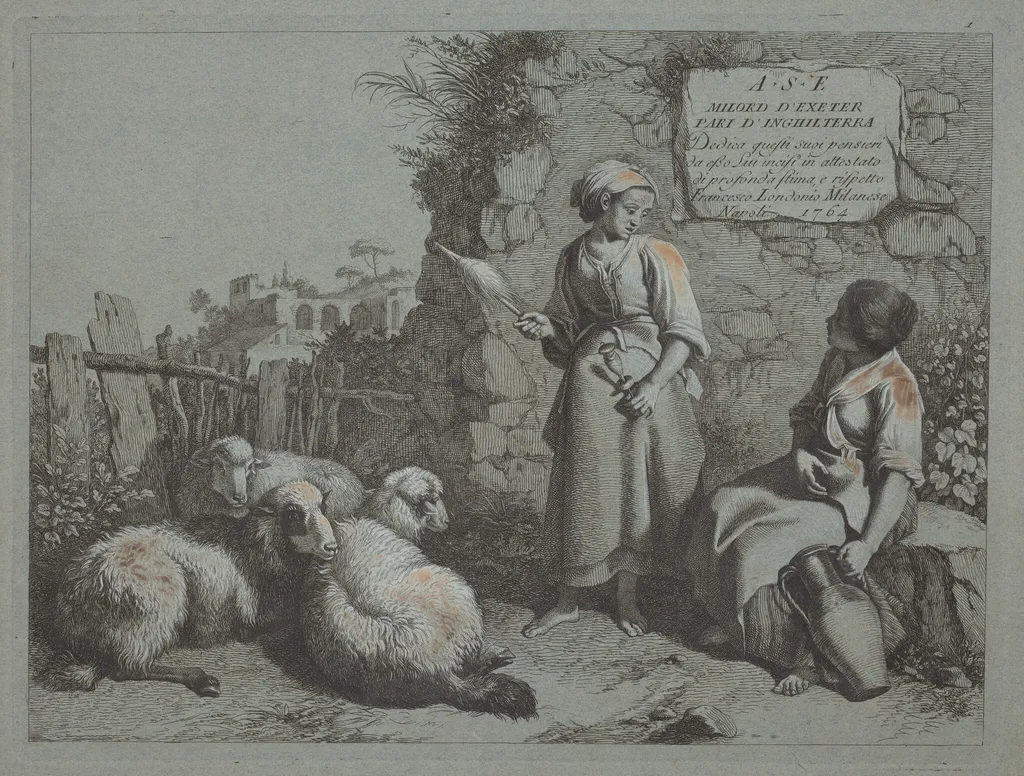
Two Girls Conversing: One Standing and Spinning is a gouache print by the Baroque artist Francesco Londonio. It dates from 1764 and is held in the collection of the National Gallery of Art.
About this work
Overview
Two Girls Conversing: One Standing and Spinning is a 1764 etching heightened with white gouache on blue laid paper by Francesco Londonio, an Italian artist known for his work in painting, engraving, and scenography.
Subject & Meaning
The etching depicts a serene rustic scene of two young women engaged in conversation in an outdoor setting, with one standing and spinning (holding a spindle and distaff) and the other seated on a rock, gazing upwards. The subject reflects Londonio's emphasis on pastoral themes, popular among Northern Italy's wealthy patrons during the late-Baroque/Rococo period.
Technique & Style
Londonio employed etching with white gouache accents on blue laid paper, achieving depth and texture. The contrast between the warm tones of the figures' attire and the cool, blue-toned background enhances visual appeal, highlighting the scene's intricate details.
History & Provenance
Created in 1764, the work's provenance is not detailed here, but its creation aligns with Londonio's training under Ferdinando Porta, Giovanni Battista Sassi, and Benigno Bossi, and his travels to Rome and Naples.
Context
The piece is characteristic of the late-Baroque to Rococo period in Northern Italy, catering to the demand for pastoral and rustic subjects among the wealthy. Londonio's diverse artistic training influenced his approach to this genre.
Legacy
While specific legacy details of *Two Girls Conversing* are not provided, Londonio's contribution to 18th-century Italian art, particularly in engraving and pastoral themes, remains notable within the context of late-Baroque and Rococo art movements.
Artist & collection

Artist
Francesco Londonio (1723–1783) was an Italian painter, engraver, and scenographer, active mainly in his native Milan in a late-Baroque or Rococo style.

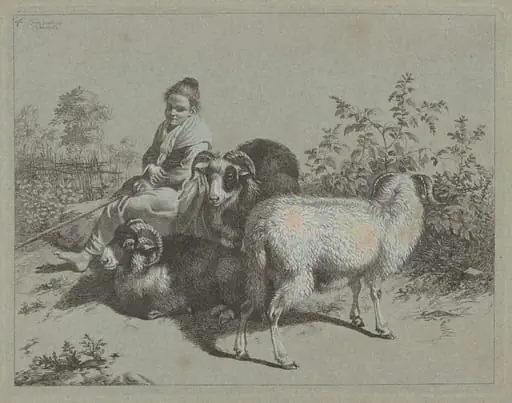
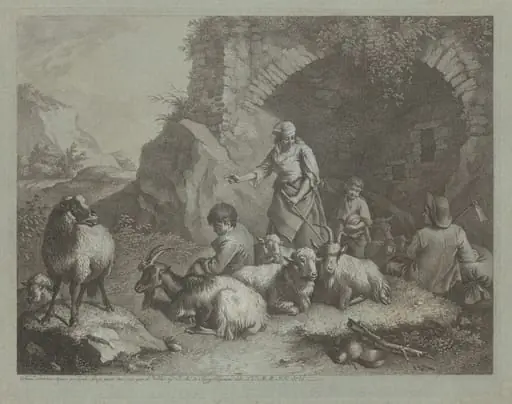 Woman, Shepherd Boys, and Sheep near an Arch
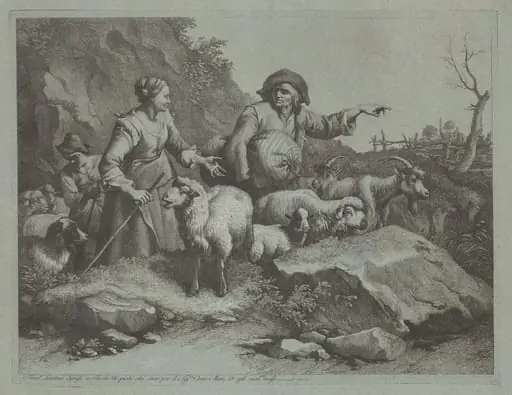 Peasant Man with a Sack and Two Shepherdesses
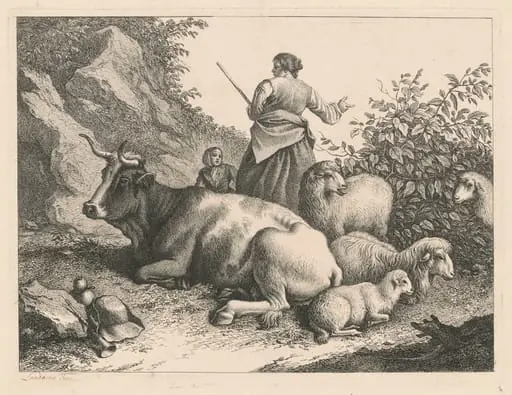 Standing Shepherdess with a Child
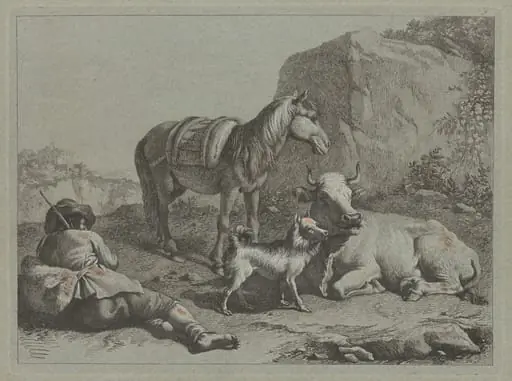 Reclining Shepherd with a Sack
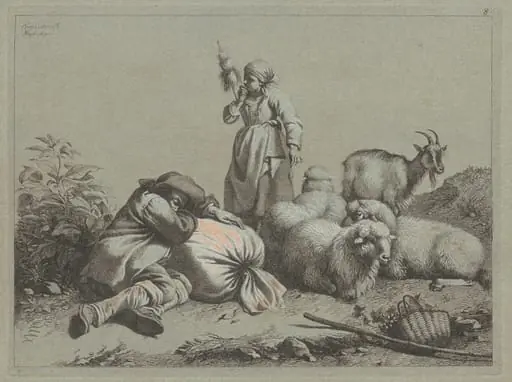 Sleeping Peasant and Standing Spinner
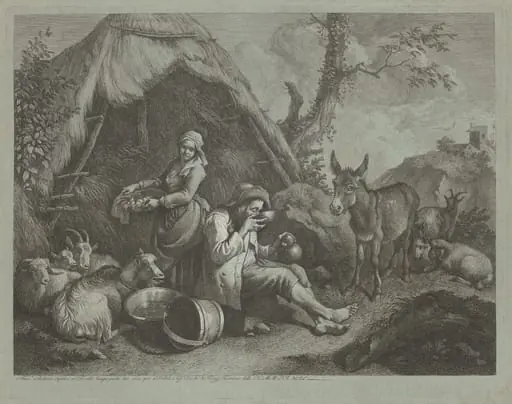 Seated Old Man and Woman with a Basket of Eggs
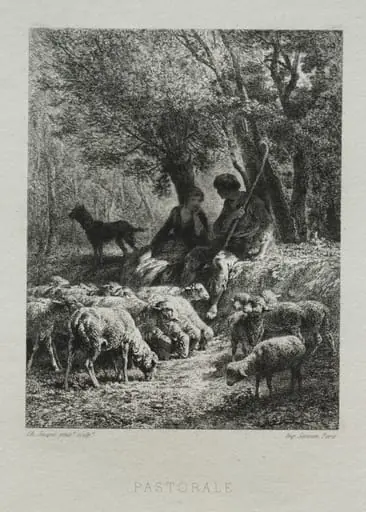 Pastorale
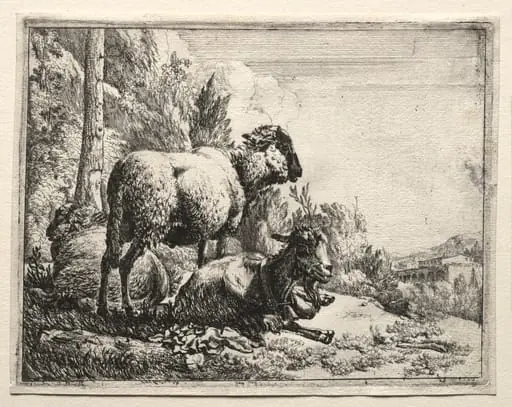 Goat with Bell
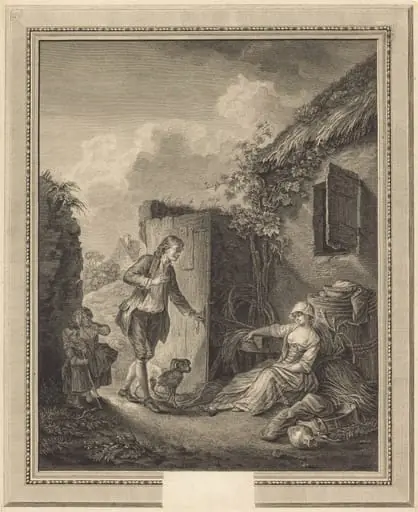 Lison dormait
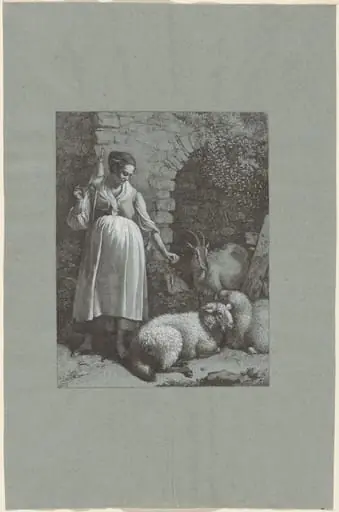 Woman Spinning Yarn by an Arch
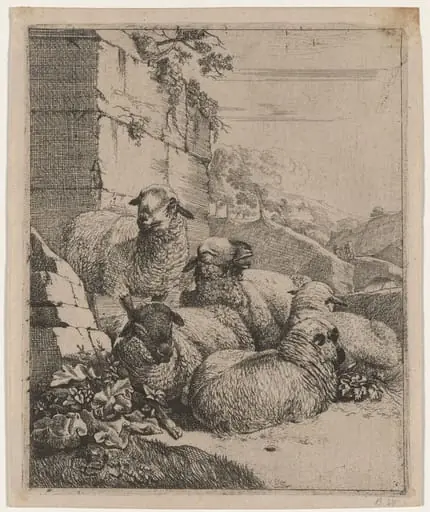 Flock of Sheep Resting