Artwork
The Book of Job: Pl. 5, Then went Satan forth from the presence of the Lord
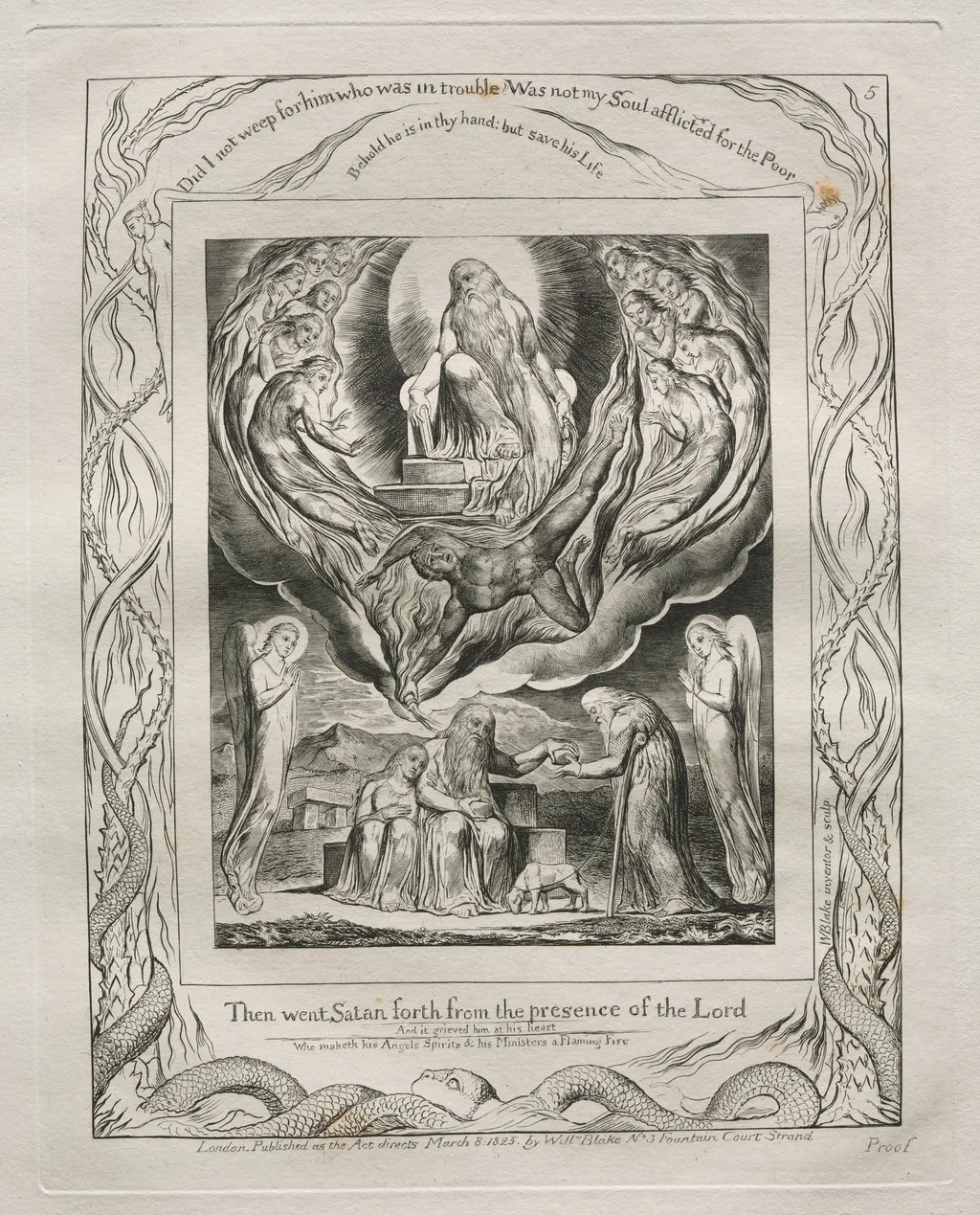
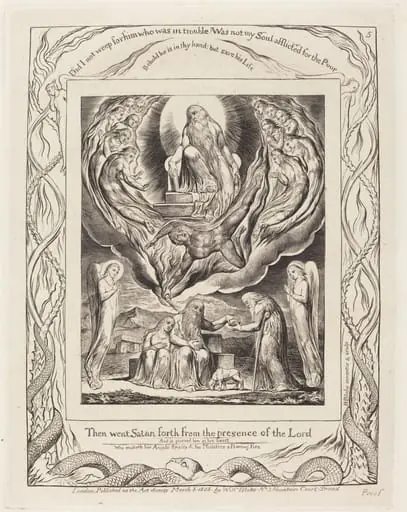
The Book of Job: Pl. 5, Then went Satan forth from the presence of the Lord is a work on paper by the Romanticist artist William Blake. It dates from 1825 and is held in the collection of the Cleveland Museum of Art. The Book of Job: Pl.
About this work
Overview
The Book of Job: Pl. 5, Then went Satan forth from the presence of the Lord is an 1825 engraving by William Blake, part of a series based on the biblical Book of Job. Characterized by symbolic depth and imaginative intensity, it reflects Blake's unique style within the Romantic period.
Subject & Meaning
The engraving illustrates a pivotal moment from the Book of Job where Satan, having received permission from God, departs to test Job's faith. The scene contrasts spiritual realms, emphasizing the dramatic tension between divine authority and the impending trial.
Technique & Style
Blake employs contrasting light and dark to create visual tension, drawing focus to Satan. A halo of light surrounds the central figure, set against a dark cloud, with a detailed mountainous background and a foreground scene of devotion, showcasing Blake's expressive use of chiaroscuro.
History & Provenance
Produced in 1825, this work is from Blake's later career, highlighting his continued exploration of religious themes through innovative printmaking techniques. Specific provenance details are not provided in the available information.
Context
This engraving is emblematic of the Romantic movement's emphasis on emotion, imagination, and the sublime. Blake's interpretation of the Book of Job reflects his mystical and artistic vision, distinct within the early 19th-century European art landscape.
Artist & collection
Artist
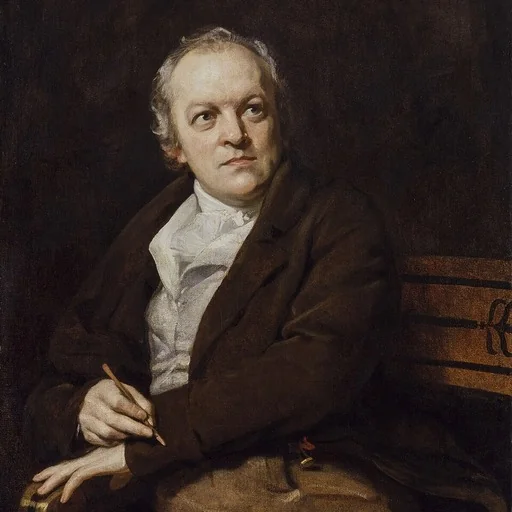
William Blake (28 November 1757 – 12 August 1827) was an English poet, painter and printmaker.

 Satan Going Forth from the Presence of the Lord
 Satan Going Forth from the Presence of the Lord
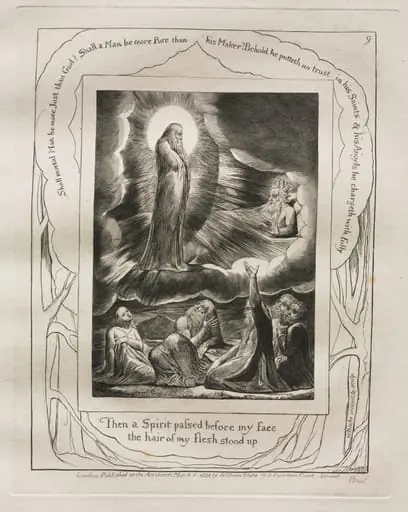 The Book of Job: Pl. 9, Then a Spirit passed before my face
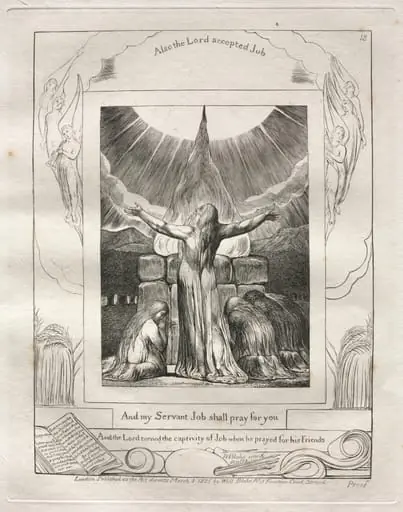 The Book of Job: Pl. 18, And my Servant Job shall pray for you
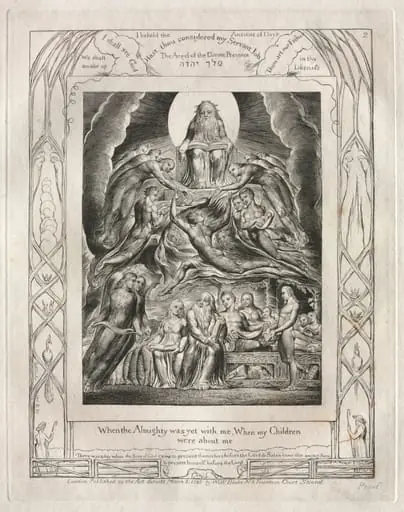 The Book of Job: Pl. 2, When the Almighty was yet with me, When my Children
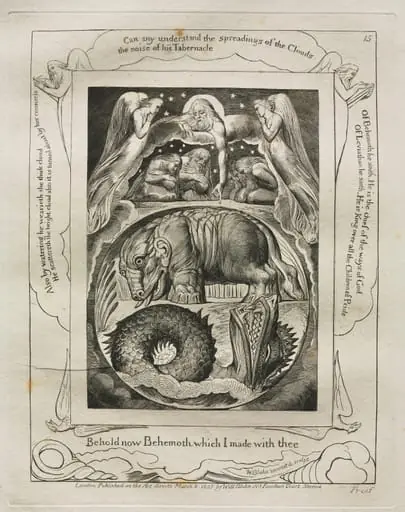 The Book of Job: Pl. 15, Behold now Behemoth which I made with thee
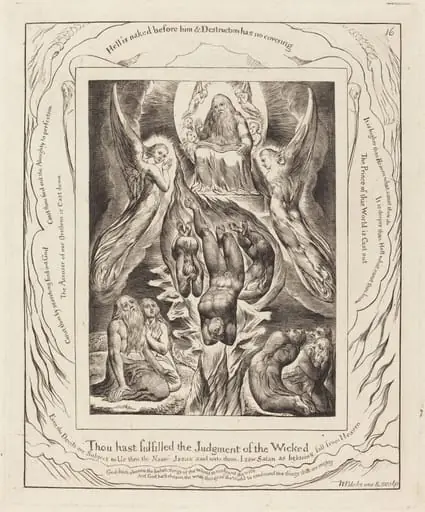 The Fall of Satan
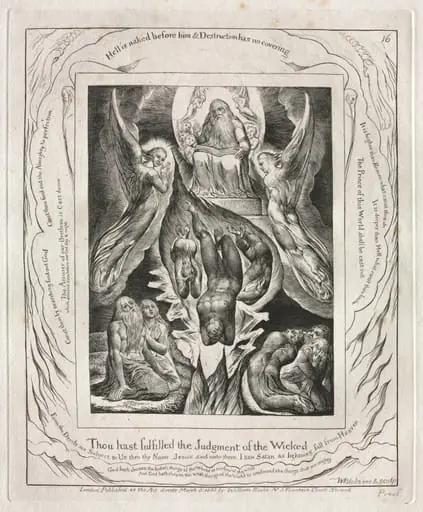 The Book of Job: Pl. 16, Thou hast fulfilled the Judgment of the Wicked
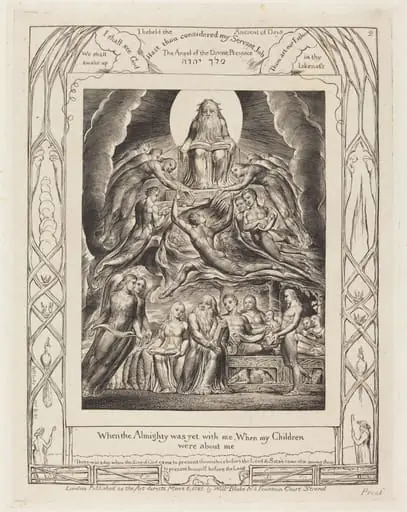 Satan Before the Throne of God
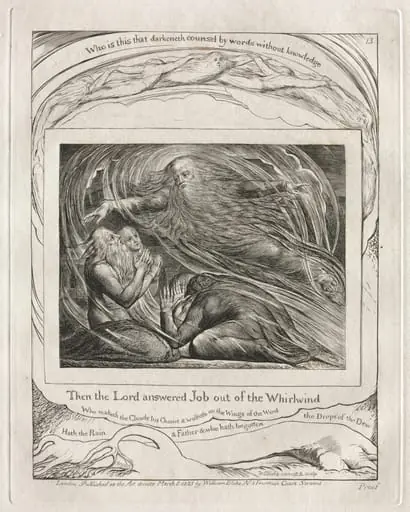 The Book of Job: Pl. 13, Then the Lord answered Job out of the Whirlwind
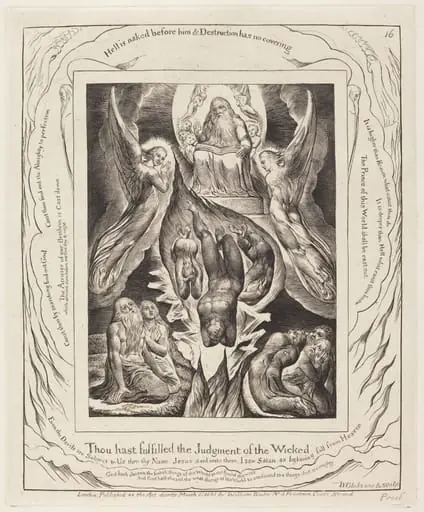 The Fall of Satan
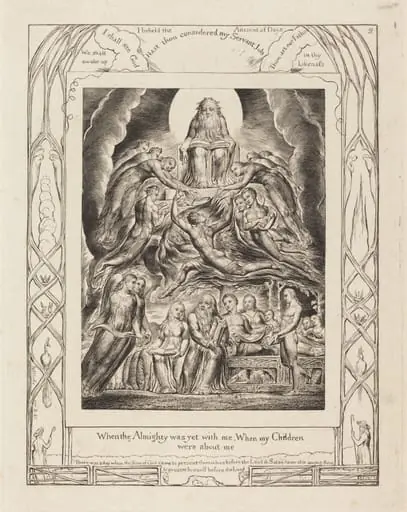 Satan Before the Throne of God