Artwork
The Book of Job: Pl. 16, Thou hast fulfilled the Judgment of the Wicked
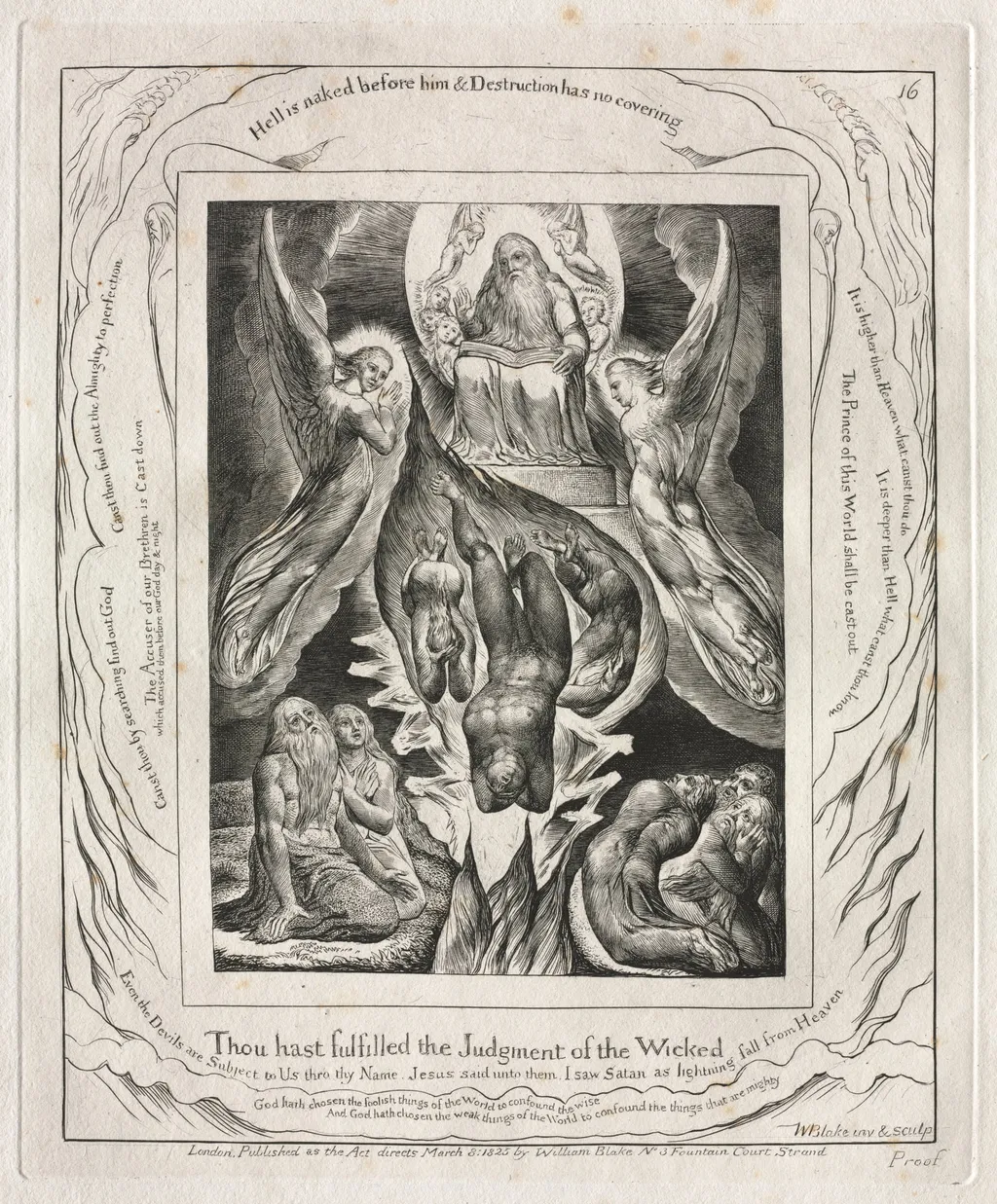
The Book of Job: Pl. 16, Thou hast fulfilled the Judgment of the Wicked is a work on paper by the Romanticist artist William Blake. It dates from 1825 and is held in the collection of the Cleveland Museum of Art.
About this work
Overview
This 1825 etching by William Blake is part of a portfolio illustrating the biblical Book of Job, characteristic of Blake's late graphic works emphasizing symbolic depth and visionary imagery.
Subject & Meaning
Depicting a pivotal moment from Job's trials, the scene contrasts divine judgment with human turmoil, as a bearded figure (likely God or an angel) oversees a dramatic confrontation between angels, demons, and mortals, illustrating the biblical theme of divine judgment and human suffering.
Technique & Style
Executed in black-and-white etching, the work leverages chiaroscuro to create intense contrast between light and dark, amplifying the emotional turmoil of the scene amidst swirling, fiery backgrounds and shadowy forms.
History & Provenance
Produced during the Romantic period, this etching was part of Blake's unrecognized yet later celebrated body of work, which would become foundational to Romantic art's visual and literary heritage.
Context
Within Blake's series on Job, this plate (16) contextualizes the narrative's themes of suffering, divine justice, and redemption, set against the broader backdrop of Blake's exploration of spirituality and the human condition.
Legacy
Though overlooked in Blake's lifetime, *The Book of Job* series, including this plate, significantly influenced subsequent artistic and literary interpretations of the biblical narrative, solidifying Blake's posthumous reputation as a visionary artist.
Artist & collection
Artist
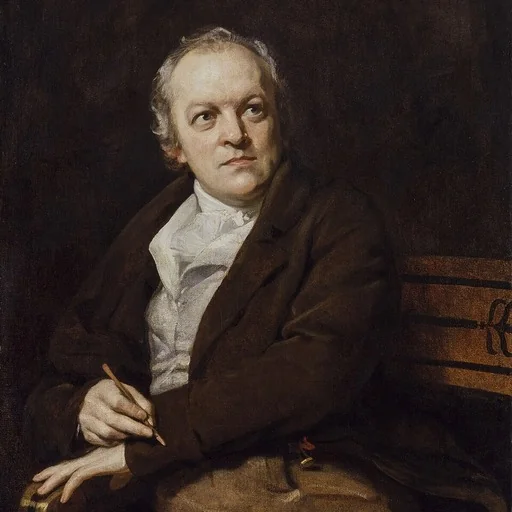
William Blake (28 November 1757 – 12 August 1827) was an English poet, painter and printmaker.

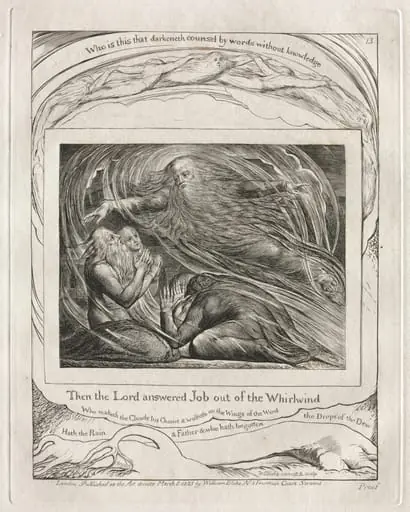 The Book of Job: Pl. 13, Then the Lord answered Job out of the Whirlwind
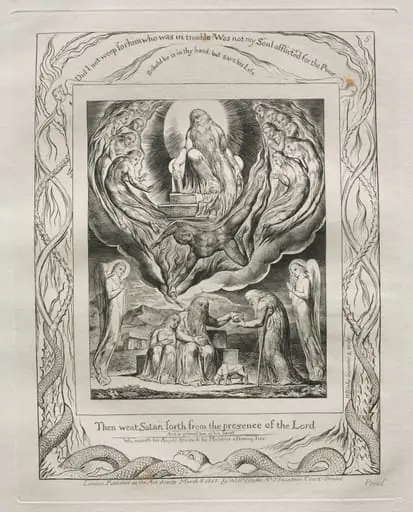 The Book of Job: Pl. 5, Then went Satan forth from the presence of the Lord
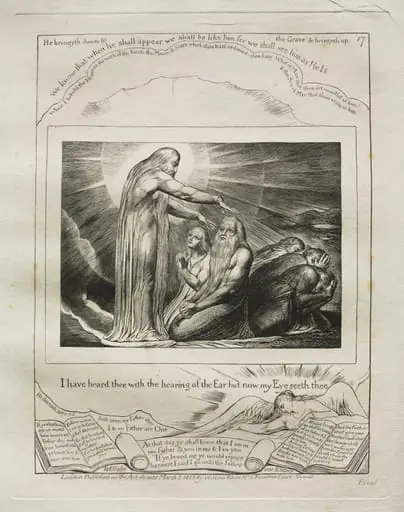 The Book of Job: Pl. 17, I have heard thee with the hearing of the Ear but now my Eye seeth thee
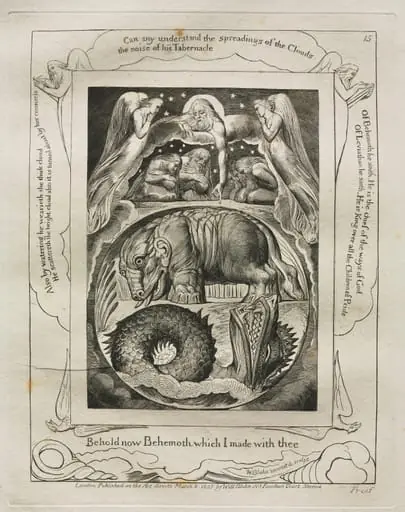 The Book of Job: Pl. 15, Behold now Behemoth which I made with thee
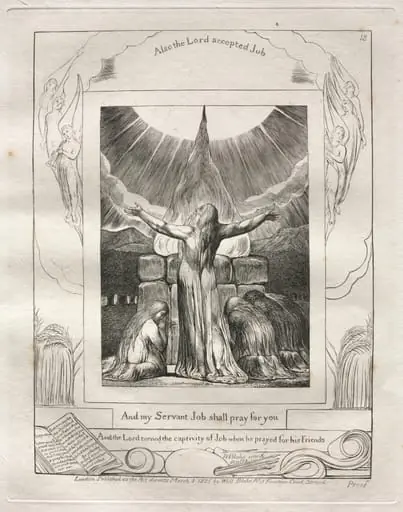 The Book of Job: Pl. 18, And my Servant Job shall pray for you
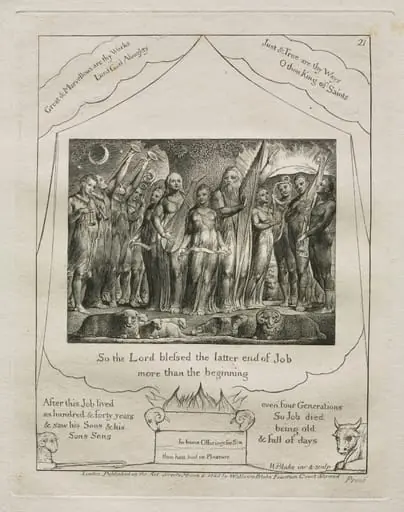 The Book of Job: Pl. 21, So the Lord blessed the latter end of Job
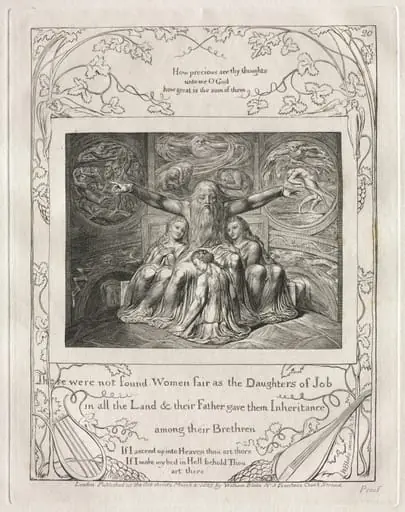 The Book of Job: Pl. 20, There were not found Women fair as the Daughters of Job
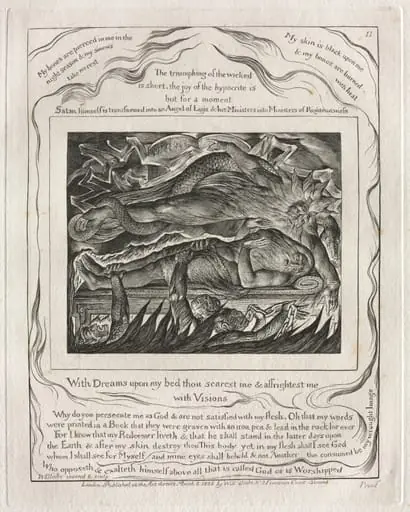 The Book of Job: Pl. 11, With Dreams upon my bed thou scarest me and affrightest me
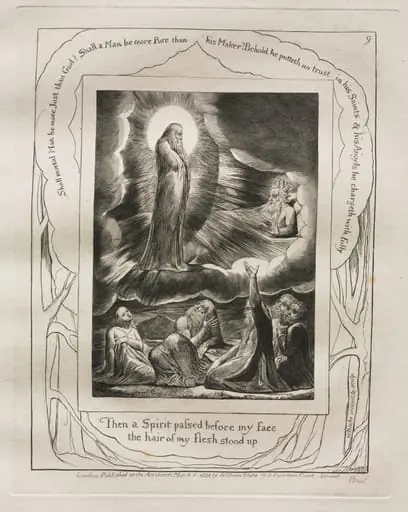 The Book of Job: Pl. 9, Then a Spirit passed before my face
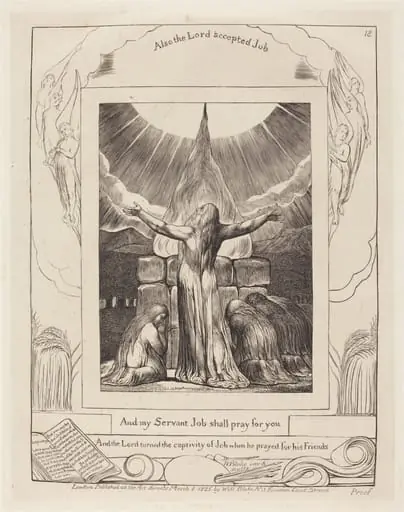
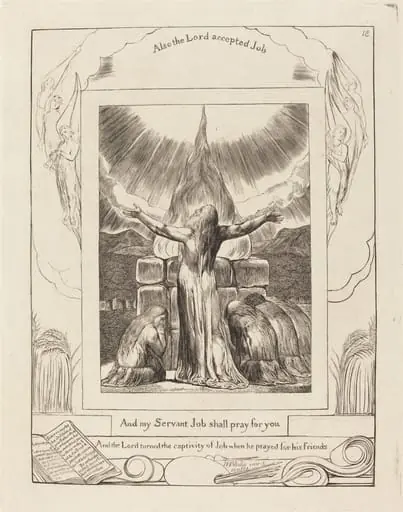 Job's Sacrifice
 Job's Sacrifice