Artwork
The Lord Answering Job out of the Whirlwind
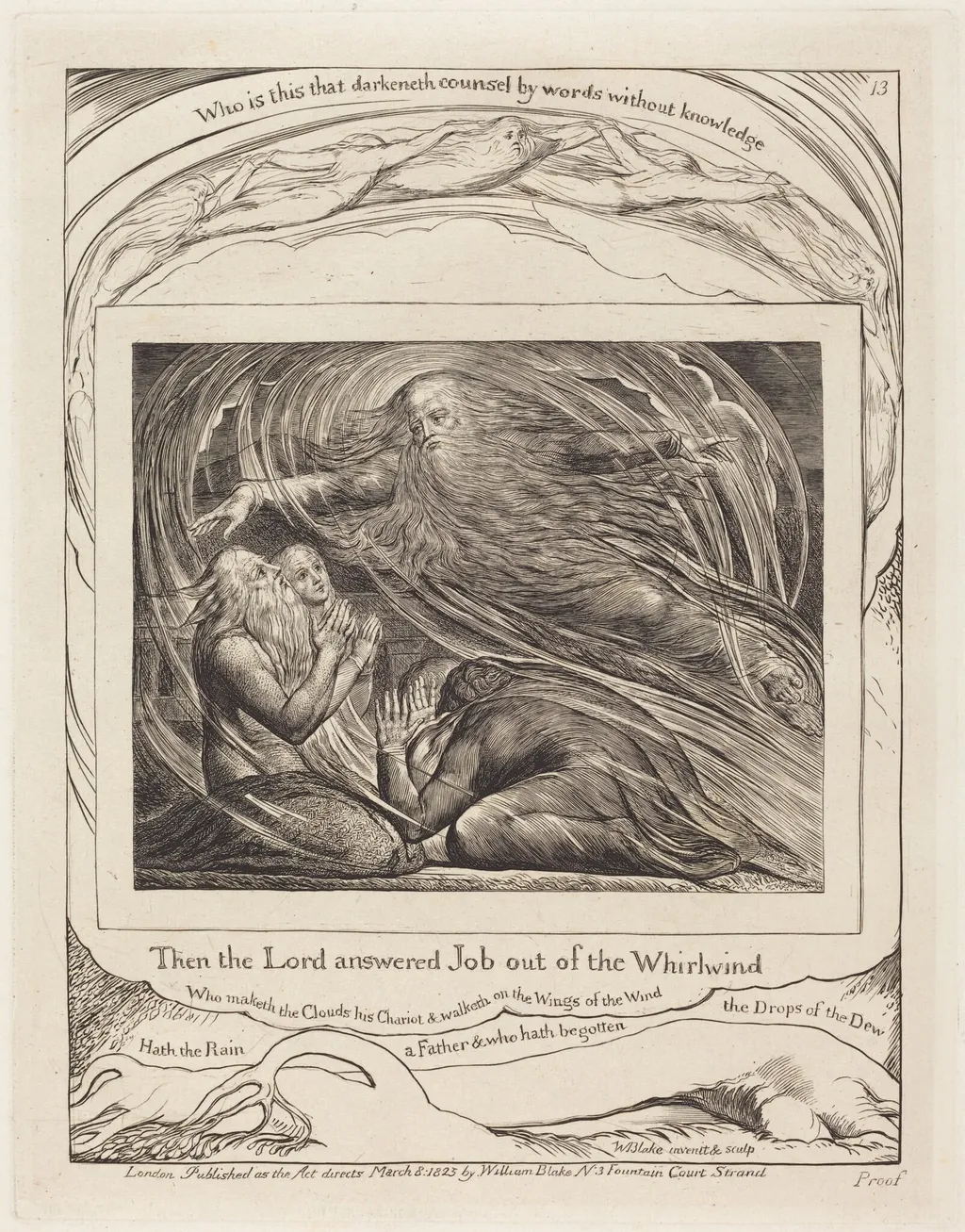
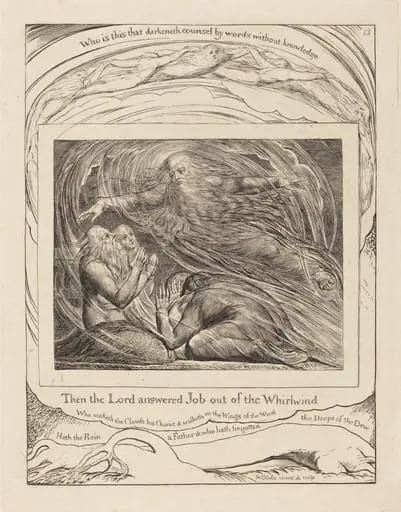
The Lord Answering Job out of the Whirlwind is an ink print by the Romanticist artist William Blake. It dates from 1825 and is held in the collection of the National Gallery of Art.
About this work
Overview
Created in 1825, *The Lord Answering Job out of the Whirlwind* is an engraving executed on India paper. It belongs to the later phase of William Blake’s printmaking, a period when he concentrated on dense, visionary subjects drawn from scripture. The work measures roughly the size of a typical sheet of fine paper and is composed entirely of incised lines that build a turbulent atmosphere.
Subject & Meaning
The image depicts the biblical episode in which Job, cloaked and seated on the ground, looks upward as a divine figure emerges amid a vortex of wind and cloud. The juxtaposition of the humbled human and the commanding presence of the divine conveys the theme of revelation through elemental force, echoing the scriptural passage that describes God speaking to Job from the storm.
Technique & Style
Blake employed a fine, scratchy line technique, layering countless delicate strokes to render the swirling winds and shadowed forms.
Blake employed a fine, scratchy line technique, layering countless delicate strokes to render the swirling winds and shadowed forms. The dense cross‑hatching creates a sense of movement and turbulence, while the contrast between the dark, densely worked sky and the lighter areas around the figures heightens the dramatic tension. The engraving’s texture reflects Blake’s characteristic blend of poetic imagination and meticulous draftsmanship.
History & Provenance
The print was produced during Blake’s final years in London, a time when his work remained largely unnoticed by the contemporary art market. It survived in a modest collection of his later prints and was later catalogued among his graphic output after his posthumous reputation grew in the late 19th century. The piece is now held in several public institutions that specialize in Romantic-era prints.
Context
Blake’s engagement with biblical narratives was a constant throughout his career, but this later engraving emphasizes a more visceral, almost apocalyptic vision of divine communication. The 1820s saw a resurgence of interest in Romantic spirituality, and Blake’s idiosyncratic visual language placed him at the intersection of poetry, mysticism, and the emerging print culture of the period.
Artist & collection
Artist
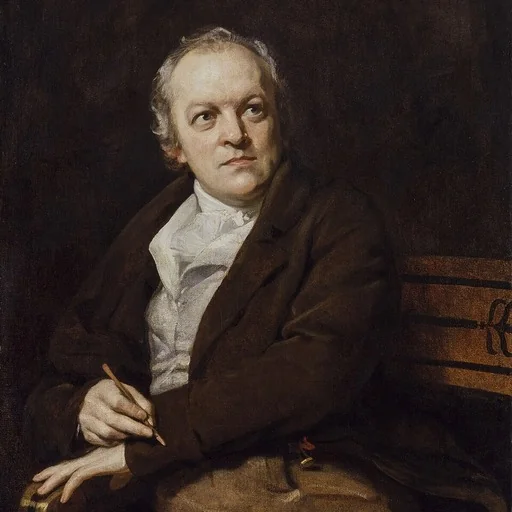
William Blake (28 November 1757 – 12 August 1827) was an English poet, painter and printmaker.

 The Lord Answering Job out of the Whirlwind
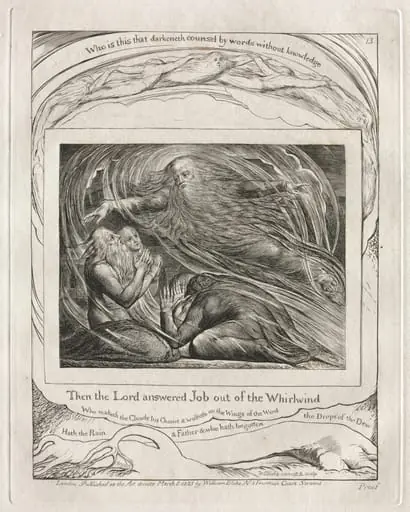 The Book of Job: Pl. 13, Then the Lord answered Job out of the Whirlwind
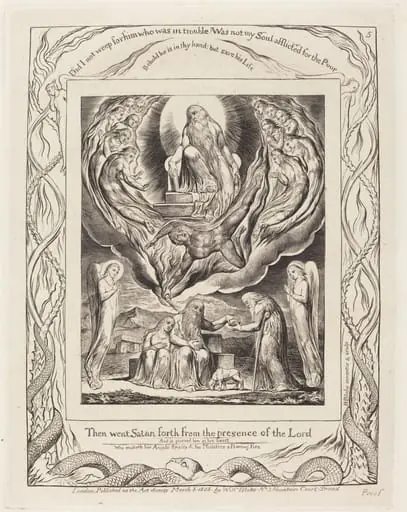 Satan Going Forth from the Presence of the Lord
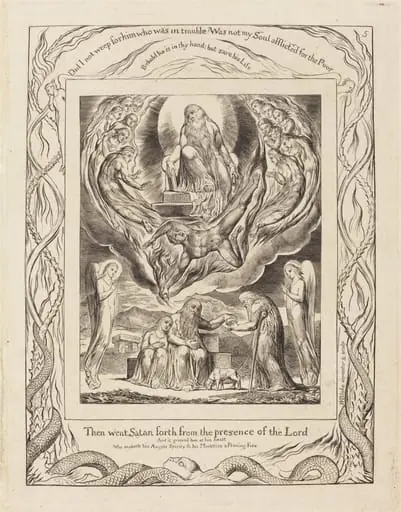 Satan Going Forth from the Presence of the Lord
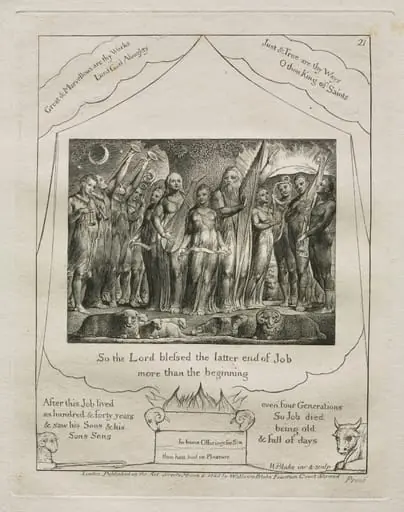 The Book of Job: Pl. 21, So the Lord blessed the latter end of Job
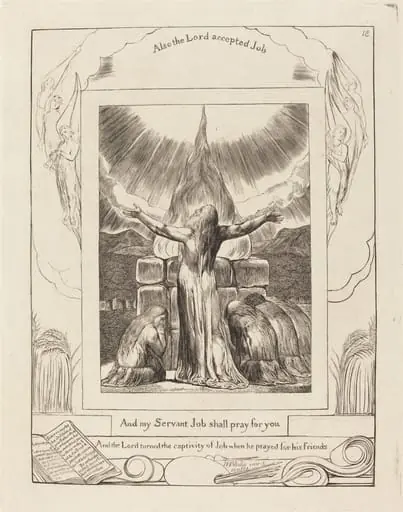 Job's Sacrifice
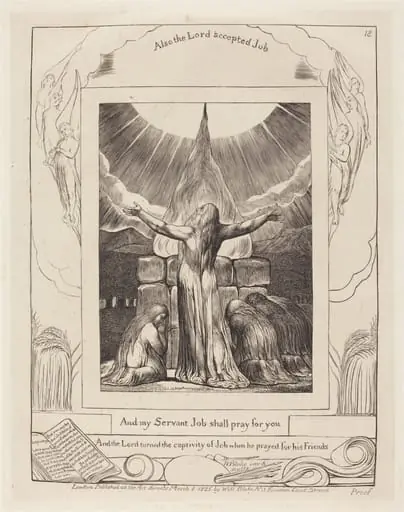 Job's Sacrifice
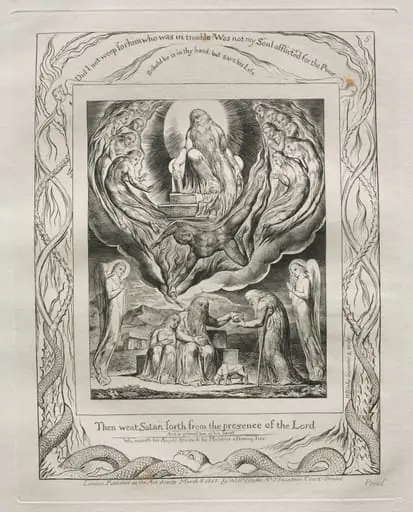 The Book of Job: Pl. 5, Then went Satan forth from the presence of the Lord
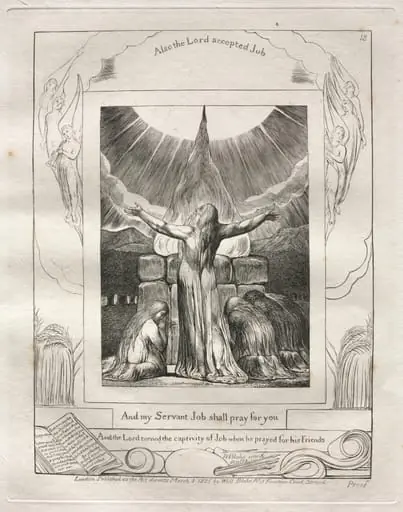 The Book of Job: Pl. 18, And my Servant Job shall pray for you