Artwork
The Book of Job: Pl. 21, So the Lord blessed the latter end of Job
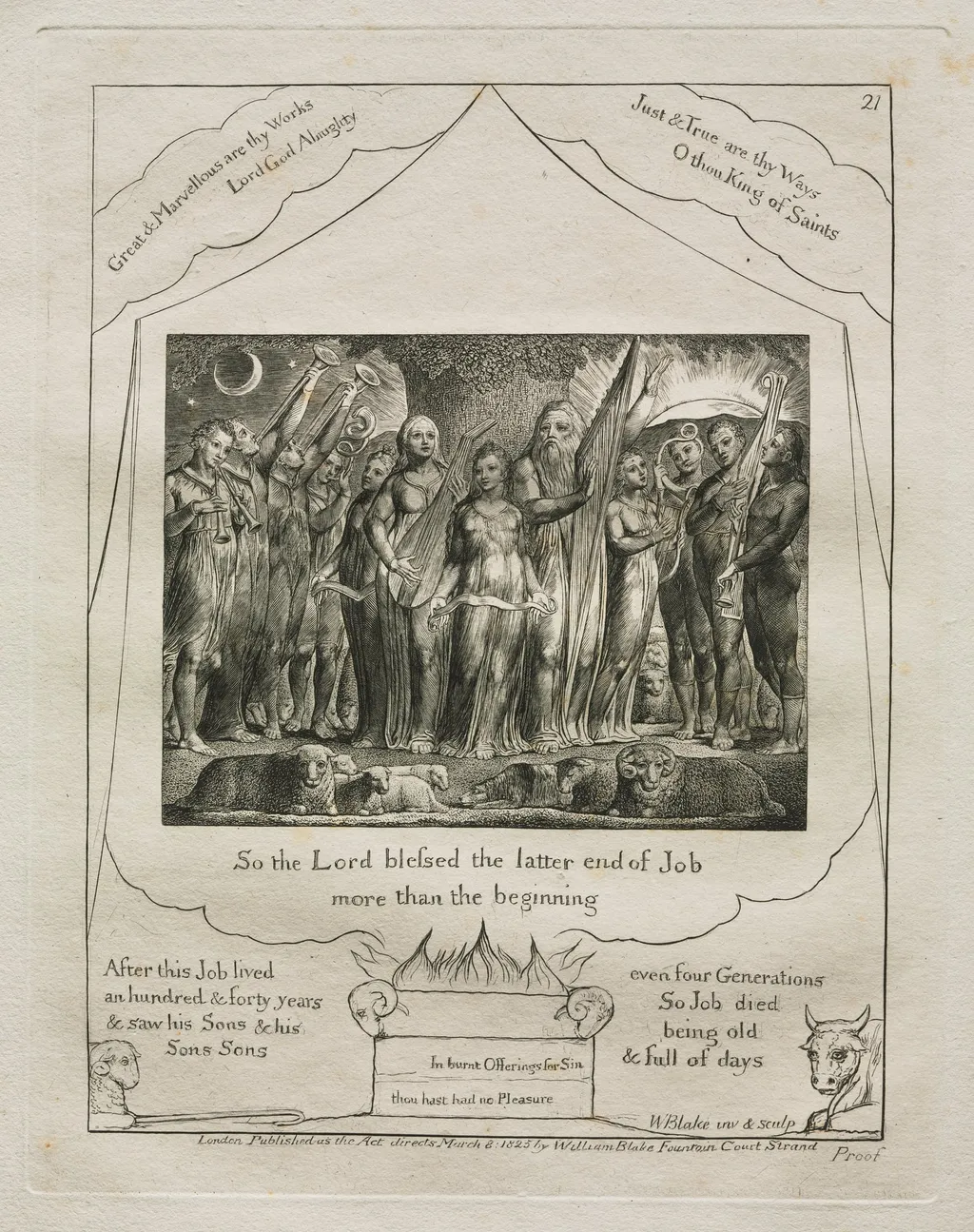
The Book of Job: Pl. 21, So the Lord blessed the latter end of Job is a work on paper by the Romanticist artist William Blake. It dates from 1825 and is held in the collection of the Cleveland Museum of Art.
About this work
Overview
This 1825 print by William Blake is part of a series illustrating the biblical Book of Job, characterized by dense symbolism and imaginative imagery. It depicts a dramatic scene with robed figures, animals, and an altar, incorporating the biblical text *"So the Lord blessed the latter end of Job more than the beginning."*
Subject & Meaning
The print illustrates a moment of divine blessing and restoration from the Book of Job. Central figures, including a staff-holding woman, convey themes of redemption and divine justice, reflecting Blake's exploration of human suffering and faith.
Technique & Style
Executed in black-and-white, the print showcases Blake's distinctive printmaking technique. The composition features flowing robes, contrasting light and shadow, and symbolic elements (animals, altar), evoking a dreamy, intense atmosphere aligned with early 19th-century Romantic aesthetics.
History & Provenance
Created in 1825, this work is among Blake's late graphic productions. Part of a dedicated series on Job, it exemplifies his late-career engagement with biblical themes through innovative printmaking.
Context
This work reflects Blake's broader artistic and philosophical preoccupations within the context of early 19th-century Romanticism in London, where symbolic, imaginative, and emotionally charged art flourished.
Legacy
As part of Blake's Job series, the print contributes to his enduring legacy in combining poetry, painting, and printmaking to explore profound theological and humanist themes, influencing subsequent artistic and literary movements.
Artist & collection
Artist
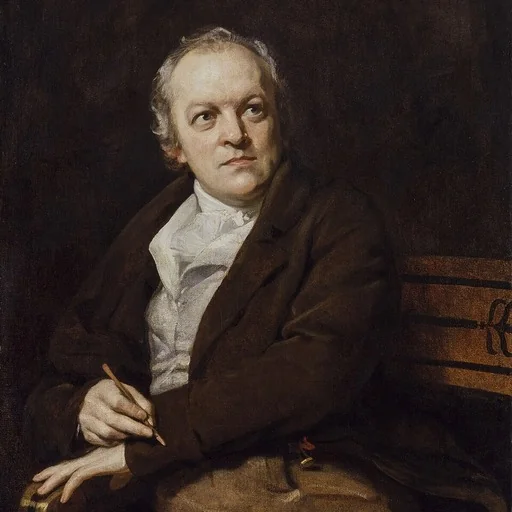
William Blake (28 November 1757 – 12 August 1827) was an English poet, painter and printmaker.

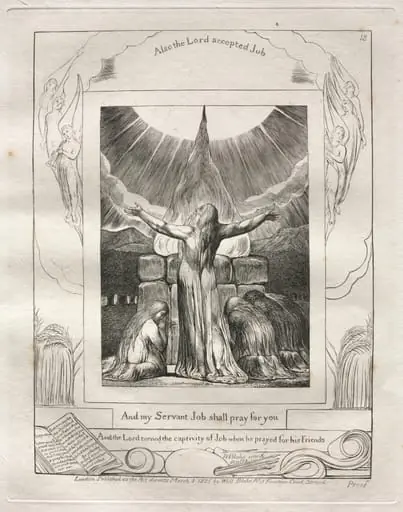 The Book of Job: Pl. 18, And my Servant Job shall pray for you
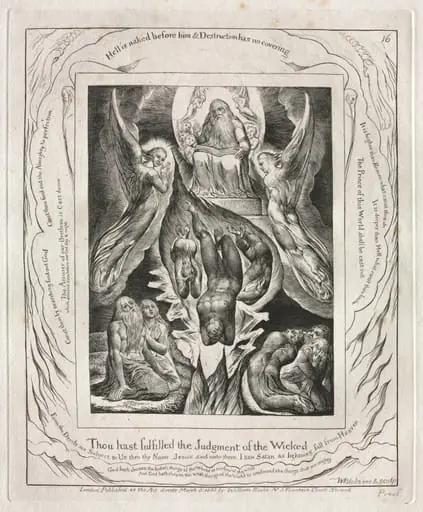 The Book of Job: Pl. 16, Thou hast fulfilled the Judgment of the Wicked
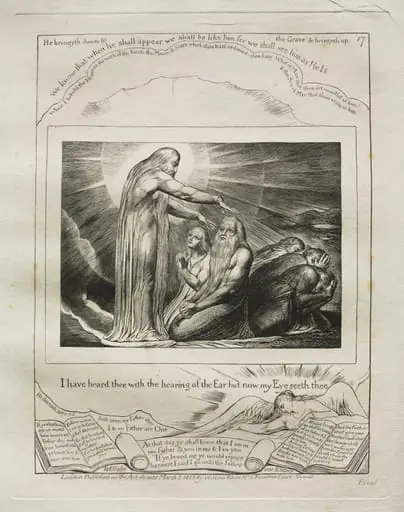 The Book of Job: Pl. 17, I have heard thee with the hearing of the Ear but now my Eye seeth thee
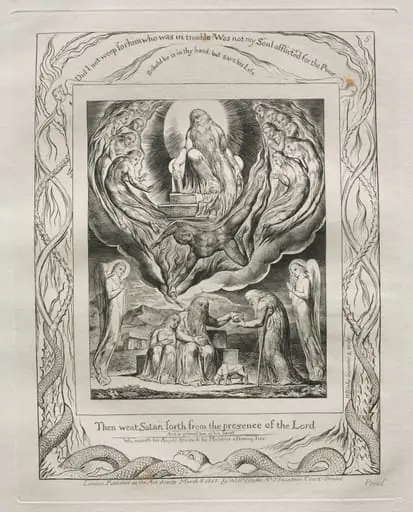 The Book of Job: Pl. 5, Then went Satan forth from the presence of the Lord
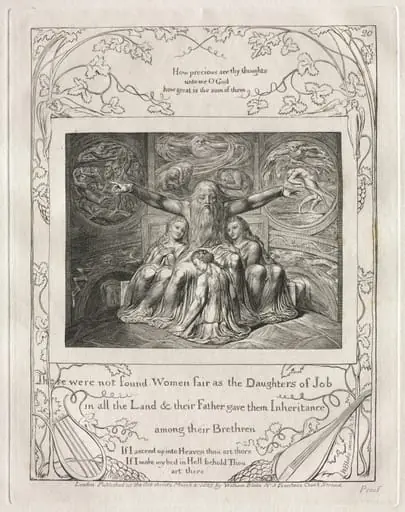 The Book of Job: Pl. 20, There were not found Women fair as the Daughters of Job
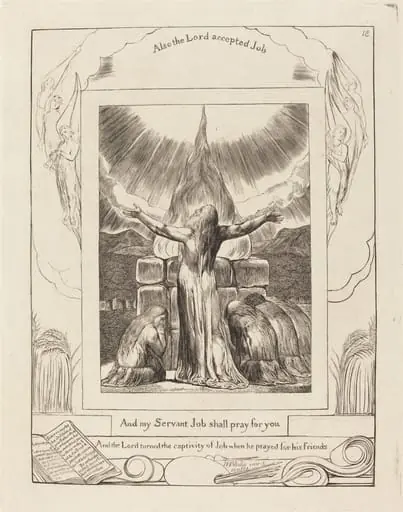 Job's Sacrifice
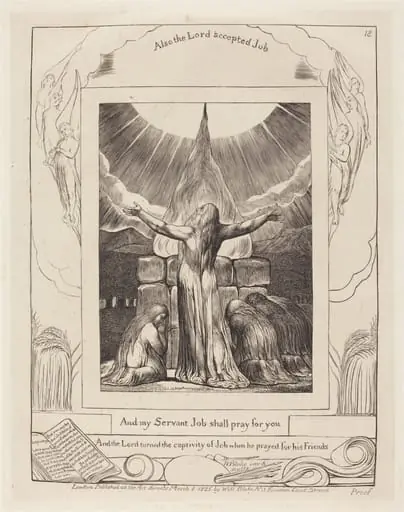 Job's Sacrifice
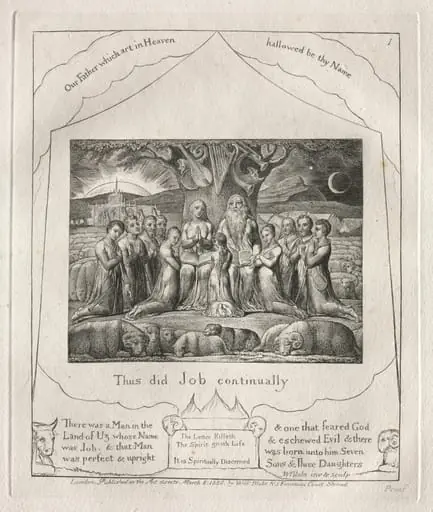 The Book of Job: Pl. 1, Thus did Job continually
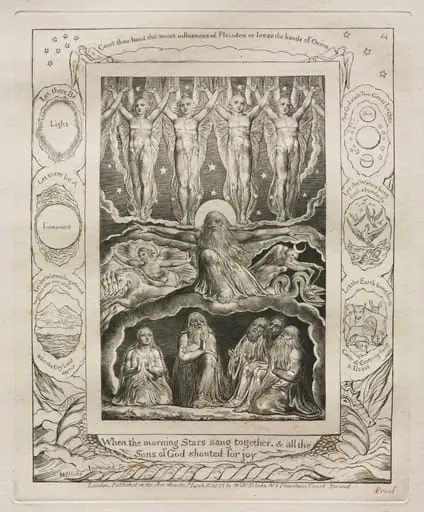 The Book of Job: Pl. 14, When the morning Stars sang together, and all the
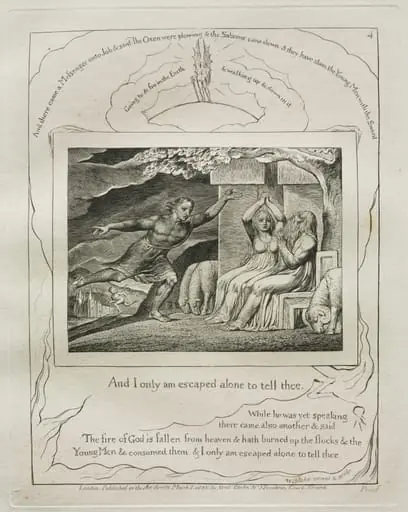 The Book of Job: Pl. 4, And I only am escaped alone to tell thee
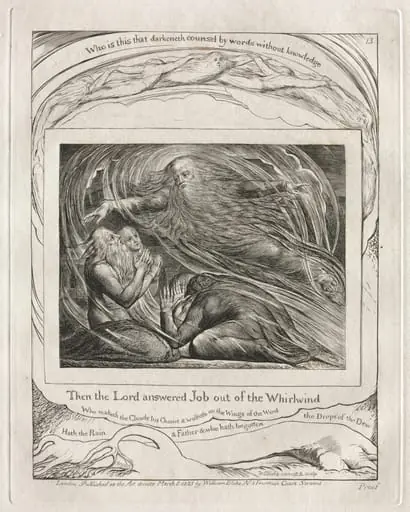 The Book of Job: Pl. 13, Then the Lord answered Job out of the Whirlwind
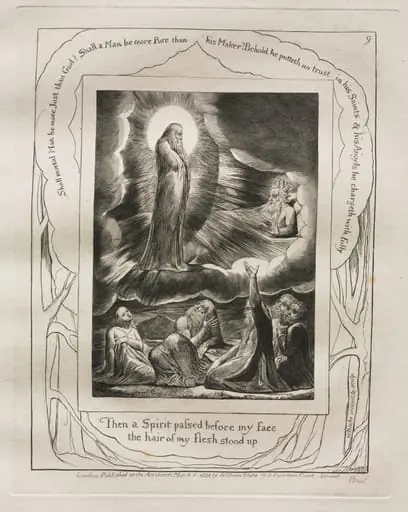 The Book of Job: Pl. 9, Then a Spirit passed before my face