Artwork
The Vision of Eliphaz
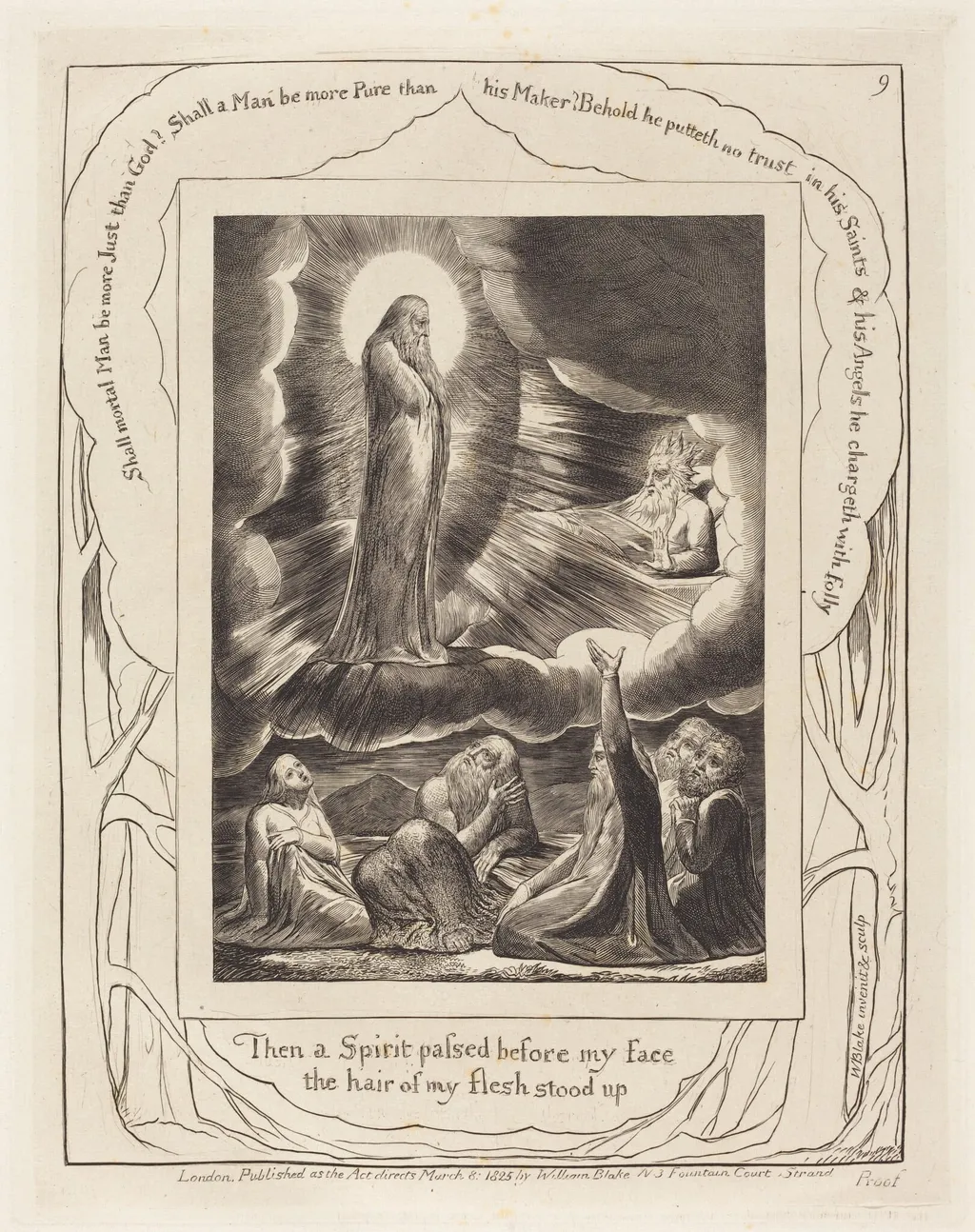
The Vision of Eliphaz is an ink print by the Romanticist artist William Blake. It dates from 1825 and is held in the collection of The William Blake Archive.
About this work
Overview
Created in 1825, *The Vision of Eliphaz* is a black-and-white engraving on India paper by William Blake, produced during the final phase of his artistic career.
Created in 1825, *The Vision of Eliphaz* is a black-and-white engraving on India paper by William Blake, produced during the final phase of his artistic career. As both poet and printmaker, Blake developed a unique method of relief etching to merge text and image. This work is part of a series illustrating the Book of Job, reflecting his lifelong engagement with spiritual themes and biblical narratives through visual means.
Subject & Meaning
The scene depicts the biblical figure Eliphaz, one of Job’s comforters, appearing in a divine vision. A luminous, towering form hovers above three figures on the ground, who gaze upward with apprehension. The imagery conveys a moment of spiritual confrontation, where divine revelation unsettles human understanding. Surrounding inscriptions from the Book of Job reinforce the tension between faith, suffering, and perceived divine justice.
Technique & Style
Blake employed fine, precise engraving lines to model form and depth, creating a sense of volume despite the monochrome medium. The glowing figure is rendered with radiating contours that suggest inner light, while swirling atmospheric lines evoke turbulence and transcendence. The integration of biblical text along the margins unites verbal and visual prophecy, a hallmark of Blake’s illuminated printing technique.
History & Provenance
This print was produced as part of Blake’s illustrated edition of the Book of Job, commissioned by John Linnell in the mid-1820s. Only a small number of impressions were made during Blake’s lifetime, and the work remained largely known within his circle until later 19th-century rediscovery. The India paper, prized for its thinness and durability, was chosen to enhance the delicacy of the engraved lines.
Context
Blake created this work amid growing public interest in mysticism and biblical symbolism, though he remained outside mainstream artistic institutions. His vision of divine communication as both awe-inspiring and destabilizing contrasted with the rationalism of his era. The Job illustrations, including this one, reflect his belief in spiritual insight as a personal, often unsettling revelation.
Legacy
Though little recognized in his time, Blake’s *Vision of Eliphaz* later became a touchstone for Symbolist and modernist artists drawn to his fusion of poetry and visual allegory. The work exemplifies his radical approach to printmaking, where image and text coexist as equal carriers of meaning. Today, it is studied for its psychological depth and technical innovation in engraved illustration.
Artist & collection

Artist
William Blake (28 November 1757 – 12 August 1827) was an English poet, painter and printmaker.

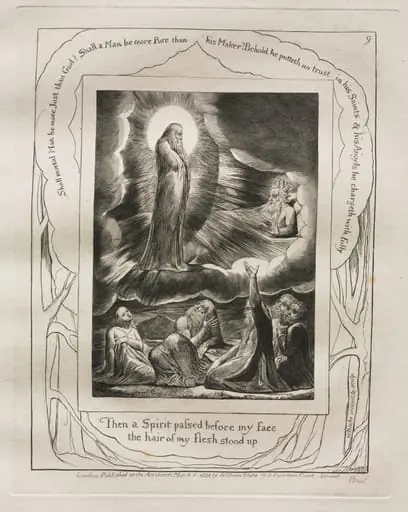 The Book of Job: Pl. 9, Then a Spirit passed before my face
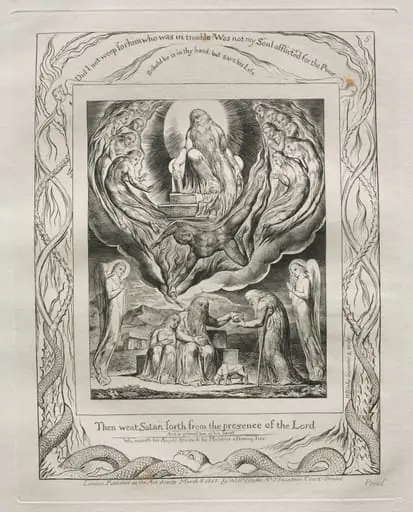 The Book of Job: Pl. 5, Then went Satan forth from the presence of the Lord
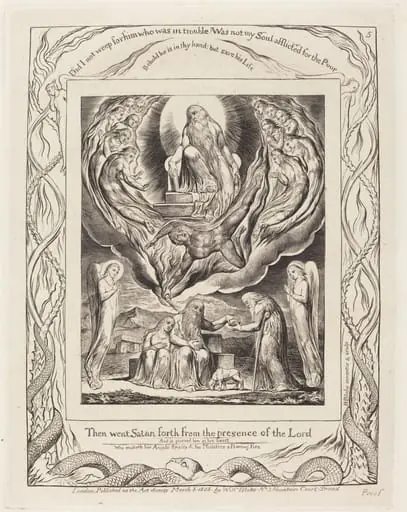 Satan Going Forth from the Presence of the Lord
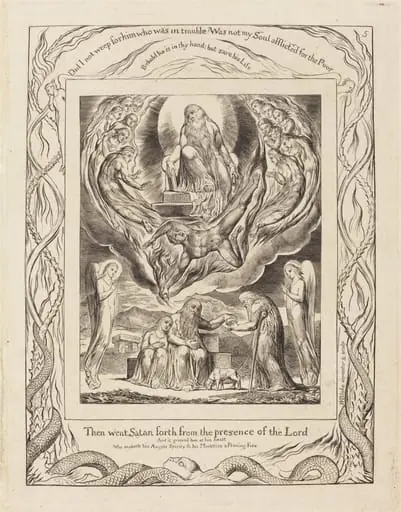 Satan Going Forth from the Presence of the Lord
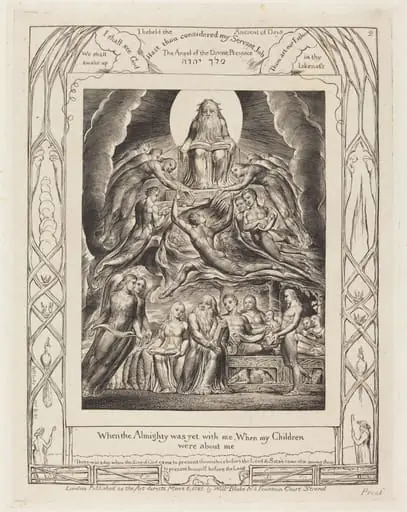 Satan Before the Throne of God
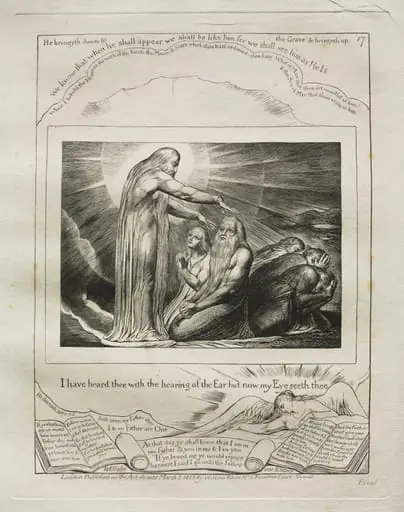 The Book of Job: Pl. 17, I have heard thee with the hearing of the Ear but now my Eye seeth thee
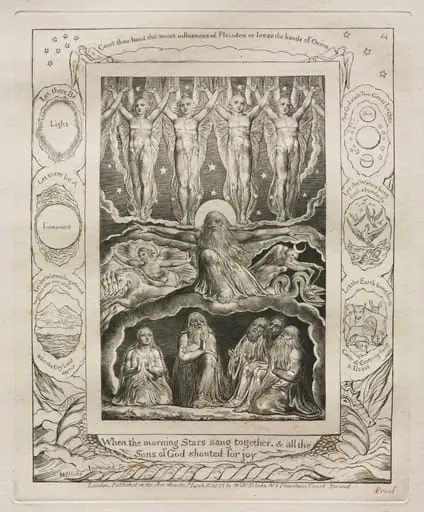 The Book of Job: Pl. 14, When the morning Stars sang together, and all the
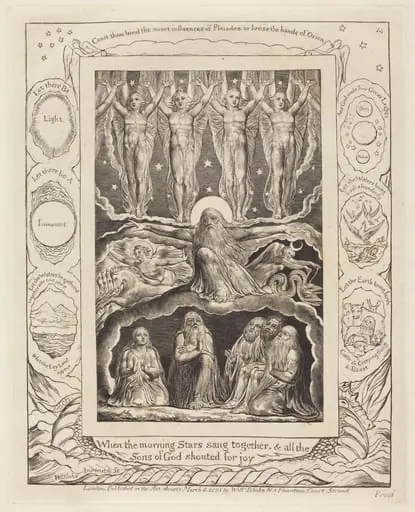 The Creation
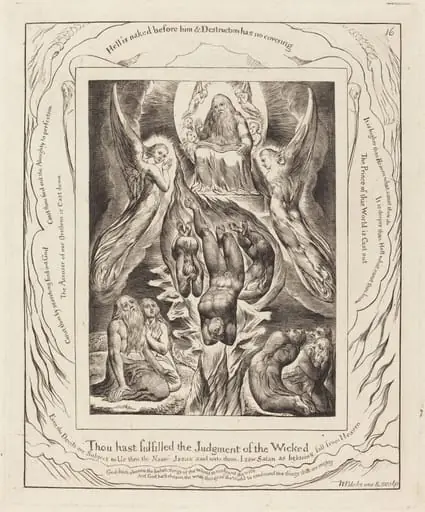 The Fall of Satan