Artwork
The Book of Job: Pl. 9, Then a Spirit passed before my face
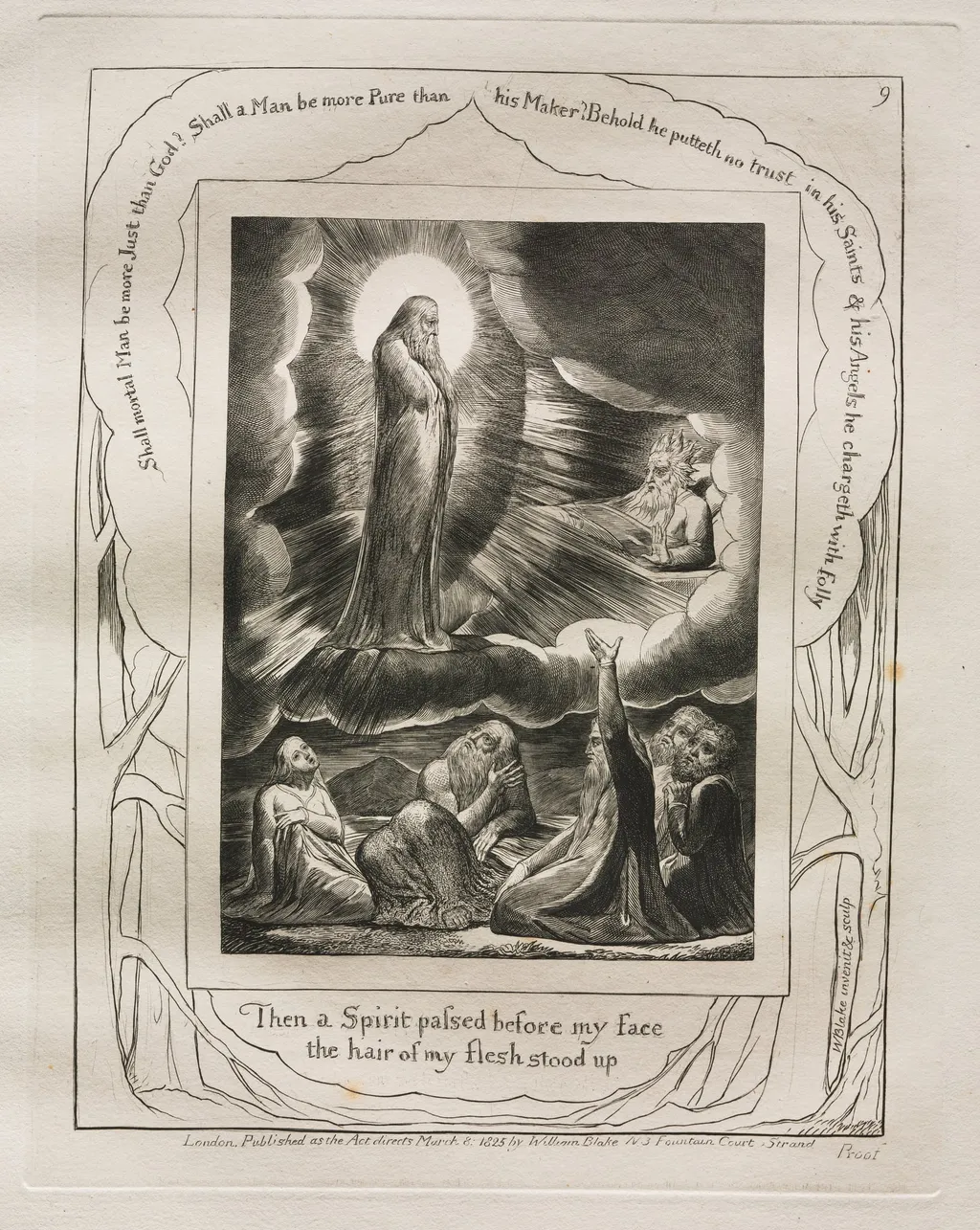
The Book of Job: Pl. 9, Then a Spirit passed before my face is a work on paper by the Romanticist artist William Blake. It dates from 1825 and is held in the collection of the Cleveland Museum of Art.
About this work
This print was made in 1825 by William Blake, who often mixed religious stories with strong emotions.
This print shows a dramatic scene in black and white. A towering figure with a glowing halo stands above three smaller people on the ground. One person kneels, another lies down, and the third looks up with their hands clasped. The sky is swirling with dark, chaotic lines, and a winged figure floats in the background.
The words around the image are quotes from the Bible’s Book of Job, describing fear and awe. This print was made in 1825 by William Blake, who often mixed religious stories with strong emotions.
Next, look up Romanticism to see how this style used deep feelings and bold imagery.
Overview
Created in 1825, this engraving is the ninth plate in William Blake’s illustrated series of the Book of Job. Executed in monochrome, it forms part of a larger project in which Blake reimagined biblical narrative through personal vision. The work combines handwritten script with intricate line work, reflecting his unique method of relief etching. Blake produced the entire series himself, from design to printing, asserting full creative control over both image and text.
Subject & Meaning
The scene depicts Job’s encounter with a divine presence, as described in Job 4:15: 'a spirit passed before my face; the hair of my flesh stood up.' A luminous, towering figure hovers above three figures reacting with awe and terror. The kneeling, prostrate, and upward-gazing postures suggest varying responses to the ineffable. Blake frames this moment not as divine punishment but as a revelation of spiritual presence, emphasizing inner transformation over external suffering.
Technique & Style
Blake employed relief etching, a method he invented, to merge text and image on a single plate. Fine, swirling lines evoke movement in the sky and the spirit’s form, contrasting with the rigid contours of the human figures. The absence of color heightens the emotional intensity, while the dense, calligraphic inscriptions frame the scene like a sacred inscription. His linear precision and symbolic density reflect his rejection of naturalism in favor of visionary expression.
History & Provenance
Blake completed the Job series between 1821 and 1826, commissioned by John Linnell, a patron who supported his later work. The plates were printed in small editions, often hand-colored by Blake and his wife Catherine. This particular plate was likely printed in 1825, during the final phase of the project. Original impressions are held in major collections, including the British Museum and the Huntington Library, preserving Blake’s original printing state.
Context
Produced during the later years of Blake’s life, this work aligns with Romanticism’s emphasis on inner experience and the sublime. Unlike contemporaries who idealized nature, Blake turned to biblical myth as a vehicle for psychological and spiritual inquiry. His illustrations resisted Enlightenment rationalism, instead asserting the primacy of imagination as a divine faculty—a core tenet of his lifelong artistic philosophy.
Legacy
Blake’s Job series is now recognized as one of the most original interpretations of biblical narrative in Western art. Its fusion of poetry, visual symbolism, and printmaking influenced later generations of symbolic and visionary artists. Though largely overlooked in his lifetime, the series gained critical attention in the 20th century, establishing Blake as a precursor to modern expressive traditions in both literature and visual art.
Artist & collection
Artist
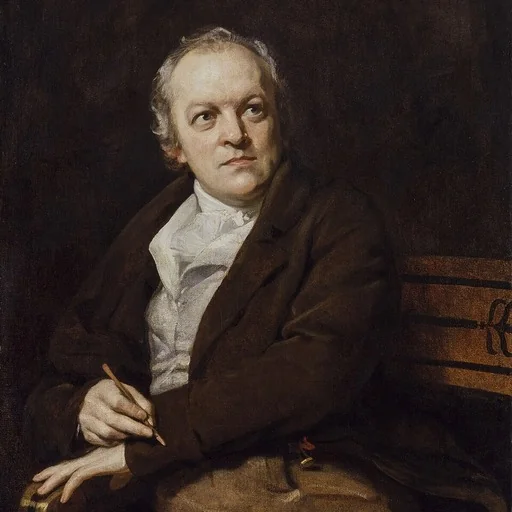
William Blake (28 November 1757 – 12 August 1827) was an English poet, painter and printmaker.

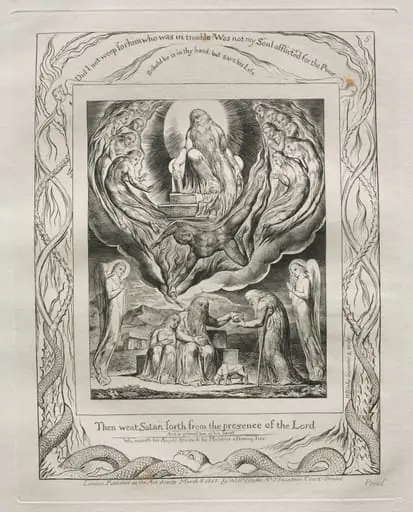 The Book of Job: Pl. 5, Then went Satan forth from the presence of the Lord
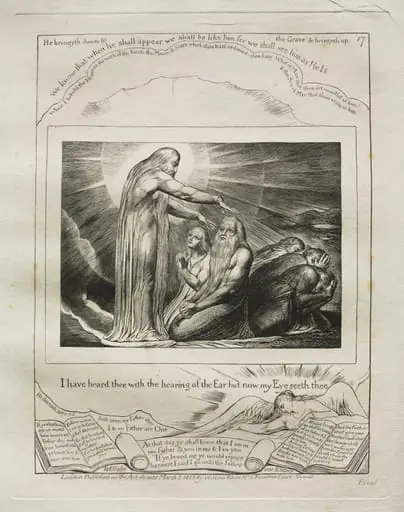 The Book of Job: Pl. 17, I have heard thee with the hearing of the Ear but now my Eye seeth thee
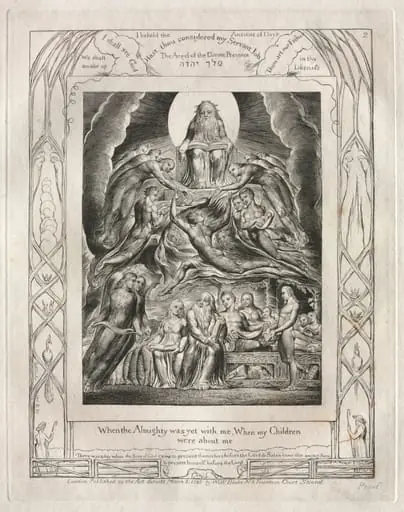 The Book of Job: Pl. 2, When the Almighty was yet with me, When my Children
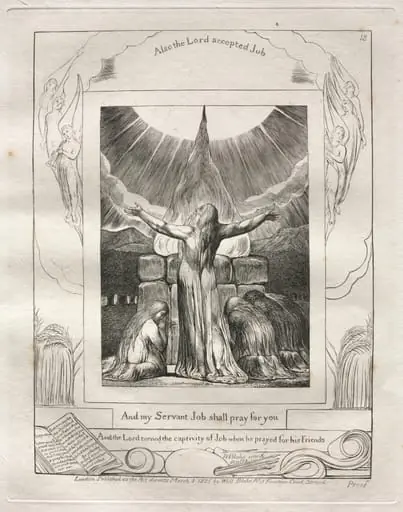 The Book of Job: Pl. 18, And my Servant Job shall pray for you
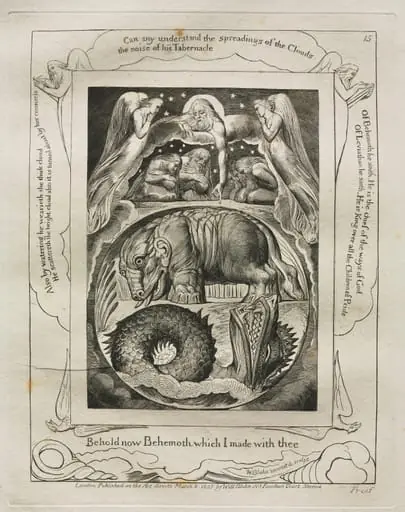 The Book of Job: Pl. 15, Behold now Behemoth which I made with thee
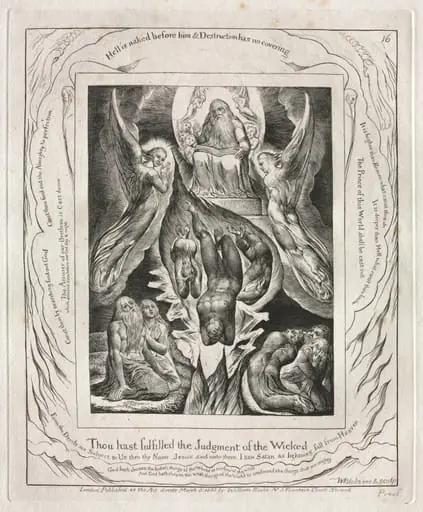 The Book of Job: Pl. 16, Thou hast fulfilled the Judgment of the Wicked
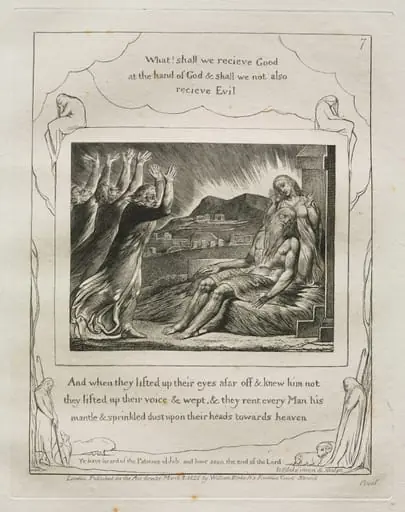 The Book of Job: Pl. 7, And when they lifted up their eyes afar off and knew him not
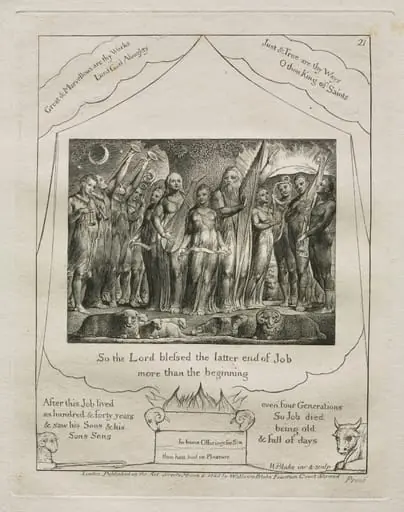 The Book of Job: Pl. 21, So the Lord blessed the latter end of Job
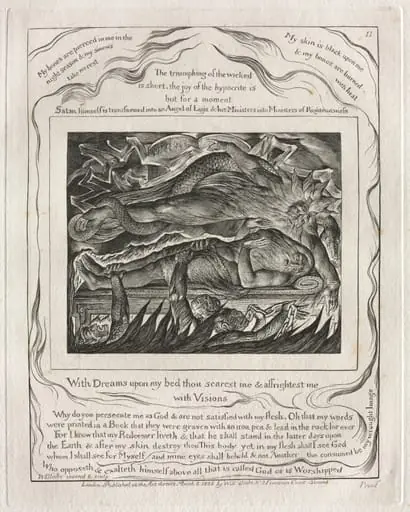 The Book of Job: Pl. 11, With Dreams upon my bed thou scarest me and affrightest me
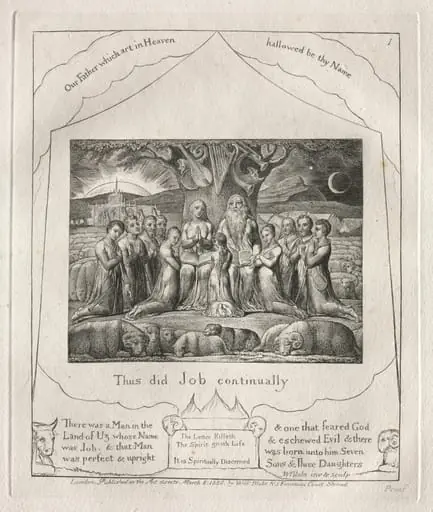 The Book of Job: Pl. 1, Thus did Job continually
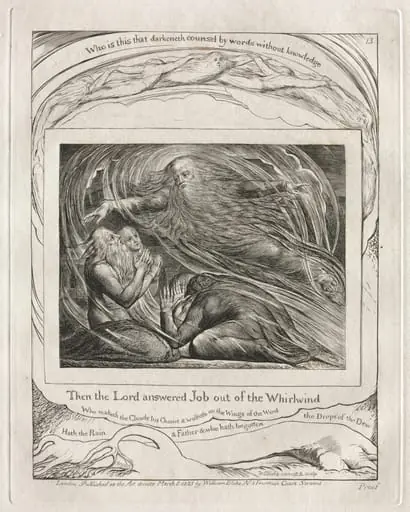 The Book of Job: Pl. 13, Then the Lord answered Job out of the Whirlwind
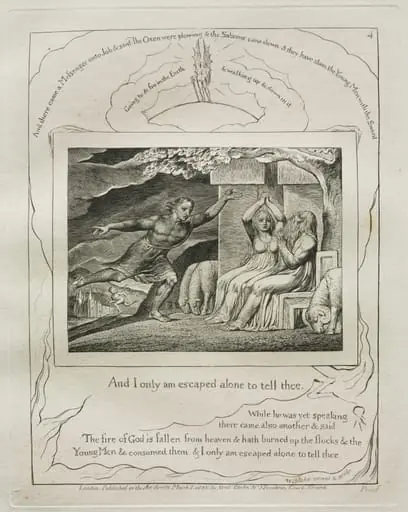 The Book of Job: Pl. 4, And I only am escaped alone to tell thee